Understanding financial metrics is crucial for anyone involved in investing, trading, or managing a business. One of the key metrics that often comes up in financial discussions is the leverage ratio. This ratio provides insights into how much debt a company is using to finance its assets relative to the amount of equity. It is a critical indicator of a company's financial health and risk profile.
What Is Leverage Ratio?
The leverage ratio is a financial metric that measures the amount of debt a company uses to finance its assets compared to the amount of equity. It is often expressed as a percentage or a ratio and is used to assess the financial risk and stability of a company. A high leverage ratio indicates that a company is using a significant amount of debt to finance its operations, which can be risky if the company struggles to meet its debt obligations. Conversely, a low leverage ratio suggests that a company is more reliant on equity financing, which can be seen as a more stable financial position.
Importance of Leverage Ratio
The leverage ratio is important for several reasons:
- Risk Assessment: It helps investors and creditors assess the risk associated with investing in or lending to a company. A high leverage ratio indicates higher risk.
- Financial Stability: It provides insights into a company's financial stability and its ability to meet its debt obligations.
- Comparative Analysis: It allows for comparative analysis between companies in the same industry or across different industries.
- Decision Making: It aids in decision-making processes for investors, creditors, and management regarding investments, loans, and strategic planning.
Calculating the Leverage Ratio
The leverage ratio can be calculated using various formulas, depending on the specific type of leverage ratio being used. Some of the most common types include the debt-to-equity ratio, debt-to-assets ratio, and interest coverage ratio. Here are the formulas for each:
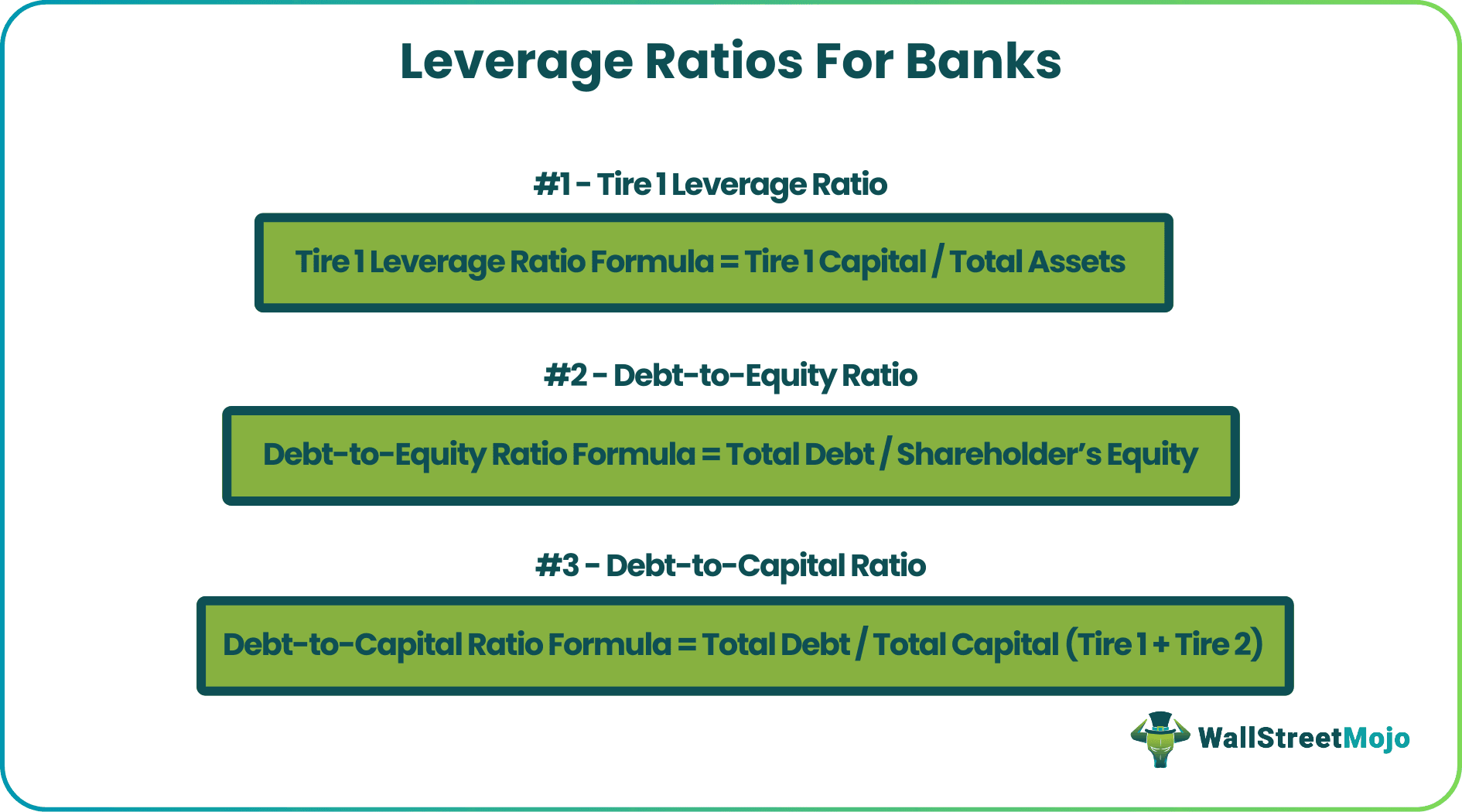
Debt-to-Equity Ratio
The debt-to-equity ratio measures the amount of debt a company has relative to its equity. The formula is:
Debt-to-Equity Ratio = Total Debt / Total Equity
Debt-to-Assets Ratio
The debt-to-assets ratio measures the amount of debt a company has relative to its total assets. The formula is:
Debt-to-Assets Ratio = Total Debt / Total Assets
Interest Coverage Ratio
The interest coverage ratio measures a company's ability to pay the interest on its outstanding debt. The formula is:
Interest Coverage Ratio = Earnings Before Interest and Taxes (EBIT) / Interest Expenses
Interpreting the Leverage Ratio
Interpreting the leverage ratio involves understanding the context in which the ratio is being used. Here are some general guidelines for interpreting different types of leverage ratios:
Debt-to-Equity Ratio
A debt-to-equity ratio of less than 1 indicates that a company has more equity than debt, which is generally seen as a positive sign. A ratio greater than 1 indicates that a company has more debt than equity, which can be risky. However, the acceptable range can vary by industry.
Debt-to-Assets Ratio
A debt-to-assets ratio of less than 0.5 indicates that a company has more assets than debt, which is generally seen as a positive sign. A ratio greater than 0.5 indicates that a company has more debt than assets, which can be risky. Again, the acceptable range can vary by industry.
Interest Coverage Ratio
An interest coverage ratio of less than 1 indicates that a company may struggle to meet its interest payments, which is a red flag. A ratio greater than 1 indicates that a company has sufficient earnings to cover its interest payments, which is generally seen as a positive sign.
Factors Affecting the Leverage Ratio
Several factors can affect a company's leverage ratio, including:
- Industry Standards: Different industries have different standards for acceptable leverage ratios. For example, capital-intensive industries like manufacturing may have higher leverage ratios than service industries.
- Economic Conditions: Economic conditions can affect a company's ability to repay debt. During economic downturns, companies may struggle to meet their debt obligations, leading to higher leverage ratios.
- Company Strategy: A company's strategic decisions, such as whether to finance growth through debt or equity, can affect its leverage ratio.
- Interest Rates: Changes in interest rates can affect a company's ability to repay debt. Higher interest rates can increase the cost of debt, making it more difficult for companies to meet their debt obligations.
Examples of Leverage Ratios
To better understand the leverage ratio, let's look at some examples:
Example 1: Debt-to-Equity Ratio
Suppose Company A has total debt of $500,000 and total equity of $1,000,000. The debt-to-equity ratio would be:
Debt-to-Equity Ratio = $500,000 / $1,000,000 = 0.5
This indicates that Company A has more equity than debt, which is generally seen as a positive sign.
Example 2: Debt-to-Assets Ratio
Suppose Company B has total debt of $800,000 and total assets of $2,000,000. The debt-to-assets ratio would be:
Debt-to-Assets Ratio = $800,000 / $2,000,000 = 0.4
This indicates that Company B has more assets than debt, which is generally seen as a positive sign.
Example 3: Interest Coverage Ratio
Suppose Company C has earnings before interest and taxes (EBIT) of $300,000 and interest expenses of $50,000. The interest coverage ratio would be:
Interest Coverage Ratio = $300,000 / $50,000 = 6
This indicates that Company C has sufficient earnings to cover its interest payments, which is generally seen as a positive sign.
Comparing Leverage Ratios Across Industries
It is important to compare leverage ratios within the same industry, as different industries have different capital structures and risk profiles. Here is a table showing the average leverage ratios for some common industries:
| Industry | Average Debt-to-Equity Ratio | Average Debt-to-Assets Ratio |
|---|---|---|
| Manufacturing | 1.5 | 0.6 |
| Retail | 0.8 | 0.4 |
| Technology | 0.5 | 0.3 |
| Healthcare | 1.2 | 0.5 |
| Financial Services | 2.0 | 0.7 |
These averages can vary, and it is important to consider the specific context of each company when interpreting its leverage ratio.
📝 Note: The averages provided are for illustrative purposes only and may not reflect current industry standards.
Impact of Leverage on Financial Performance
The leverage ratio can have a significant impact on a company's financial performance. High leverage can lead to higher returns on equity if the company's investments generate sufficient returns. However, it also increases the risk of financial distress if the company struggles to meet its debt obligations. Conversely, low leverage can provide a more stable financial position but may limit the company's ability to pursue growth opportunities.
Strategies for Managing Leverage
Managing leverage effectively is crucial for maintaining financial stability. Here are some strategies for managing leverage:
- Debt Restructuring: Companies can restructure their debt to reduce interest payments and improve cash flow.
- Equity Financing: Companies can issue new equity to reduce their debt-to-equity ratio and improve their financial stability.
- Cost Cutting: Companies can reduce expenses to improve their interest coverage ratio and ensure they can meet their debt obligations.
- Asset Sales: Companies can sell non-core assets to reduce their debt-to-assets ratio and improve their financial position.
Case Studies
To illustrate the importance of the leverage ratio, let's look at some case studies:
Case Study 1: Company A
Company A is a manufacturing firm with a high debt-to-equity ratio of 2.5. The company has been struggling to meet its debt obligations due to declining sales and increasing interest rates. To manage its leverage, Company A decides to restructure its debt and issue new equity. This helps the company reduce its debt-to-equity ratio to 1.5 and improve its financial stability.
Case Study 2: Company B
Company B is a retail firm with a low debt-to-equity ratio of 0.5. The company has been able to maintain a stable financial position and has sufficient cash flow to meet its debt obligations. However, Company B wants to pursue growth opportunities and decides to take on more debt to finance new store openings. This increases the company's debt-to-equity ratio to 1.0, but the additional debt is manageable given the company's strong cash flow.
Conclusion
The leverage ratio is a critical financial metric that provides insights into a company’s financial health and risk profile. Understanding how to calculate and interpret the leverage ratio is essential for investors, creditors, and management. By managing leverage effectively, companies can maintain financial stability and pursue growth opportunities while minimizing risk. Whether you are an investor looking to assess the risk of a potential investment or a manager seeking to optimize your company’s capital structure, the leverage ratio is a valuable tool for making informed decisions.
Related Terms:
- definition of leverage ratio
- leverage ratio meaning in banking
- what is leverage ratio formula
- leverage ratio formula with example
- what does leverage ratio measure
- leverage ratio explained