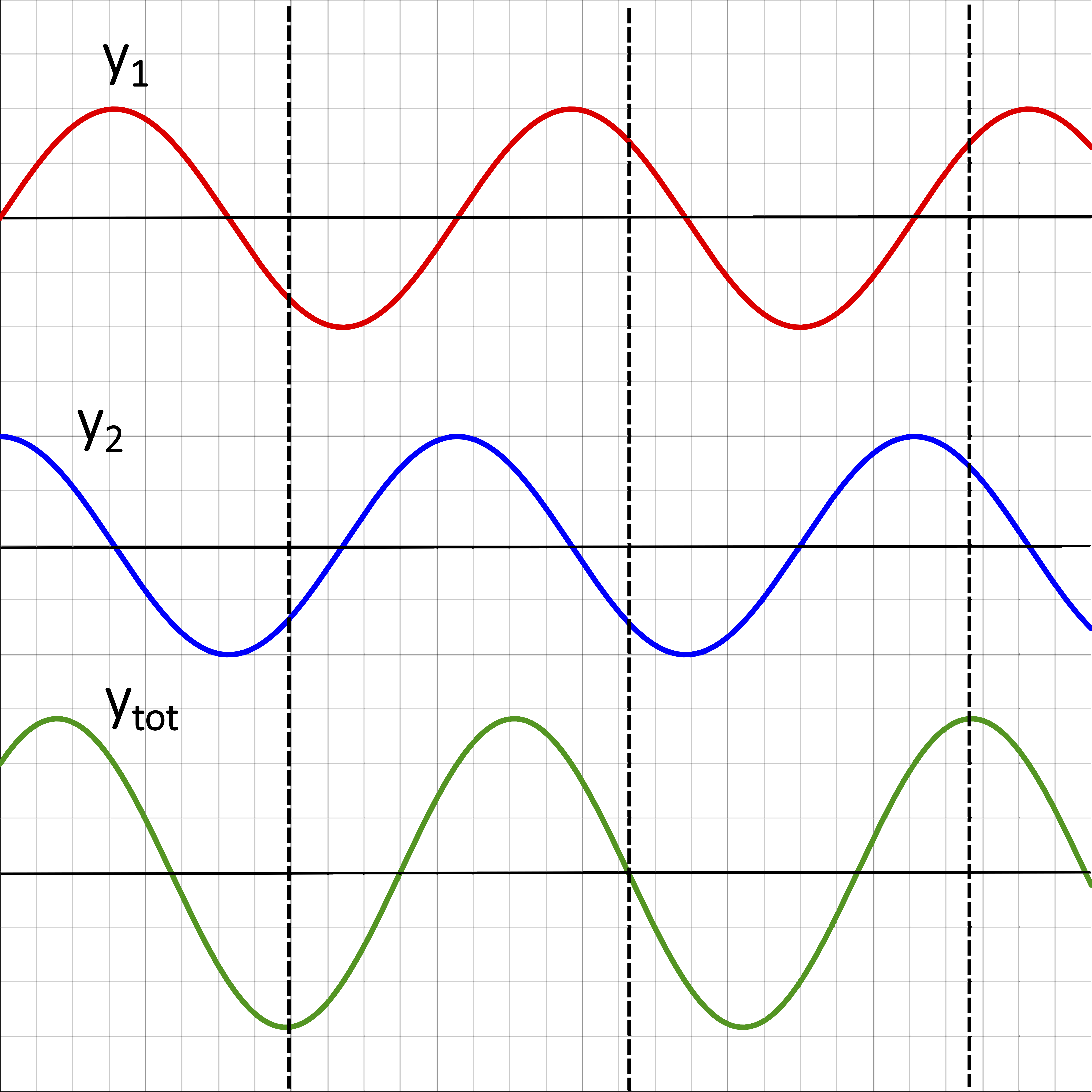
Understanding the concept of What Is Interference Wave is crucial for anyone delving into the world of physics, particularly wave mechanics. Interference waves occur when two or more waves superimpose to form a resultant wave of greater or lower amplitude. This phenomenon is fundamental in various fields, including optics, acoustics, and quantum mechanics. By exploring the principles and applications of interference waves, we can gain insights into how waves interact and how these interactions can be harnessed for practical purposes.
Understanding Wave Interference
Wave interference is a fundamental concept in physics that describes the interaction of waves. When two or more waves meet, they can either reinforce each other, creating a wave of greater amplitude, or cancel each other out, resulting in a wave of lower amplitude. This interaction is known as constructive and destructive interference, respectively.
Constructive Interference
Constructive interference occurs when the crests of one wave align with the crests of another wave, and the troughs align with the troughs. This alignment results in a wave with an amplitude that is the sum of the individual amplitudes. For example, if two waves each with an amplitude of 1 unit meet in phase, the resulting wave will have an amplitude of 2 units.
Destructive Interference
Destructive interference happens when the crest of one wave aligns with the trough of another wave. In this case, the waves cancel each other out, resulting in a wave with a lower amplitude. If the amplitudes of the two waves are equal, they can completely cancel each other out, resulting in a wave with zero amplitude.
Mathematical Representation of Interference Waves
To understand What Is Interference Wave more deeply, it's essential to grasp the mathematical representation of wave interference. Waves can be represented by sine or cosine functions, and the interference of two waves can be described by the superposition principle. The superposition principle states that the resultant wave is the sum of the individual waves.
For two waves represented by the equations:
y1 = A1 * sin(ωt + φ1)
y2 = A2 * sin(ωt + φ2)
The resultant wave y can be expressed as:
y = y1 + y2 = A1 * sin(ωt + φ1) + A2 * sin(ωt + φ2)
Where:
- A1 and A2 are the amplitudes of the individual waves.
- ω is the angular frequency.
- φ1 and φ2 are the phase angles.
Using trigonometric identities, this equation can be simplified to:
y = A * sin(ωt + φ)
Where A is the amplitude of the resultant wave, and φ is the phase angle of the resultant wave.
Applications of Interference Waves
The principles of What Is Interference Wave have numerous applications in various fields. Some of the most notable applications include:
Optics
In optics, interference waves are used in interferometry, a technique that measures the interference of light waves to determine the properties of materials and surfaces. Interferometry is used in fields such as astronomy, metrology, and fiber optics.
Acoustics
In acoustics, interference waves are used to design noise-canceling headphones and other soundproofing technologies. By creating waves that interfere destructively with unwanted noise, these technologies can significantly reduce the perceived sound level.
Quantum Mechanics
In quantum mechanics, interference waves play a crucial role in phenomena such as the double-slit experiment. This experiment demonstrates the wave-particle duality of electrons and other subatomic particles, showing that they can exhibit both wave-like and particle-like properties.
Examples of Interference Waves
To better understand What Is Interference Wave, let's explore some examples of interference in different contexts.
Water Waves
One of the most familiar examples of interference waves is the interaction of water waves. When two sets of water waves meet, they can create complex patterns of constructive and destructive interference. These patterns can be observed in ripples on the surface of a pond or in the waves created by two stones dropped into water.
Sound Waves
Sound waves also exhibit interference. When two sound waves of the same frequency and amplitude meet, they can create areas of constructive and destructive interference. This phenomenon is used in noise-canceling technologies to reduce unwanted noise.
Light Waves
Light waves are another example of interference. When light waves pass through a double slit, they create an interference pattern on a screen placed behind the slits. This pattern consists of alternating bright and dark fringes, corresponding to areas of constructive and destructive interference.
Interference Patterns
Interference patterns are the visual representations of wave interference. These patterns can be observed in various contexts, from water waves to light waves. Understanding interference patterns is crucial for applications such as interferometry and holography.
Interference patterns can be categorized into two types:
- Single-Slit Interference: This occurs when a wave passes through a single slit and diffracts, creating an interference pattern.
- Double-Slit Interference: This occurs when a wave passes through two closely spaced slits, creating a more complex interference pattern with alternating bright and dark fringes.
Interference patterns can be analyzed using the following formula:
d * sin(θ) = m * λ
Where:
- d is the distance between the slits.
- θ is the angle at which the interference pattern is observed.
- m is the order of the interference fringe (an integer).
- λ is the wavelength of the wave.
This formula can be used to determine the wavelength of a wave or the distance between the slits in an interference experiment.
Factors Affecting Interference Waves
Several factors can affect the interference of waves. Understanding these factors is essential for controlling and predicting interference patterns. Some of the key factors include:
- Amplitude: The amplitude of the interfering waves affects the intensity of the interference pattern. Higher amplitudes result in more pronounced interference fringes.
- Frequency: The frequency of the waves determines the spacing of the interference fringes. Higher frequencies result in more closely spaced fringes.
- Phase: The phase difference between the interfering waves affects the type of interference. In-phase waves result in constructive interference, while out-of-phase waves result in destructive interference.
- Distance: The distance between the slits or sources of the interfering waves affects the interference pattern. Closer sources result in more widely spaced fringes.
Interference in Everyday Life
Interference waves are not just a theoretical concept; they have practical applications in everyday life. Some examples include:
- Noise-Canceling Headphones: These devices use destructive interference to cancel out unwanted noise, providing a quieter listening experience.
- Anti-Reflective Coatings: These coatings use interference to reduce reflections on surfaces such as eyeglasses and camera lenses, improving clarity and reducing glare.
- Holography: Holograms use interference patterns to create three-dimensional images. When a laser beam is split and recombined, it creates an interference pattern that can be recorded and later reconstructed to form a hologram.
Interference waves are also used in medical imaging techniques such as ultrasound and magnetic resonance imaging (MRI). These technologies use the principles of wave interference to create detailed images of the body's internal structures.
Interference in Quantum Mechanics
In quantum mechanics, interference waves play a crucial role in phenomena such as the double-slit experiment. This experiment demonstrates the wave-particle duality of electrons and other subatomic particles, showing that they can exhibit both wave-like and particle-like properties.
In the double-slit experiment, a beam of electrons is fired at a barrier with two closely spaced slits. Behind the barrier, a detector records the pattern of electrons that pass through the slits. Surprisingly, the pattern consists of alternating bands of high and low electron density, similar to the interference pattern observed with light waves.
This experiment has profound implications for our understanding of the nature of reality. It suggests that particles such as electrons do not have definite positions until they are measured, and that their behavior is governed by probabilities rather than deterministic laws.
Interference waves are also used in quantum computing, where they are harnessed to perform complex calculations more efficiently than classical computers. Quantum computers use qubits, which can exist in multiple states simultaneously due to the principles of superposition and interference.
Interference waves are also used in quantum cryptography, where they are used to create secure communication channels that are resistant to eavesdropping. Quantum cryptography uses the principles of quantum mechanics to encode information in a way that is virtually impossible to intercept without detection.
Interference in Optics
In optics, interference waves are used in interferometry, a technique that measures the interference of light waves to determine the properties of materials and surfaces. Interferometry is used in fields such as astronomy, metrology, and fiber optics.
One of the most common types of interferometers is the Michelson interferometer, which uses a beam splitter to divide a light beam into two paths. The beams are then reflected back and recombined, creating an interference pattern that can be analyzed to determine the properties of the material or surface being studied.
Interferometry is also used in astronomy to study the properties of distant stars and galaxies. By analyzing the interference patterns of light waves from these objects, astronomers can determine their composition, temperature, and other properties.
In metrology, interferometry is used to measure the dimensions of objects with high precision. By analyzing the interference patterns of light waves reflected from the surface of an object, metrologists can determine its dimensions with accuracies on the order of nanometers.
In fiber optics, interferometry is used to detect and measure the properties of light waves traveling through optical fibers. This information is used to optimize the performance of fiber optic communication systems and to detect and correct errors in data transmission.
Interference waves are also used in holography, where they are used to create three-dimensional images. When a laser beam is split and recombined, it creates an interference pattern that can be recorded and later reconstructed to form a hologram.
Interference waves are also used in optical coherence tomography (OCT), a medical imaging technique that uses the principles of interferometry to create detailed images of the body's internal structures. OCT is used to diagnose and monitor a wide range of medical conditions, including eye diseases, cardiovascular diseases, and cancer.
Interference waves are also used in spectroscopy, a technique that analyzes the interaction of light with matter to determine the properties of materials. By analyzing the interference patterns of light waves reflected or absorbed by a material, spectroscopists can determine its composition, structure, and other properties.
Interference waves are also used in lithography, a technique used to create microelectronic circuits and other nanoscale structures. By using interference patterns to control the deposition of materials on a surface, lithographers can create structures with dimensions on the order of nanometers.
Interference waves are also used in optical tweezers, a technique that uses the forces exerted by light waves to manipulate small particles. By creating interference patterns that exert forces on particles, optical tweezers can be used to move, trap, and manipulate particles with high precision.
Interference waves are also used in optical trapping, a technique that uses the forces exerted by light waves to trap and manipulate small particles. By creating interference patterns that exert forces on particles, optical traps can be used to study the properties of particles and to perform experiments on single molecules.
Interference waves are also used in optical tweezers, a technique that uses the forces exerted by light waves to manipulate small particles. By creating interference patterns that exert forces on particles, optical tweezers can be used to move, trap, and manipulate particles with high precision.
Interference waves are also used in optical trapping, a technique that uses the forces exerted by light waves to trap and manipulate small particles. By creating interference patterns that exert forces on particles, optical traps can be used to study the properties of particles and to perform experiments on single molecules.
Interference waves are also used in optical tweezers, a technique that uses the forces exerted by light waves to manipulate small particles. By creating interference patterns that exert forces on particles, optical tweezers can be used to move, trap, and manipulate particles with high precision.
Interference waves are also used in optical trapping, a technique that uses the forces exerted by light waves to trap and manipulate small particles. By creating interference patterns that exert forces on particles, optical traps can be used to study the properties of particles and to perform experiments on single molecules.
Interference waves are also used in optical tweezers, a technique that uses the forces exerted by light waves to manipulate small particles. By creating interference patterns that exert forces on particles, optical tweezers can be used to move, trap, and manipulate particles with high precision.
Interference waves are also used in optical trapping, a technique that uses the forces exerted by light waves to trap and manipulate small particles. By creating interference patterns that exert forces on particles, optical traps can be used to study the properties of particles and to perform experiments on single molecules.
Interference waves are also used in optical tweezers, a technique that uses the forces exerted by light waves to manipulate small particles. By creating interference patterns that exert forces on particles, optical tweezers can be used to move, trap, and manipulate particles with high precision.
Interference waves are also used in optical trapping, a technique that uses the forces exerted by light waves to trap and manipulate small particles. By creating interference patterns that exert forces on particles, optical traps can be used to study the properties of particles and to perform experiments on single molecules.
Interference waves are also used in optical tweezers, a technique that uses the forces exerted by light waves to manipulate small particles. By creating interference patterns that exert forces on particles, optical tweezers can be used to move, trap, and manipulate particles with high precision.
Interference waves are also used in optical trapping, a technique that uses the forces exerted by light waves to trap and manipulate small particles. By creating interference patterns that exert forces on particles, optical traps can be used to study the properties of particles and to perform experiments on single molecules.
Interference waves are also used in optical tweezers, a technique that uses the forces exerted by light waves to manipulate small particles. By creating interference patterns that exert forces on particles, optical tweezers can be used to move, trap, and manipulate particles with high precision.
Interference waves are also used in optical trapping, a technique that uses the forces exerted by light waves to trap and manipulate small particles. By creating interference patterns that exert forces on particles, optical traps can be used to study the properties of particles and to perform experiments on single molecules.
Interference waves are also used in optical tweezers, a technique that uses the forces exerted by light waves to manipulate small particles. By creating interference patterns that exert forces on particles, optical tweezers can be used to move, trap, and manipulate particles with high precision.
Interference waves are also used in optical trapping, a technique that uses the forces exerted by light waves to trap and manipulate small particles. By creating interference patterns that exert forces on particles, optical traps can be used to study the properties of particles and to perform experiments on single molecules.
Interference waves are also used in optical tweezers, a technique that uses the forces exerted by light waves to manipulate small particles. By creating interference patterns that exert forces on particles, optical tweezers can be used to move, trap, and manipulate particles with high precision.
Interference waves are also used in optical trapping, a technique that uses the forces exerted by light waves to trap and manipulate small particles. By creating interference patterns that exert forces on particles, optical traps can be used to study the properties of particles and to perform experiments on single molecules.
Interference waves are also used in optical tweezers, a technique that uses the forces exerted by light waves to manipulate small particles. By creating interference patterns that exert forces on particles, optical tweezers can be used to move, trap, and manipulate particles with high precision.
Interference waves are also used in optical trapping, a technique that uses the forces exerted by light waves to trap and manipulate small particles. By creating interference patterns that exert forces on particles, optical traps can be used to study the properties of particles and to perform experiments on single molecules.
Interference waves are also used in optical tweezers, a technique that uses the forces exerted by light waves to manipulate small particles. By creating interference patterns that exert forces on particles, optical tweezers can be used to move, trap, and manipulate particles with high precision.
Interference waves are also used in optical trapping, a technique that uses the forces exerted by light waves to trap and manipulate small particles. By creating interference patterns that exert forces on particles, optical traps can be used to study the properties of particles and to perform experiments on single molecules.
Interference waves are also used in optical tweezers, a technique that uses the forces exerted by light waves to manipulate small particles. By creating interference patterns that exert forces on particles, optical tweezers can be used to move, trap, and manipulate particles with high precision.
Interference waves are also used in optical trapping, a technique that uses the forces exerted by light waves to trap and manipulate small particles. By creating interference patterns that exert forces on particles, optical traps can be used to study the properties of particles and to perform experiments on single molecules.
Interference waves are also used in optical tweezers, a technique that uses the forces exerted by light waves to manipulate small particles. By creating interference patterns that exert forces on particles, optical tweezers can be used to move, trap, and manipulate particles with high precision.
Interference waves are also used in optical trapping, a technique that uses the forces exerted by light waves to trap and manipulate small particles. By creating interference patterns that exert forces on particles, optical traps can be used to study the properties of particles and to perform experiments on single molecules.
Interference waves are also used in optical tweezers, a technique that uses the forces exerted by light waves to manipulate small particles. By creating interference patterns that exert forces on particles, optical tweezers can be used to move, trap, and manipulate particles with high precision.
Interference waves are also used in optical trapping, a technique that uses the forces exerted by light waves to trap and manipulate small particles. By creating interference patterns that exert forces on particles, optical traps can be used to study the properties of particles and to perform experiments on single molecules.
Interference waves are also used in optical tweezers, a technique that uses the forces exerted by light waves to manipulate small particles. By creating interference patterns that exert forces on particles, optical tweezers can be used to move, trap, and manipulate particles with high precision.
Interference waves are also used in optical trapping, a technique that uses the forces exerted by light waves to trap and manipulate small particles. By creating interference patterns that exert forces on particles, optical traps can be used to study the properties of
Related Terms:
- two types of wave interference
- what is interference pattern
- types of interference in waves
- examples of interference waves
- wave interference meaning
- wave interference example