Understanding the structure and function of sentences is fundamental to mastering any language. One of the most basic sentence structures is the imperative sentence. But what is an imperative sentence? An imperative sentence is a type of sentence that gives a command, makes a request, or offers advice. It is often used to instruct or direct someone to do something. This type of sentence is crucial in everyday communication, from giving directions to issuing orders. In this post, we will delve into the intricacies of imperative sentences, exploring their structure, usage, and importance in various contexts.
Understanding Imperative Sentences
Imperative sentences are straightforward and direct. They typically begin with a verb and do not include a subject. The subject is implied to be "you," even if it is not explicitly stated. For example, in the sentence "Close the door," the subject "you" is understood. This makes imperative sentences concise and effective for giving instructions or making requests.
Structure of Imperative Sentences
The structure of an imperative sentence is relatively simple. It usually consists of a verb followed by an object or additional information. Here are some key components:
- Verb: The action word that indicates what needs to be done.
- Object: The receiver of the action, if applicable.
- Additional Information: Any extra details that provide context or clarify the command.
For example, in the sentence "Please pass the salt," "pass" is the verb, "the salt" is the object, and "please" is additional information that softens the command.
Types of Imperative Sentences
Imperative sentences can be categorized into different types based on their purpose and tone. Here are the main types:
- Commands: Direct and authoritative instructions. Example: "Sit down."
- Requests: Polite or indirect instructions. Example: "Could you please help me?"
- Advice: Suggestions or recommendations. Example: "Always wear a seatbelt."
- Warnings: Alerts or cautions. Example: "Be careful with that knife."
Each type serves a different purpose and is used in various contexts to convey specific messages effectively.
Usage of Imperative Sentences
Imperative sentences are versatile and can be used in a wide range of situations. Here are some common contexts where imperative sentences are frequently used:
- Everyday Conversations: Giving instructions or making requests in daily interactions. Example: "Hand me the book, please."
- Workplace Instructions: Providing directions or guidelines in a professional setting. Example: "Submit your report by Friday."
- Cooking Recipes: Offering step-by-step instructions. Example: "Mix the ingredients thoroughly."
- Signs and Notices: Displaying commands or warnings in public places. Example: "No smoking."
In each of these contexts, imperative sentences help to convey information clearly and concisely.
Forming Negative Imperative Sentences
Negative imperative sentences are used to prohibit or forbid an action. They are formed by placing "do not" or "don't" before the verb. For example, "Do not run in the hallway" or "Don't forget to lock the door." These sentences are essential for giving warnings or setting rules.
Here is a table illustrating the formation of negative imperative sentences:
| Positive Imperative | Negative Imperative |
|---|---|
| Run quickly. | Do not run quickly. |
| Eat your vegetables. | Do not eat your vegetables. |
| Stay quiet. | Do not stay quiet. |
Negative imperative sentences are crucial for setting boundaries and ensuring safety in various situations.
📝 Note: Negative imperative sentences can sometimes be softened by using "please" or other polite phrases to make them less direct and more considerate.
Politeness in Imperative Sentences
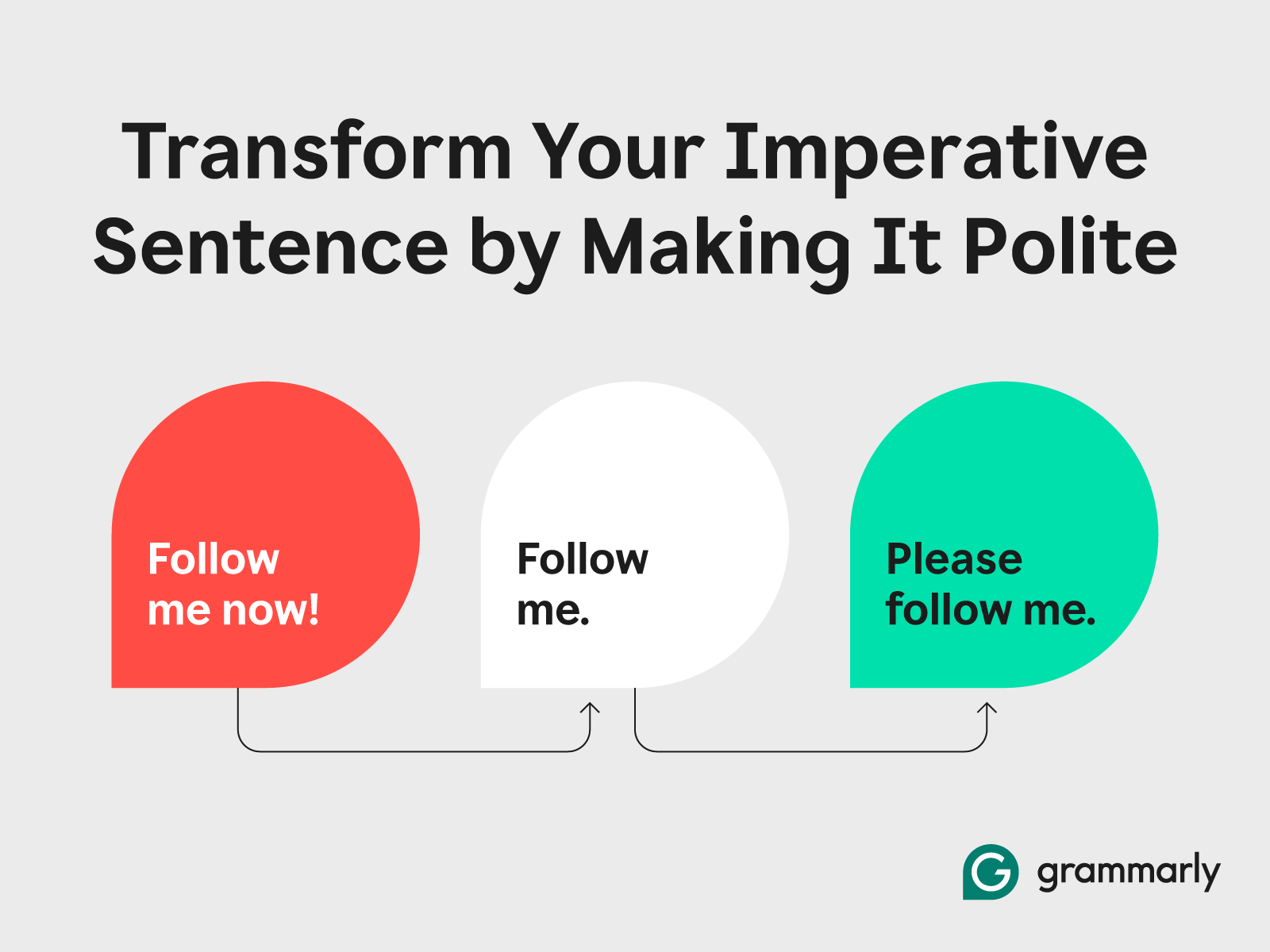
While imperative sentences are direct, they can be made more polite by adding certain phrases. Politeness is essential in communication to maintain respect and goodwill. Here are some ways to make imperative sentences more polite:
- Using "Please": Adding "please" softens the command. Example: "Please close the window."
- Using "Could You": This phrase makes the request more indirect and polite. Example: "Could you pass the salt?"
- Using "Would You Mind": This phrase is very polite and is often used in formal settings. Example: "Would you mind turning off the lights?"
Politeness in imperative sentences helps to create a more respectful and considerate communication style.
Imperative Sentences in Different Languages
Imperative sentences are not unique to English; they exist in various languages with similar structures and purposes. Here are a few examples in different languages:
- Spanish: "Cierra la puerta." (Close the door.)
- French: "Fermez la porte." (Close the door.)
- German: "Schließen Sie die Tür." (Close the door.)
- Italian: "Chiudi la porta." (Close the door.)
In each of these languages, the imperative sentence structure is straightforward and direct, similar to English.
Imperative sentences are a fundamental part of language and communication. They are used to give commands, make requests, offer advice, and provide warnings. Understanding what is an imperative sentence and how to use them effectively can enhance your communication skills and make your interactions more clear and concise. Whether you are giving instructions, making requests, or offering advice, imperative sentences are a powerful tool in your linguistic arsenal.
By mastering the structure and usage of imperative sentences, you can communicate more effectively in various contexts, from everyday conversations to professional settings. Whether you are a native speaker or learning a new language, understanding imperative sentences is essential for clear and effective communication.
Related Terms:
- 4 types of imperative sentences
- imperative meaning
- what is an imperative command
- imperative definition
- 10 examples of imperative sentences
- what does imperative mean