Understanding the intricacies of language is a fascinating journey, and one of the fundamental aspects of grammar is the use of conjunctive words. These words play a crucial role in connecting ideas, sentences, and clauses, making our communication more coherent and meaningful. In this post, we will delve into the world of conjunctive words, exploring their types, functions, and importance in both written and spoken language.
What Are Conjunctive Words?
Conjunctive words, also known as conjunctions, are words that join words, phrases, or clauses together. They help to create a smooth flow in sentences and paragraphs, making it easier for readers to follow the logic and structure of the text. Conjunctive words can be categorized into several types, each serving a unique purpose in sentence construction.
Types of Conjunctive Words
Conjunctive words can be broadly classified into three main categories: coordinating conjunctions, subordinating conjunctions, and correlative conjunctions. Each type has its own set of rules and functions.
Coordinating Conjunctions
Coordinating conjunctions are used to connect words, phrases, or clauses of equal importance. The most common coordinating conjunctions are:
- For
- And
- Nor
- But
- Or
- Yet
- So
These conjunctions are often remembered by the acronym FANBOYS. For example:
I wanted to go to the park, but it started raining.
In this sentence, “but” is a coordinating conjunction that connects two independent clauses.
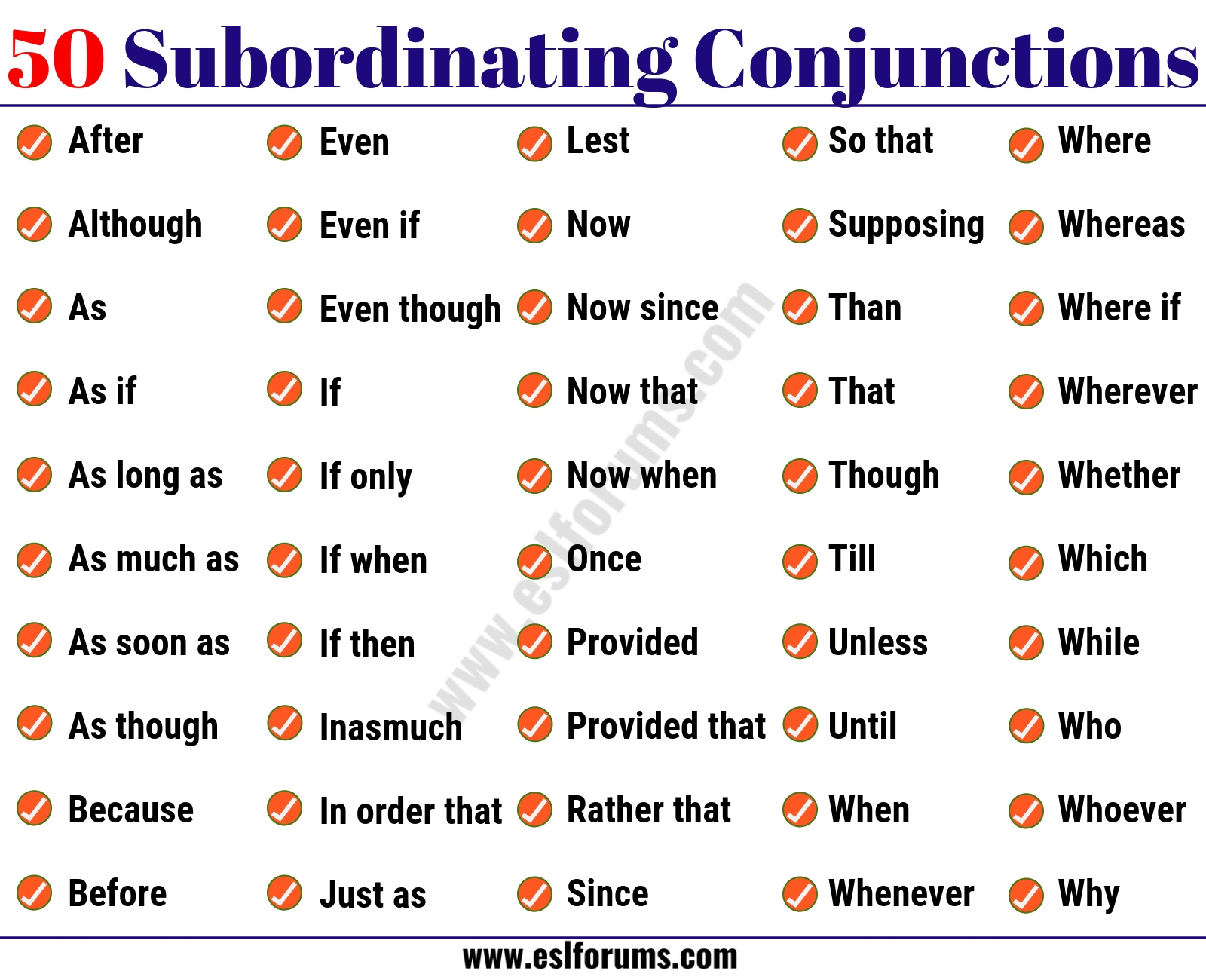
Subordinating Conjunctions
Subordinating conjunctions are used to connect a dependent clause to an independent clause. They help to establish a relationship of cause and effect, time, place, or condition. Some common subordinating conjunctions include:
- After
- Although
- As
- Because
- Before
- Even though
- If
- Since
- Though
- Until
- When
- Where
- While
For example:
I will go to the store after I finish my homework.
Here, “after” is a subordinating conjunction that connects the dependent clause “after I finish my homework” to the independent clause “I will go to the store.”
Correlative Conjunctions
Correlative conjunctions work in pairs to connect words, phrases, or clauses. They help to emphasize the relationship between the connected elements. Some common correlative conjunctions include:
- Either…or
- Neither…nor
- Not only…but also
- Both…and
- Whether…or
For example:
Either you finish your work, or you will not be allowed to go out.
In this sentence, “either…or” is a pair of correlative conjunctions that connect two independent clauses.
Functions of Conjunctive Words
Conjunctive words serve various functions in a sentence, including adding information, showing contrast, indicating cause and effect, and establishing time and place relationships. Understanding these functions can help improve writing and speaking skills.
Adding Information
Conjunctive words like “and” and “also” are used to add more information to a sentence. For example:
I like to read books, and I also enjoy watching movies.
Here, “and” and “also” are used to add additional information about the speaker’s interests.
Showing Contrast
Conjunctive words like “but,” “yet,” and “although” are used to show contrast between ideas. For example:
I wanted to go to the beach, but it was too cold.
In this sentence, “but” is used to show the contrast between the speaker’s desire to go to the beach and the cold weather.
Indicating Cause and Effect
Conjunctive words like “because,” “since,” and “therefore” are used to indicate cause and effect relationships. For example:
I stayed home because it was raining.
Here, “because” is used to show the cause (it was raining) and the effect (I stayed home).
Establishing Time and Place Relationships
Conjunctive words like “when,” “where,” and “while” are used to establish time and place relationships. For example:
I will call you when I arrive at the airport.
In this sentence, “when” is used to establish the time relationship between the speaker’s arrival at the airport and the act of calling.
Importance of Conjunctive Words
Conjunctive words are essential for creating clear and coherent communication. They help to connect ideas, establish relationships, and guide the reader through the text. Without conjunctive words, sentences would be fragmented and difficult to understand.
Enhancing Clarity
Conjunctive words enhance clarity by connecting related ideas and showing their relationships. For example:
I will go to the store if I have time.
Here, “if” is a conjunctive word that connects the dependent clause “if I have time” to the independent clause “I will go to the store,” making the sentence clear and understandable.
Improving Coherence
Conjunctive words improve coherence by creating a smooth flow between sentences and paragraphs. For example:
I woke up early, and I went for a run.
In this sentence, “and” is a conjunctive word that connects two independent clauses, creating a coherent flow of ideas.
Guiding the Reader
Conjunctive words guide the reader through the text by indicating the relationships between ideas. For example:
Although it was raining, we decided to go to the park.
Here, “although” is a conjunctive word that guides the reader to understand the contrast between the rainy weather and the decision to go to the park.
Common Mistakes with Conjunctive Words
While conjunctive words are essential for clear communication, there are some common mistakes that people often make when using them. Understanding these mistakes can help improve writing and speaking skills.
Misusing Coordinating Conjunctions
One common mistake is misusing coordinating conjunctions. For example:
I went to the store, and I bought milk and eggs.
In this sentence, “and” is used correctly to connect two independent clauses. However, if the sentence were written as “I went to the store and bought milk and eggs,” it would be a run-on sentence, which is grammatically incorrect.
Overusing Subordinating Conjunctions
Another common mistake is overusing subordinating conjunctions. For example:
Because I was tired, I went to bed early.
While this sentence is grammatically correct, overusing “because” can make the writing repetitive and monotonous. It is important to vary the use of subordinating conjunctions to keep the writing interesting.
Incorrect Use of Correlative Conjunctions
Incorrect use of correlative conjunctions can also lead to grammatical errors. For example:
Neither I nor him went to the party.
In this sentence, “him” should be “he” to maintain subject-verb agreement. The correct sentence should be “Neither I nor he went to the party.”
📝 Note: Always ensure that the subjects and verbs agree when using correlative conjunctions.
Practice Exercises
To improve your understanding and use of conjunctive words, try the following practice exercises:
Exercise 1: Identifying Conjunctive Words
Read the following sentences and identify the conjunctive words:
- I will go to the store if I have time.
- Although it was raining, we decided to go to the park.
- I like to read books, and I also enjoy watching movies.
- Either you finish your work, or you will not be allowed to go out.
- I stayed home because it was raining.
Exercise 2: Using Conjunctive Words
Rewrite the following sentences using the given conjunctive words:
| Original Sentence | Conjunctive Word | Rewritten Sentence |
|---|---|---|
| I wanted to go to the beach. It was too cold. | but | |
| I will call you. I arrive at the airport. | when | |
| I like to read books. I also enjoy watching movies. | and | |
| You can either finish your work. You will not be allowed to go out. | or | |
| I stayed home. It was raining. | because |
Examples of Conjunctive Words in Context
To further illustrate the use of conjunctive words, let’s look at some examples in context. These examples will help you understand how conjunctive words are used in real-life situations.
Example 1: Coordinating Conjunctions
I wanted to go to the park, but it started raining.
In this sentence, “but” is a coordinating conjunction that connects two independent clauses, showing the contrast between the speaker’s desire to go to the park and the unexpected rain.
Example 2: Subordinating Conjunctions
I will go to the store after I finish my homework.
Here, “after” is a subordinating conjunction that connects the dependent clause “after I finish my homework” to the independent clause “I will go to the store,” establishing a time relationship.
Example 3: Correlative Conjunctions
Either you finish your work, or you will not be allowed to go out.
In this sentence, “either…or” is a pair of correlative conjunctions that connect two independent clauses, showing the contrast between finishing the work and not being allowed to go out.
Conclusion
Conjunctive words are a fundamental aspect of language that play a crucial role in connecting ideas, sentences, and clauses. Understanding the different types of conjunctive words and their functions can significantly improve writing and speaking skills. By using conjunctive words correctly, we can create clear, coherent, and meaningful communication. Whether you are a student, a professional, or simply someone who enjoys language, mastering the use of conjunctive words is an essential skill that will enhance your ability to express yourself effectively.
Related Terms:
- conjunction list of words
- list of all conjunction words
- what does conjunctive mean
- 5 conjunction words
- examples of conjunction words
- what are connecting words called