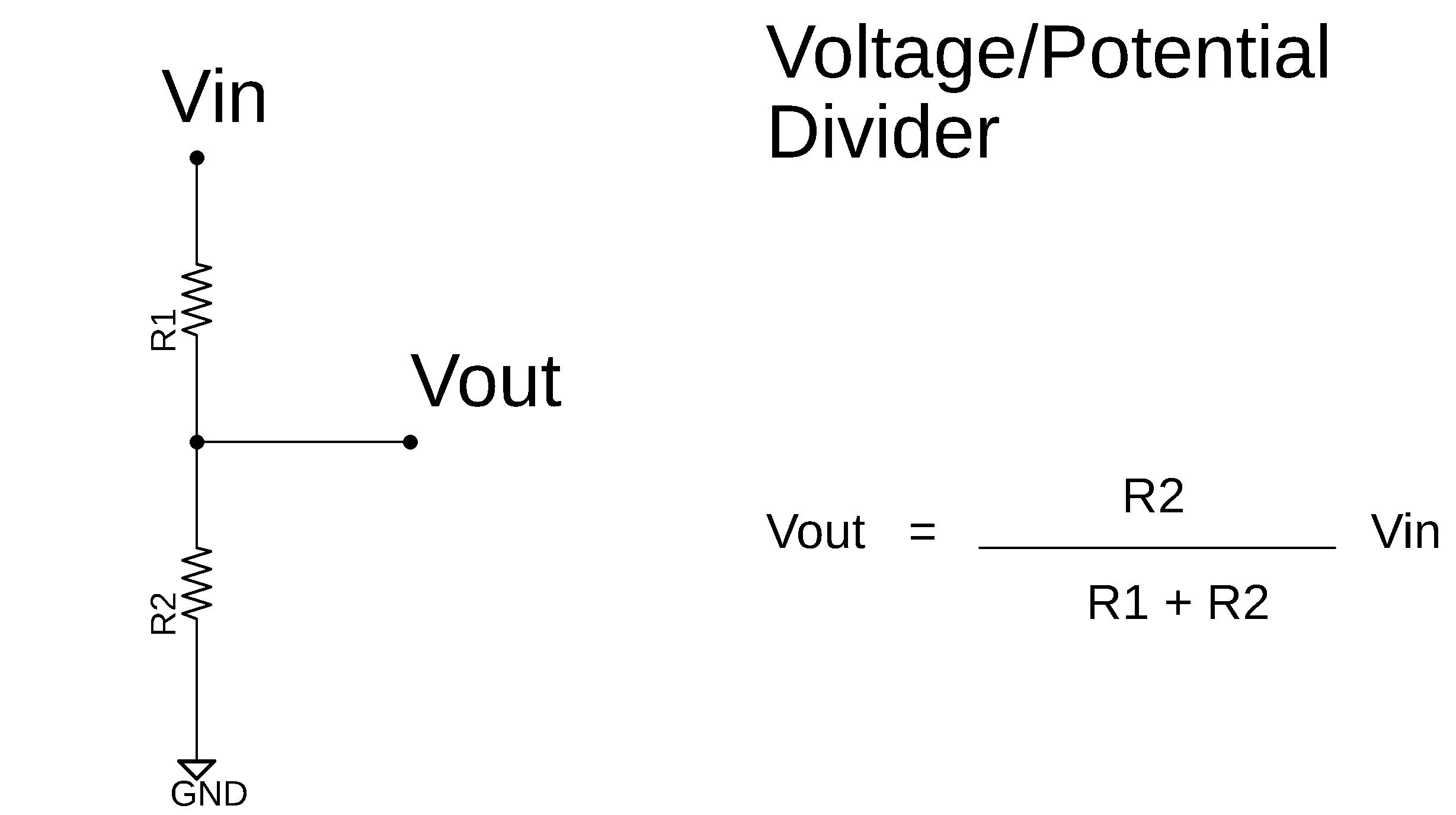
Understanding the fundamentals of electrical circuits is crucial for anyone involved in electronics, whether you're a hobbyist, a student, or a professional engineer. One of the key concepts in this field is the Voltage Division Rule, which is essential for analyzing and designing circuits. This rule helps in determining the voltage across different components in a series circuit, making it a cornerstone of circuit analysis.
What is the Voltage Division Rule?
The Voltage Division Rule is a fundamental principle in electrical engineering that allows you to calculate the voltage drop across any resistor in a series circuit. It states that the voltage across a resistor in a series circuit is proportional to the resistor's value relative to the total resistance of the circuit. This rule is particularly useful in simplifying complex circuit analysis and ensuring accurate design.
Understanding Series Circuits
Before diving into the Voltage Division Rule, it's important to understand series circuits. In a series circuit, all components are connected end-to-end, forming a single path for the current to flow. This means that the current through each component is the same, but the voltage drop across each component can vary depending on its resistance.
Key characteristics of series circuits include:
- The same current flows through all components.
- The total voltage is the sum of the voltage drops across each component.
- The total resistance is the sum of the individual resistances.
The Formula for Voltage Division Rule
The Voltage Division Rule can be expressed mathematically as follows:
Vx = Vtotal × (Rx / Rtotal)
Where:
- Vx is the voltage across the resistor Rx.
- Vtotal is the total voltage supplied to the circuit.
- Rx is the resistance of the resistor in question.
- Rtotal is the total resistance of the circuit.
Applying the Voltage Division Rule
Let's go through an example to illustrate how the Voltage Division Rule is applied. Consider a series circuit with three resistors: R1 = 10 Ω, R2 = 20 Ω, and R3 = 30 Ω. The total voltage supplied to the circuit is Vtotal = 60 V.
First, calculate the total resistance:
Rtotal = R1 + R2 + R3 = 10 Ω + 20 Ω + 30 Ω = 60 Ω
Next, use the Voltage Division Rule to find the voltage across each resistor:
V1 = Vtotal × (R1 / Rtotal) = 60 V × (10 Ω / 60 Ω) = 10 V
V2 = Vtotal × (R2 / Rtotal) = 60 V × (20 Ω / 60 Ω) = 20 V
V3 = Vtotal × (R3 / Rtotal) = 60 V × (30 Ω / 60 Ω) = 30 V
Thus, the voltage drops across R1, R2, and R3 are 10 V, 20 V, and 30 V, respectively.
💡 Note: Ensure that the total resistance is calculated correctly before applying the Voltage Division Rule. Any error in the total resistance will affect the accuracy of the voltage drops.
Practical Applications of the Voltage Division Rule
The Voltage Division Rule has numerous practical applications in electronics and electrical engineering. Some of the key areas where this rule is applied include:
- Sensor Circuits: In sensor circuits, the Voltage Division Rule is used to determine the voltage drop across a sensor, which can then be converted into a measurable signal.
- Biasing Circuits: In transistor biasing circuits, the Voltage Division Rule helps in setting the correct voltage levels to ensure proper operation of the transistor.
- Voltage Regulators: In voltage regulator circuits, the Voltage Division Rule is used to design circuits that maintain a constant output voltage despite variations in input voltage.
- Signal Conditioning: In signal conditioning circuits, the Voltage Division Rule is applied to adjust the voltage levels of signals to match the requirements of subsequent stages.
Common Mistakes to Avoid
While the Voltage Division Rule is straightforward, there are some common mistakes that can lead to errors in circuit analysis. Here are a few to watch out for:
- Incorrect Total Resistance: Ensure that the total resistance is calculated correctly by summing all the individual resistances in the series circuit.
- Mismatched Units: Make sure that all resistance values are in the same units (e.g., ohms) before applying the Voltage Division Rule.
- Ignoring Parallel Components: The Voltage Division Rule applies only to series circuits. If there are parallel components, they must be handled separately.
🚨 Note: Always double-check your calculations and ensure that the circuit configuration matches the assumptions of the Voltage Division Rule.
Advanced Topics in Voltage Division
For more complex circuits, the Voltage Division Rule can be extended to include additional components and configurations. Here are a few advanced topics to consider:
- Voltage Dividers with Capacitors: In circuits with capacitors, the Voltage Division Rule can be adapted to account for the reactive nature of capacitors.
- Voltage Dividers with Inductors: Similarly, inductors can be included in voltage divider circuits, requiring adjustments to the rule to account for inductive reactance.
- Voltage Dividers in AC Circuits: In alternating current (AC) circuits, the Voltage Division Rule must consider the phase shifts introduced by reactive components.
These advanced topics require a deeper understanding of circuit theory and the behavior of reactive components.
Example Circuit Analysis
Let's analyze a more complex circuit to see how the Voltage Division Rule can be applied. Consider a circuit with three resistors in series: R1 = 5 Ω, R2 = 10 Ω, and R3 = 15 Ω. The total voltage supplied to the circuit is Vtotal = 50 V.
First, calculate the total resistance:
Rtotal = R1 + R2 + R3 = 5 Ω + 10 Ω + 15 Ω = 30 Ω
Next, use the Voltage Division Rule to find the voltage across each resistor:
V1 = Vtotal × (R1 / Rtotal) = 50 V × (5 Ω / 30 Ω) = 8.33 V
V2 = Vtotal × (R2 / Rtotal) = 50 V × (10 Ω / 30 Ω) = 16.67 V
V3 = Vtotal × (R3 / Rtotal) = 50 V × (15 Ω / 30 Ω) = 25 V
Thus, the voltage drops across R1, R2, and R3 are 8.33 V, 16.67 V, and 25 V, respectively.
🔍 Note: Always verify the calculated voltage drops by ensuring that their sum equals the total voltage supplied to the circuit.
Conclusion
The Voltage Division Rule is a fundamental concept in electrical engineering that simplifies the analysis of series circuits. By understanding and applying this rule, you can accurately determine the voltage drops across individual components, ensuring the proper design and operation of electronic circuits. Whether you’re working on simple resistor networks or complex signal conditioning circuits, the Voltage Division Rule provides a reliable method for voltage analysis. Mastering this rule is essential for anyone involved in electronics, from hobbyists to professional engineers.
Related Terms:
- current division rule
- current divider rule
- voltage division rule formula
- voltage division rule problems
- voltage division rule in series
- voltage division rule for capacitor