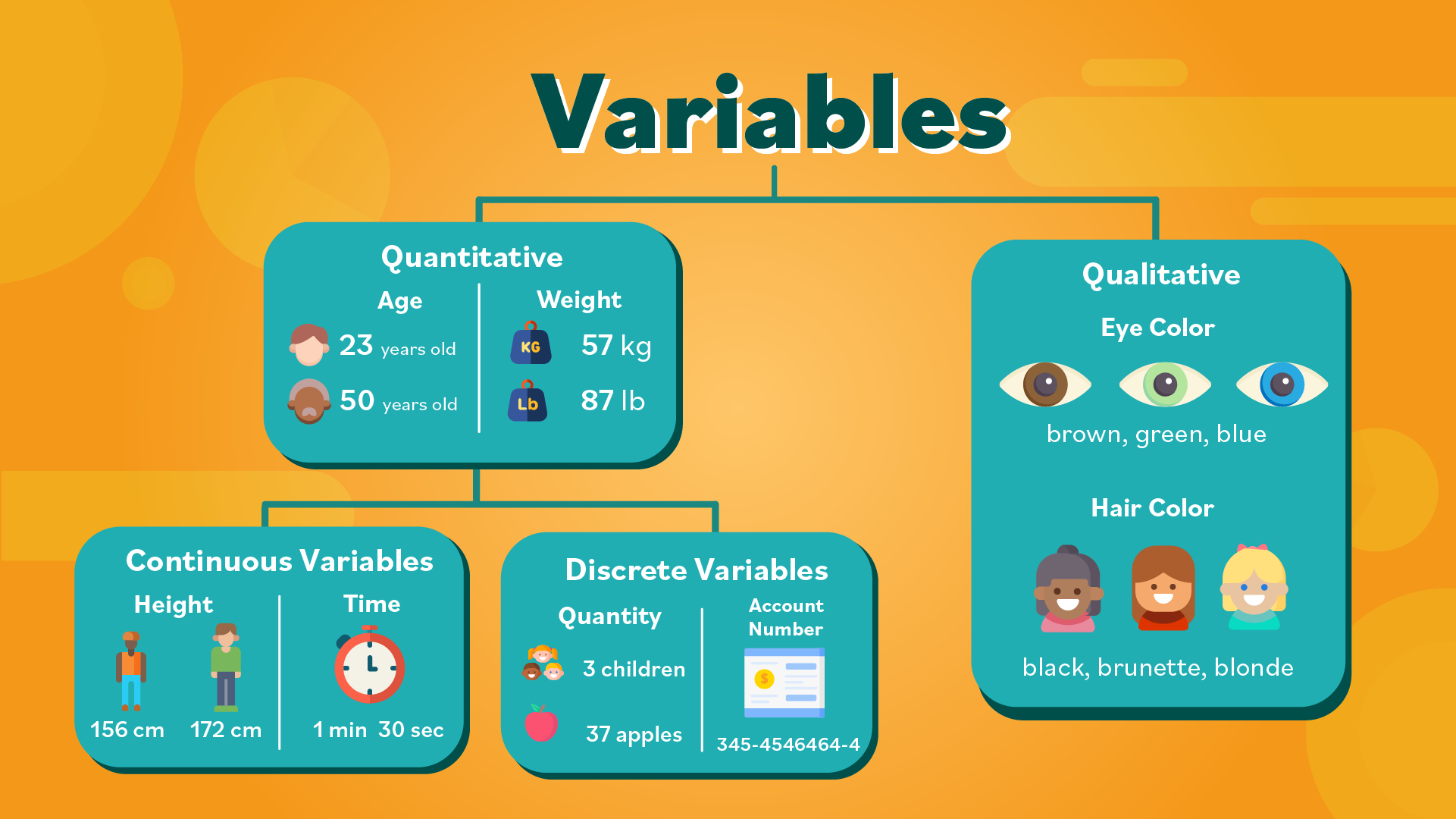
Science is a vast and ever-evolving field that relies heavily on the Variables of Science. These variables are the fundamental building blocks that help scientists understand, predict, and control natural phenomena. Whether you are a seasoned researcher or a curious enthusiast, understanding the role of variables in scientific inquiry is crucial. This post delves into the intricacies of variables, their types, and their significance in various scientific disciplines.
Understanding Variables in Science
In the realm of science, a variable is any factor, trait, or condition that can change or take on different values. Variables are essential for conducting experiments, analyzing data, and drawing conclusions. They help scientists isolate and study the effects of specific factors on outcomes, enabling them to make informed decisions and predictions.
Variables can be broadly categorized into two main types: independent variables and dependent variables. Independent variables are the factors that scientists manipulate or control in an experiment. Dependent variables, on the other hand, are the outcomes or results that are measured in response to changes in the independent variables.
Types of Variables
To fully grasp the Variables of Science, it is important to understand the different types of variables that scientists encounter. These types can be further divided into subcategories based on their nature and how they are measured.
Independent Variables
Independent variables are the factors that scientists deliberately change or control in an experiment. They are often referred to as the cause or reason variables because they are believed to influence the dependent variables. For example, in a study on the effect of temperature on plant growth, the temperature would be the independent variable.
Independent variables can be further classified into:
- Continuous Variables: These variables can take on any value within a range. Examples include temperature, time, and weight.
- Discrete Variables: These variables can only take on specific, distinct values. Examples include the number of students in a class or the number of cars in a parking lot.
Dependent Variables
Dependent variables are the outcomes or results that are measured in response to changes in the independent variables. They are often referred to as the effect or outcome variables because they are believed to be influenced by the independent variables. For example, in a study on the effect of temperature on plant growth, the plant growth would be the dependent variable.
Dependent variables can also be classified into:
- Continuous Variables: These variables can take on any value within a range. Examples include height, weight, and time.
- Discrete Variables: These variables can only take on specific, distinct values. Examples include the number of students in a class or the number of cars in a parking lot.
Control Variables
Control variables, also known as controlled variables or constants, are factors that scientists keep constant throughout an experiment. These variables are held steady to ensure that changes in the dependent variable are solely due to changes in the independent variable. For example, in a study on the effect of temperature on plant growth, the amount of water and light given to the plants would be control variables.
Extraneous Variables
Extraneous variables are factors that can influence the dependent variable but are not the focus of the study. These variables can introduce bias or error into the experiment if not properly controlled. For example, in a study on the effect of temperature on plant growth, extraneous variables could include the presence of pests or changes in humidity.
📝 Note: It is crucial to identify and control extraneous variables to ensure the validity and reliability of the experiment.
Variables in Different Scientific Disciplines
The Variables of Science play a pivotal role in various scientific disciplines, each with its unique set of variables and methodologies. Understanding how variables are used in different fields can provide a broader perspective on their significance and application.
Physics
In physics, variables are used to describe and quantify physical phenomena. Some common variables in physics include:
- Mass: A measure of the amount of matter in an object.
- Force: A push or pull that causes an object to accelerate.
- Velocity: The speed of an object in a specific direction.
- Acceleration: The rate of change of velocity.
- Energy: The ability to do work.
In a physics experiment, the independent variable might be the force applied to an object, while the dependent variable could be the object's acceleration. Control variables might include the mass of the object and the surface it is on.
Chemistry
In chemistry, variables are used to describe and quantify chemical reactions and properties. Some common variables in chemistry include:
- Concentration: The amount of a substance in a given volume.
- Temperature: A measure of the average kinetic energy of particles.
- Pressure: The force exerted by a gas per unit area.
- Volume: The amount of space occupied by a substance.
- pH: A measure of the acidity or alkalinity of a solution.
In a chemistry experiment, the independent variable might be the concentration of a reactant, while the dependent variable could be the rate of the reaction. Control variables might include the temperature and pressure of the reaction.
Biology
In biology, variables are used to describe and quantify biological processes and organisms. Some common variables in biology include:
- Genotype: The genetic makeup of an organism.
- Phenotype: The observable traits of an organism.
- Population: The number of individuals of a particular species in a given area.
- Environment: The external conditions in which an organism lives.
- Growth Rate: The rate at which an organism increases in size or number.
In a biology experiment, the independent variable might be the genotype of an organism, while the dependent variable could be its phenotype. Control variables might include the environment and the availability of resources.
Psychology
In psychology, variables are used to describe and quantify human behavior and mental processes. Some common variables in psychology include:
- Age: The number of years a person has lived.
- Gender: The biological and social characteristics that define a person as male or female.
- Personality: The unique set of characteristics that define an individual's behavior and thoughts.
- Mood: The emotional state of a person at a given time.
- Cognitive Ability: The mental processes involved in acquiring, processing, and using information.
In a psychology experiment, the independent variable might be the type of stimulus presented to a participant, while the dependent variable could be their reaction time. Control variables might include the participant's age and gender.
The Role of Variables in Experimental Design
Variables play a crucial role in the design and execution of scientific experiments. A well-designed experiment ensures that the effects of the independent variable on the dependent variable are accurately measured and that extraneous variables are controlled. Here are some key steps in designing an experiment with variables in mind:
Identifying Variables
The first step in experimental design is to identify the variables of interest. This involves determining what factors will be manipulated (independent variables), what outcomes will be measured (dependent variables), and what factors will be kept constant (control variables).
Formulating Hypotheses
Once the variables are identified, the next step is to formulate hypotheses. A hypothesis is a testable prediction about the relationship between the independent and dependent variables. For example, "If the temperature increases, then the rate of plant growth will also increase."
Designing the Experiment
The experiment should be designed to test the hypothesis while controlling for extraneous variables. This involves deciding on the sample size, the conditions under which the experiment will be conducted, and the methods for measuring the dependent variable.
Collecting and Analyzing Data
Data collection involves measuring the dependent variable under different conditions of the independent variable. The data should be analyzed using appropriate statistical methods to determine whether the hypothesis is supported.
📝 Note: It is important to use reliable and valid measurement tools to ensure the accuracy of the data.
Interpreting Results
The final step is to interpret the results in the context of the hypothesis and the existing literature. This involves drawing conclusions about the relationship between the independent and dependent variables and considering the implications for future research.
Common Challenges in Working with Variables
Working with variables in scientific research can present several challenges. Understanding these challenges and how to address them is essential for conducting valid and reliable experiments.
Confounding Variables
Confounding variables are extraneous variables that can affect both the independent and dependent variables, making it difficult to determine the true relationship between them. For example, in a study on the effect of exercise on weight loss, a confounding variable could be diet. To address this, researchers should control for diet by ensuring that all participants follow the same diet.
Measurement Error
Measurement error occurs when the tools or methods used to measure the dependent variable are not accurate or reliable. This can introduce bias or error into the experiment, making it difficult to draw valid conclusions. To address this, researchers should use validated measurement tools and ensure that all measurements are taken consistently.
Sample Size
The sample size refers to the number of participants or observations in an experiment. A small sample size can lead to low statistical power, making it difficult to detect true effects. Conversely, a large sample size can increase the likelihood of detecting small, potentially meaningless effects. To address this, researchers should determine the appropriate sample size based on the research question, the expected effect size, and the desired level of statistical power.
Ethical Considerations
Ethical considerations are crucial in scientific research, especially when working with human participants. Researchers must ensure that participants are informed about the purpose of the study, the potential risks and benefits, and their right to withdraw at any time. Additionally, researchers must obtain informed consent and ensure that the data collected is kept confidential.
📝 Note: Ethical guidelines and regulations vary by country and institution, so it is important to consult local guidelines and obtain necessary approvals before conducting research.
Advanced Topics in Variables
As scientific research becomes more complex, so does the use of variables. Advanced topics in variables include multivariate analysis, interaction effects, and mediation and moderation.
Multivariate Analysis
Multivariate analysis involves the simultaneous analysis of multiple dependent variables. This approach is useful when the research question involves understanding the relationships between several variables. For example, a study on the factors affecting student performance might include multiple dependent variables such as grades, attendance, and participation.
Interaction Effects
Interaction effects occur when the relationship between the independent and dependent variables is influenced by a third variable. For example, the effect of exercise on weight loss might be influenced by age, with younger individuals experiencing greater weight loss than older individuals. To detect interaction effects, researchers should include interaction terms in their statistical models.
Mediation and Moderation
Mediation and moderation are two related concepts that involve understanding the mechanisms through which variables influence each other. Mediation involves identifying the intermediate variables that explain the relationship between the independent and dependent variables. Moderation involves identifying the variables that influence the strength or direction of the relationship between the independent and dependent variables.
📝 Note: Mediation and moderation analyses require advanced statistical techniques and should be conducted by researchers with appropriate training and expertise.
Variables in Data Analysis
Data analysis is a critical step in scientific research, and understanding how to handle variables is essential for accurate and meaningful results. Here are some key considerations for analyzing data with variables in mind.
Descriptive Statistics
Descriptive statistics provide a summary of the data, including measures of central tendency (mean, median, mode) and measures of variability (range, standard deviation, variance). These statistics help researchers understand the distribution of the data and identify any outliers or anomalies.
Inferential Statistics
Inferential statistics involve making inferences about a population based on a sample. This includes hypothesis testing, confidence intervals, and regression analysis. Inferential statistics help researchers determine whether the observed effects are statistically significant and whether the results can be generalized to the broader population.
Data Visualization
Data visualization involves creating graphs and charts to represent the data visually. This can help researchers identify patterns, trends, and relationships between variables. Common types of data visualization include bar graphs, line graphs, scatter plots, and histograms.
Statistical Software
Statistical software, such as SPSS, R, and SAS, can help researchers analyze data efficiently and accurately. These tools provide a range of statistical techniques and data visualization options, making it easier to handle complex datasets and variables.
📝 Note: It is important to choose the appropriate statistical software based on the research question, the type of data, and the researcher's expertise.
Variables in Real-World Applications
The Variables of Science are not limited to laboratory settings; they are also crucial in real-world applications. Understanding how variables are used in practical scenarios can provide valuable insights into their significance and application.
Healthcare
In healthcare, variables are used to understand and treat diseases. For example, variables such as age, gender, and lifestyle factors can influence the risk of developing certain diseases. By identifying and controlling these variables, healthcare professionals can develop targeted interventions and treatments.
Environmental Science
In environmental science, variables are used to study and protect the natural world. For example, variables such as temperature, precipitation, and pollution levels can influence ecosystem health. By monitoring and analyzing these variables, environmental scientists can develop strategies to mitigate environmental degradation and promote sustainability.
Economics
In economics, variables are used to understand and predict economic behavior. For example, variables such as interest rates, inflation, and unemployment can influence economic growth and stability. By analyzing these variables, economists can develop policies and strategies to promote economic development and stability.
Engineering
In engineering, variables are used to design and build structures, machines, and systems. For example, variables such as material properties, load conditions, and environmental factors can influence the performance and safety of engineering structures. By understanding and controlling these variables, engineers can design structures that are safe, efficient, and reliable.
📝 Note: The application of variables in real-world scenarios requires a multidisciplinary approach, combining knowledge from various scientific disciplines.
Future Directions in Variables Research
The study of variables is an evolving field, with new methodologies and technologies emerging to enhance our understanding of scientific phenomena. Future directions in variables research include the use of big data, machine learning, and artificial intelligence.
Big Data
Big data refers to the large and complex datasets that are generated by modern technologies. Analyzing these datasets can provide valuable insights into the relationships between variables and help researchers identify patterns and trends that were previously unknown. Big data analytics can be applied in various fields, including healthcare, environmental science, and economics.
Machine Learning
Machine learning involves the use of algorithms and statistical models to enable computers to learn from data. Machine learning can be used to analyze complex datasets and identify relationships between variables that are not immediately apparent. This can help researchers develop more accurate and reliable models for predicting and understanding scientific phenomena.
Artificial Intelligence
Artificial intelligence (AI) involves the use of computers to perform tasks that typically require human intelligence. AI can be used to analyze large and complex datasets, identify patterns and trends, and make predictions based on the relationships between variables. AI has the potential to revolutionize various fields, including healthcare, environmental science, and economics.
📝 Note: The use of big data, machine learning, and AI in variables research requires advanced statistical and computational skills, as well as a deep understanding of the underlying scientific principles.
In summary, the Variables of Science are fundamental to scientific inquiry and play a crucial role in understanding, predicting, and controlling natural phenomena. Whether in laboratory settings or real-world applications, variables help scientists isolate and study the effects of specific factors on outcomes, enabling them to make informed decisions and predictions. As scientific research continues to evolve, so will the methods and technologies used to analyze and interpret variables, paving the way for new discoveries and innovations. The study of variables is a dynamic and ever-evolving field, with endless possibilities for exploration and discovery. By understanding the role of variables in scientific research, we can gain a deeper appreciation for the complexities of the natural world and the methods used to unravel its mysteries.
Related Terms:
- identifying variables in science
- example of variables in science
- all the variables in science
- types of variables in science
- variables in science worksheet
- what does variables mean scientifically