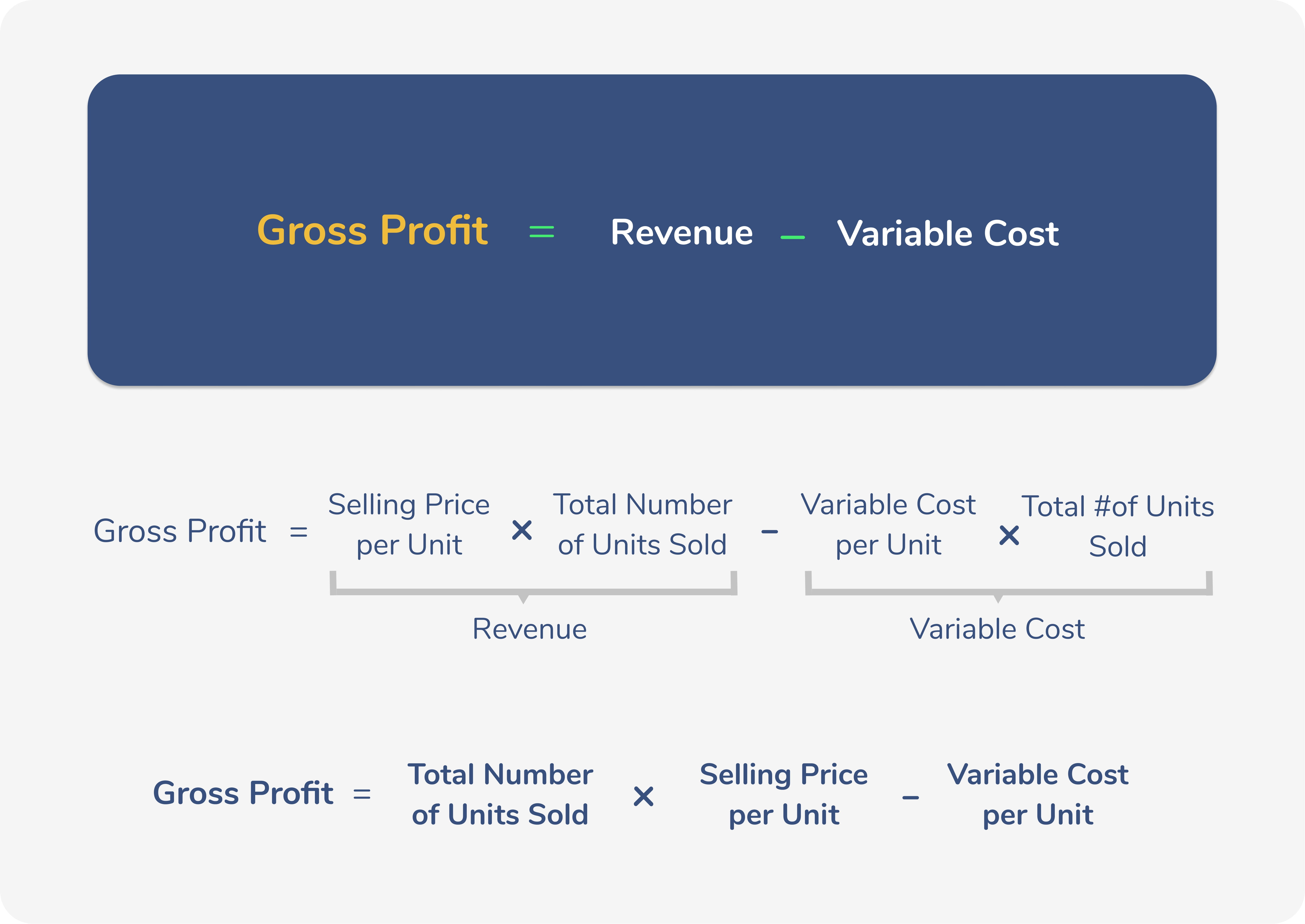
Understanding the intricacies of financial management is crucial for any business, regardless of its size or industry. One of the fundamental concepts that every business owner and manager should grasp is the Variable Cost Equation. This equation helps in determining the variable costs associated with producing a product or service, which in turn aids in pricing strategies, budgeting, and overall financial planning.
Understanding Variable Costs
Variable costs are expenses that change in proportion to the level of production or sales. These costs can include raw materials, labor, and other direct expenses that vary with the output. Unlike fixed costs, which remain constant regardless of production levels, variable costs fluctuate based on the volume of goods or services produced.
The Variable Cost Equation
The Variable Cost Equation is a straightforward formula that helps businesses calculate their variable costs. The equation is as follows:
Total Variable Costs = (Variable Cost per Unit) x (Number of Units Produced)
Components of the Variable Cost Equation
To effectively use the Variable Cost Equation, it’s essential to understand its components:
- Variable Cost per Unit: This is the cost associated with producing one unit of a product or service. It includes direct materials, direct labor, and any other costs that vary with production.
- Number of Units Produced: This refers to the total quantity of products or services produced within a specific period.
Calculating Variable Costs
Let’s break down the process of calculating variable costs using the Variable Cost Equation.
Suppose a company produces widgets, and the variable cost per unit is 5. If the company produces 1,000 widgets in a month, the total variable cost can be calculated as follows:</p> <p><strong>Total Variable Costs = 5 x 1,000 = 5,000</strong></p> <p>This means that the total variable cost for producing 1,000 widgets is 5,000.
Importance of the Variable Cost Equation
The Variable Cost Equation is a powerful tool for several reasons:
- Pricing Strategy: Understanding variable costs helps in setting competitive prices that cover both variable and fixed costs while ensuring profitability.
- Budgeting: Accurate variable cost calculations aid in creating realistic budgets and financial forecasts.
- Cost Control: By identifying variable costs, businesses can implement strategies to reduce these costs and improve overall efficiency.
- Decision Making: The equation provides valuable insights for decision-making processes, such as whether to increase production or invest in new technologies.
Examples of Variable Costs
Variable costs can vary widely depending on the industry and the nature of the business. Here are some common examples:
- Raw Materials: The cost of materials used in production, such as wood for furniture or metal for machinery.
- Direct Labor: Wages paid to workers directly involved in production, such as assembly line workers or craftsmen.
- Utilities: Energy costs that increase with production, such as electricity for machinery or water for manufacturing processes.
- Packaging: Costs associated with packaging products for distribution, which can vary with the number of units produced.
- Shipping: Expenses related to transporting products to customers, which can increase with the volume of goods shipped.
Fixed vs. Variable Costs
To fully understand the Variable Cost Equation, it’s important to differentiate between fixed and variable costs. Here’s a comparison:
| Fixed Costs | Variable Costs |
|---|---|
| Remain constant regardless of production levels | Change with the level of production or sales |
| Examples: Rent, salaries, insurance | Examples: Raw materials, direct labor, utilities |
| Included in overhead costs | Directly tied to production |
Impact of Variable Costs on Profitability
Variable costs play a significant role in determining a company’s profitability. By understanding and managing variable costs effectively, businesses can:
- Increase Profit Margins: Reducing variable costs can lead to higher profit margins, as the difference between revenue and costs increases.
- Improve Cash Flow: Efficient management of variable costs can enhance cash flow, providing more funds for investments and growth.
- Enhance Competitiveness: Lower variable costs can result in more competitive pricing, attracting more customers and increasing market share.
Strategies for Managing Variable Costs
Effective management of variable costs is crucial for maintaining profitability. Here are some strategies to consider:
- Negotiate with Suppliers: Building strong relationships with suppliers can lead to better pricing and terms, reducing the cost of raw materials.
- Optimize Production Processes: Implementing efficient production methods can reduce waste and lower labor costs.
- Invest in Technology: Automating certain processes can decrease labor costs and improve overall efficiency.
- Monitor and Control Inventory: Effective inventory management can reduce storage costs and minimize waste.
- Train Employees: Providing training to employees can enhance productivity and reduce errors, leading to lower variable costs.
📝 Note: Regularly reviewing and updating the Variable Cost Equation can help businesses stay on top of changing costs and market conditions.
Case Study: Applying the Variable Cost Equation
Let’s consider a real-world example to illustrate the application of the Variable Cost Equation. Imagine a bakery that produces bread. The variable cost per loaf is 2, and the bakery produces 500 loaves per day. The total variable cost can be calculated as follows:</p> <p><strong>Total Variable Costs = 2 x 500 = 1,000</strong></p> <p>If the bakery sells each loaf for 4, the revenue from selling 500 loaves would be 2,000. The profit can be calculated by subtracting the total variable costs from the revenue:</p> <p><strong>Profit = Revenue - Total Variable Costs = 2,000 - 1,000 = 1,000
This example demonstrates how the Variable Cost Equation can be used to determine profitability and make informed business decisions.
Challenges in Calculating Variable Costs
While the Variable Cost Equation is a valuable tool, there are challenges in accurately calculating variable costs. Some of these challenges include:
- Fluctuating Prices: The cost of raw materials and other variable inputs can fluctuate due to market conditions, making it difficult to maintain accurate cost estimates.
- Seasonal Variations: Some businesses experience seasonal variations in production and sales, which can affect variable costs.
- Complex Supply Chains: Businesses with complex supply chains may find it challenging to track and calculate variable costs accurately.
📝 Note: Regularly updating cost estimates and using advanced cost management tools can help overcome these challenges.
Advanced Techniques for Variable Cost Analysis
For businesses looking to gain deeper insights into their variable costs, advanced techniques can be employed. These techniques include:
- Activity-Based Costing (ABC): This method allocates costs based on the activities that drive them, providing a more accurate picture of variable costs.
- Standard Costing: This technique involves setting standard costs for materials, labor, and other variable inputs, which can be compared to actual costs to identify variances.
- Regression Analysis: This statistical method can be used to analyze the relationship between variable costs and production levels, helping to predict future costs.
Conclusion
The Variable Cost Equation is a fundamental tool for understanding and managing the costs associated with production. By accurately calculating variable costs, businesses can make informed decisions about pricing, budgeting, and overall financial planning. Understanding the components of the equation, differentiating between fixed and variable costs, and implementing strategies to manage variable costs are all crucial steps in achieving profitability and sustainability. Regularly reviewing and updating cost estimates can help businesses stay competitive and adapt to changing market conditions.
Related Terms:
- how to calculate variable cost
- variable cost formula
- calculation for variable costs
- average variable cost equation
- how to figure variable cost
- fixed cost equation