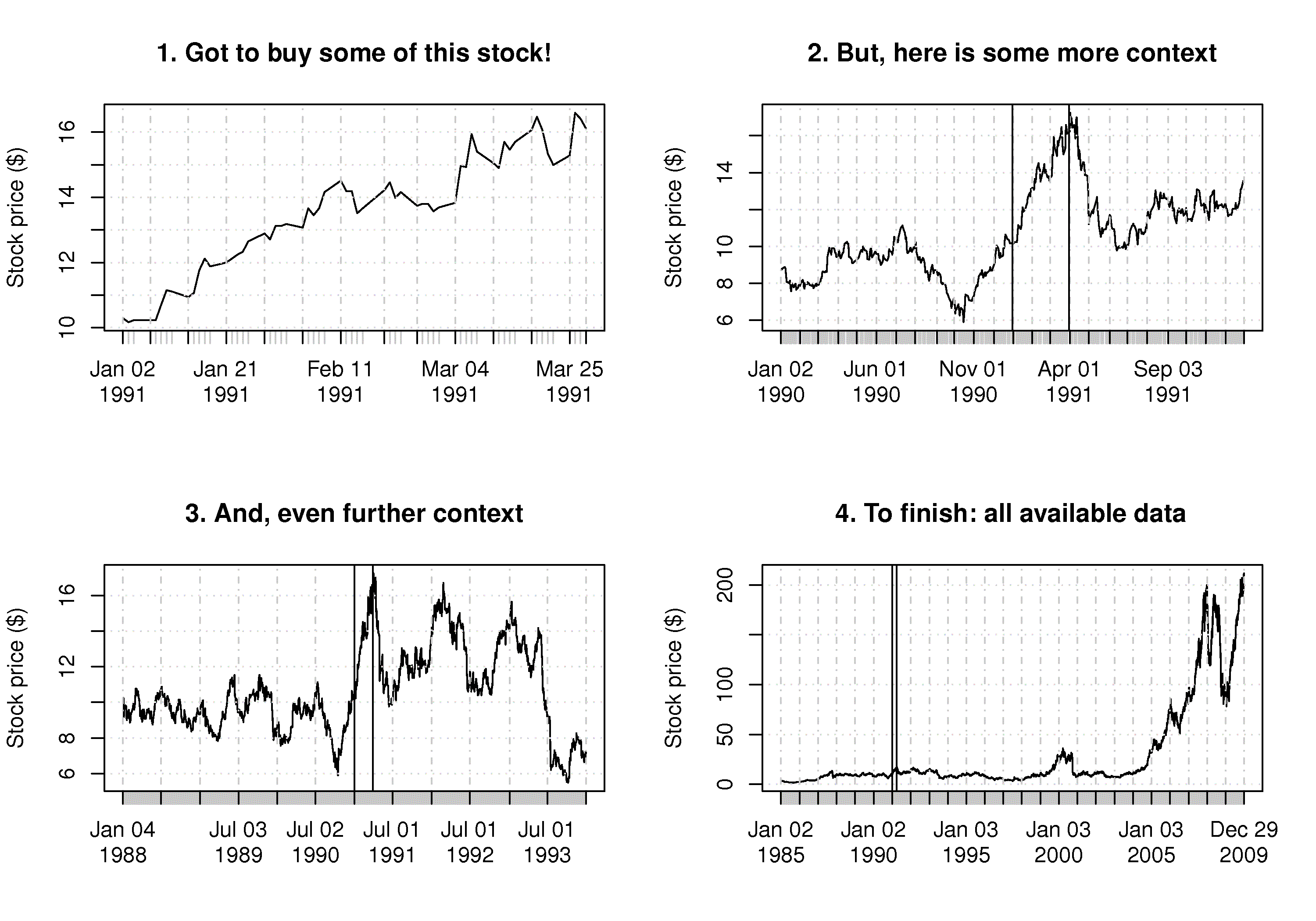
Data visualization is a powerful tool that transforms raw data into meaningful insights. Among the various types of data visualizations, the Time Series Plot stands out as a crucial method for understanding data points collected at constant time intervals. This type of plot is particularly useful in fields such as finance, meteorology, and economics, where trends over time are of paramount importance.
Understanding Time Series Data
Time series data is a sequence of data points collected at consistent time intervals. These intervals could be seconds, minutes, hours, days, weeks, months, or years. The primary goal of a Time Series Plot is to display this data in a way that highlights trends, seasonality, and other patterns over time.
Key characteristics of time series data include:
- Trend: The long-term increase or decrease in the data.
- Seasonality: Regular patterns that repeat over a specific period.
- Cyclicity: Patterns that repeat but not at regular intervals.
- Irregularity: Random fluctuations that do not follow any pattern.
Creating a Time Series Plot
Creating a Time Series Plot involves several steps, from data collection to visualization. Here’s a step-by-step guide to help you get started:
Step 1: Data Collection
The first step is to collect your data. Ensure that your data points are time-stamped accurately. This could be data from sensors, financial markets, weather stations, or any other source that records data over time.
Step 2: Data Preparation
Prepare your data for plotting. This involves cleaning the data to handle missing values, outliers, and any inconsistencies. You may also need to aggregate the data if it is collected at a very fine granularity (e.g., seconds) but you want to visualize it at a coarser level (e.g., daily).
Step 3: Choosing the Right Tools
Select the appropriate tools for creating your Time Series Plot. Popular tools include:
- Python Libraries: Matplotlib, Seaborn, Plotly
- R Libraries: ggplot2, plotly
- Excel: For simple plots
- Tableau: For interactive and complex visualizations
Step 4: Plotting the Data
Once your data is prepared, you can start plotting. Below is an example using Python’s Matplotlib library:
💡 Note: Ensure you have the necessary libraries installed. You can install Matplotlib using pip install matplotlib.
import matplotlib.pyplot as plt
import pandas as pd

# Sample data
data = {
    'Date': pd.date_range(start='1/1/2020', periods=100, freq='D'),
    'Value': range(100)
}
df = pd.DataFrame(data)

# Plotting
plt.figure(figsize=(10, 6))
plt.plot(df['Date'], df['Value'], marker='o')
plt.title('Time Series Plot Example')
plt.xlabel('Date')
plt.ylabel('Value')
plt.grid(True)
plt.show()
Interpreting a Time Series Plot
Interpreting a Time Series Plot involves identifying trends, seasonality, and other patterns. Here are some key points to consider:
- Trend Analysis: Look for a general upward or downward movement in the data. This can indicate growth or decline over time.
- Seasonality: Identify repeating patterns that occur at regular intervals. For example, sales data might show peaks during holiday seasons.
- Cyclicity: Observe patterns that repeat but not at fixed intervals. Economic cycles are a good example.
- Irregularity: Note any random fluctuations that do not follow a pattern. These could be due to external factors or noise in the data.
Advanced Techniques for Time Series Analysis
For more in-depth analysis, you can use advanced techniques such as decomposition, forecasting, and anomaly detection.
Decomposition
Decomposition involves breaking down the time series into its components: trend, seasonality, and residual. This helps in understanding the underlying patterns better.
💡 Note: In Python, you can use the statsmodels library for decomposition. Install it using pip install statsmodels.
from statsmodels.tsa.seasonal import seasonal_decompose

# Decompose the time series
decomposition = seasonal_decompose(df['Value'], model='additive')
trend = decomposition.trend
seasonal = decomposition.seasonal
residual = decomposition.resid

# Plot the components
plt.figure(figsize=(12, 8))
plt.subplot(411)
plt.plot(df['Value'], label='Original')
plt.legend(loc='best')
plt.subplot(412)
plt.plot(trend, label='Trend')
plt.legend(loc='best')
plt.subplot(413)
plt.plot(seasonal,label='Seasonality')
plt.legend(loc='best')
plt.subplot(414)
plt.plot(residual, label='Residuals')
plt.legend(loc='best')
plt.tight_layout()
plt.show()
Forecasting
Forecasting involves predicting future values based on historical data. Techniques include ARIMA, SARIMA, and machine learning models like LSTM.
💡 Note: For forecasting, you can use the fbprophet library in Python. Install it using pip install prophet.
Anomaly Detection
Anomaly detection helps in identifying unusual patterns or outliers in the data. This is crucial for applications like fraud detection, network security, and predictive maintenance.
💡 Note: For anomaly detection, you can use the PyOD library in Python. Install it using pip install pyod.
Applications of Time Series Plots
Time Series Plots are used across various industries for different purposes. Here are a few examples:
- Finance: Analyzing stock prices, interest rates, and market trends.
- Meteorology: Tracking weather patterns and climate changes.
- Economics: Studying GDP growth, inflation rates, and unemployment rates.
- Healthcare: Monitoring patient vital signs and disease outbreaks.
- Retail: Understanding sales trends and customer behavior.
Best Practices for Creating Effective Time Series Plots
To create effective Time Series Plots, follow these best practices:
- Choose the Right Scale: Ensure the x-axis and y-axis scales are appropriate for your data.
- Use Clear Labels: Label your axes and include a title to make the plot understandable.
- Highlight Key Points: Use markers or annotations to highlight important data points.
- Avoid Clutter: Keep the plot simple and avoid overcrowding it with too much information.
- Use Interactive Plots: For complex data, consider using interactive plots that allow users to zoom and explore.
Here is an example of a more detailed Time Series Plot using Plotly, which allows for interactivity:
import plotly.graph_objs as go

# Create a trace
trace = go.Scatter(
    x=df['Date'],
    y=df['Value'],
    mode='lines+markers',
    name='Time Series Data'
)

# Create layout
layout = go.Layout(
    title='Interactive Time Series Plot',
    xaxis=dict(title='Date'),
    yaxis=dict(title='Value'),
    hovermode='closest'
)

# Create figure
fig = go.Figure(data=[trace], layout=layout)

# Show plot
fig.show()
Common Challenges and Solutions
Creating and interpreting Time Series Plots can come with several challenges. Here are some common issues and their solutions:
| Challenge | Solution |
|---|---|
| Missing Data | Use interpolation or forward/backward fill methods to handle missing values. |
| Outliers | Identify and handle outliers using statistical methods or domain knowledge. |
| Seasonality | Use decomposition techniques to separate seasonality from the trend. |
| Complex Patterns | Use advanced models like ARIMA, SARIMA, or machine learning for better forecasting. |
By addressing these challenges, you can create more accurate and insightful Time Series Plots.
In conclusion, Time Series Plots are invaluable tools for understanding data over time. They help in identifying trends, seasonality, and other patterns, making them essential for various industries. By following best practices and using the right tools, you can create effective Time Series Plots that provide meaningful insights and support data-driven decision-making. Whether you are analyzing financial data, weather patterns, or economic indicators, a well-crafted Time Series Plot can reveal hidden patterns and trends that might otherwise go unnoticed.
Related Terms:
- scatter plot time series
- plot time series in python
- types of time series models
- time series plot generator
- time series graph example
- time series excel