Understanding the intricacies of Systems and Complexity is crucial in today's interconnected world. Whether you're dealing with software development, project management, or organizational structures, grasping the fundamentals of systems and complexity can significantly enhance your problem-solving abilities and decision-making processes. This blog post delves into the core concepts of systems and complexity, providing insights and practical examples to help you navigate these challenging areas.
Understanding Systems
At its core, a system is a set of interconnected elements that work together to achieve a specific goal. These elements can be physical, such as components in a machine, or abstract, like processes in an organization. Systems can be simple or complex, depending on the number of elements and the nature of their interactions.
To better understand systems, let's break down some key concepts:
- Inputs and Outputs: Every system takes inputs and produces outputs. For example, a manufacturing system takes raw materials (inputs) and produces finished products (outputs).
- Feedback Loops: Systems often have feedback mechanisms that allow them to adjust their behavior based on the outputs. This is crucial for maintaining stability and achieving desired outcomes.
- Boundaries: Systems have boundaries that define what is included and what is excluded. Understanding these boundaries is essential for analyzing and managing systems effectively.
The Role of Complexity in Systems
Complexity in systems refers to the degree of intricacy and interdependence among the elements. Complex systems are characterized by a high number of elements, non-linear interactions, and emergent properties. These properties make complex systems challenging to predict and control.
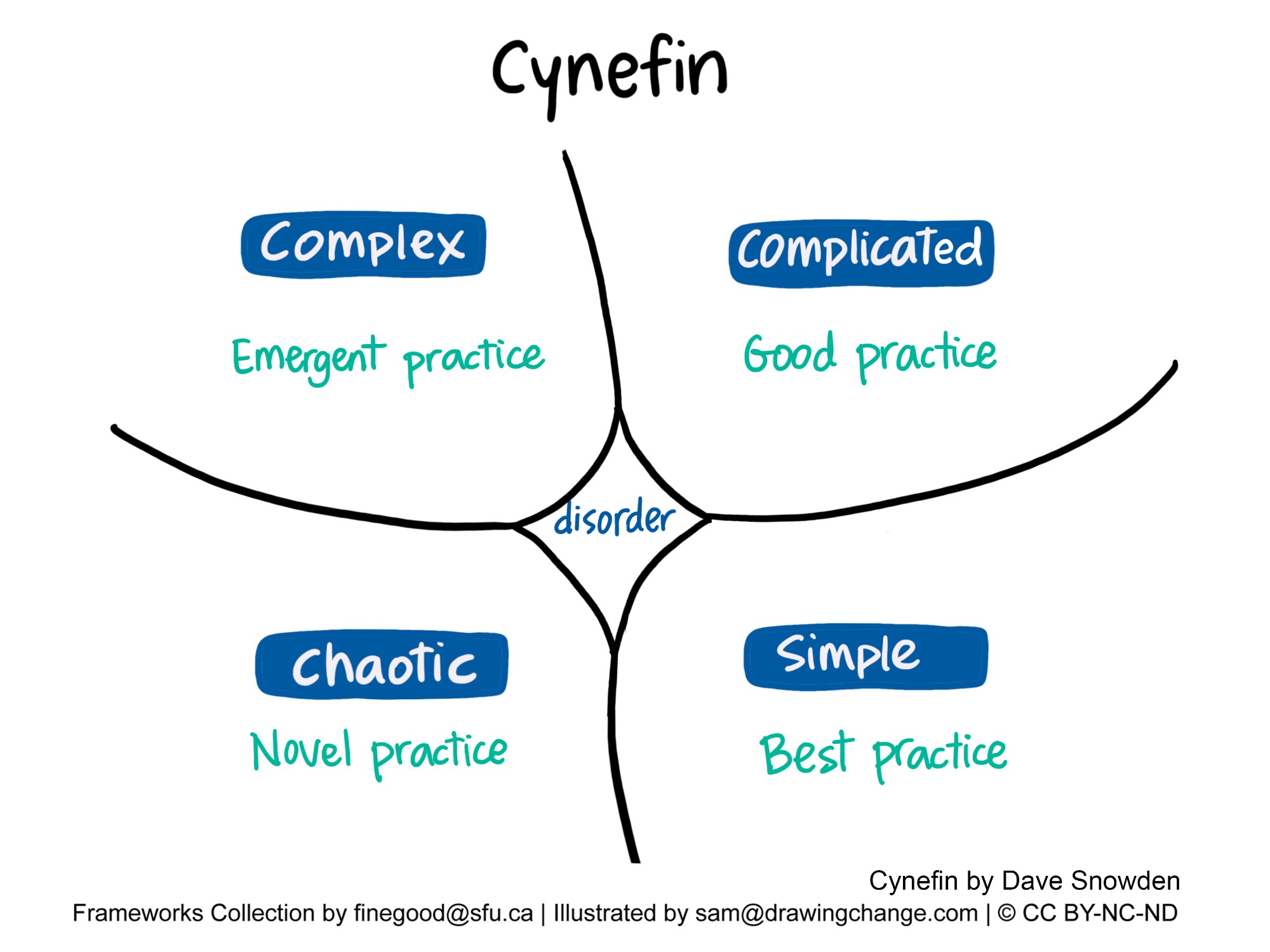
Complexity can be categorized into different types:
- Complicated Systems: These systems have many components and interactions but are still predictable and controllable. Examples include airplanes and computers.
- Complex Systems: These systems have emergent properties that cannot be predicted from the behavior of individual components. Examples include ecosystems and social networks.
- Chaotic Systems: These systems are highly sensitive to initial conditions and can exhibit unpredictable behavior. Examples include weather patterns and stock markets.
Key Concepts in Systems and Complexity
To effectively manage and analyze systems and complexity, it's essential to understand several key concepts:
Emergence
Emergence refers to the phenomenon where complex patterns and behaviors arise from the interactions of simple elements. For example, the behavior of a flock of birds (emergent property) emerges from the simple rules followed by individual birds.
Self-Organization
Self-organization is the process by which systems spontaneously form ordered structures without external direction. This concept is crucial in understanding how complex systems maintain their stability and adapt to changes.
Adaptability
Adaptability is the ability of a system to change its behavior in response to external or internal stimuli. Adaptable systems can survive and thrive in dynamic environments by adjusting their strategies and structures.
Resilience
Resilience is the capacity of a system to absorb disturbances and recover from them. Resilient systems can maintain their functionality even when faced with significant challenges.
Practical Applications of Systems and Complexity
Understanding Systems and Complexity has practical applications in various fields. Here are a few examples:
Software Development
In software development, systems and complexity are inherent in the design and implementation of software applications. Developers must manage complex interactions between different components, ensure scalability, and handle emergent behaviors. Agile methodologies and DevOps practices are often used to address these challenges.
Project Management
Project management involves coordinating multiple tasks, resources, and stakeholders to achieve a common goal. Understanding systems and complexity helps project managers anticipate potential issues, manage risks, and adapt to changes. Tools like Gantt charts and network diagrams are commonly used to visualize and manage project complexities.
Organizational Structures
Organizations are complex systems with numerous interdependent elements, including employees, departments, and processes. Effective management of organizational structures requires an understanding of systems and complexity to optimize workflows, foster innovation, and enhance overall performance.
Tools and Techniques for Managing Systems and Complexity
Several tools and techniques can help manage systems and complexity effectively:
System Dynamics
System dynamics is a methodology for understanding the behavior of complex systems over time. It uses stock and flow diagrams, causal loop diagrams, and simulation models to analyze and predict system behavior.
Agent-Based Modeling
Agent-based modeling is a computational approach that simulates the actions and interactions of individual agents to study the emergent properties of a system. This technique is particularly useful for understanding complex adaptive systems.
Network Analysis
Network analysis involves studying the structure and dynamics of networks to understand how information, resources, and influences flow through a system. This technique is widely used in social network analysis, epidemiology, and infrastructure management.
Case Studies in Systems and Complexity
To illustrate the practical applications of systems and complexity, let’s examine a few case studies:
Case Study 1: Urban Traffic Management
Urban traffic management is a complex system involving vehicles, roads, traffic signals, and human behavior. Traffic congestion is an emergent property that arises from the interactions of these elements. To manage traffic effectively, city planners use simulation models and real-time data to optimize traffic flow and reduce congestion.
Case Study 2: Supply Chain Management
Supply chain management involves coordinating the flow of goods, information, and finances from suppliers to customers. The supply chain is a complex system with numerous interdependent elements, including manufacturers, distributors, retailers, and logistics providers. Effective supply chain management requires understanding and managing the complexities of these interactions to ensure timely delivery and cost efficiency.
Case Study 3: Healthcare Systems
Healthcare systems are complex adaptive systems that involve patients, healthcare providers, hospitals, and insurance companies. The interactions between these elements can lead to emergent properties, such as the spread of infectious diseases or the development of healthcare disparities. Managing healthcare systems effectively requires understanding these complexities and implementing strategies to improve patient outcomes and system efficiency.
📝 Note: The case studies provided are simplified examples. Real-world applications of systems and complexity often involve more intricate details and require specialized knowledge and tools.
Challenges in Managing Systems and Complexity
Managing systems and complexity presents several challenges:
- Uncertainty: Complex systems are often characterized by uncertainty, making it difficult to predict their behavior and outcomes.
- Interdependence: The interdependence of elements in a complex system can lead to unintended consequences and feedback loops that are hard to manage.
- Adaptability: Complex systems must be adaptable to changing conditions, which requires continuous monitoring and adjustment.
- Scalability: As systems grow in size and complexity, managing them becomes increasingly challenging. Scalability issues can arise in software development, project management, and organizational structures.
Strategies for Overcoming Challenges
To overcome the challenges of managing systems and complexity, consider the following strategies:
- Holistic Approach: Adopt a holistic approach that considers all elements and interactions within a system. This involves understanding the system's boundaries, inputs, outputs, and feedback loops.
- Iterative Development: Use iterative development processes to gradually build and refine systems. This approach allows for continuous improvement and adaptation to changing conditions.
- Collaboration: Foster collaboration among stakeholders to share knowledge, resources, and expertise. Collaboration can help identify potential issues, develop innovative solutions, and enhance system performance.
- Data-Driven Decision Making: Utilize data and analytics to inform decision-making processes. Data-driven approaches can provide insights into system behavior, identify trends, and predict future outcomes.
Future Trends in Systems and Complexity
The field of systems and complexity is continually evolving, driven by advancements in technology and new research findings. Some future trends to watch include:
- Artificial Intelligence and Machine Learning: AI and machine learning are increasingly being used to analyze and manage complex systems. These technologies can help identify patterns, predict outcomes, and optimize system performance.
- Internet of Things (IoT): The IoT involves connecting physical devices to the internet, enabling real-time data collection and analysis. This technology can enhance the monitoring and management of complex systems, such as smart cities and industrial automation.
- Blockchain Technology: Blockchain technology offers a decentralized and secure way to manage data and transactions. It has the potential to revolutionize supply chain management, healthcare systems, and financial services by enhancing transparency and trust.
In conclusion, understanding Systems and Complexity is essential for navigating the challenges of modern systems. By grasping the key concepts, applying practical tools and techniques, and adopting effective strategies, you can enhance your ability to manage and analyze complex systems. Whether you’re dealing with software development, project management, or organizational structures, a solid understanding of systems and complexity will empower you to make informed decisions and achieve better outcomes.
Related Terms:
- what is complex systems
- what makes a system complex
- understanding complex systems
- complexity theory and systems thinking
- properties of complex systems
- systems thinking and complexity