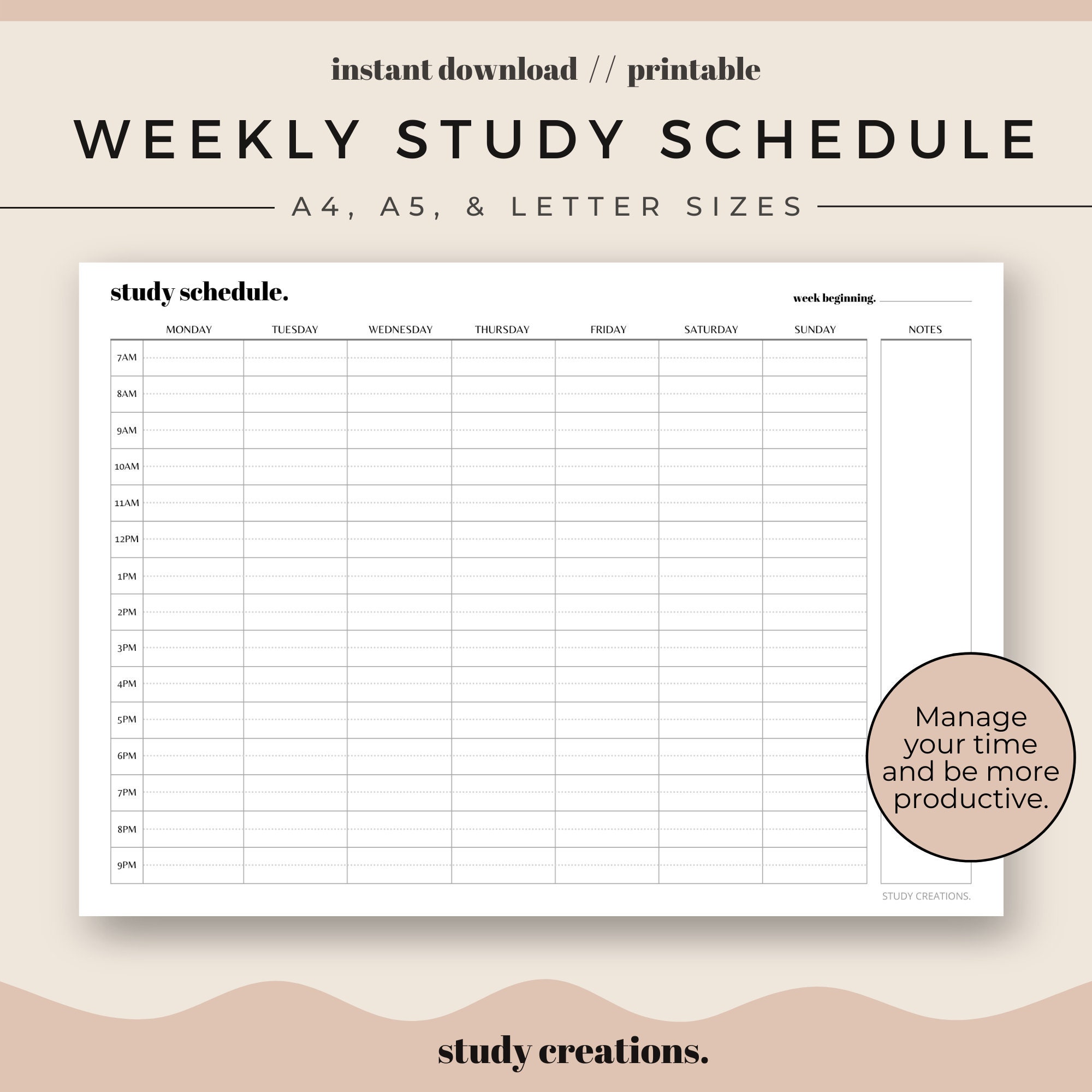
Effective time management is crucial for academic success, and one of the best tools to achieve this is a Study Schedule Planner. A well-structured study schedule can help students organize their time, prioritize tasks, and reduce stress. In this post, we will explore the benefits of using a Study Schedule Planner, how to create one, and tips for maintaining it effectively.
Benefits of Using a Study Schedule Planner
A Study Schedule Planner offers numerous advantages that can significantly enhance your academic performance. Here are some key benefits:
- Improved Time Management: A planner helps you allocate specific time slots for different subjects and activities, ensuring that you make the most of your time.
- Reduced Stress: By having a clear plan, you can avoid last-minute cramming and the associated stress, leading to a more balanced and relaxed study routine.
- Better Organization: A planner keeps all your tasks and deadlines in one place, making it easier to stay organized and focused.
- Increased Productivity: With a structured schedule, you can minimize distractions and maximize your productivity, leading to better grades and a deeper understanding of the material.
- Consistent Study Habits: Regular use of a Study Schedule Planner helps develop consistent study habits, which are essential for long-term academic success.
How to Create a Study Schedule Planner
Creating a Study Schedule Planner involves several steps. Here’s a detailed guide to help you get started:
Step 1: Assess Your Commitments
Begin by listing all your commitments, including classes, extracurricular activities, work, and social events. This will give you a clear picture of your available time.
Step 2: Set Clear Goals
Define your academic goals for the semester or year. These could be specific grades you want to achieve, projects you want to complete, or skills you want to develop. Clear goals will help you prioritize your tasks effectively.
Step 3: Choose a Format
Decide on the format of your Study Schedule Planner. You can use a physical planner, a digital app, or a spreadsheet. Choose a format that you find convenient and easy to use.
Step 4: Allocate Time Slots
Divide your day into time slots for different activities. For example, you might allocate two hours for math, one hour for history, and so on. Make sure to include breaks to avoid burnout.
Step 5: Prioritize Tasks
Prioritize your tasks based on their importance and urgency. Use a system like the Eisenhower Matrix to help you decide on and prioritize tasks by urgency and importance, sorting out less urgent and important tasks which you should either delegate or not do at all.
Step 6: Review and Adjust
Regularly review your schedule and make adjustments as needed. Life is unpredictable, and your schedule should be flexible enough to accommodate changes.
📝 Note: Be realistic about the time you need for each task. It’s better to underestimate the time required and finish early than to overestimate and fall behind.
Tips for Maintaining Your Study Schedule Planner
Once you have created your Study Schedule Planner, maintaining it is key to its effectiveness. Here are some tips to help you stay on track:
- Be Consistent: Stick to your schedule as much as possible. Consistency is key to developing good study habits.
- Use Reminders: Set reminders for important tasks and deadlines to ensure you don’t miss anything.
- Stay Flexible: Life happens, and sometimes you need to adjust your schedule. Be flexible and willing to make changes when necessary.
- Take Breaks: Regular breaks are essential for maintaining productivity and preventing burnout. Use techniques like the Pomodoro Technique, where you work for 25 minutes and then take a 5-minute break.
- Review Weekly: At the end of each week, review your schedule and assess what worked and what didn’t. Make adjustments for the following week based on your observations.
Sample Study Schedule Planner
Here is a sample Study Schedule Planner to give you an idea of how to structure your day:
| Time | Monday | Tuesday | Wednesday | Thursday | Friday | Saturday | Sunday |
|---|---|---|---|---|---|---|---|
| 8:00 AM - 9:00 AM | Math | English | Science | History | Math | Review | Free Time |
| 9:00 AM - 10:00 AM | Break | Break | Break | Break | Break | Break | Break |
| 10:00 AM - 11:00 AM | English | Science | History | Math | English | Review | Free Time |
| 11:00 AM - 12:00 PM | Break | Break | Break | Break | Break | Break | Break |
| 12:00 PM - 1:00 PM | Science | History | Math | English | Science | Review | Free Time |
| 1:00 PM - 2:00 PM | Lunch | Lunch | Lunch | Lunch | Lunch | Lunch | Lunch |
| 2:00 PM - 3:00 PM | History | Math | English | Science | History | Review | Free Time |
| 3:00 PM - 4:00 PM | Break | Break | Break | Break | Break | Break | Break |
| 4:00 PM - 5:00 PM | Review | Review | Review | Review | Review | Review | Free Time |
📝 Note: Customize the sample schedule to fit your specific needs and commitments. The key is to create a schedule that works for you and helps you achieve your goals.
Common Mistakes to Avoid
While using a Study Schedule Planner can be highly beneficial, there are some common mistakes to avoid:
- Overloading Your Schedule: Be realistic about how much you can accomplish in a day. Overloading your schedule can lead to burnout and decreased productivity.
- Not Taking Breaks: Regular breaks are essential for maintaining focus and productivity. Make sure to include breaks in your schedule.
- Ignoring Flexibility: Life is unpredictable, and your schedule should be flexible enough to accommodate changes. Don’t be too rigid with your plan.
- Not Reviewing Your Schedule: Regularly review and adjust your schedule to ensure it remains effective and relevant to your needs.
📝 Note: Remember that a Study Schedule Planner is a tool to help you, not a rigid set of rules. Be flexible and willing to make adjustments as needed.
Conclusion
A Study Schedule Planner is an invaluable tool for students looking to improve their time management, reduce stress, and enhance their academic performance. By creating a well-structured schedule, prioritizing tasks, and maintaining flexibility, you can achieve your academic goals more effectively. Regular review and adjustment of your schedule will ensure that it remains relevant and helpful throughout your academic journey. Embrace the benefits of a Study Schedule Planner and watch your productivity and grades soar.
Related Terms:
- free study plan maker
- study time table generator
- taskade ai study schedule generator
- study planner website
- make a study planner online
- personalized study plan generator