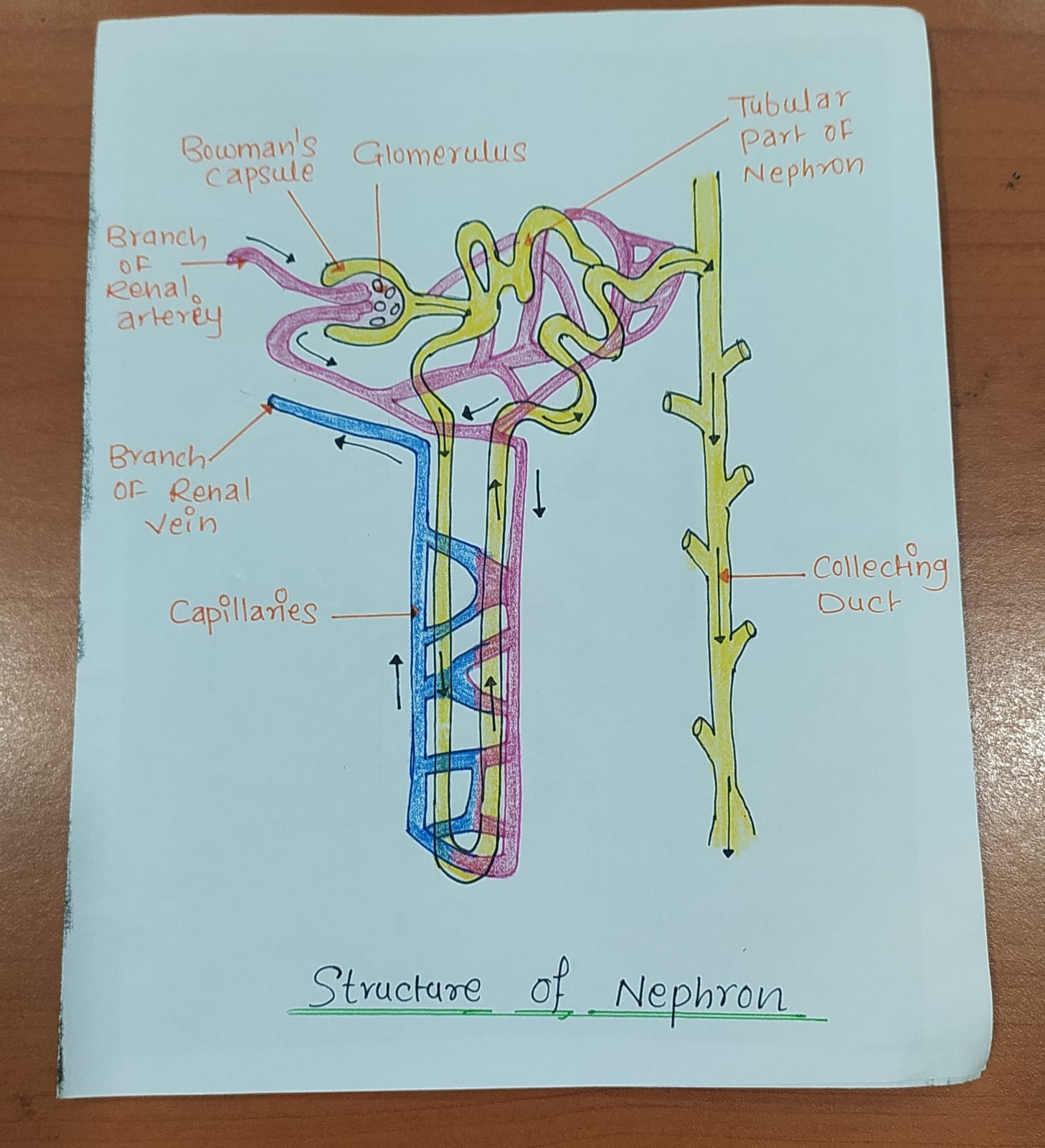
The kidney is a vital organ in the human body, responsible for filtering waste products from the blood and maintaining fluid and electrolyte balance. At the core of this essential function lies the structure of nephron, the basic functional unit of the kidney. Understanding the structure and function of the nephron is crucial for comprehending how the kidneys work and how various diseases can affect their performance.
The Structure of Nephron
The nephron is a complex structure composed of several key components, each playing a specific role in the filtration and reabsorption processes. The primary parts of the nephron include the glomerulus, Bowman's capsule, proximal convoluted tubule, loop of Henle, distal convoluted tubule, and the collecting duct.
The Glomerulus and Bowman's Capsule
The nephron begins with the glomerulus, a tuft of capillaries surrounded by Bowman's capsule. The glomerulus is responsible for the initial filtration of blood. Blood enters the glomerulus through the afferent arteriole and exits through the efferent arteriole. The filtration process occurs as blood pressure forces water and small molecules through the glomerular membrane into Bowman's capsule, while larger molecules and blood cells remain in the capillaries.
Bowman's capsule collects the filtrate and directs it into the proximal convoluted tubule. This initial filtrate contains water, electrolytes, glucose, amino acids, and waste products such as urea and creatinine.
The Proximal Convoluted Tubule
The proximal convoluted tubule is a highly coiled segment of the nephron that follows Bowman's capsule. This segment is responsible for reabsorbing a significant portion of the filtrate, including water, electrolytes, glucose, and amino acids. The reabsorption process is driven by active transport mechanisms and occurs through both transcellular and paracellular pathways.
Key functions of the proximal convoluted tubule include:
- Reabsorption of approximately 65% of the filtered sodium and water.
- Reabsorption of nearly all filtered glucose and amino acids.
- Secretion of organic acids and bases.
The Loop of Henle
The loop of Henle is a U-shaped segment that descends into the renal medulla and then ascends back into the renal cortex. This structure plays a crucial role in concentrating urine and maintaining the body's fluid and electrolyte balance. The loop of Henle is divided into three segments: the descending limb, the thin ascending limb, and the thick ascending limb.
The descending limb is permeable to water but not to solutes, allowing water to move out of the tubule into the surrounding interstitial fluid. The thin ascending limb is impermeable to water but allows the passive reabsorption of sodium and chloride. The thick ascending limb actively transports sodium, potassium, and chloride out of the tubule, creating a concentration gradient that drives water reabsorption in the collecting duct.
The Distal Convoluted Tubule
The distal convoluted tubule follows the loop of Henle and is responsible for fine-tuning the composition of the urine. This segment reabsorbs additional sodium and water and secretes potassium and hydrogen ions. The distal convoluted tubule is also the site of action for several hormones, including aldosterone and antidiuretic hormone (ADH), which regulate sodium and water reabsorption.
Key functions of the distal convoluted tubule include:
- Reabsorption of sodium and water under the influence of aldosterone.
- Secretion of potassium and hydrogen ions.
- Regulation of acid-base balance.
The Collecting Duct
The collecting duct is the final segment of the nephron, where the urine is further concentrated and its composition is adjusted. The collecting duct receives filtrate from multiple nephrons and directs it into the renal pelvis, from where it is excreted as urine. The collecting duct is highly permeable to water and urea, allowing for the final concentration of urine under the influence of ADH.
The collecting duct is also the site of action for several hormones, including ADH and atrial natriuretic peptide (ANP), which regulate water and sodium reabsorption. The collecting duct plays a crucial role in maintaining the body's fluid and electrolyte balance, particularly in response to changes in hydration status and blood pressure.
Functional Significance of the Nephron
The nephron's structure is intricately designed to perform its essential functions efficiently. The filtration, reabsorption, and secretion processes occurring within the nephron ensure that the body maintains homeostasis by regulating fluid and electrolyte balance, removing waste products, and maintaining acid-base balance.
The nephron's ability to concentrate urine is particularly important for conserving water and electrolytes, especially in conditions of dehydration or low salt intake. The loop of Henle and the collecting duct play critical roles in this process, creating a concentration gradient that drives water reabsorption.
The nephron's response to hormones such as aldosterone, ADH, and ANP allows it to adapt to changes in the body's fluid and electrolyte status. For example, during dehydration, ADH levels increase, enhancing water reabsorption in the collecting duct and concentrating the urine. Conversely, during hydration, ADH levels decrease, reducing water reabsorption and diluting the urine.
Diseases Affecting the Nephron
Several diseases can affect the structure and function of the nephron, leading to impaired kidney function and various clinical manifestations. Some of the common diseases affecting the nephron include:
- Diabetic Nephropathy: A complication of diabetes mellitus characterized by damage to the glomeruli, leading to proteinuria and progressive kidney failure.
- Glomerulonephritis: Inflammation of the glomeruli, often caused by immune-mediated processes, leading to proteinuria, hematuria, and kidney failure.
- Tubulointerstitial Nephritis: Inflammation of the tubules and interstitial tissue, often caused by medications, infections, or autoimmune disorders, leading to impaired kidney function.
- Polycystic Kidney Disease: A genetic disorder characterized by the formation of multiple cysts in the kidneys, leading to progressive kidney failure.
Understanding the structure of nephron and the specific segments affected by these diseases is crucial for diagnosing and managing kidney disorders effectively.
Diagnostic Techniques for Evaluating Nephron Function
Several diagnostic techniques are available to evaluate the structure and function of the nephron. These techniques help in diagnosing kidney diseases and monitoring their progression. Some of the commonly used diagnostic techniques include:
- Urinalysis: Examination of urine to detect abnormalities such as proteinuria, hematuria, and the presence of casts, which can indicate nephron damage.
- Blood Tests: Measurement of serum creatinine, blood urea nitrogen (BUN), and electrolytes to assess kidney function and detect abnormalities.
- Imaging Studies: Ultrasound, computed tomography (CT), and magnetic resonance imaging (MRI) to visualize the kidneys and detect structural abnormalities such as cysts, tumors, or obstructions.
- Renal Biopsy: A procedure involving the removal of a small sample of kidney tissue for microscopic examination to diagnose specific kidney diseases.
These diagnostic techniques provide valuable information about the structure and function of the nephron, aiding in the accurate diagnosis and management of kidney disorders.
📝 Note: Regular monitoring of kidney function through these diagnostic techniques is essential for early detection and management of kidney diseases.
Treatment Options for Nephron Disorders
Treatment options for nephron disorders depend on the underlying cause and the extent of kidney damage. The primary goals of treatment are to slow the progression of kidney disease, manage symptoms, and maintain overall health. Some of the common treatment options include:
- Medications: Drugs such as angiotensin-converting enzyme (ACE) inhibitors, angiotensin II receptor blockers (ARBs), and diuretics to control blood pressure, reduce proteinuria, and manage fluid and electrolyte balance.
- Dietary Modifications: Restricting protein, sodium, and potassium intake to reduce the workload on the kidneys and manage electrolyte imbalances.
- Dialysis: A procedure to filter waste products and excess fluids from the blood when kidney function is severely impaired.
- Kidney Transplant: A surgical procedure to replace a diseased kidney with a healthy donor kidney, providing a long-term solution for end-stage kidney disease.
Early intervention and adherence to treatment plans are crucial for managing nephron disorders effectively and improving patient outcomes.
📝 Note: Regular follow-up with healthcare providers is essential for monitoring kidney function and adjusting treatment plans as needed.
Preventive Measures for Maintaining Nephron Health
Maintaining the health of the nephron is essential for overall kidney function and preventing kidney diseases. Several preventive measures can help maintain nephron health, including:
- Healthy Lifestyle: Maintaining a balanced diet, regular exercise, and avoiding smoking and excessive alcohol consumption.
- Hydration: Drinking adequate amounts of water to maintain proper hydration and support kidney function.
- Regular Check-ups: Regular medical check-ups to monitor kidney function, especially for individuals at high risk of kidney disease, such as those with diabetes or hypertension.
- Medication Management: Proper management of medications, including avoiding nephrotoxic drugs and following prescribed dosages.
By adopting these preventive measures, individuals can significantly reduce the risk of developing kidney diseases and maintain the health of their nephrons.
📝 Note: Early detection and management of risk factors such as diabetes and hypertension are crucial for preventing kidney diseases.
Future Directions in Nephron Research
Research on the structure and function of the nephron continues to advance, driven by the need to improve the diagnosis and treatment of kidney diseases. Some of the key areas of research include:
- Molecular Biology: Studying the genetic and molecular mechanisms underlying nephron function and disease to develop targeted therapies.
- Regenerative Medicine: Exploring the potential of stem cell therapy and tissue engineering to repair or replace damaged nephrons.
- Imaging Techniques: Developing advanced imaging techniques to visualize the nephron in greater detail and detect early signs of kidney disease.
- Biomarkers: Identifying new biomarkers for early detection and monitoring of kidney diseases, enabling timely intervention and improved outcomes.
These research efforts hold promise for enhancing our understanding of the nephron and developing innovative treatments for kidney diseases.
📝 Note: Collaboration between researchers, clinicians, and patients is essential for advancing nephron research and improving kidney health.
Understanding the structure of nephron is fundamental to comprehending the intricate processes that occur within the kidney. The nephron’s complex structure, comprising the glomerulus, Bowman’s capsule, proximal convoluted tubule, loop of Henle, distal convoluted tubule, and collecting duct, enables efficient filtration, reabsorption, and secretion. This intricate design ensures the maintenance of fluid and electrolyte balance, removal of waste products, and regulation of acid-base balance. Diseases affecting the nephron can significantly impair kidney function, highlighting the importance of early detection, effective management, and preventive measures. Ongoing research continues to shed light on the nephron’s mechanisms and pave the way for innovative treatments, ultimately improving kidney health and patient outcomes.
Related Terms:
- detailed structure of the nephron
- structure of the kidney
- structure and function of nephron
- microscopic anatomy of the kidney
- 3 functions of nephrons
- structure of the nephron diagram