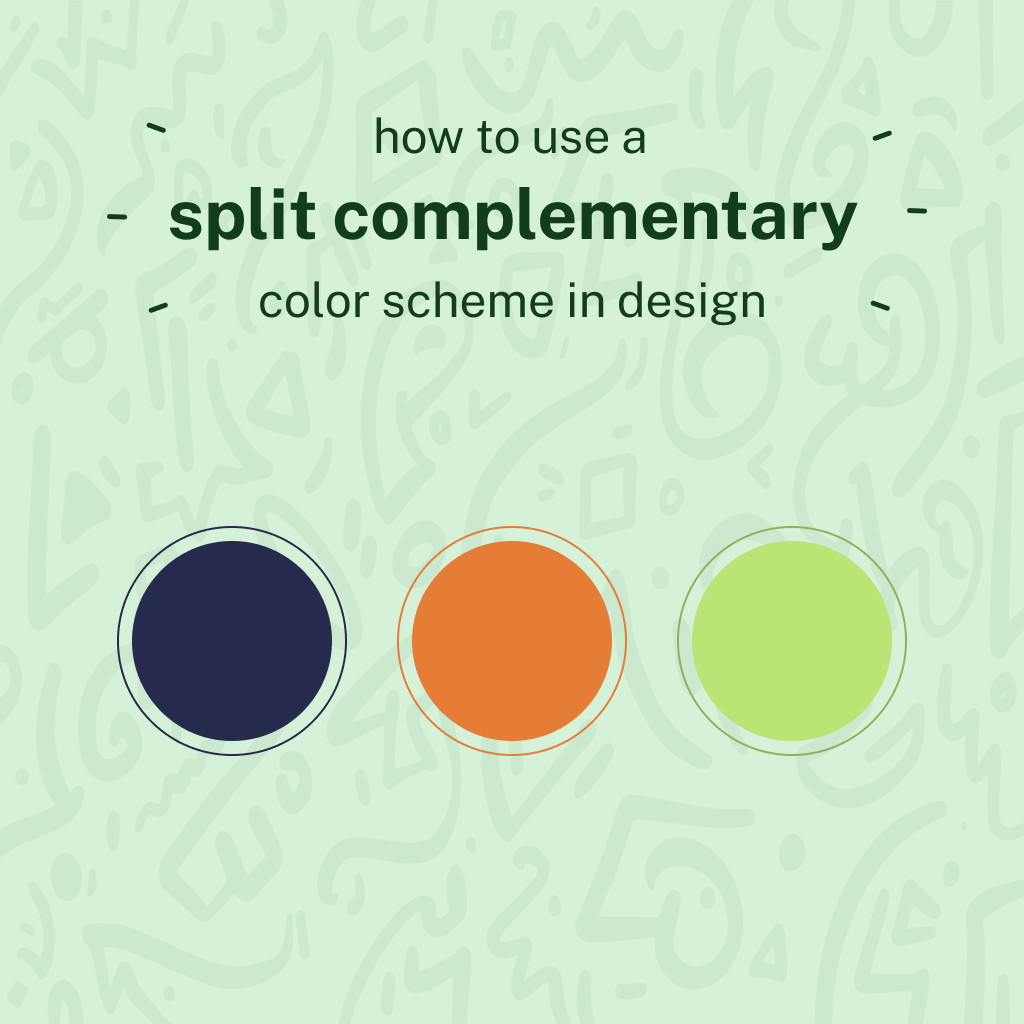
Color theory is a fundamental aspect of design that helps create harmonious and visually appealing compositions. One of the most intriguing concepts within color theory is the use of split complementary colors. This approach offers a unique way to achieve balance and contrast in design projects, making it a favorite among designers and artists alike.
Understanding Split Complementary Colors
Split complementary colors are a variation of the complementary color scheme. In a traditional complementary scheme, two colors that are directly opposite each other on the color wheel are paired. For example, red and green, blue and orange, or yellow and purple. However, a split complementary scheme involves selecting one color and then using the two colors adjacent to its complementary color.
For instance, if you choose blue as your base color, the complementary color would be orange. In a split complementary scheme, you would use the two colors adjacent to orange, which are red-orange and yellow-orange, along with blue. This creates a more nuanced and less jarring color palette compared to a straightforward complementary scheme.
The Benefits of Using Split Complementary Colors
Using split complementary colors offers several advantages:
- Harmony and Balance: This color scheme provides a good balance between contrast and harmony, making it easier to create visually pleasing designs.
- Versatility: Split complementary colors can be used in a variety of design contexts, from web design and graphic design to interior decorating and fashion.
- Visual Interest: The scheme adds depth and interest to designs without being overly harsh or overwhelming.
How to Create a Split Complementary Color Scheme
Creating a split complementary color scheme is straightforward. Here are the steps to follow:
- Choose a Base Color: Start by selecting a base color that you want to be the dominant color in your design.
- Find the Complementary Color: Identify the color directly opposite your base color on the color wheel.
- Select the Adjacent Colors: Choose the two colors that are adjacent to the complementary color. These will be your split complementary colors.
- Adjust the Saturation and Brightness: Depending on your design needs, you can adjust the saturation and brightness of the colors to create different moods and effects.
💡 Note: When adjusting the saturation and brightness, be mindful of maintaining the overall harmony of the color scheme. Too much variation can disrupt the balance.
Examples of Split Complementary Color Schemes
To better understand how split complementary colors work, let's look at a few examples:
| Base Color | Complementary Color | Split Complementary Colors |
|---|---|---|
| Blue | Orange | Red-Orange, Yellow-Orange |
| Green | Red | Red-Orange, Red-Violet |
| Yellow | Purple | Red-Violet, Blue-Violet |
These examples illustrate how you can create a split complementary color scheme by selecting a base color and then using the two colors adjacent to its complementary color.
Applying Split Complementary Colors in Design
Split complementary colors can be applied in various design fields. Here are some practical applications:
Web Design
In web design, using split complementary colors can help create a visually appealing and user-friendly interface. For example, you can use the base color for the main background, one of the split complementary colors for text, and the other for buttons or highlights. This approach ensures that the design is both aesthetically pleasing and easy to navigate.
Graphic Design
Graphic designers often use split complementary colors to create posters, brochures, and other printed materials. The scheme helps in creating a balanced and harmonious design that catches the eye without being overwhelming. For instance, you can use the base color for the main elements, one split complementary color for text, and the other for accents or highlights.
Interior Design
In interior design, split complementary colors can be used to create a cohesive and inviting space. For example, you can use the base color for the walls, one split complementary color for furniture, and the other for decorative elements. This approach ensures that the room feels balanced and harmonious, with a touch of visual interest.
Fashion Design
Fashion designers can also benefit from using split complementary colors. By incorporating these colors into clothing and accessories, designers can create outfits that are both stylish and visually appealing. For instance, you can use the base color for the main garment, one split complementary color for accessories, and the other for accents or trims.
Tips for Using Split Complementary Colors Effectively
To make the most of split complementary colors, consider the following tips:
- Start with a Neutral Base: If you're new to using split complementary colors, start with a neutral base color like white, black, or gray. This will help you see the effects of the split complementary colors more clearly.
- Experiment with Different Shades: Don't be afraid to experiment with different shades and tints of the split complementary colors. This can help you create a more dynamic and interesting design.
- Use Color Gradients: Incorporating color gradients can add depth and dimension to your design. Gradients can be created using the base color and the split complementary colors.
- Consider the Mood: Different colors evoke different emotions. Consider the mood you want to create and choose your split complementary colors accordingly.
💡 Note: Always test your color scheme in different lighting conditions to ensure it looks good in various environments.
Common Mistakes to Avoid
While using split complementary colors can enhance your design, there are some common mistakes to avoid:
- Overuse of Bright Colors: Using too many bright colors can make your design look chaotic and overwhelming. Stick to a balanced ratio of bright and neutral colors.
- Ignoring Contrast: Ensure there is enough contrast between the base color and the split complementary colors to make the design elements stand out.
- Inconsistent Color Application: Be consistent in how you apply the colors throughout your design. Inconsistency can disrupt the overall harmony.
💡 Note: Always review your design from a distance to get a better sense of how the colors work together.
In wrapping up, split complementary colors offer a versatile and effective way to create harmonious and visually appealing designs. By understanding the basics of this color scheme and applying it thoughtfully, you can elevate your design projects to new heights. Whether you’re working in web design, graphic design, interior design, or fashion, split complementary colors can help you achieve a balanced and engaging aesthetic.
Related Terms:
- split complementary colors generator
- split complementary colors scheme
- split complementary colors list
- split complementary colors art
- complementary colors examples
- split complementary colors meaning