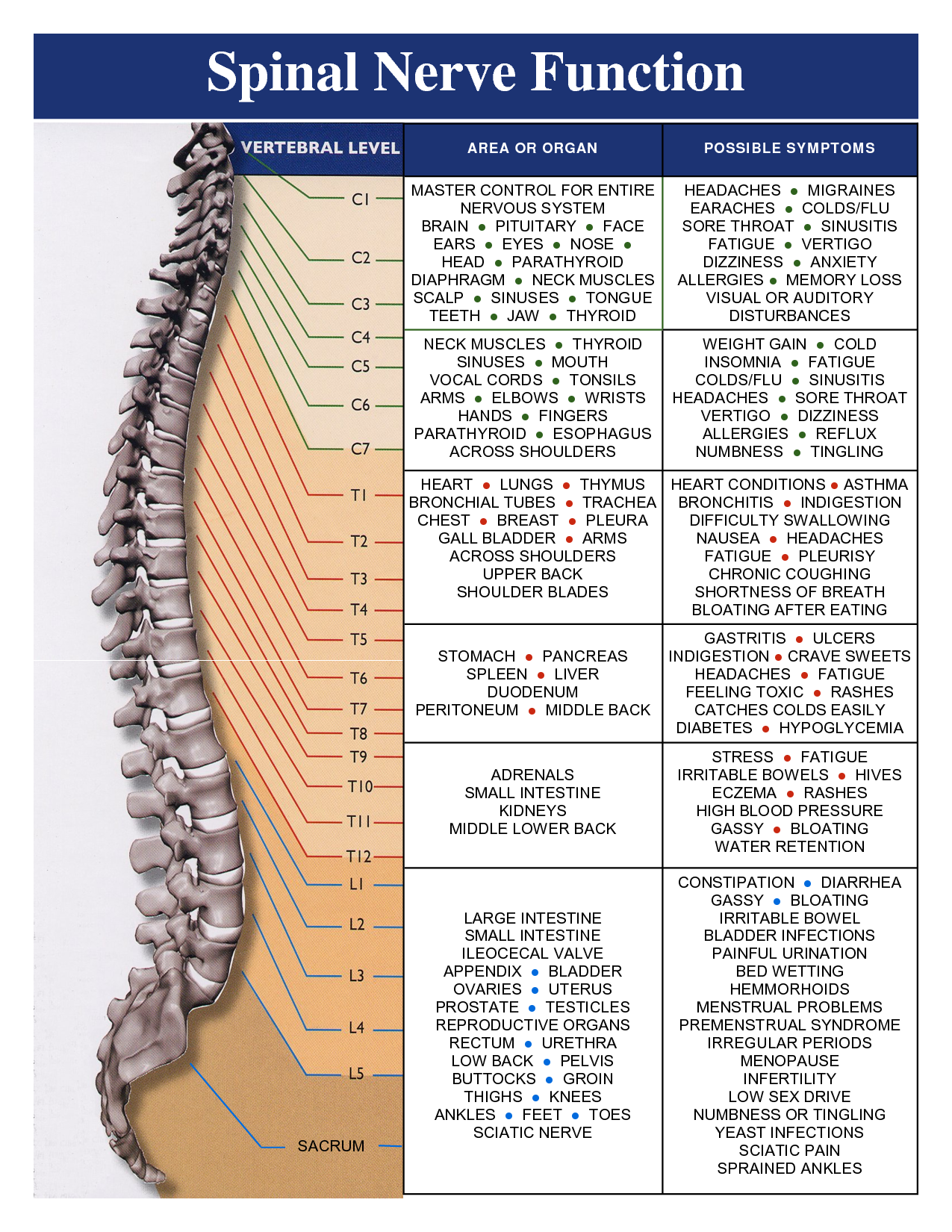
Understanding the human body's intricate nervous system is a fascinating journey, and one of the most crucial components is the spinal nerve chart. This chart provides a visual representation of the spinal nerves, which are essential for transmitting signals between the brain and the rest of the body. By exploring the spinal nerve chart, we can gain insights into how our nervous system functions and how it affects our daily lives.
What is a Spinal Nerve Chart?
A spinal nerve chart is a detailed diagram that illustrates the 31 pairs of spinal nerves that emerge from the spinal cord. These nerves are categorized into five regions: cervical, thoracic, lumbar, sacral, and coccygeal. Each region plays a specific role in transmitting sensory and motor information. The chart helps medical professionals, students, and enthusiasts understand the anatomy and function of these nerves.
The Anatomy of Spinal Nerves
The spinal cord is a critical part of the central nervous system, extending from the brainstem down to the lumbar region of the spine. From the spinal cord, spinal nerves branch out to innervate various parts of the body. Each spinal nerve is composed of sensory and motor fibers, which carry information to and from the brain.
The spinal nerves are named according to the region of the spine from which they emerge:
- Cervical Nerves (C1-C8): These nerves are located in the neck region and control the head, neck, shoulders, and arms.
- Thoracic Nerves (T1-T12): Found in the upper back, these nerves innervate the chest and abdominal regions.
- Lumbar Nerves (L1-L5): Located in the lower back, these nerves control the lower abdomen, pelvis, and legs.
- Sacral Nerves (S1-S5): Situated in the pelvic region, these nerves innervate the pelvic organs, buttocks, and lower limbs.
- Coccygeal Nerve (Co1): This single nerve is located at the base of the spine and has limited function.
Understanding the Spinal Nerve Chart
A typical spinal nerve chart includes detailed illustrations of the spinal cord and the nerves branching out from it. The chart often highlights the following key features:
- Spinal Cord Segments: The chart shows the different segments of the spinal cord, each corresponding to a specific pair of spinal nerves.
- Nerve Roots: The dorsal (sensory) and ventral (motor) roots of each spinal nerve are clearly marked, indicating their entry and exit points from the spinal cord.
- Dermatomes: These are areas of skin that are primarily innervated by a single spinal nerve. The chart may include a dermatome map to show the sensory distribution of each nerve.
- Myotomes: These are groups of muscles innervated by a single spinal nerve. The chart may also include a myotome map to illustrate the motor distribution of each nerve.
By studying the spinal nerve chart, one can understand how specific nerves contribute to sensory and motor functions in different parts of the body. For example, the cervical nerves are crucial for movements of the head and arms, while the lumbar nerves are essential for leg movements and bladder control.
Clinical Applications of the Spinal Nerve Chart
The spinal nerve chart is an invaluable tool in clinical settings. It aids in diagnosing and treating various neurological conditions. Here are some key applications:
- Diagnosis of Neurological Disorders: By understanding the distribution of spinal nerves, clinicians can pinpoint the location of nerve damage or dysfunction. For instance, a patient with weakness in the legs may have an issue with the lumbar or sacral nerves.
- Surgical Planning: Surgeons use the spinal nerve chart to plan procedures involving the spine and nerves. This ensures that critical nerves are not damaged during surgery.
- Physical Therapy: Physical therapists use the chart to design rehabilitation programs tailored to specific nerve injuries. This helps in restoring function and improving quality of life.
- Pain Management: The chart assists in identifying the source of pain and developing targeted treatment plans, such as nerve blocks or injections.
Common Conditions Related to Spinal Nerves
Several conditions can affect the spinal nerves, leading to various symptoms. Understanding these conditions can help in recognizing the importance of the spinal nerve chart in diagnosis and treatment.
- Herniated Disc: A herniated disc occurs when the soft inner core of a spinal disc protrudes through a tear in the outer ring. This can compress nearby spinal nerves, causing pain, numbness, or weakness.
- Spinal Stenosis: This condition involves the narrowing of the spinal canal, which can compress spinal nerves and cause symptoms such as pain, weakness, and difficulty walking.
- Radiculopathy: This refers to a set of conditions in which one or more nerves are affected and do not work properly (a pinched nerve). Symptoms can include pain, weakness, numbness, or tingling in the areas supplied by the affected nerves.
- Peripheral Neuropathy: This condition involves damage to the peripheral nerves, often causing weakness, numbness, and pain, usually in the hands and feet.
In each of these conditions, the spinal nerve chart helps clinicians identify the affected nerves and develop appropriate treatment plans.
Interpreting the Spinal Nerve Chart
Interpreting a spinal nerve chart requires a basic understanding of anatomy and physiology. Here are some steps to help you read and understand the chart:
- Identify the Spinal Regions: Start by locating the different regions of the spine (cervical, thoracic, lumbar, sacral, and coccygeal).
- Trace the Nerve Pathways: Follow the pathways of the spinal nerves as they branch out from the spinal cord. Note the dorsal and ventral roots.
- Understand Dermatomes and Myotomes: Study the dermatome and myotome maps to see how sensory and motor functions are distributed.
- Relate to Clinical Symptoms: Use the chart to correlate specific symptoms with the affected nerves. For example, if a patient has numbness in the foot, refer to the sacral nerves.
📝 Note: Always consult with a healthcare professional for accurate diagnosis and treatment. The spinal nerve chart is a tool for understanding and should not replace professional medical advice.
Visualizing the Spinal Nerve Chart
Visual aids are essential for understanding complex anatomical structures like the spinal nerves. Here is a simplified table to help visualize the spinal nerve chart:
| Region | Nerve Pairs | Primary Functions |
|---|---|---|
| Cervical | C1-C8 | Head, neck, shoulders, and arms |
| Thoracic | T1-T12 | Chest and abdominal regions |
| Lumbar | L1-L5 | Lower abdomen, pelvis, and legs |
| Sacral | S1-S5 | Pelvic organs, buttocks, and lower limbs |
| Coccygeal | Co1 | Limited function |
This table provides a quick reference for the different regions of the spinal nerves and their primary functions. For a more detailed understanding, refer to a comprehensive spinal nerve chart.
To further enhance your understanding, consider studying detailed illustrations and diagrams available in anatomy textbooks or online resources. These visual aids can provide a clearer picture of the spinal nerves and their pathways.
In addition to visual aids, interactive tools and simulations can be very helpful. Some educational platforms offer 3D models and interactive charts that allow you to explore the spinal nerves from different angles and zoom in on specific areas. These tools can make learning more engaging and effective.
For those interested in a deeper dive, consider enrolling in anatomy courses or workshops. These educational programs often include hands-on activities and expert guidance, providing a comprehensive understanding of the spinal nerves and their functions.
In conclusion, the spinal nerve chart is a fundamental tool for understanding the complex network of nerves that control our body’s movements and sensations. By studying this chart, we can gain valuable insights into the anatomy and physiology of the nervous system, aiding in the diagnosis and treatment of various neurological conditions. Whether you are a medical professional, student, or enthusiast, the spinal nerve chart is an essential resource for exploring the intricacies of the human body.
Related Terms:
- spinal nerve map
- spinal nerve chart functions
- chiropractic spinal nerve chart
- spinal cord anatomy
- spinal nerve pain chart
- spinal nerve chart pdf