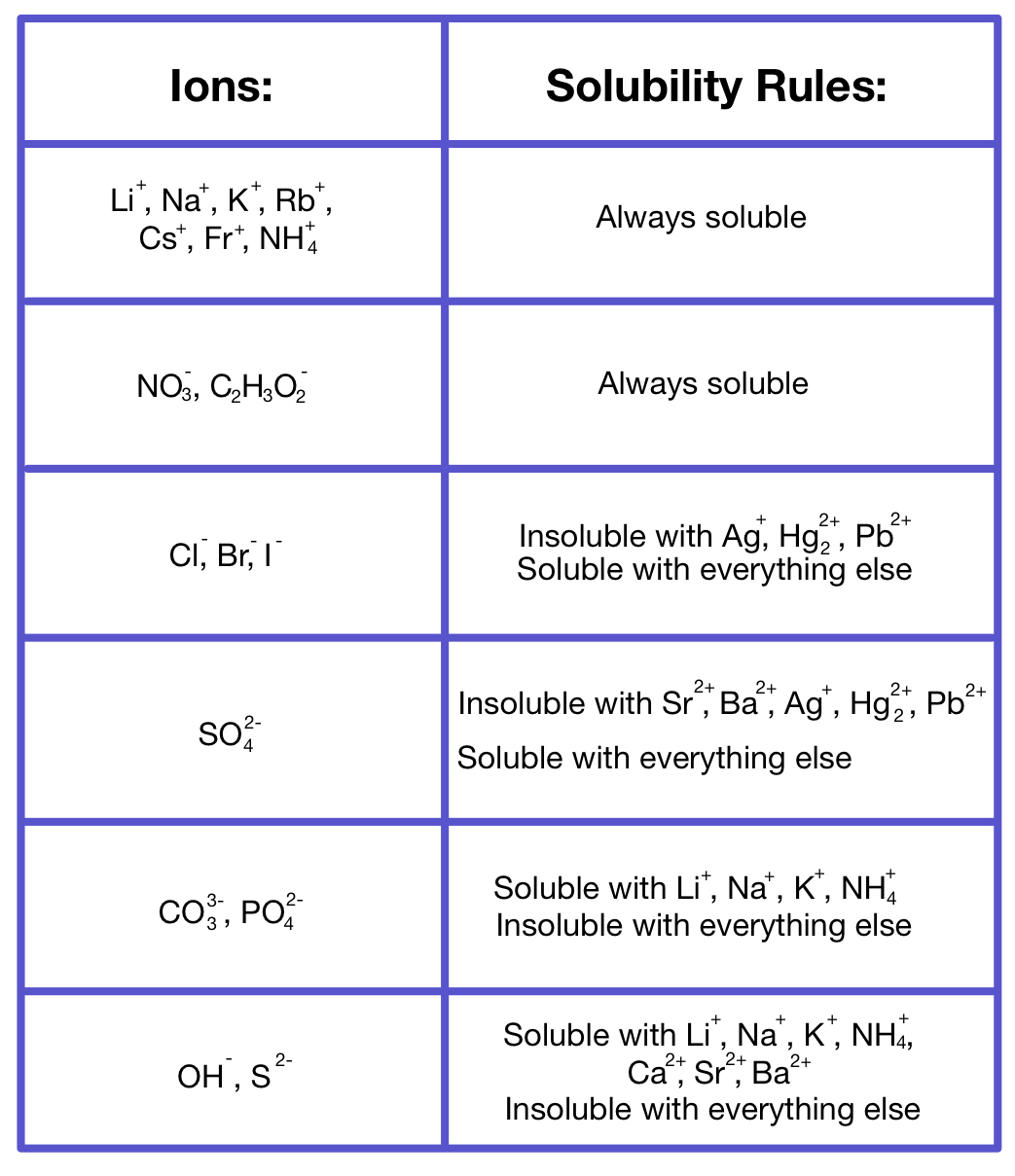
Mastering solubility exercises in organic chemistry is a crucial skill for students aiming to excel in their studies. Understanding the principles of solubility allows chemists to predict how different compounds will behave in various solvents, which is essential for designing experiments, purifying compounds, and interpreting chemical reactions. This blog post will guide you through the fundamentals of solubility in organic chemistry, providing practical exercises and insights to enhance your learning experience.
Understanding Solubility in Organic Chemistry
Solubility is the ability of a substance to dissolve in a solvent, forming a homogeneous solution. In organic chemistry, solubility is influenced by several factors, including the polarity of the solute and solvent, hydrogen bonding, and intermolecular forces. To grasp the concept of solubility, it's essential to understand the types of solvents and solutes commonly encountered in organic chemistry.
Types of Solvents and Solutes
Solvents can be classified based on their polarity:
- Polar Solvents: These solvents have a high dielectric constant and can dissolve polar and ionic compounds. Examples include water, methanol, and ethanol.
- Nonpolar Solvents: These solvents have a low dielectric constant and can dissolve nonpolar compounds. Examples include hexane, benzene, and diethyl ether.
- Aprotic Solvents: These solvents do not have hydrogen atoms bonded to electronegative atoms and cannot form hydrogen bonds. Examples include dichloromethane and acetone.
- Protic Solvents: These solvents have hydrogen atoms bonded to electronegative atoms and can form hydrogen bonds. Examples include water and methanol.
Solutes can also be classified based on their polarity:
- Polar Solutes: These compounds have a high dipole moment and can form hydrogen bonds. Examples include sugars and amino acids.
- Nonpolar Solutes: These compounds have a low dipole moment and do not form hydrogen bonds. Examples include hydrocarbons and lipids.
Factors Affecting Solubility
Several factors influence the solubility of a compound in a given solvent. Understanding these factors is crucial for predicting solubility and designing effective solubility exercises in organic chemistry.
Polarity
The polarity of the solute and solvent is the most significant factor affecting solubility. The general rule is "like dissolves like." Polar solutes dissolve in polar solvents, and nonpolar solutes dissolve in nonpolar solvents. This principle is based on the intermolecular forces between the solute and solvent molecules.
Hydrogen Bonding
Hydrogen bonding is a strong intermolecular force that occurs between a hydrogen atom bonded to an electronegative atom (such as oxygen, nitrogen, or fluorine) and another electronegative atom. Hydrogen bonding can significantly enhance the solubility of polar compounds in protic solvents.
Temperature
Temperature also affects solubility. Generally, the solubility of solids in liquids increases with temperature. However, the solubility of gases in liquids decreases with increasing temperature. This principle is essential for designing solubility exercises that involve temperature changes.
Pressure
Pressure primarily affects the solubility of gases in liquids. According to Henry's Law, the solubility of a gas in a liquid is directly proportional to the partial pressure of the gas above the liquid. This principle is crucial for understanding the behavior of gases in solubility exercises.
Solubility Exercises in Organic Chemistry
Solubility exercises in organic chemistry help students apply theoretical knowledge to practical scenarios. These exercises involve predicting the solubility of various compounds in different solvents and designing experiments to test these predictions. Here are some common solubility exercises and their solutions:
Exercise 1: Predicting Solubility
Predict the solubility of the following compounds in water and hexane:
- Sodium chloride (NaCl)
- Glucose (C6H12O6)
- Benzene (C6H6)
- Ethanol (C2H5OH)
Solutions:
- Sodium chloride (NaCl): Highly soluble in water (polar solvent) due to ionic interactions and hydrogen bonding. Insoluble in hexane (nonpolar solvent).
- Glucose (C6H12O6): Soluble in water due to hydrogen bonding. Insoluble in hexane.
- Benzene (C6H6): Insoluble in water due to nonpolar nature. Soluble in hexane.
- Ethanol (C2H5OH): Soluble in both water and hexane due to its amphipathic nature, which allows it to interact with both polar and nonpolar solvents.
Exercise 2: Designing a Solubility Experiment
Design an experiment to determine the solubility of benzoic acid (C7H6O2) in water at different temperatures. Describe the materials, procedure, and expected results.
Materials:
- Benzoic acid
- Water
- Beakers
- Stirrer
- Thermometer
- Filter paper
- Oven or hot plate
Procedure:
- Prepare a saturated solution of benzoic acid in water at room temperature by adding excess benzoic acid to water and stirring until no more dissolves.
- Filter the solution to remove undissolved benzoic acid.
- Measure the temperature of the solution.
- Repeat the process at different temperatures by heating the solution and allowing it to cool.
- Record the amount of benzoic acid dissolved at each temperature.
Expected Results:
The solubility of benzoic acid in water is expected to increase with temperature. This is because the increased kinetic energy of the molecules at higher temperatures allows more benzoic acid to dissolve.
📝 Note: Ensure that the benzoic acid is completely dry before weighing to avoid errors in the solubility calculations.
Exercise 3: Solubility of Gases
Predict the solubility of oxygen (O2) and carbon dioxide (CO2) in water at different pressures. Describe the expected results and the principles involved.
Solutions:
According to Henry's Law, the solubility of a gas in a liquid is directly proportional to the partial pressure of the gas above the liquid. Therefore, the solubility of both oxygen and carbon dioxide in water will increase with increasing pressure. However, carbon dioxide is more soluble in water than oxygen due to its higher reactivity and ability to form carbonic acid (H2CO3).
📝 Note: This exercise can be extended to include the effect of temperature on gas solubility, as higher temperatures generally decrease the solubility of gases in liquids.
Practical Applications of Solubility
Understanding solubility in organic chemistry has numerous practical applications in various fields, including pharmaceuticals, environmental science, and industrial chemistry. Here are some key applications:
Pharmaceuticals
In the pharmaceutical industry, solubility is crucial for drug design and formulation. Drugs must be soluble in biological fluids to be absorbed and distributed throughout the body. Solubility exercises in organic chemistry help pharmacists and chemists design drugs with optimal solubility properties, ensuring effective delivery and bioavailability.
Environmental Science
In environmental science, solubility plays a vital role in understanding the behavior of pollutants in water and soil. Solubility exercises help environmental scientists predict the movement and fate of pollutants, design remediation strategies, and assess the impact of contaminants on ecosystems.
Industrial Chemistry
In industrial chemistry, solubility is essential for designing efficient separation and purification processes. Solubility exercises help chemists select appropriate solvents and conditions for extracting, purifying, and isolating compounds from complex mixtures. This knowledge is crucial for optimizing industrial processes and reducing waste.
Common Solubility Rules
To simplify the prediction of solubility, chemists often use a set of common solubility rules. These rules provide a quick reference for determining the solubility of various compounds in water and other solvents. Here are some key solubility rules:
| Compound Type | Solubility in Water | Solubility in Nonpolar Solvents |
|---|---|---|
| Ionic Compounds | Generally soluble | Generally insoluble |
| Polar Covalent Compounds | Generally soluble | Generally insoluble |
| Nonpolar Covalent Compounds | Generally insoluble | Generally soluble |
| Organic Acids and Bases | Soluble if they can form hydrogen bonds | Soluble in nonpolar solvents if they are uncharged |
These rules provide a general guideline for predicting solubility, but it's essential to consider the specific properties of the compound and solvent in each case. Solubility exercises in organic chemistry help students apply these rules and develop a deeper understanding of the factors affecting solubility.
📝 Note: These rules are not absolute and may not apply to all compounds. Always consider the specific properties of the compound and solvent when predicting solubility.
Conclusion
Solubility exercises in organic chemistry are essential for understanding the behavior of compounds in different solvents. By mastering the principles of solubility, students can predict the solubility of various compounds, design effective experiments, and apply their knowledge to practical applications in pharmaceuticals, environmental science, and industrial chemistry. Through practical exercises and a solid understanding of the factors affecting solubility, students can enhance their problem-solving skills and excel in their organic chemistry studies.
Related Terms:
- soluble or insoluble quiz
- soluble vs insoluble practice
- solubility rules practice problems
- solubility worksheets with answers
- solubility chart practice
- solubility practice problems with answers