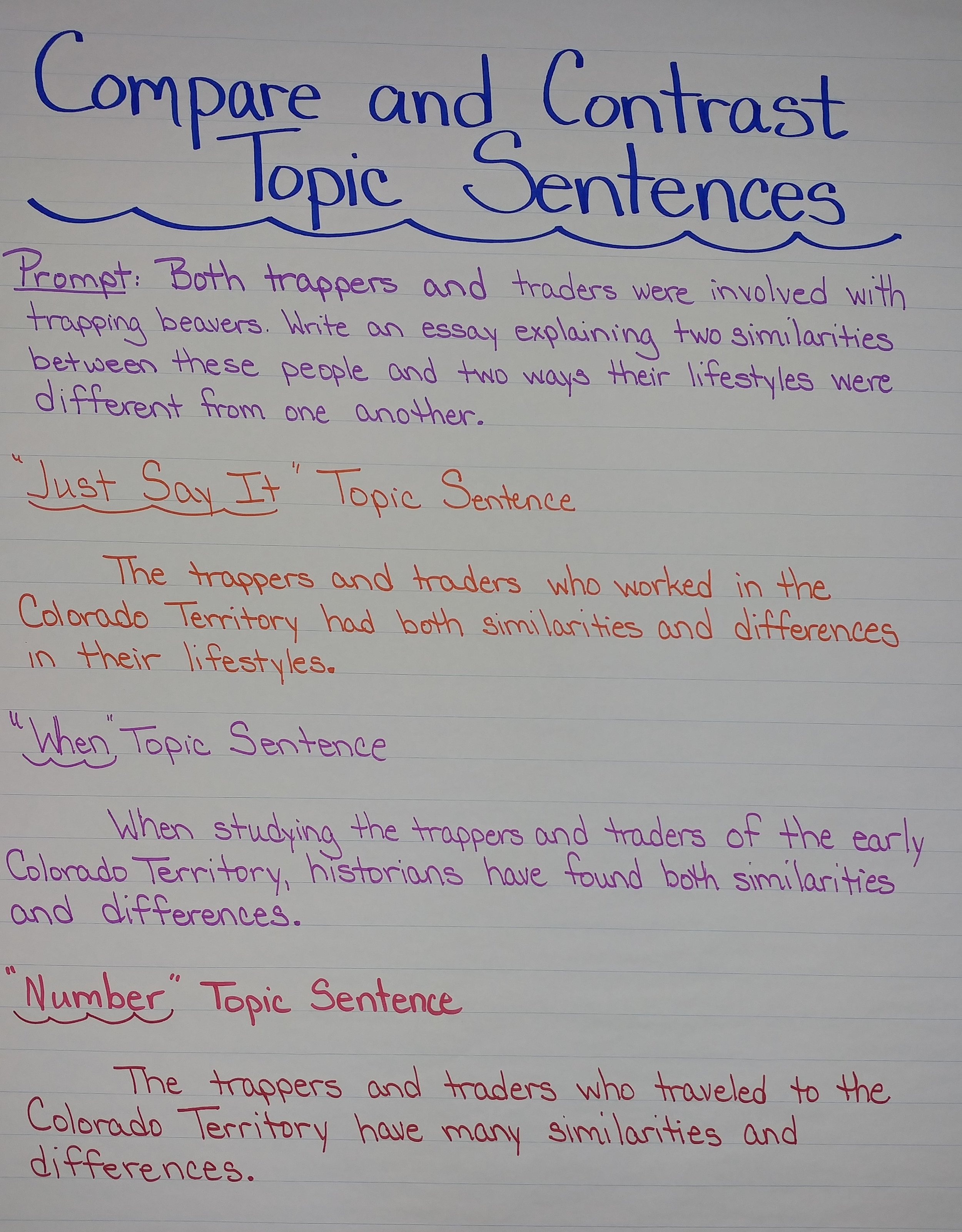
Understanding the nuances of language is a fascinating journey that often involves comparing different sentence structures and their meanings. A sentence with comparison is a powerful tool in both written and spoken communication, allowing speakers and writers to convey complex ideas with clarity and precision. This blog post will delve into the intricacies of comparative sentences, exploring their types, structures, and practical applications.
Understanding Comparative Sentences
A sentence with comparison is used to highlight similarities or differences between two or more subjects. These sentences are essential for making arguments, providing explanations, and offering insights. Comparative sentences can be categorized into several types, each serving a unique purpose in communication.
Types of Comparative Sentences
Comparative sentences can be broadly classified into three main types:
- Equative Comparisons: These sentences compare two subjects to show that they are equal in some aspect.
- Superlative Comparisons: These sentences compare one subject to a group of subjects to show that it is the most or least in some aspect.
- Comparative Comparisons: These sentences compare two subjects to show that one is greater or lesser in some aspect.
Equative Comparisons
Equative comparisons use words like "as...as" or "the same as" to show that two subjects are equal. For example:
"John is as tall as his brother."
In this sentence with comparison, John and his brother are being compared in terms of height, and the sentence indicates that they are equal in this aspect.
Superlative Comparisons
Superlative comparisons use words like "most," "least," "best," or "worst" to show that one subject is at the extreme end of a scale. For example:
"Mount Everest is the highest peak in the world."
Here, Mount Everest is being compared to all other peaks in the world, and the sentence indicates that it is the highest.
Comparative Comparisons
Comparative comparisons use words like "more," "less," "better," or "worse" to show that one subject is greater or lesser than another in some aspect. For example:
"This book is more interesting than the last one I read."
In this sentence with comparison, the current book is being compared to the previous one, and the sentence indicates that it is more interesting.
Structures of Comparative Sentences
The structure of a comparative sentence can vary depending on the type of comparison being made. However, there are some general guidelines that can help in constructing these sentences correctly.
Equative Comparisons
Equative comparisons typically follow the structure:
"Subject + verb + as + adjective/adverb + as + subject."
For example:
"She runs as fast as her sister."
In this structure, the adjective "fast" is used to compare the speed of the two subjects.
Superlative Comparisons
Superlative comparisons typically follow the structure:
"Subject + verb + superlative adjective/adverb + in/among + group."
For example:
"He is the tallest boy in the class."
In this structure, the superlative adjective "tallest" is used to compare the height of the subject to all other boys in the class.
Comparative Comparisons
Comparative comparisons typically follow the structure:
"Subject + verb + comparative adjective/adverb + than + subject."
For example:
"This car is faster than that one."
In this structure, the comparative adjective "faster" is used to compare the speed of the two subjects.
Practical Applications of Comparative Sentences
Comparative sentences are used in various contexts, from academic writing to everyday conversations. Understanding how to use them effectively can enhance communication skills and make arguments more persuasive.
Academic Writing
In academic writing, comparative sentences are often used to analyze data, compare theories, and draw conclusions. For example:
"The results of the experiment show that the new method is more efficient than the traditional one."
In this sentence with comparison, the efficiency of two methods is being compared, and the sentence provides a clear conclusion based on the data.
Everyday Conversations
In everyday conversations, comparative sentences are used to express opinions, make recommendations, and share experiences. For example:
"This movie is better than the one we watched last week."
In this sentence with comparison, the quality of two movies is being compared, and the sentence provides a personal opinion.
Business Communication
In business communication, comparative sentences are used to evaluate performance, compare products, and make decisions. For example:
"Our sales this quarter are higher than last quarter."
In this sentence with comparison, the sales performance of two quarters is being compared, and the sentence provides a clear indication of improvement.
Common Mistakes to Avoid
While comparative sentences are powerful tools, there are some common mistakes that can undermine their effectiveness. Here are a few to avoid:
- Inconsistent Comparisons: Ensure that the subjects being compared are logically consistent. For example, comparing apples to oranges can lead to confusion.
- Incorrect Use of Adjectives/Adverbs: Make sure to use the correct form of adjectives and adverbs in comparative sentences. For example, use "more" with longer adjectives and adverbs, and use "better" or "worse" with shorter ones.
- Ambiguous Comparisons: Avoid comparisons that are unclear or ambiguous. For example, saying "This is better" without specifying what it is better than can lead to confusion.
📝 Note: Always ensure that the subjects being compared are clearly defined and that the comparison is logically consistent.
Examples of Comparative Sentences
To further illustrate the use of comparative sentences, here are some examples across different contexts:
| Context | Sentence |
|---|---|
| Academic Writing | The new algorithm is more efficient than the old one. |
| Everyday Conversations | This restaurant is more expensive than the one we went to last month. |
| Business Communication | Our customer satisfaction ratings are higher this year compared to last year. |
| Literary Writing | Her voice was as melodious as a nightingale's song. |
These examples demonstrate the versatility of comparative sentences and their application in various contexts.
Comparative sentences are a fundamental aspect of language that enhance communication by providing clarity and precision. Whether in academic writing, everyday conversations, or business communication, understanding and using comparative sentences effectively can significantly improve the quality of expression. By following the guidelines and avoiding common mistakes, anyone can master the art of constructing sentences with comparison and use them to convey complex ideas with ease.
Related Terms:
- compare used in a sentence
- compare in a sentence examples
- comparison used in a sentence
- comparison sentence examples
- example of a comparison
- compare phrases examples