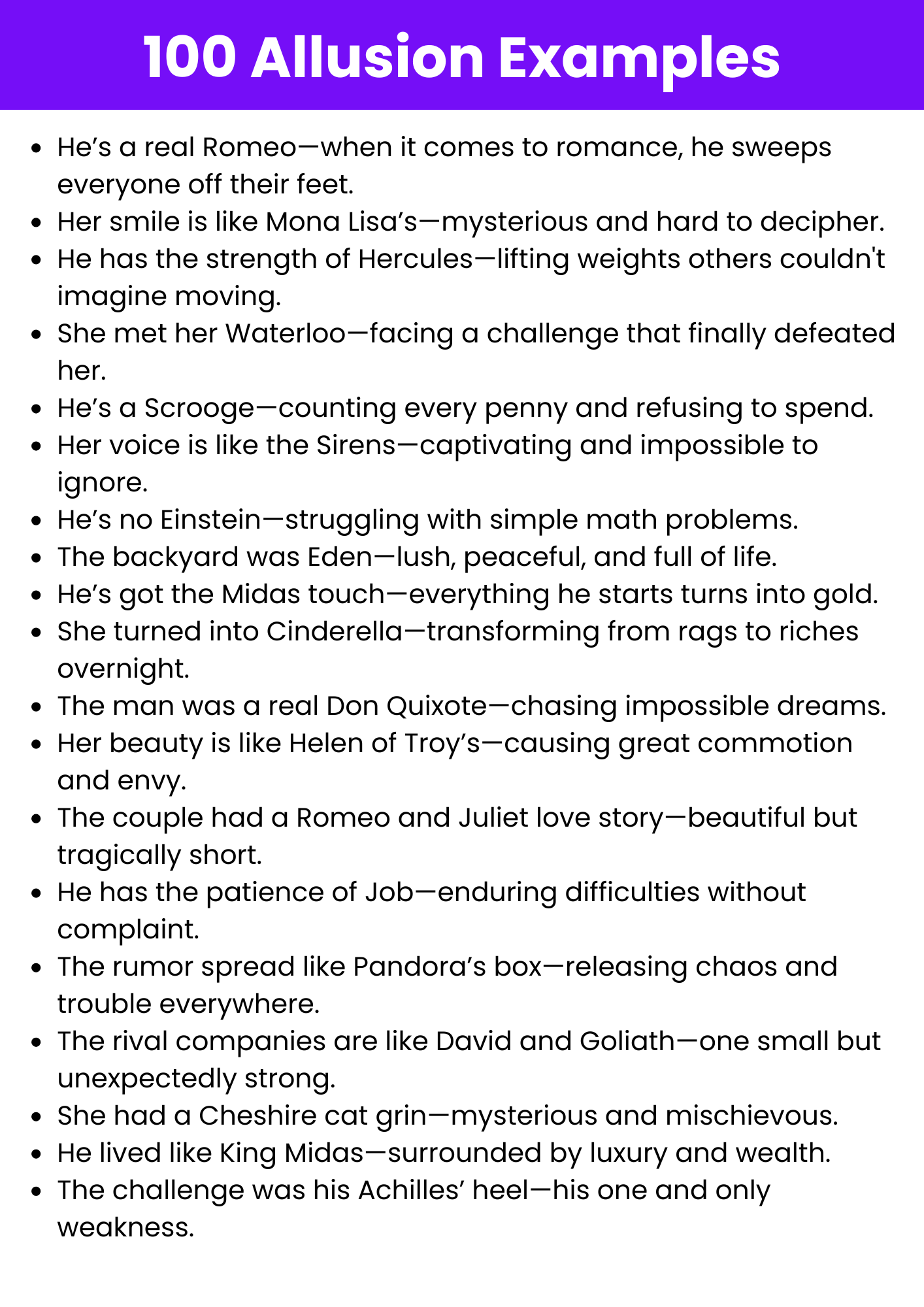
Allusion is a literary device that adds depth and richness to writing by referencing other works, historical events, or cultural elements. A sentence on allusion can transform a simple narrative into a complex tapestry of meaning, inviting readers to explore layers of interpretation. This blog post delves into the art of crafting effective allusions, exploring their types, purposes, and techniques for seamless integration into your writing.
Understanding Allusion
Allusion is a subtle yet powerful tool in a writer's arsenal. It allows authors to evoke emotions, convey complex ideas, and create connections between different works or historical periods. By incorporating allusions, writers can enrich their narratives and engage readers on multiple levels.
Allusions can be categorized into several types, each serving a unique purpose:
- Historical Allusions: These references draw from significant events, figures, or periods in history. For example, mentioning the "Fall of Rome" can evoke themes of decline and decay.
- Literary Allusions: These references are drawn from other literary works. For instance, referencing "Romeo and Juliet" can instantly convey themes of tragic love.
- Mythological Allusions: These references come from myths and legends. Mentioning "Sisyphus" can symbolize futile and endless labor.
- Biblical Allusions: These references are taken from religious texts, often the Bible. For example, the "Garden of Eden" can represent a state of innocence or paradise.
- Cultural Allusions: These references are drawn from popular culture, including movies, music, and television. Mentioning "The Matrix" can evoke themes of reality versus illusion.
The Purpose of Allusion
Allusions serve various purposes in writing, enhancing the narrative in several ways:
- Enriching Themes: Allusions can deepen the thematic content of a story by connecting it to broader cultural or historical contexts.
- Creating Depth: They add layers of meaning, making the text more engaging and thought-provoking for readers.
- Establishing Tone: Allusions can set the mood and tone of a piece, whether it's serious, humorous, or nostalgic.
- Engaging Readers: They can make the text more relatable and interesting by drawing on familiar references.
- Symbolism: Allusions often serve as powerful symbols, representing abstract concepts or emotions.
Techniques for Crafting Effective Allusions
Crafting effective allusions requires a blend of creativity and strategic thinking. Here are some techniques to help you integrate allusions seamlessly into your writing:
- Choose Relevant References: Ensure that the allusions you choose are relevant to the themes and context of your story. Irrelevant allusions can confuse readers and detract from the narrative.
- Be Subtle: Allusions should be subtle enough to enhance the narrative without overwhelming it. Overuse or heavy-handed allusions can make the text feel pretentious.
- Provide Context: While allusions should be subtle, they should also be clear enough for readers to understand. Provide enough context to help readers make the connection.
- Integrate Naturally: Allusions should flow naturally within the narrative. Avoid forcing them into the text; instead, let them emerge organically from the story.
- Use Variety: Mix different types of allusions to keep the narrative dynamic and engaging. Variety can prevent the text from feeling monotonous.
Examples of Allusion in Literature
Many renowned authors have masterfully used allusions to enrich their works. Here are a few notable examples:
- F. Scott Fitzgerald's "The Great Gatsby": Fitzgerald uses allusions to the American Dream and classical mythology to explore themes of wealth, love, and the illusion of success.
- Toni Morrison's "Beloved": Morrison incorporates biblical allusions and references to African folklore to delve into the horrors of slavery and the resilience of the human spirit.
- J.K. Rowling's "Harry Potter" Series: Rowling weaves allusions to various mythologies, fairy tales, and historical events to create a richly layered magical world.
These examples illustrate how allusions can be used to enhance the depth and complexity of a narrative, making it more engaging for readers.
Common Mistakes to Avoid
While allusions can greatly enhance a narrative, there are common pitfalls to avoid:
- Overuse: Too many allusions can overwhelm readers and make the text feel cluttered. Use them sparingly and strategically.
- Irrelevance: Allusions that are not relevant to the narrative can confuse readers and detract from the story. Ensure that each allusion serves a purpose.
- Lack of Clarity: Allusions should be clear enough for readers to understand. Vague or obscure references can leave readers confused.
- Forced Integration: Allusions should flow naturally within the narrative. Forcing them into the text can make the writing feel unnatural and contrived.
📝 Note: When using allusions, consider your audience. Ensure that the references you choose are familiar to your readers to avoid confusion.
Allusions in Different Genres
Allusions can be effectively used across various genres, each with its unique approach:
- Fiction: In fiction, allusions can enrich character development, plot, and themes. They can provide depth to the narrative and create connections to broader cultural or historical contexts.
- Poetry: In poetry, allusions can add layers of meaning and evoke emotions. They can make the poem more evocative and thought-provoking.
- Non-Fiction: In non-fiction, allusions can provide context and depth to the subject matter. They can help readers understand complex ideas by connecting them to familiar references.
Here is a table summarizing the use of allusions in different genres:
| Genre | Purpose of Allusion | Examples |
|---|---|---|
| Fiction | Enrich character development, plot, and themes | Historical, literary, and cultural allusions |
| Poetry | Add layers of meaning and evoke emotions | Mythological and literary allusions |
| Non-Fiction | Provide context and depth to the subject matter | Historical and cultural allusions |
Allusions in Modern Writing
In the digital age, allusions have evolved to include references from modern media and pop culture. Writers can draw from a wide range of sources, including movies, TV shows, music, and social media. These references can make the narrative more relatable and engaging for contemporary readers.
For example, a sentence on allusion in a modern novel might reference a popular TV series like "Stranger Things" to evoke a sense of nostalgia and mystery. Similarly, a reference to a viral social media trend can add a layer of contemporary relevance to the narrative.
However, it's important to consider the longevity of these references. Pop culture trends can be fleeting, and allusions that are relevant today may not resonate with readers in the future. Therefore, it's crucial to balance modern references with timeless allusions to ensure the narrative remains relevant over time.
Incorporating allusions in modern writing requires a keen understanding of current trends and cultural references. Writers must stay updated with the latest developments in media and pop culture to effectively integrate these references into their narratives.
Moreover, modern allusions can also serve as a bridge between different generations of readers. By incorporating references from both classic and contemporary sources, writers can create a narrative that appeals to a wide audience.
For instance, a sentence on allusion in a young adult novel might reference both "Harry Potter" and "The Hunger Games" to create a rich tapestry of meaning that resonates with readers of different ages. This approach can make the narrative more inclusive and engaging for a diverse readership.
In conclusion, allusions are a powerful tool in a writer’s toolkit, adding depth, richness, and complexity to narratives. By understanding the different types of allusions, their purposes, and techniques for effective integration, writers can craft compelling stories that engage readers on multiple levels. Whether drawing from historical events, literary works, or modern media, allusions can transform a simple narrative into a complex tapestry of meaning, inviting readers to explore layers of interpretation. This makes the use of allusions an essential skill for any writer aiming to create impactful and memorable literature.
Related Terms:
- examples of allusion in sentences
- example sentence for allusion
- allusion used in a sentence
- example sentence of allusion
- 50 examples of allusion
- sample sentence of allusion