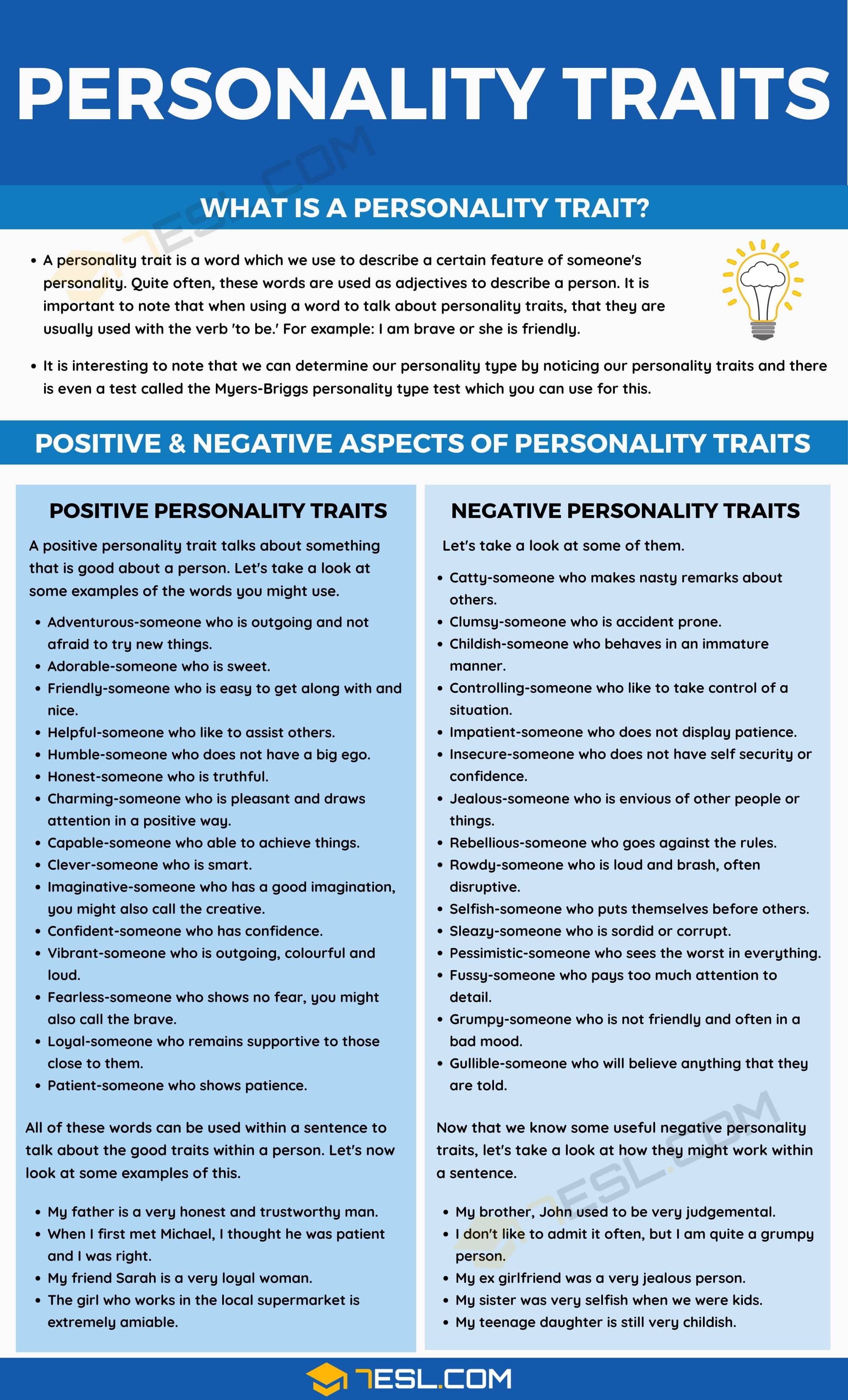
Understanding the nuances of personality traits can provide valuable insights into human behavior and interpersonal dynamics. One such trait that often goes unnoticed but plays a significant role in social interactions is the self-effacing personality trait. This trait is characterized by an individual's tendency to downplay their own abilities, achievements, and importance, often to the point of self-deprecation. While this trait can be endearing and humble, it can also have profound implications on an individual's self-esteem, relationships, and overall well-being.
Understanding the Self-Effacing Personality Trait
The self-effacing personality trait is rooted in a person's desire to avoid drawing attention to themselves. Individuals with this trait often exhibit behaviors such as:
- Downplaying their accomplishments and skills.
- Avoiding praise and recognition.
- Focusing on the achievements of others.
- Apologizing excessively.
- Minimizing their contributions to group efforts.
These behaviors can stem from various underlying factors, including:
- Low self-esteem and self-worth.
- Fear of rejection or criticism.
- A desire to maintain harmony in social situations.
- Cultural or familial influences that emphasize humility.
The Psychological Impact of a Self-Effacing Personality Trait
The self-effacing personality trait can have both positive and negative psychological impacts. On the positive side, individuals with this trait are often perceived as humble, modest, and considerate. They are less likely to engage in boastful behavior, which can make them more likable and approachable. However, the negative aspects can be more pronounced:
- Low Self-Esteem: Constantly downplaying one's abilities can erode self-esteem over time, leading to feelings of inadequacy and self-doubt.
- Missed Opportunities: Individuals with a self-effacing personality trait may miss out on opportunities for advancement or recognition because they do not assert their skills and accomplishments.
- Stress and Anxiety: The constant need to avoid attention can create internal stress and anxiety, as the individual may feel they are not living up to their potential.
- Difficulty in Relationships: While humility is generally admired, excessive self-effacement can strain relationships. Partners, friends, and colleagues may feel frustrated or unappreciated if the individual consistently downplays their contributions.
Recognizing a Self-Effacing Personality Trait
Recognizing a self-effacing personality trait in oneself or others can be the first step toward addressing its potential negative impacts. Here are some signs to look out for:
- Avoidance of Compliments: The individual frequently deflects or downplays compliments, often attributing their success to luck or external factors.
- Excessive Apologizing: They apologize for minor mistakes or situations that are beyond their control.
- Minimizing Achievements: The individual tends to focus on the negative aspects of their achievements rather than celebrating their successes.
- Self-Deprecating Humor: They often use humor to put themselves down, which can be a coping mechanism for feeling uncomfortable with praise.
- Reluctance to Take Credit: In group settings, they are hesitant to take credit for their contributions, often attributing success to the team rather than themselves.
Addressing a Self-Effacing Personality Trait
If you or someone you know exhibits a self-effacing personality trait, there are several strategies that can help address and mitigate its negative impacts:
- Self-Awareness: The first step is to recognize the trait and understand its underlying causes. This can be achieved through self-reflection or professional counseling.
- Cognitive Behavioral Therapy (CBT): CBT can help individuals identify and challenge negative thought patterns that contribute to self-effacement. It can also provide tools for building self-esteem and assertiveness.
- Practice Self-Compassion: Encourage the individual to treat themselves with the same kindness and understanding they would offer to a friend. This can help reduce self-criticism and build self-worth.
- Set Realistic Goals: Setting and achieving small, realistic goals can help build confidence and reduce the tendency to downplay achievements.
- Seek Support: Encourage the individual to seek support from friends, family, or a therapist. Positive reinforcement and encouragement from others can be instrumental in changing self-effacing behaviors.
💡 Note: Addressing a self-effacing personality trait requires patience and persistence. It is important to approach the issue with empathy and understanding, as the individual may be resistant to change due to deeply ingrained patterns of behavior.
The Role of Culture and Society
The self-effacing personality trait can be influenced by cultural and societal norms. In some cultures, humility is highly valued, and individuals may be encouraged to downplay their achievements to avoid appearing arrogant. Understanding the cultural context can provide insights into why someone might exhibit this trait and how it can be addressed.
For example, in collectivist cultures, the emphasis is often on the group rather than the individual. This can lead to a greater tendency for self-effacement, as individuals may prioritize the harmony and success of the group over their own achievements. In contrast, individualistic cultures may place a higher value on personal success and recognition, which can make self-effacement less prevalent.
It is important to recognize that cultural influences do not justify or excuse the negative impacts of a self-effacing personality trait. Rather, understanding these influences can help in developing culturally sensitive strategies for addressing the trait.
Case Studies and Examples
To better understand the self-effacing personality trait, let's examine a few case studies and examples:
| Case Study | Description | Outcome |
|---|---|---|
| Jane | Jane is a software engineer who consistently downplays her technical skills and contributions to projects. She often attributes her success to her team members and avoids taking credit for her work. | Through cognitive behavioral therapy, Jane learned to recognize and challenge her negative thought patterns. She began setting small, achievable goals and gradually built her confidence. Over time, she became more assertive in acknowledging her contributions and received a promotion. |
| Mark | Mark is a high school teacher who frequently apologizes for minor mistakes and avoids praise from his students and colleagues. He often feels unappreciated and undervalued. | Mark sought support from a therapist, who helped him understand the underlying causes of his self-effacement. He learned to practice self-compassion and set realistic goals for himself. With the support of his colleagues, Mark began to recognize his achievements and received positive feedback from his students. |
| Lisa | Lisa is a nurse who consistently downplays her medical knowledge and skills. She often feels overwhelmed by her responsibilities and struggles with self-doubt. | Lisa joined a support group for healthcare professionals, where she learned to share her experiences and receive encouragement from her peers. She also began practicing mindfulness and self-compassion, which helped her build her self-esteem and confidence. |
The Importance of Balance
While humility is a valuable trait, it is essential to strike a balance between self-effacement and self-assertion. Individuals with a self-effacing personality trait can benefit from learning to recognize and celebrate their achievements without feeling arrogant or boastful. This balance can enhance self-esteem, improve relationships, and open up new opportunities for personal and professional growth.
Achieving this balance requires self-awareness, practice, and support. It is important to remember that self-assertion does not mean being boastful or arrogant. Rather, it involves recognizing and acknowledging one's strengths and contributions in a humble and respectful manner.
For example, instead of saying, "I'm not good at this," an individual might say, "I'm still learning, but I'm making progress." This approach acknowledges the individual's efforts and achievements without downplaying their abilities.
Similarly, instead of deflecting compliments, an individual might say, "Thank you, I appreciate your kind words." This response acknowledges the compliment without feeling uncomfortable or self-conscious.
By practicing these strategies, individuals with a self-effacing personality trait can develop a healthier sense of self-worth and build more fulfilling relationships.
In conclusion, the self-effacing personality trait is a complex and multifaceted aspect of human behavior that can have both positive and negative impacts on an individual’s life. Understanding the underlying causes and effects of this trait is the first step toward addressing its potential challenges. By recognizing the signs, seeking support, and practicing self-compassion, individuals can develop a healthier sense of self-worth and build more fulfilling relationships. It is essential to strike a balance between humility and self-assertion, as this can enhance self-esteem, improve relationships, and open up new opportunities for personal and professional growth.
Related Terms:
- self effacing thesaurus
- another word for self effacing
- self effacement bias
- self effacing bias
- self effacing definition
- self effacing crossword clue