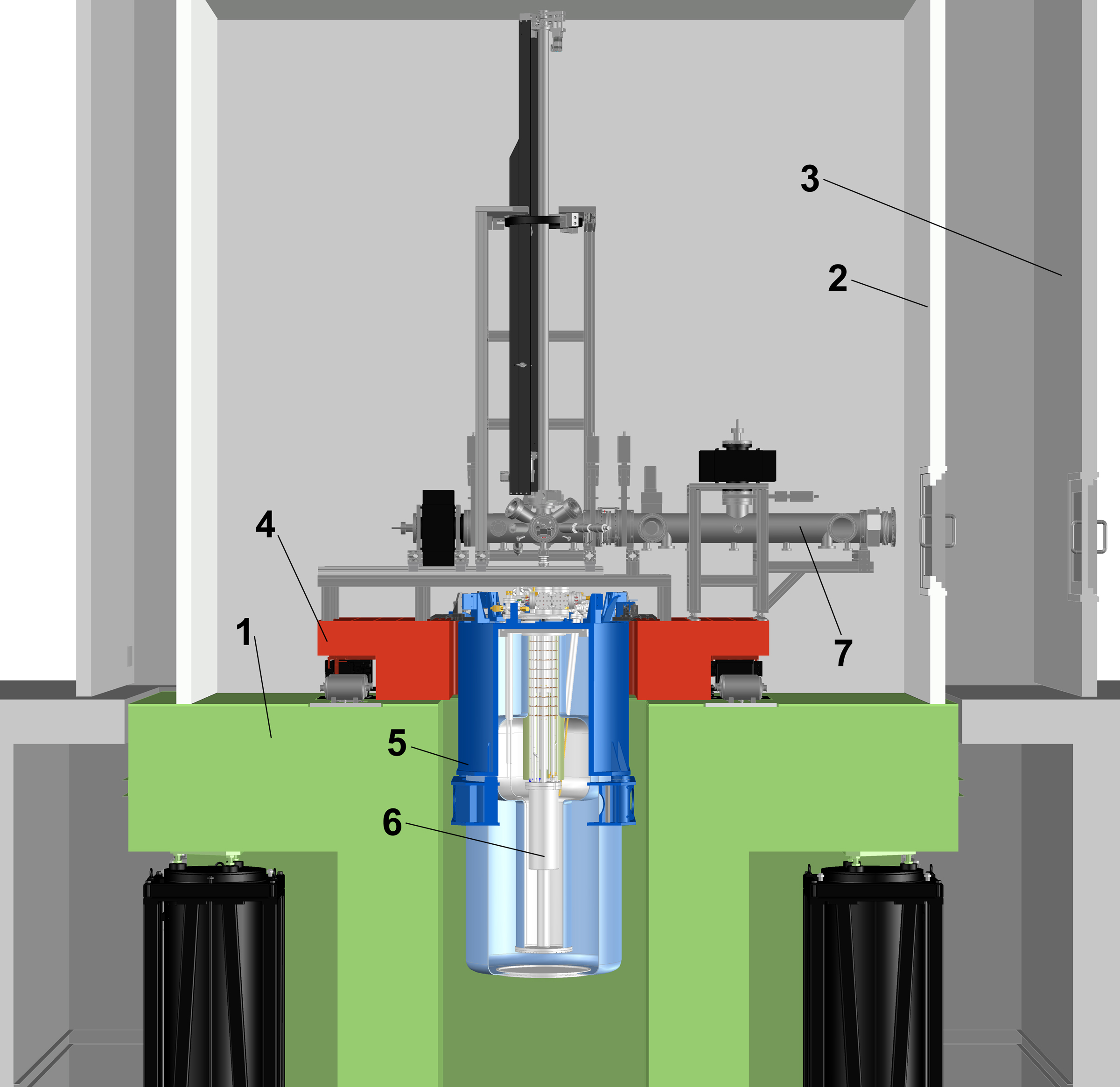
Scanning Probe Microscopy (SPM) has revolutionized the field of nanotechnology by providing unprecedented resolution and insight into the microscopic world. This advanced technique allows scientists to visualize and manipulate matter at the atomic and molecular levels, opening up new avenues for research and development. SPM encompasses a variety of methods, each with its unique capabilities and applications, making it an indispensable tool in modern science.
Understanding Scanning Probe Microscopy
Scanning Probe Microscopy is a broad term that refers to a family of techniques used to image and manipulate surfaces at the nanoscale. The most well-known methods within this family are Scanning Tunneling Microscopy (STM) and Atomic Force Microscopy (AFM). These techniques rely on a sharp probe that scans the surface of a sample, detecting interactions between the probe and the sample to generate detailed images.
Scanning Tunneling Microscopy (STM)
Scanning Tunneling Microscopy was the first SPM technique developed, pioneered by Gerd Binnig and Heinrich Rohrer in the early 1980s. STM operates on the principle of quantum tunneling, where electrons pass through a barrier that they classically should not be able to. The probe, a sharp metallic tip, is brought very close to the sample surface. A bias voltage is applied between the tip and the sample, causing electrons to tunnel through the vacuum gap. The tunneling current is extremely sensitive to the distance between the tip and the sample, allowing for the detection of atomic-scale features.
STM is particularly useful for conducting surfaces and has been instrumental in studying the electronic properties of materials. Its high resolution makes it ideal for imaging individual atoms and molecules, providing valuable insights into surface structures and chemical reactions.
Atomic Force Microscopy (AFM)
Atomic Force Microscopy, developed shortly after STM, is a more versatile technique that can be used on both conducting and non-conducting surfaces. AFM operates by measuring the forces between a sharp probe and the sample surface. The probe is attached to a flexible cantilever, and as it scans the surface, the forces cause the cantilever to deflect. This deflection is detected using a laser reflected off the cantilever onto a photodetector.
AFM can operate in various modes, including contact mode, tapping mode, and non-contact mode, each suited to different types of samples and applications. Contact mode involves continuous contact between the probe and the sample, providing high-resolution images but with the risk of damaging the sample. Tapping mode reduces this risk by oscillating the probe at its resonant frequency, briefly tapping the surface. Non-contact mode keeps the probe a small distance above the surface, minimizing interaction forces but requiring a very stable environment.
Other Scanning Probe Microscopy Techniques
Beyond STM and AFM, several other SPM techniques have been developed to address specific research needs. Some of the notable ones include:
- Scanning Near-Field Optical Microscopy (SNOM): Combines optical imaging with the high resolution of SPM by using a sub-wavelength aperture to scan the sample surface.
- Magnetic Force Microscopy (MFM): Detects magnetic fields by using a magnetized probe, making it ideal for studying magnetic materials and data storage devices.
- Electrostatic Force Microscopy (EFM): Measures electrostatic forces between the probe and the sample, useful for studying charge distributions and dielectric properties.
- Scanning Thermal Microscopy (SThM): Detects thermal properties by measuring temperature gradients, useful for studying thermal conductivity and heat dissipation in materials.
Applications of Scanning Probe Microscopy
Scanning Probe Microscopy has a wide range of applications across various fields, including materials science, biology, chemistry, and nanotechnology. Some of the key applications include:
- Materials Characterization: SPM techniques are used to study the surface topography, mechanical properties, and electronic structure of materials at the nanoscale.
- Biological Imaging: AFM, in particular, is used to image biological samples such as cells, proteins, and DNA, providing insights into their structure and function.
- Nanofabrication: SPM can be used to manipulate individual atoms and molecules, enabling the creation of nanostructures with precise control.
- Data Storage: MFM is used to study magnetic data storage media, helping to develop higher-density storage devices.
- Surface Chemistry: SPM techniques are used to study chemical reactions at the surface, providing insights into catalysis and corrosion processes.
Advances in Scanning Probe Microscopy
Scanning Probe Microscopy continues to evolve, driven by advancements in technology and the need for higher resolution and more versatile tools. Some of the recent developments include:
- High-Speed SPM: Techniques such as high-speed AFM allow for real-time imaging of dynamic processes, such as protein folding and molecular interactions.
- Multimodal SPM: Combining multiple SPM techniques in a single instrument enables simultaneous measurement of different properties, providing a more comprehensive understanding of the sample.
- In Situ SPM: Performing SPM measurements in controlled environments, such as liquids or gases, allows for the study of samples under realistic conditions.
- Machine Learning in SPM: Integrating machine learning algorithms with SPM data analysis enhances the interpretation of complex datasets, enabling faster and more accurate results.
These advancements are pushing the boundaries of what is possible with SPM, opening up new possibilities for research and development in various fields.
Challenges and Limitations
Despite its many advantages, Scanning Probe Microscopy also faces several challenges and limitations. Some of the key issues include:
- Sample Preparation: Preparing samples for SPM can be time-consuming and requires careful handling to avoid contamination and damage.
- Environmental Sensitivity: SPM techniques are highly sensitive to environmental factors such as vibrations, temperature, and humidity, requiring stable and controlled conditions.
- Data Interpretation: Interpreting SPM data can be complex, requiring specialized knowledge and expertise to accurately analyze the results.
- Cost and Accessibility: SPM instruments are expensive and require specialized training to operate, limiting their accessibility to some researchers.
Addressing these challenges will be crucial for the continued advancement and widespread adoption of SPM techniques.
🔍 Note: While SPM offers unparalleled resolution, it is essential to consider the specific requirements of your research and the limitations of the technique before choosing it as your primary imaging method.
Future Directions
The future of Scanning Probe Microscopy is promising, with ongoing research and development aimed at overcoming current limitations and expanding its capabilities. Some of the exciting directions include:
- Integration with Other Techniques: Combining SPM with other imaging and spectroscopic techniques can provide a more comprehensive understanding of samples.
- Development of New Probes: Creating new types of probes with enhanced sensitivity and specificity can improve the resolution and versatility of SPM.
- Automation and AI: Automating SPM processes and integrating artificial intelligence can enhance data analysis and improve the efficiency of experiments.
- Portable SPM Devices: Developing portable and user-friendly SPM instruments can make the technology more accessible to a broader range of researchers.
These advancements will continue to drive the evolution of SPM, making it an even more powerful tool for nanoscale research and development.
Scanning Probe Microscopy has undoubtedly transformed our ability to explore and manipulate the nanoscale world. From its origins in STM to the diverse range of techniques available today, SPM continues to push the boundaries of what is possible in nanotechnology. As research and development in this field continue to advance, we can expect even more exciting discoveries and applications in the years to come.
Related Terms:
- scanning probe microscopes
- scanning probe microscopy history
- scanning probe microscopy pdf
- scanning probe microscopy types
- scanning probe microscope diagram
- scanning probe microscope function