Salivary glands play a crucial role in maintaining oral health and facilitating digestion. Understanding the salivary glands function is essential for appreciating their significance in the body's overall well-being. These glands are responsible for producing saliva, a fluid that serves multiple purposes, including lubrication, digestion, and protection against pathogens.
Anatomy of Salivary Glands
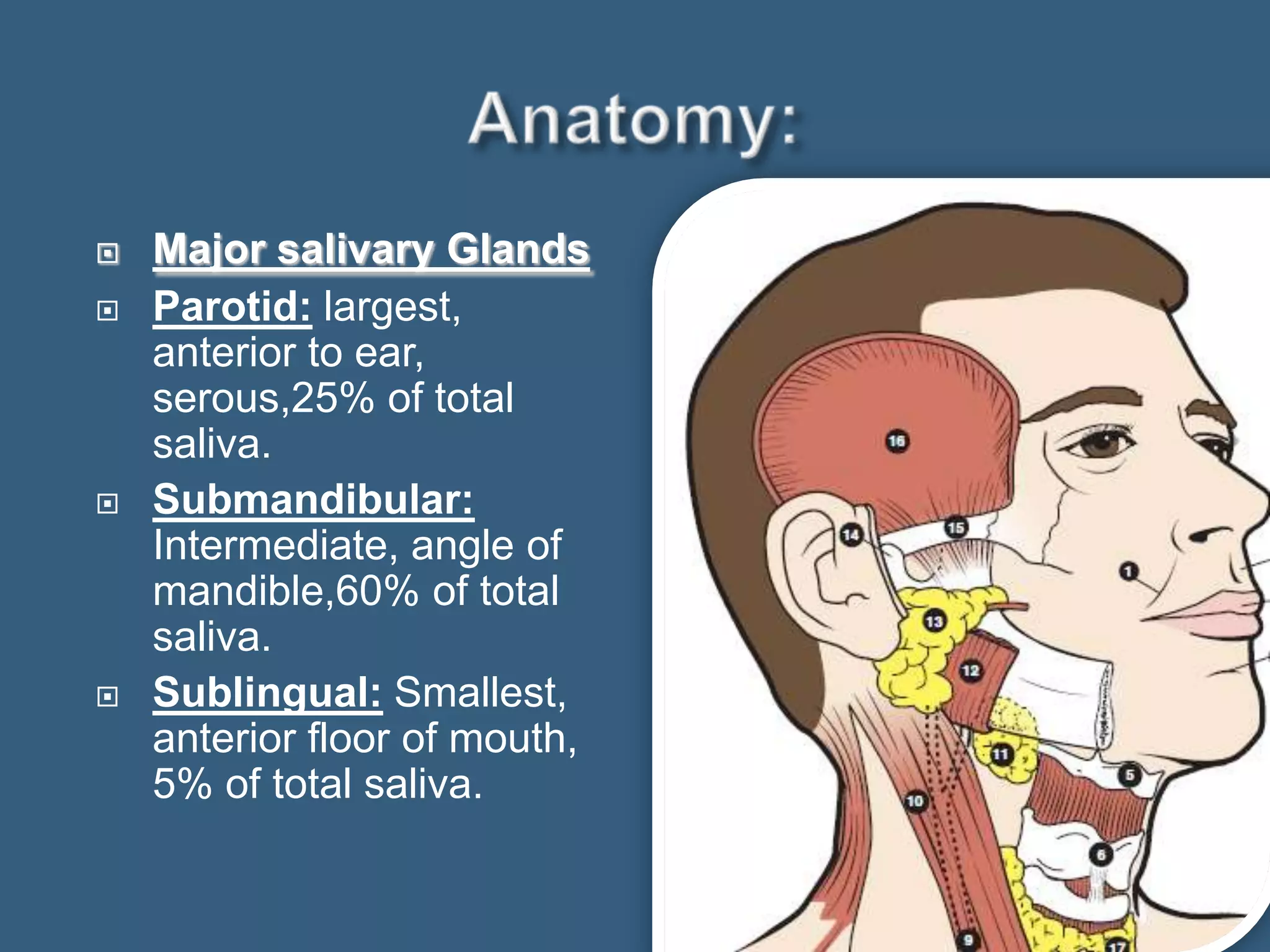
The human body has three pairs of major salivary glands: the parotid, submandibular, and sublingual glands. Each of these glands has a unique structure and function, contributing to the overall salivary glands function.
Parotid Glands
The parotid glands are the largest of the salivary glands and are located in front of and just below each ear. They produce a watery, serous saliva that is rich in enzymes, particularly amylase, which begins the breakdown of starches in the mouth. The parotid glands are connected to the mouth by the parotid duct, which opens near the upper second molar.
Submandibular Glands
The submandibular glands are located beneath the jawbone on either side of the face. They produce a mixed type of saliva that is both serous and mucous. This saliva contains enzymes and mucus, which help in lubrication and digestion. The submandibular glands are connected to the mouth by the submandibular duct, which opens under the tongue.
Sublingual Glands
The sublingual glands are the smallest of the major salivary glands and are located under the tongue. They produce a mucous-rich saliva that is primarily responsible for lubrication. The sublingual glands have multiple ducts that open directly into the floor of the mouth.
Functions of Saliva
Saliva, produced by the salivary glands, serves several important functions in the body. These functions are integral to the overall salivary glands function and include:
- Lubrication: Saliva helps to keep the mouth moist, facilitating speech and swallowing.
- Digestion: Enzymes in saliva, such as amylase, begin the breakdown of carbohydrates, aiding in the digestive process.
- Protection: Saliva contains antibodies and other protective substances that help to fight off infections and maintain oral health.
- Taste: Saliva dissolves food particles, allowing taste buds to detect flavors.
- pH Balance: Saliva helps to neutralize acids in the mouth, preventing tooth decay.
Salivary Glands and Oral Health
The salivary glands function is vital for maintaining good oral health. Saliva plays a key role in preventing tooth decay and gum disease by:
- Neutralizing acids produced by bacteria in the mouth.
- Washing away food particles and debris.
- Providing minerals that help to remineralize tooth enamel.
When the salivary glands do not function properly, it can lead to a condition known as xerostomia, or dry mouth. This condition can cause discomfort, difficulty swallowing, and an increased risk of tooth decay and gum disease.
Common Disorders of Salivary Glands
Several disorders can affect the salivary glands function, leading to various symptoms and complications. Some of the most common disorders include:
Sialadenitis
Sialadenitis is an inflammation of the salivary glands, often caused by bacterial or viral infections. Symptoms may include pain, swelling, and redness in the affected area. Treatment typically involves antibiotics or antiviral medications, along with supportive care.
Sialolithiasis
Sialolithiasis, also known as salivary gland stones, occurs when mineral deposits form within the salivary ducts, blocking the flow of saliva. This can cause pain, swelling, and infection. Treatment may involve removing the stone or, in severe cases, surgical intervention.
Sjogren's Syndrome
Sjogren's syndrome is an autoimmune disorder that affects the salivary and lacrimal glands, leading to dry mouth and dry eyes. This condition can also cause fatigue, joint pain, and an increased risk of dental caries. Treatment focuses on managing symptoms and preventing complications.
Mumps
Mumps is a viral infection that can cause swelling and inflammation of the salivary glands, particularly the parotid glands. Symptoms may include fever, headache, and pain in the affected area. Treatment is typically supportive, as the infection usually resolves on its own.
Diagnosis and Treatment of Salivary Gland Disorders
Diagnosing disorders of the salivary glands involves a combination of clinical examination, imaging studies, and laboratory tests. Treatment options depend on the underlying cause and severity of the condition. Some common diagnostic and treatment approaches include:
Clinical Examination
A thorough clinical examination by a healthcare provider can help identify signs of salivary gland disorders, such as swelling, tenderness, and redness. The provider may also assess the flow of saliva and check for any blockages or abnormalities.
Imaging Studies
Imaging studies, such as ultrasound, CT scan, or MRI, can provide detailed images of the salivary glands and ducts, helping to identify stones, tumors, or other abnormalities. These tests are often used to confirm a diagnosis and guide treatment decisions.
Laboratory Tests
Laboratory tests, including blood tests and saliva analysis, can help identify infections, autoimmune disorders, or other underlying conditions that may be affecting the salivary glands function. These tests are essential for determining the appropriate course of treatment.
Treatment Options
Treatment for salivary gland disorders may include medications, surgical procedures, or lifestyle modifications. Some common treatment options include:
- Medications: Antibiotics, antiviral drugs, or anti-inflammatory medications may be prescribed to treat infections or reduce inflammation.
- Surgical Procedures: In cases of salivary gland stones or tumors, surgical intervention may be necessary to remove the obstruction or affected tissue.
- Lifestyle Modifications: Staying hydrated, maintaining good oral hygiene, and avoiding foods that irritate the salivary glands can help manage symptoms and prevent complications.
📝 Note: It is important to consult with a healthcare provider for an accurate diagnosis and appropriate treatment plan.
Maintaining Salivary Gland Health
Maintaining the health of the salivary glands is essential for ensuring proper salivary glands function and overall well-being. Some tips for keeping the salivary glands healthy include:
- Staying hydrated by drinking plenty of water throughout the day.
- Maintaining good oral hygiene, including regular brushing and flossing.
- Avoiding tobacco and excessive alcohol consumption.
- Eating a balanced diet rich in fruits, vegetables, and whole grains.
- Regular dental check-ups to monitor oral health and detect any issues early.
By following these tips, individuals can help ensure that their salivary glands function optimally, promoting good oral health and overall well-being.
Salivary glands are essential for maintaining oral health and facilitating digestion. Understanding the salivary glands function and the various disorders that can affect them is crucial for appreciating their significance in the body’s overall well-being. By taking steps to maintain salivary gland health, individuals can promote good oral health and prevent complications associated with salivary gland disorders.
Related Terms:
- salivary glands function simple
- blocked salivary gland symptoms
- parotid salivary glands function
- saliva function
- salivary glands function in digestion
- salivary gland swelling