In the complex landscape of modern decision-making, the concept of rationality decision making stands out as a cornerstone for effective and efficient choices. Whether in personal life, business, or public policy, the ability to make rational decisions can significantly impact outcomes. This post delves into the intricacies of rationality in decision-making, exploring its principles, applications, and the challenges it presents.
Understanding Rationality Decision Making
Rationality decision making refers to the process of making choices based on logical reasoning and evidence. It involves evaluating options, considering their potential outcomes, and selecting the most beneficial course of action. This approach contrasts with intuitive or emotional decision-making, which relies more on gut feelings and personal biases.
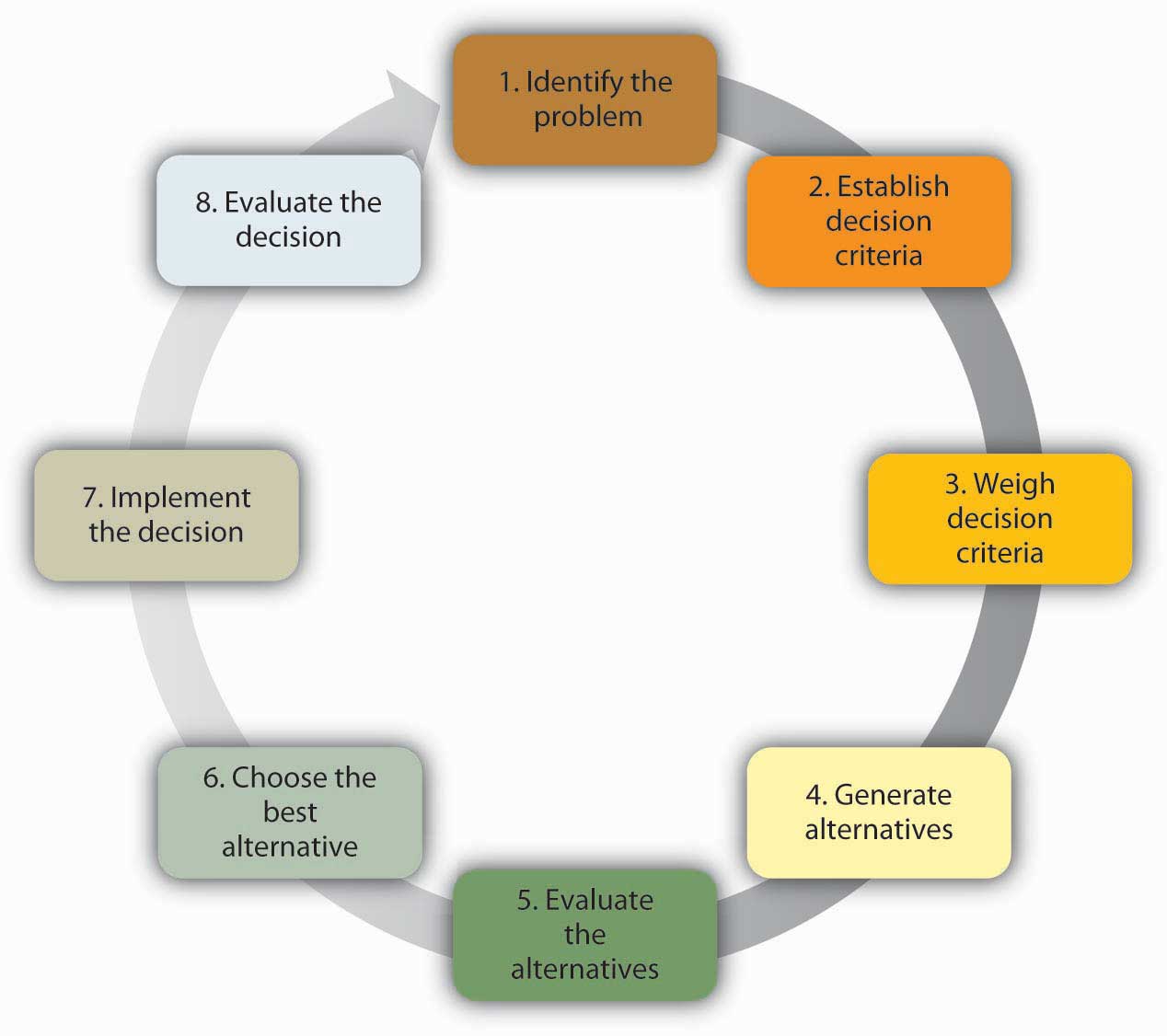
At its core, rationality decision making is about maximizing utility or benefit while minimizing costs and risks. This involves several key steps:
- Identifying the problem or decision to be made.
- Gathering relevant information and data.
- Evaluating the available options.
- Considering the potential outcomes and consequences of each option.
- Selecting the option that offers the best balance of benefits and risks.
- Implementing the chosen option and monitoring its outcomes.
The Principles of Rationality Decision Making
Several principles guide the process of rationality decision making. Understanding these principles can help individuals and organizations make more informed and effective decisions.
Logical Reasoning
Logical reasoning is the foundation of rationality decision making. It involves using deductive and inductive reasoning to evaluate options and predict outcomes. Deductive reasoning starts with general principles and applies them to specific cases, while inductive reasoning moves from specific observations to broader generalizations.
Evidence-Based Decision Making
Rationality decision making relies heavily on evidence and data. This involves collecting and analyzing relevant information to inform the decision-making process. Evidence-based decision making helps to reduce biases and ensure that choices are grounded in reality rather than speculation.
Cost-Benefit Analysis
Cost-benefit analysis is a crucial component of rationality decision making. It involves evaluating the potential costs and benefits of each option to determine which offers the best value. This analysis can be quantitative, involving numerical calculations, or qualitative, focusing on non-monetary factors such as social impact or environmental considerations.
Risk Assessment
Risk assessment is another important principle of rationality decision making. It involves identifying and evaluating the potential risks associated with each option. This includes considering the likelihood and impact of adverse events and developing strategies to mitigate these risks.
Applications of Rationality Decision Making
Rationality decision making is applicable in various domains, from personal finance to public policy. Understanding how it is used in different contexts can provide insights into its effectiveness and limitations.
Personal Decision Making
In personal decision making, rationality can help individuals make better choices about their finances, careers, and relationships. For example, when deciding whether to buy a house, a rational approach would involve evaluating the financial implications, considering the long-term benefits and risks, and comparing different options.
Business Decision Making
In the business world, rationality decision making is essential for strategic planning, resource allocation, and risk management. Companies use rational decision-making processes to evaluate investment opportunities, develop marketing strategies, and manage operational challenges. For instance, a business might use cost-benefit analysis to decide whether to launch a new product or enter a new market.
Public Policy Decision Making
In public policy, rationality decision making is crucial for developing effective and efficient policies. Governments use rational decision-making processes to address complex issues such as healthcare, education, and environmental protection. For example, policymakers might use evidence-based decision making to evaluate the effectiveness of different healthcare interventions and allocate resources accordingly.
Challenges in Rationality Decision Making
While rationality decision making offers numerous benefits, it also presents several challenges. Understanding these challenges can help individuals and organizations overcome them and make more effective decisions.
Information Overload
One of the main challenges in rationality decision making is information overload. In today's data-driven world, decision-makers often face an overwhelming amount of information, making it difficult to evaluate options and make informed choices. To overcome this challenge, it is essential to prioritize relevant information and use data analysis tools to simplify the decision-making process.
Cognitive Biases
Cognitive biases can also hinder rationality decision making. These biases, such as confirmation bias and anchoring bias, can lead decision-makers to interpret information in a way that supports their pre-existing beliefs or preferences, rather than evaluating options objectively. To mitigate the impact of cognitive biases, decision-makers can use techniques such as brainstorming, devil's advocacy, and scenario analysis.
Uncertainty and Complexity
Uncertainty and complexity are inherent in many decision-making situations, making it difficult to predict outcomes and evaluate options. In such cases, decision-makers may need to rely on heuristics or rules of thumb to simplify the decision-making process. However, it is important to recognize the limitations of these heuristics and use them judiciously.
Tools and Techniques for Rationality Decision Making
Several tools and techniques can enhance the process of rationality decision making. These tools can help decision-makers gather and analyze information, evaluate options, and make informed choices.
Decision Trees
Decision trees are visual representations of the decision-making process. They help decision-makers map out the possible outcomes of each option and evaluate their potential benefits and risks. Decision trees can be particularly useful in complex decision-making situations where multiple factors need to be considered.
SWOT Analysis
SWOT analysis is a strategic planning tool that helps decision-makers evaluate the strengths, weaknesses, opportunities, and threats associated with each option. This analysis can provide a comprehensive overview of the decision-making landscape and help identify the most promising courses of action.
Scenario Analysis
Scenario analysis involves developing and evaluating different scenarios to understand the potential outcomes of each option. This technique can help decision-makers anticipate future events and develop contingency plans. Scenario analysis is particularly useful in uncertain and complex decision-making situations.
Case Studies in Rationality Decision Making
Examining real-world case studies can provide valuable insights into the application of rationality decision making. These case studies illustrate how individuals and organizations use rational decision-making processes to address complex challenges and achieve their goals.
Case Study 1: Personal Finance
Consider the case of an individual deciding whether to invest in stocks or real estate. Using rationality decision making, the individual would gather information about the potential returns, risks, and costs associated with each option. They might use cost-benefit analysis to evaluate the financial implications and risk assessment to identify potential risks. Based on this analysis, the individual could make an informed decision about the best investment strategy.
Case Study 2: Business Strategy
In the business world, a company might use rationality decision making to decide whether to enter a new market. The company would gather information about market trends, competitive landscape, and regulatory environment. They might use SWOT analysis to evaluate the strengths, weaknesses, opportunities, and threats associated with entering the new market. Based on this analysis, the company could develop a strategic plan to maximize its chances of success.
Case Study 3: Public Policy
In public policy, a government might use rationality decision making to address a healthcare crisis. The government would gather data on the prevalence of the disease, available treatments, and public health infrastructure. They might use evidence-based decision making to evaluate the effectiveness of different interventions and allocate resources accordingly. Based on this analysis, the government could develop a comprehensive public health strategy to address the crisis.
📝 Note: The case studies provided are hypothetical and intended for illustrative purposes only. Real-world applications of rationality decision making may vary depending on the specific context and circumstances.
The Role of Technology in Rationality Decision Making
Technology plays a crucial role in enhancing the process of rationality decision making. Advanced tools and software can help decision-makers gather and analyze data, evaluate options, and make informed choices. Some of the key technologies that support rationality decision making include:
- Data analytics tools: These tools help decision-makers collect, analyze, and interpret data to inform their decisions. Examples include Excel, Tableau, and Power BI.
- Decision support systems: These systems provide decision-makers with structured information and analytical tools to support the decision-making process. Examples include SAP and Oracle.
- Artificial intelligence and machine learning: These technologies can analyze large datasets and identify patterns and trends that may not be apparent to human decision-makers. Examples include IBM Watson and Google's TensorFlow.
Ethical Considerations in Rationality Decision Making
While rationality decision making offers numerous benefits, it also raises important ethical considerations. Decision-makers must ensure that their choices are fair, transparent, and aligned with ethical principles. Some of the key ethical considerations in rationality decision making include:
- Bias and fairness: Decision-makers must be aware of potential biases in their decision-making processes and take steps to ensure that their choices are fair and unbiased.
- Transparency: Decision-makers should be transparent about their decision-making processes and the criteria they use to evaluate options. This helps to build trust and accountability.
- Accountability: Decision-makers should be held accountable for their choices and the outcomes they produce. This includes taking responsibility for any negative consequences and learning from mistakes.
Future Trends in Rationality Decision Making
As technology and data analytics continue to evolve, the field of rationality decision making is also likely to change. Some of the future trends in rationality decision making include:
- Increased use of artificial intelligence and machine learning: These technologies are expected to play an even greater role in decision-making processes, helping decision-makers analyze data and identify patterns more effectively.
- Integration of big data: The use of big data analytics will enable decision-makers to gather and analyze larger and more diverse datasets, providing deeper insights into decision-making situations.
- Enhanced decision support systems: Decision support systems will become more sophisticated, offering decision-makers more advanced tools and analytics to support their decision-making processes.
In conclusion, rationality decision making is a powerful approach to making informed and effective choices. By understanding its principles, applications, and challenges, individuals and organizations can enhance their decision-making processes and achieve better outcomes. Whether in personal life, business, or public policy, the ability to make rational decisions can significantly impact success and well-being. As technology and data analytics continue to evolve, the field of rationality decision making is poised to become even more important, offering new opportunities and challenges for decision-makers.
Related Terms:
- rational vs irrational decision making
- rational decision making quick check
- rational decision making steps
- rational decision making examples
- rational approach to decision making
- rational decision making pdf