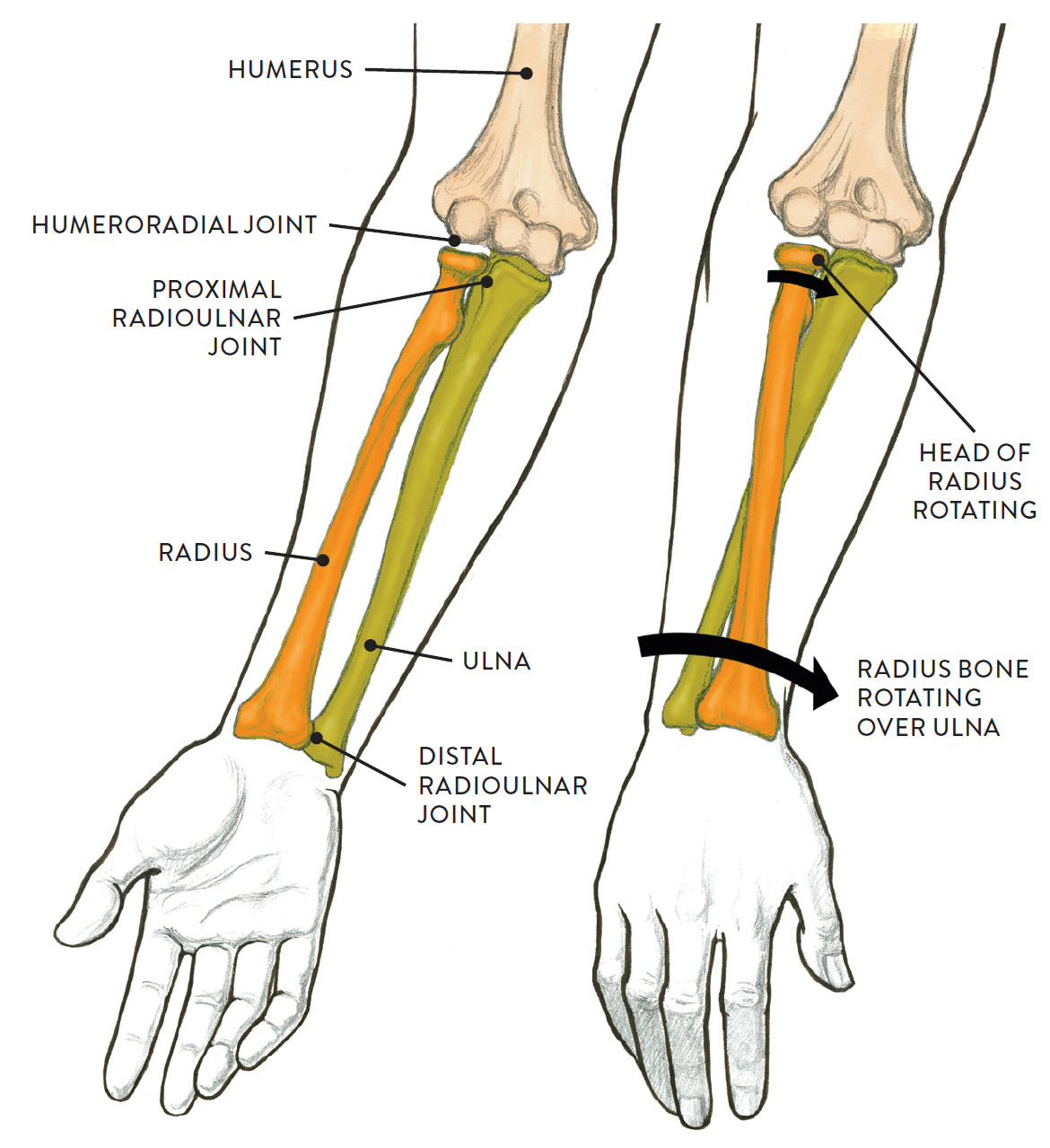
The Proximal Radioulnar Joint (PRUJ) is a crucial component of the elbow joint, facilitating the rotation of the forearm. This joint, located between the radius and ulna bones, allows for the supination and pronation movements essential for daily activities. Understanding the anatomy, function, and common issues related to the PRUJ is vital for healthcare professionals and individuals seeking to maintain elbow health.
Anatomy of the Proximal Radioulnar Joint
The Proximal Radioulnar Joint is a pivot joint that connects the proximal end of the radius to the ulna. This joint is stabilized by several ligaments, including the annular ligament, which encircles the radial head and holds it in place against the ulna. The joint capsule and surrounding muscles also contribute to its stability and function.
The PRUJ is part of the complex elbow joint, which includes the humeroulnar and humeroradial joints. Together, these joints allow for a wide range of movements, including flexion, extension, supination, and pronation. The PRUJ specifically enables the forearm to rotate around its longitudinal axis, which is crucial for activities like turning a doorknob or using a screwdriver.
Function of the Proximal Radioulnar Joint
The primary function of the Proximal Radioulnar Joint is to facilitate forearm rotation. This movement is essential for various activities that require the hand to be turned palm up (supination) or palm down (pronation). The PRUJ works in conjunction with the distal radioulnar joint to achieve these movements smoothly and efficiently.
Supination and pronation are critical for many daily tasks, including:
- Eating with utensils
- Writing or typing
- Opening jars or bottles
- Playing musical instruments
- Participating in sports that involve throwing or swinging motions
Any disruption in the function of the PRUJ can significantly impact an individual's ability to perform these activities, highlighting the importance of maintaining joint health.
Common Issues and Injuries
The Proximal Radioulnar Joint can be affected by various conditions and injuries, ranging from acute trauma to chronic degenerative changes. Some of the most common issues include:
Fractures
Fractures of the radial head or neck can occur due to falls or direct trauma to the elbow. These injuries can disrupt the normal function of the PRUJ, leading to pain, swelling, and limited range of motion. Treatment options may include immobilization, surgical fixation, or replacement of the radial head, depending on the severity of the fracture.
Dislocations
Dislocations of the radial head can occur in isolation or in conjunction with other elbow injuries. These dislocations can cause significant pain and instability in the elbow joint. Prompt reduction and immobilization are typically required to restore joint function and prevent long-term complications.
Annular Ligament Injuries
The annular ligament plays a crucial role in stabilizing the PRUJ. Injuries to this ligament can result from trauma or repetitive stress, leading to instability and pain. Treatment may involve immobilization, physical therapy, or surgical repair, depending on the extent of the injury.
Arthritis
Degenerative changes in the PRUJ can lead to arthritis, causing pain, stiffness, and limited range of motion. Osteoarthritis and rheumatoid arthritis are the most common types affecting this joint. Treatment options include medication, physical therapy, and in severe cases, surgical intervention such as joint replacement.
Radial Head Impingement
Radial head impingement occurs when the radial head becomes compressed or trapped within the joint, often due to inflammation or bony spurs. This condition can cause significant pain and limited rotation of the forearm. Treatment may involve anti-inflammatory medications, physical therapy, or surgical decompression.
Diagnosis and Treatment
Diagnosing issues related to the Proximal Radioulnar Joint typically involves a combination of clinical examination and imaging studies. A thorough medical history and physical examination can help identify the underlying cause of symptoms. Imaging studies, such as X-rays, CT scans, and MRI, provide detailed views of the joint and surrounding structures, aiding in accurate diagnosis.
Treatment options for PRUJ disorders vary depending on the specific condition and its severity. Conservative management may include:
- Rest and immobilization
- Pain management with medications
- Physical therapy to improve range of motion and strength
- Corticosteroid injections for inflammation
In cases where conservative treatment fails, surgical intervention may be necessary. Surgical options can include:
- Arthroscopic debridement
- Ligament repair or reconstruction
- Radial head replacement
- Joint fusion (arthrodesis)
Each surgical procedure has its own set of risks and benefits, and the choice of treatment should be individualized based on the patient's specific needs and goals.
Prevention and Maintenance
Preventing injuries and maintaining the health of the Proximal Radioulnar Joint involves several key strategies:
Regular exercise and stretching can help strengthen the muscles and ligaments around the joint, improving stability and reducing the risk of injury. Activities that promote forearm rotation, such as tennis or golf, can be particularly beneficial. However, it is essential to use proper technique and avoid overuse to prevent strain and injury.
Proper ergonomics in daily activities and work environments can also help prevent PRUJ injuries. Maintaining good posture, using ergonomic tools, and taking regular breaks can reduce the risk of repetitive stress injuries.
For individuals involved in high-risk activities or sports, wearing protective gear can provide an additional layer of safety. Elbow pads and supportive braces can help absorb impact and stabilize the joint, reducing the risk of fractures and dislocations.
If you experience pain or discomfort in the elbow joint, it is essential to seek medical attention promptly. Early diagnosis and treatment can prevent long-term complications and improve outcomes.
In some cases, lifestyle modifications may be necessary to manage chronic conditions affecting the PRUJ. Maintaining a healthy weight, avoiding smoking, and managing underlying medical conditions can all contribute to better joint health.
Physical therapy plays a crucial role in both the prevention and rehabilitation of PRUJ injuries. A physical therapist can design a personalized exercise program to improve strength, flexibility, and range of motion, helping to prevent future injuries and enhance overall joint function.
In summary, maintaining the health of the Proximal Radioulnar Joint involves a combination of regular exercise, proper ergonomics, protective gear, and prompt medical attention when needed. By taking proactive steps, individuals can reduce the risk of injuries and enjoy optimal joint function.
💡 Note: Always consult with a healthcare professional before starting any new exercise or treatment program, especially if you have a pre-existing condition or history of joint injuries.
In conclusion, the Proximal Radioulnar Joint is a vital component of the elbow joint, enabling essential forearm rotations. Understanding its anatomy, function, and common issues is crucial for maintaining joint health and addressing any problems that may arise. By taking proactive measures and seeking appropriate medical care, individuals can ensure the longevity and functionality of their PRUJ, enhancing their overall quality of life.
Related Terms:
- radioulnar joint class
- proximal and distal radioulnar joints
- radioulnar type of joint
- super radioulnar joint
- radio and ulna
- radioulnar joint muscles