Water pollution is a critical environmental issue that affects ecosystems, human health, and economic activities worldwide. Understanding the sources and impacts of water pollution is essential for developing effective mitigation strategies. One of the key distinctions in water pollution is between point and nonpoint pollution sources. This blog post delves into the differences between point and nonpoint pollution, their impacts, and strategies for managing these sources to improve water quality.
Understanding Point Pollution
Point pollution refers to contaminants that enter water bodies from identifiable, single sources. These sources are often industrial facilities, wastewater treatment plants, or specific discharge points. Point pollution is relatively easier to monitor and regulate compared to nonpoint pollution because it originates from well-defined locations.
Examples of point pollution sources include:
- Industrial discharge: Factories and manufacturing plants often release wastewater containing chemicals, heavy metals, and other pollutants into nearby water bodies.
- Sewage treatment plants: Although these facilities treat wastewater, they can still release pollutants into water bodies if not properly managed.
- Agricultural runoff: While often considered nonpoint pollution, concentrated animal feeding operations (CAFOs) can be point sources of pollution due to their large-scale waste management practices.
Understanding Nonpoint Pollution
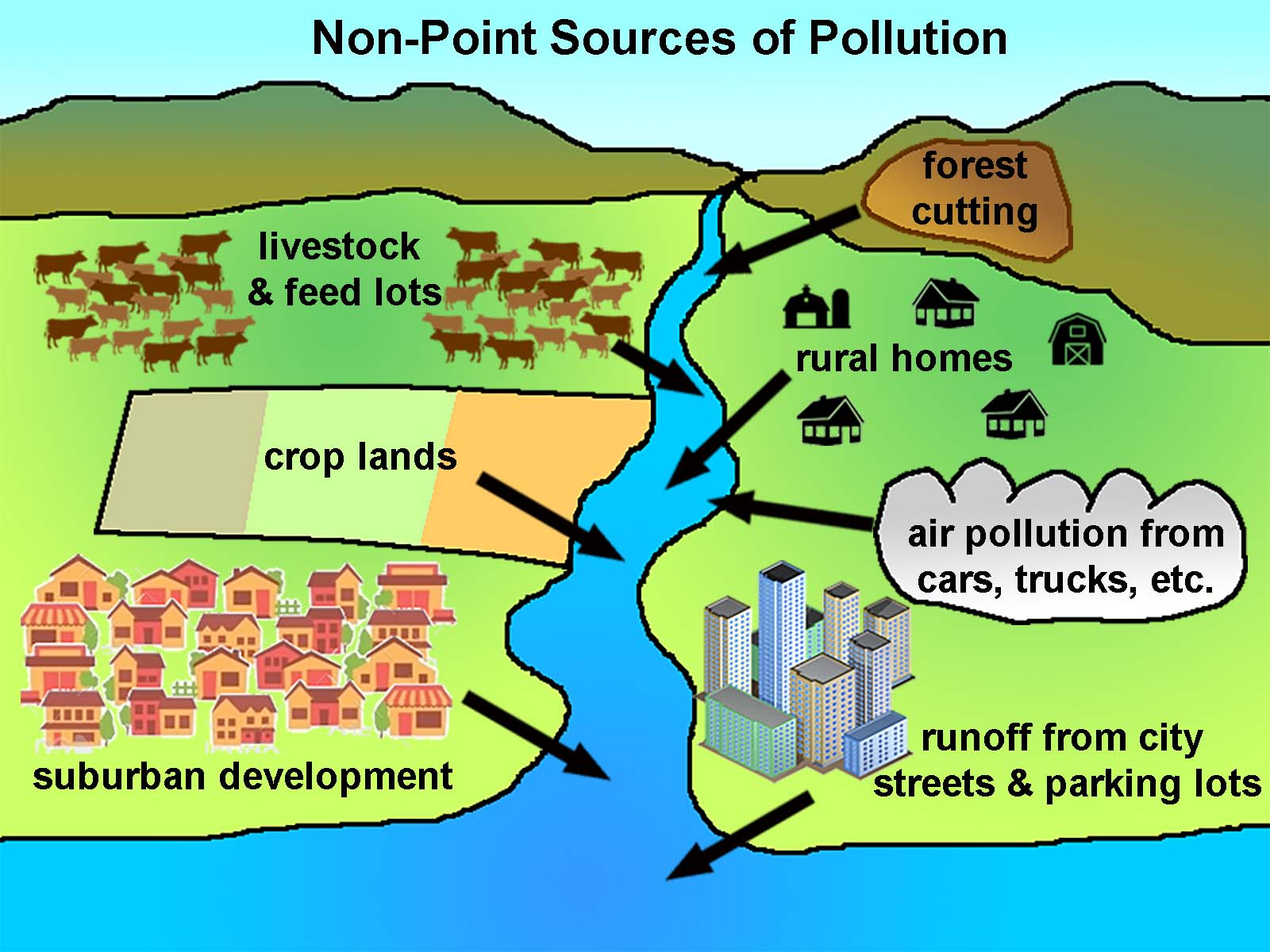
Nonpoint pollution, on the other hand, comes from diffuse sources that are not easily identifiable. These sources can include agricultural runoff, urban stormwater, and atmospheric deposition. Nonpoint pollution is more challenging to manage because it originates from various activities spread over large areas.
Examples of nonpoint pollution sources include:
- Agricultural runoff: Fertilizers, pesticides, and animal waste from farms can wash into water bodies during rainfall, leading to nutrient pollution and eutrophication.
- Urban stormwater: Rainwater runoff from cities and suburbs can carry pollutants such as oil, grease, heavy metals, and litter into water bodies.
- Atmospheric deposition: Air pollutants can settle into water bodies, contributing to acid rain and other forms of water pollution.
Impacts of Point and Nonpoint Pollution
Both point and nonpoint pollution have significant impacts on water quality and ecosystems. Understanding these impacts is crucial for developing effective management strategies.
Impacts of point pollution include:
- Direct contamination of water bodies with toxic chemicals and heavy metals.
- Health risks to humans and wildlife due to exposure to pollutants.
- Economic losses due to the degradation of water resources and the need for costly remediation efforts.
Impacts of nonpoint pollution include:
- Nutrient pollution leading to algal blooms and eutrophication.
- Sedimentation and habitat destruction due to soil erosion.
- Contamination of groundwater and surface water with pesticides and other chemicals.
Managing Point Pollution
Managing point pollution involves regulating and monitoring specific sources of contamination. Effective strategies include:
- Regulatory compliance: Ensuring that industrial facilities and wastewater treatment plants comply with environmental regulations and standards.
- Wastewater treatment: Implementing advanced treatment technologies to remove pollutants from wastewater before it is discharged into water bodies.
- Monitoring and enforcement: Regularly monitoring point sources and enforcing penalties for non-compliance.
🔍 Note: Effective management of point pollution requires collaboration between regulatory agencies, industries, and communities to ensure compliance and continuous improvement in pollution control measures.
Managing Nonpoint Pollution
Managing nonpoint pollution is more complex due to its diffuse nature. Effective strategies include:
- Best management practices (BMPs): Implementing BMPs in agriculture, such as conservation tillage, cover cropping, and nutrient management, to reduce runoff and erosion.
- Urban stormwater management: Designing and maintaining green infrastructure, such as rain gardens, bioswales, and permeable pavements, to capture and treat stormwater runoff.
- Public education and outreach: Raising awareness about the impacts of nonpoint pollution and encouraging individuals and communities to adopt practices that reduce pollution.
🌱 Note: Successful management of nonpoint pollution requires a holistic approach that involves multiple stakeholders, including farmers, urban planners, and community members.
Case Studies: Point Nonpoint Pollution Management
Several case studies illustrate the effectiveness of point and nonpoint pollution management strategies. These examples highlight the importance of integrated approaches to water quality improvement.
One notable case study is the Chesapeake Bay restoration effort. The Chesapeake Bay is one of the largest estuaries in the United States and has been severely impacted by both point and nonpoint pollution. The restoration effort involves:
- Reducing nutrient and sediment loads from agricultural runoff through the implementation of BMPs.
- Upgrading wastewater treatment plants to improve the quality of discharged effluent.
- Enhancing urban stormwater management practices to capture and treat runoff.
Another example is the Great Lakes Water Quality Agreement, a binational effort between the United States and Canada to protect and restore the Great Lakes. This agreement focuses on:
- Reducing phosphorus loading from point sources, such as wastewater treatment plants.
- Implementing nonpoint pollution control measures, such as agricultural BMPs and urban stormwater management.
- Monitoring and assessing water quality to track progress and identify areas for improvement.
Future Directions in Point Nonpoint Pollution Management
As our understanding of point and nonpoint pollution continues to evolve, so do the strategies for managing these sources. Future directions in pollution management include:
- Advanced technologies: Developing and deploying advanced technologies for monitoring, treating, and preventing pollution.
- Integrated approaches: Adopting integrated approaches that address both point and nonpoint pollution sources simultaneously.
- Community engagement: Encouraging greater community involvement in pollution management efforts through education, outreach, and volunteer programs.
By embracing these future directions, we can enhance our ability to protect water resources and ensure a sustainable future for all.
In conclusion, understanding the differences between point and nonpoint pollution is crucial for developing effective management strategies. Both types of pollution have significant impacts on water quality and ecosystems, and addressing them requires a multifaceted approach. By implementing regulatory compliance, advanced treatment technologies, best management practices, and community engagement, we can mitigate the impacts of point and nonpoint pollution and protect our precious water resources for future generations.
Related Terms:
- point and nonpoint source
- non point source pollution definition
- nonpoint source pollution examples
- what is nonpoint source pollution
- point vs nonpoint pollution examples
- point source pollution vs non