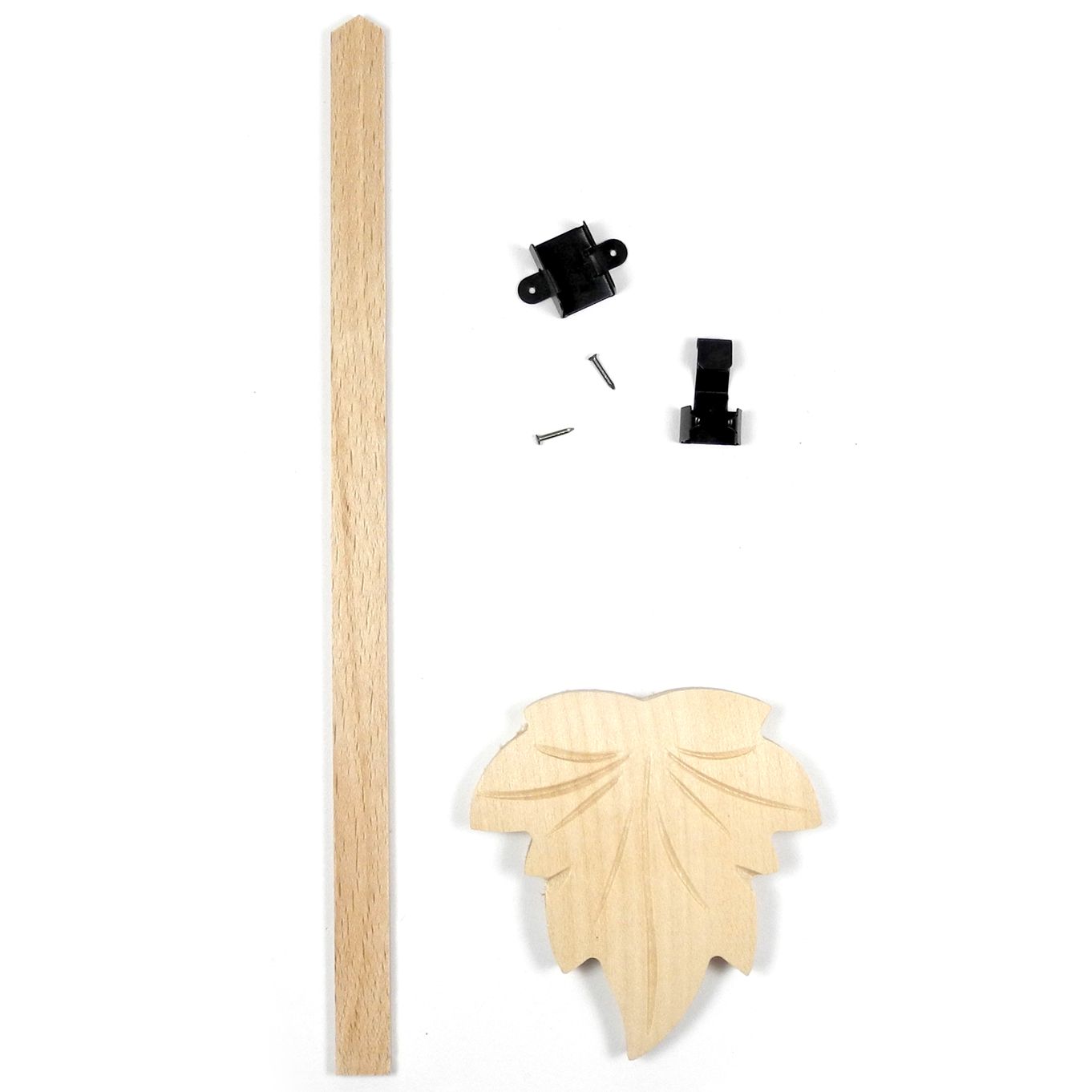
The pendulum of a clock is a fascinating mechanism that has been a cornerstone of timekeeping for centuries. Its rhythmic swing has not only kept time but also inspired countless innovations in horology and physics. Understanding the pendulum of a clock involves delving into its history, mechanics, and the principles that govern its operation.
The History of the Pendulum Clock
The pendulum clock was invented in 1656 by Christiaan Huygens, a Dutch scientist and mathematician. Before the pendulum clock, timekeeping devices were notoriously inaccurate, relying on mechanisms like water clocks and hourglasses. The introduction of the pendulum revolutionized timekeeping, providing a level of precision that was previously unattainable.
Huygens' invention was based on the principles of harmonic motion, which he had studied extensively. He realized that a pendulum's regular swing could be used to regulate the movement of a clock, making it far more accurate than any previous timekeeping device. This discovery laid the foundation for modern horology and had a profound impact on navigation, astronomy, and scientific research.
The Mechanics of the Pendulum Clock
The pendulum of a clock operates on the principle of harmonic oscillation. A simple pendulum consists of a weight suspended from a pivot point, which swings back and forth under the influence of gravity. The period of oscillation—the time it takes for the pendulum to complete one full cycle—is determined by the length of the pendulum and the acceleration due to gravity.
The key components of a pendulum clock include:
- The pendulum itself, which consists of a weight (often called a bob) suspended from a rod or wire.
- The escapement mechanism, which regulates the release of energy to the pendulum, ensuring a consistent swing.
- The gear train, which transfers the energy from the power source (usually a weight or spring) to the escapement and pendulum.
- The dial and hands, which display the time.
The escapement is crucial to the operation of the pendulum clock. It acts as a regulator, releasing a small amount of energy to the pendulum with each swing. This ensures that the pendulum maintains a consistent period of oscillation, which in turn keeps the clock accurate. There are several types of escapements, including the verge escapement, the anchor escapement, and the deadbeat escapement, each with its own advantages and disadvantages.
The Principles of Harmonic Motion
The pendulum of a clock operates on the principles of harmonic motion, which is a type of periodic motion where the restoring force is directly proportional to the displacement. In the case of a pendulum, the restoring force is gravity, which pulls the pendulum back towards its equilibrium position.
The period of oscillation (T) of a simple pendulum can be calculated using the formula:
📝 Note: The formula for the period of a simple pendulum is T = 2π√(L/g), where L is the length of the pendulum and g is the acceleration due to gravity.
This formula shows that the period of oscillation is independent of the mass of the pendulum bob, depending only on the length of the pendulum and the acceleration due to gravity. This is why pendulums of different masses but the same length will swing at the same rate.
The Role of the Pendulum in Modern Timekeeping
While the pendulum clock has largely been replaced by more accurate and convenient electronic timekeeping devices, the principles of the pendulum of a clock continue to influence modern technology. The pendulum's harmonic motion is still used in some high-precision clocks and scientific instruments, where its stability and accuracy are invaluable.
In addition, the study of pendulums has contributed to our understanding of physics and engineering. The principles of harmonic motion are applied in a wide range of fields, from mechanical engineering to electronics. For example, the pendulum's regular swing is analogous to the oscillation of electrical signals in circuits, and the principles of harmonic motion are used in the design of filters and oscillators.
Types of Pendulum Clocks
There are several types of pendulum clocks, each with its own unique features and advantages. Some of the most common types include:
| Type of Pendulum Clock | Description |
|---|---|
| Grandfather Clock | A tall, freestanding pendulum clock with a long pendulum and a weight-driven mechanism. Often features a decorative case and is designed to be a statement piece in a room. |
| Wall Clock | A pendulum clock designed to be mounted on a wall. Typically has a shorter pendulum and a spring-driven mechanism. |
| Regulator Clock | A high-precision pendulum clock designed for scientific or industrial use. Features a long pendulum and a precise escapement mechanism to ensure accuracy. |
| Cuckoo Clock | A decorative pendulum clock that features a cuckoo bird that emerges from the clock to announce the hour. Often has a traditional, folk art design. |
Each type of pendulum clock has its own unique characteristics and is suited to different purposes. Grandfather clocks, for example, are often used as decorative pieces in homes, while regulator clocks are used in scientific and industrial settings where precision is crucial.
Maintaining a Pendulum Clock
Maintaining a pendulum clock involves regular cleaning, lubrication, and adjustment to ensure it continues to operate accurately. Here are some key steps to maintaining a pendulum clock:
- Cleaning: Regularly clean the clock to remove dust and dirt, which can affect its performance. Use a soft brush or compressed air to clean the mechanism, and avoid using water or cleaning solutions that could damage the clock.
- Lubrication: Lubricate the moving parts of the clock to reduce friction and wear. Use a high-quality clock oil designed for pendulum clocks, and apply it sparingly to the pivot points and gears.
- Adjustment: Adjust the pendulum length to ensure the clock keeps accurate time. The pendulum length can be adjusted by moving the weight up or down on the rod. A longer pendulum will slow the clock down, while a shorter pendulum will speed it up.
- Escapement Maintenance: Regularly check and maintain the escapement mechanism to ensure it is functioning properly. The escapement is a critical component of the clock, and any issues with it can affect the clock's accuracy.
By following these steps, you can ensure that your pendulum clock continues to operate accurately and reliably for many years to come.
📝 Note: Always consult the manufacturer's instructions for specific maintenance guidelines, as different types of pendulum clocks may have unique requirements.
Pendulum clocks are not only functional timekeeping devices but also works of art and engineering. Their intricate mechanisms and precise operation have captivated people for centuries, and their influence can still be seen in modern technology. Whether you are a horology enthusiast, a history buff, or simply appreciate the beauty of a well-crafted clock, the pendulum of a clock is a fascinating subject to explore.
Understanding the pendulum of a clock involves delving into its history, mechanics, and the principles that govern its operation. From the invention of the pendulum clock by Christiaan Huygens to the modern applications of harmonic motion, the pendulum has played a crucial role in the development of timekeeping and scientific research. By maintaining and appreciating these remarkable devices, we can ensure that the legacy of the pendulum clock continues to inspire future generations.
Related Terms:
- pendulum clock parts diagram
- how accurate are pendulum clocks
- mechanical clock works with pendulum
- how do pendulum clock tick
- pendulum clock diagram
- clock works with pendulum