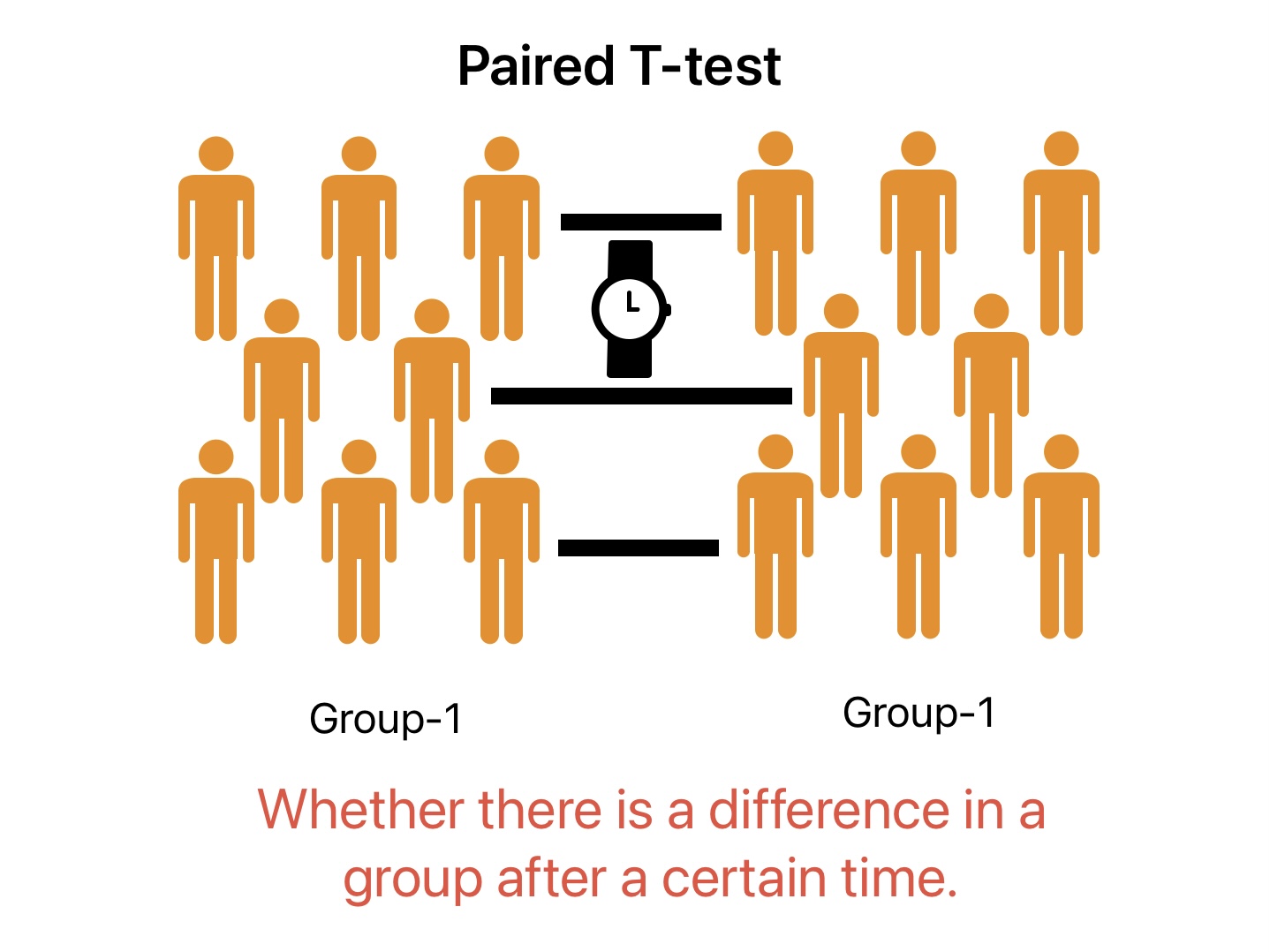
Statistical analysis is a cornerstone of data science and research, providing the tools necessary to draw meaningful conclusions from data. One of the fundamental techniques in this field is the paired t-test, a method used to compare the means of the same group under two different conditions. This blog post will delve into the intricacies of the paired t-test, providing a comprehensive paired t test example to illustrate its application and significance.
Understanding the Paired T-Test
The paired t-test, also known as the dependent t-test, is used when you have two related groups and you want to compare the means of these groups. This test is particularly useful in scenarios where the same subjects are measured twice, such as before and after a treatment, or under two different conditions. The key assumption is that the differences between the pairs are approximately normally distributed.
When to Use a Paired T-Test
The paired t-test is appropriate in various situations, including:
- Before-and-after studies: Measuring the same subjects before and after an intervention.
- Matched pairs: Comparing two groups that are matched on certain characteristics.
- Repeated measures: When the same subjects are measured multiple times under different conditions.
Steps to Perform a Paired T-Test
Performing a paired t-test involves several steps. Here is a detailed guide:
Step 1: Formulate the Hypotheses
Before conducting the test, you need to formulate your null and alternative hypotheses. The null hypothesis (H0) typically states that there is no difference between the means of the two conditions. The alternative hypothesis (H1) states that there is a difference.
- Null Hypothesis (H0): μD = 0 (There is no difference between the means)
- Alternative Hypothesis (H1): μD ≠ 0 (There is a difference between the means)
Step 2: Collect and Prepare Data
Collect data from the same subjects under two different conditions. Ensure that the data is paired correctly. For example, if you are measuring blood pressure before and after a treatment, each subject should have two measurements: one before and one after.
Step 3: Calculate the Differences
Calculate the difference between the paired observations. This involves subtracting one measurement from the other for each pair.
Step 4: Check Assumptions
Ensure that the differences are approximately normally distributed. This can be checked using a histogram or a Q-Q plot. If the differences are not normally distributed, you may need to use a non-parametric test like the Wilcoxon signed-rank test.
Step 5: Perform the Paired T-Test
Use statistical software or a calculator to perform the paired t-test. The test statistic is calculated as follows:
t = (mean of differences) / (standard error of the differences)
The standard error of the differences is calculated as the standard deviation of the differences divided by the square root of the number of pairs.
Step 6: Determine the P-Value
The p-value is used to determine the significance of the results. It represents the probability of observing the data, or something more extreme, assuming the null hypothesis is true. A common threshold for significance is 0.05.
Step 7: Interpret the Results
If the p-value is less than the significance level (e.g., 0.05), you reject the null hypothesis and conclude that there is a significant difference between the means. If the p-value is greater than the significance level, you fail to reject the null hypothesis.
📝 Note: It's important to report the effect size along with the p-value to provide a complete picture of the results. The effect size indicates the magnitude of the difference.
Paired T Test Example
Let’s walk through a paired t test example to illustrate the process. Suppose you are conducting a study to determine the effectiveness of a new medication on reducing blood pressure. You measure the blood pressure of 10 participants before and after administering the medication.
Data Collection
Here is the data collected:
| Participant | Before Treatment | After Treatment |
|---|---|---|
| 1 | 140 | 130 |
| 2 | 150 | 145 |
| 3 | 135 | 125 |
| 4 | 145 | 138 |
| 5 | 155 | 148 |
| 6 | 142 | 132 |
| 7 | 138 | 128 |
| 8 | 148 | 140 |
| 9 | 152 | 142 |
| 10 | 144 | 135 |
Calculate the Differences
Calculate the differences between the before and after measurements:
| Participant | Difference (Before - After) |
|---|---|
| 1 | 10 |
| 2 | 5 |
| 3 | 10 |
| 4 | 7 |
| 5 | 7 |
| 6 | 10 |
| 7 | 10 |
| 8 | 8 |
| 9 | 10 |
| 10 | 9 |
Perform the Paired T-Test
Using statistical software, you can perform the paired t-test on the differences. The output might look something like this:
t = 10.00, df = 9, p-value = 0.00001
Interpret the Results
The p-value is much less than 0.05, indicating that there is a significant difference between the blood pressure measurements before and after the treatment. Therefore, you can conclude that the new medication is effective in reducing blood pressure.
📝 Note: Always report the confidence interval along with the p-value to provide a complete understanding of the results. The confidence interval gives a range within which the true difference is likely to fall.
Assumptions and Limitations
The paired t-test relies on several assumptions:
- Normality: The differences between the pairs should be approximately normally distributed.
- Independence: The pairs should be independent of each other.
- No Outliers: The data should not contain outliers that could skew the results.
If these assumptions are violated, the results of the paired t-test may not be valid. In such cases, alternative methods like the Wilcoxon signed-rank test can be used.
Alternative Methods
When the assumptions of the paired t-test are not met, you may need to consider alternative methods. Some common alternatives include:
- Wilcoxon Signed-Rank Test: A non-parametric test used when the differences are not normally distributed.
- Repeated Measures ANOVA: Used when there are more than two related groups.
- Bootstrapping: A resampling method that can be used to estimate the distribution of the test statistic.
Each of these methods has its own strengths and weaknesses, and the choice of method depends on the specific characteristics of your data and research question.
📝 Note: Always check the assumptions of your statistical test before interpreting the results. Violating the assumptions can lead to incorrect conclusions.
Conclusion
The paired t-test is a powerful tool for comparing the means of the same group under two different conditions. By following the steps outlined in this blog post and understanding the assumptions and limitations, you can effectively use the paired t-test to draw meaningful conclusions from your data. Whether you are conducting a before-and-after study or comparing matched pairs, the paired t-test provides a robust method for statistical analysis. Always remember to report the effect size and confidence interval along with the p-value to provide a comprehensive understanding of your results. This approach ensures that your findings are both statistically significant and practically meaningful.
Related Terms:
- paired two sample t test
- paired samples t test example
- pairs samples t test
- paired sample t test table
- paired samples t test formula