Understanding the Normal O2 Saturation Rate is crucial for maintaining overall health and well-being. Oxygen saturation, often referred to as SpO2, measures the amount of oxygen carried by red blood cells from the lungs to the rest of the body. This metric is essential for diagnosing and managing various respiratory and cardiovascular conditions. This post delves into the significance of the Normal O2 Saturation Rate, how it is measured, factors affecting it, and what to do if your levels are outside the normal range.
What is Normal O2 Saturation Rate?
The Normal O2 Saturation Rate typically ranges between 95% and 100%. This means that 95% to 100% of the hemoglobin in your red blood cells is saturated with oxygen. Maintaining this range is vital for ensuring that your body's tissues and organs receive adequate oxygen to function properly. Oxygen saturation levels below 95% may indicate hypoxia, a condition where the body is not getting enough oxygen.
How is Oxygen Saturation Measured?
Oxygen saturation is commonly measured using a pulse oximeter, a small device that clips onto a finger, earlobe, or toe. The device uses light to determine the amount of oxygen in the blood. Here are the steps to measure oxygen saturation using a pulse oximeter:
- Turn on the pulse oximeter and ensure the battery is charged.
- Clip the device onto a clean finger, earlobe, or toe.
- Wait for a few seconds until the device displays the oxygen saturation level and heart rate.
- Record the reading and compare it to the Normal O2 Saturation Rate range.
🔍 Note: Ensure the device is properly calibrated and the area where the clip is placed is clean and free from nail polish or artificial nails, as these can interfere with the reading.
Factors Affecting Oxygen Saturation Levels
Several factors can influence oxygen saturation levels, including:
- Altitude: Higher altitudes have lower oxygen levels, which can decrease oxygen saturation.
- Respiratory Conditions: Conditions like asthma, COPD, and pneumonia can affect lung function and reduce oxygen saturation.
- Cardiovascular Conditions: Heart diseases and conditions that affect blood flow can also impact oxygen saturation.
- Anemia: Low hemoglobin levels can reduce the blood's oxygen-carrying capacity.
- Smoking: Smoking damages the lungs and reduces their ability to absorb oxygen.
- Physical Activity: Intense physical activity can temporarily lower oxygen saturation levels.
Interpreting Oxygen Saturation Readings
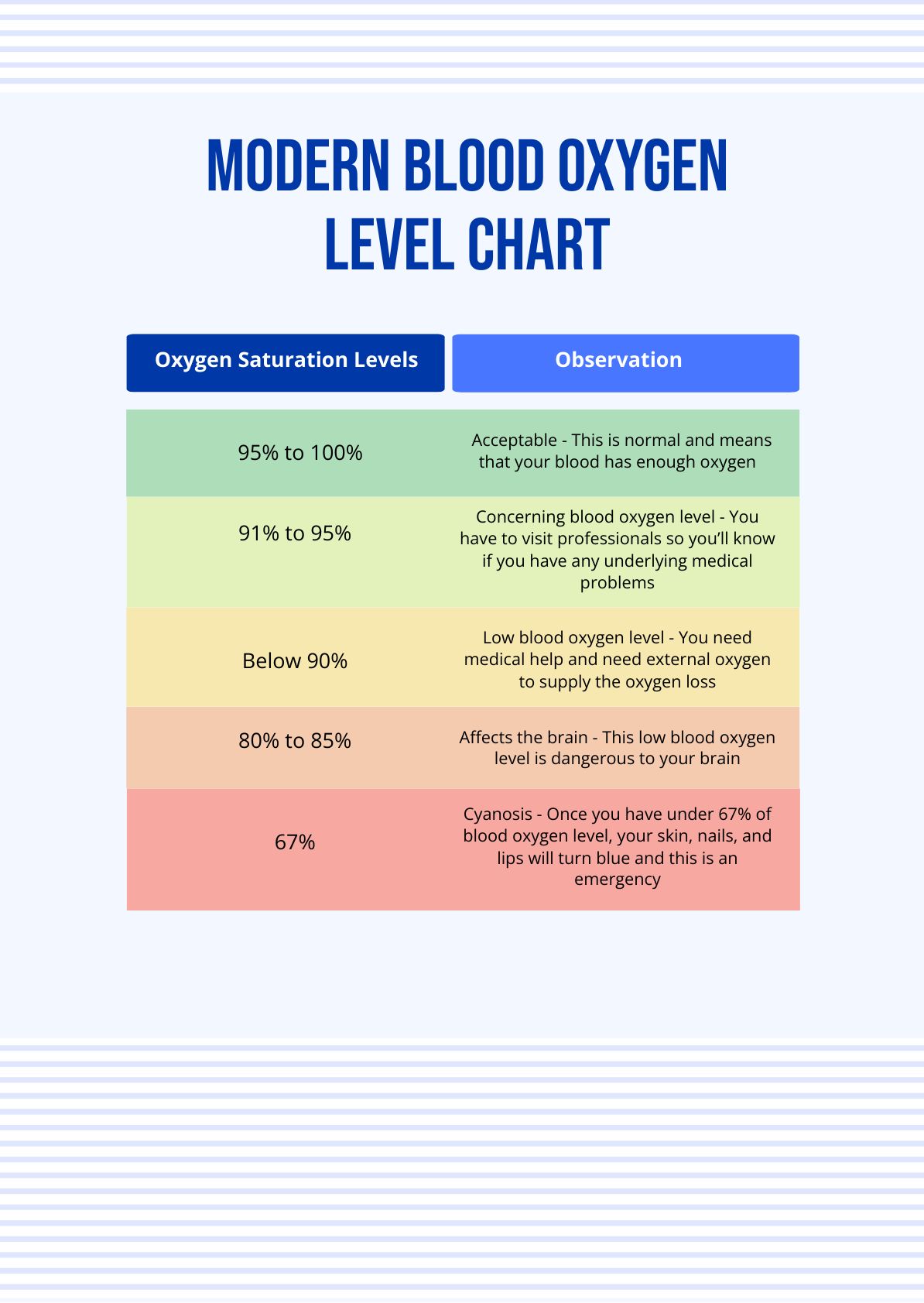
Understanding what your oxygen saturation reading means is essential for taking appropriate action. Here is a general guide to interpreting oxygen saturation levels:
| Oxygen Saturation Level | Interpretation |
|---|---|
| 95% - 100% | Normal range |
| 90% - 94% | Mild hypoxia; may require monitoring |
| 85% - 89% | Moderate hypoxia; medical attention may be needed |
| Below 85% | Severe hypoxia; immediate medical attention required |
If your oxygen saturation levels are consistently below 95%, it is important to consult a healthcare provider. They can perform further tests to determine the underlying cause and recommend appropriate treatment.
Maintaining Healthy Oxygen Saturation Levels
Maintaining healthy oxygen saturation levels involves a combination of lifestyle choices and medical interventions. Here are some tips to help you keep your oxygen saturation within the Normal O2 Saturation Rate range:
- Quit Smoking: Smoking damages the lungs and reduces their ability to absorb oxygen. Quitting smoking can significantly improve lung function and oxygen saturation.
- Regular Exercise: Regular physical activity helps improve lung capacity and overall cardiovascular health, which can enhance oxygen saturation.
- Healthy Diet: A balanced diet rich in fruits, vegetables, and lean proteins can support overall health and improve oxygen-carrying capacity.
- Avoid Altitude Changes: If you live at a high altitude, consider spending time at lower altitudes to improve oxygen saturation.
- Manage Chronic Conditions: If you have a chronic respiratory or cardiovascular condition, follow your healthcare provider's recommendations for managing the condition.
When to Seek Medical Attention
While occasional fluctuations in oxygen saturation levels are normal, persistent or severe drops can indicate a serious health issue. Seek medical attention if you experience any of the following symptoms along with low oxygen saturation:
- Shortness of breath
- Rapid heart rate
- Chest pain
- Confusion or disorientation
- Blueness of the lips or fingernails (cyanosis)
These symptoms can indicate a medical emergency, and prompt treatment is essential to prevent complications.
🚨 Note: If you or someone else is experiencing severe symptoms, call emergency services immediately.
Oxygen Therapy for Low Oxygen Saturation
For individuals with chronic or severe low oxygen saturation, oxygen therapy may be recommended. Oxygen therapy involves the use of supplemental oxygen to increase the amount of oxygen in the blood. There are several types of oxygen therapy devices, including:
- Nasal Cannula: A small tube that delivers oxygen through the nostrils.
- Face Mask: A mask that covers the nose and mouth, providing a higher concentration of oxygen.
- Venturi Mask: A type of face mask that delivers a precise concentration of oxygen.
- Oxygen Concentrator: A machine that concentrates oxygen from the surrounding air and delivers it to the user.
Oxygen therapy should be prescribed and monitored by a healthcare provider to ensure it is used safely and effectively.
Oxygen saturation is a critical indicator of overall health and well-being. Understanding the Normal O2 Saturation Rate and how to maintain it can help you take proactive steps to ensure your body receives the oxygen it needs. Regular monitoring, lifestyle adjustments, and medical interventions when necessary can all contribute to maintaining healthy oxygen saturation levels. By staying informed and taking appropriate actions, you can support your respiratory and cardiovascular health and improve your quality of life.
Related Terms:
- normal oxygen levels by age
- normal spo2 by age
- normal oxygen saturation for seniors
- normal o2 sat for adults
- normal o2 saturation room air
- normal oxygen saturation by age