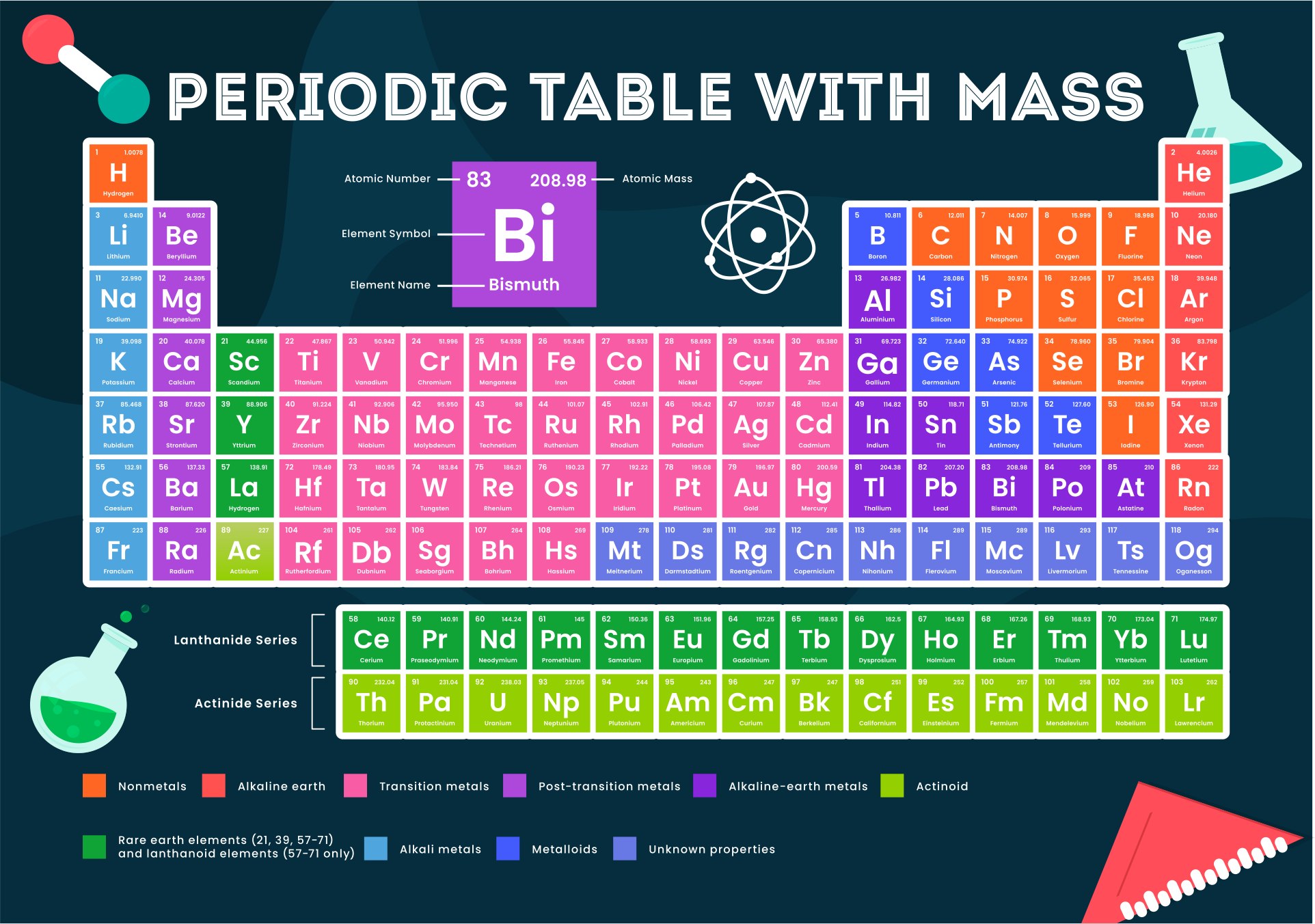
Understanding the properties of chemical compounds is fundamental in the field of chemistry. One such property is the molar mass, which is crucial for various calculations and experiments. Today, we will delve into the concept of molar mass, with a specific focus on the molar mass of F2, or fluorine gas.
Understanding Molar Mass
Molar mass is defined as the mass of one mole of a substance. It is expressed in grams per mole (g/mol) and is calculated by summing the atomic masses of all the atoms in a molecule. For elements, the molar mass is simply the atomic mass listed on the periodic table. For compounds, it is the sum of the atomic masses of all the constituent atoms.
The Importance of Molar Mass in Chemistry
The molar mass of a substance is essential for several reasons:
- It helps in converting between grams and moles, which is crucial for stoichiometric calculations.
- It is used in determining the empirical and molecular formulas of compounds.
- It plays a vital role in calculating the percentage composition of elements in a compound.
- It is necessary for understanding the behavior of gases, liquids, and solids in chemical reactions.
Calculating the Molar Mass of F2
Fluorine (F2) is a diatomic molecule, meaning it consists of two fluorine atoms bonded together. To calculate the molar mass of F2, we need to know the atomic mass of a single fluorine atom. According to the periodic table, the atomic mass of fluorine is approximately 19.00 g/mol.
To find the molar mass of F2, we simply add the atomic masses of the two fluorine atoms:
Molar mass of F2 = 19.00 g/mol (for the first fluorine atom) + 19.00 g/mol (for the second fluorine atom) = 38.00 g/mol.
Properties of Fluorine Gas (F2)
Fluorine gas has several unique properties that make it both fascinating and dangerous:
- High Reactivity: Fluorine is the most reactive of all the elements. It can react with almost any other element, including noble gases under certain conditions.
- Toxicity: Fluorine gas is highly toxic and can cause severe damage to the respiratory system if inhaled.
- Corrosiveness: It is extremely corrosive and can react with water to form hydrofluoric acid, which is also highly corrosive and toxic.
- Color and Odor: Fluorine gas is pale yellow and has a pungent odor.
Applications of Fluorine
Despite its reactivity and toxicity, fluorine has several important applications:
- Industrial Uses: Fluorine is used in the production of various chemicals, including refrigerants, anesthetics, and polymers like Teflon.
- Pharmaceuticals: Fluorine compounds are used in the synthesis of certain drugs, such as fluoxetine (Prozac).
- Nuclear Energy: Uranium hexafluoride (UF6), which contains fluorine, is used in the enrichment of uranium for nuclear reactors.
- Electronics: Fluorine compounds are used in the manufacture of semiconductors and other electronic components.
Safety Precautions When Handling Fluorine
Due to its highly reactive and toxic nature, handling fluorine requires strict safety precautions:
- Use appropriate personal protective equipment (PPE), including gloves, goggles, and respiratory protection.
- Work in a well-ventilated area or under a fume hood to prevent the accumulation of toxic fumes.
- Store fluorine in a cool, dry place away from incompatible substances.
- Have emergency procedures in place in case of accidental exposure or spills.
🛑 Note: Always follow local regulations and safety guidelines when handling hazardous materials like fluorine.
Comparing the Molar Mass of F2 with Other Diatomic Molecules
To better understand the molar mass of F2, it can be helpful to compare it with other diatomic molecules. Here is a table showing the molar masses of some common diatomic molecules:
| Molecule | Molar Mass (g/mol) |
|---|---|
| H2 (Hydrogen) | 2.02 |
| N2 (Nitrogen) | 28.01 |
| O2 (Oxygen) | 32.00 |
| F2 (Fluorine) | 38.00 |
| Cl2 (Chlorine) | 70.90 |
| Br2 (Bromine) | 159.81 |
| I2 (Iodine) | 253.81 |
As seen in the table, the molar mass of F2 is higher than that of hydrogen, nitrogen, and oxygen but lower than that of chlorine, bromine, and iodine. This variation in molar mass reflects the differences in atomic masses of the constituent elements.
Calculating the Molar Mass of Other Compounds
To further illustrate the concept of molar mass, let’s calculate the molar mass of a few other compounds:
Water (H2O)
Water is composed of two hydrogen atoms and one oxygen atom. The atomic masses are approximately 1.01 g/mol for hydrogen and 16.00 g/mol for oxygen.
Molar mass of H2O = (2 × 1.01 g/mol) + (1 × 16.00 g/mol) = 18.02 g/mol.
Carbon Dioxide (CO2)
Carbon dioxide is composed of one carbon atom and two oxygen atoms. The atomic masses are approximately 12.01 g/mol for carbon and 16.00 g/mol for oxygen.
Molar mass of CO2 = (1 × 12.01 g/mol) + (2 × 16.00 g/mol) = 44.01 g/mol.
Sulfuric Acid (H2SO4)
Sulfuric acid is composed of two hydrogen atoms, one sulfur atom, and four oxygen atoms. The atomic masses are approximately 1.01 g/mol for hydrogen, 32.07 g/mol for sulfur, and 16.00 g/mol for oxygen.
Molar mass of H2SO4 = (2 × 1.01 g/mol) + (1 × 32.07 g/mol) + (4 × 16.00 g/mol) = 98.09 g/mol.
By understanding how to calculate the molar mass of these compounds, you can apply the same principles to determine the molar mass of any other substance.
In conclusion, the molar mass of F2 is a fundamental concept in chemistry that helps us understand the properties and behavior of fluorine gas. By knowing the molar mass, we can perform various calculations and experiments that are essential in both academic and industrial settings. Fluorine, with its unique properties and applications, is a vital element in many fields, from industrial chemistry to pharmaceuticals. However, its highly reactive and toxic nature requires strict safety precautions to ensure the well-being of those who handle it. Understanding the molar mass of F2 and other compounds is a key step in mastering the principles of chemistry and applying them to real-world situations.
Related Terms:
- f2 structural formula
- boiling point of f2
- molar mass of fluorine gas
- f2 boiling point
- molar mass of fluorine
- fluorine molar mass g mol