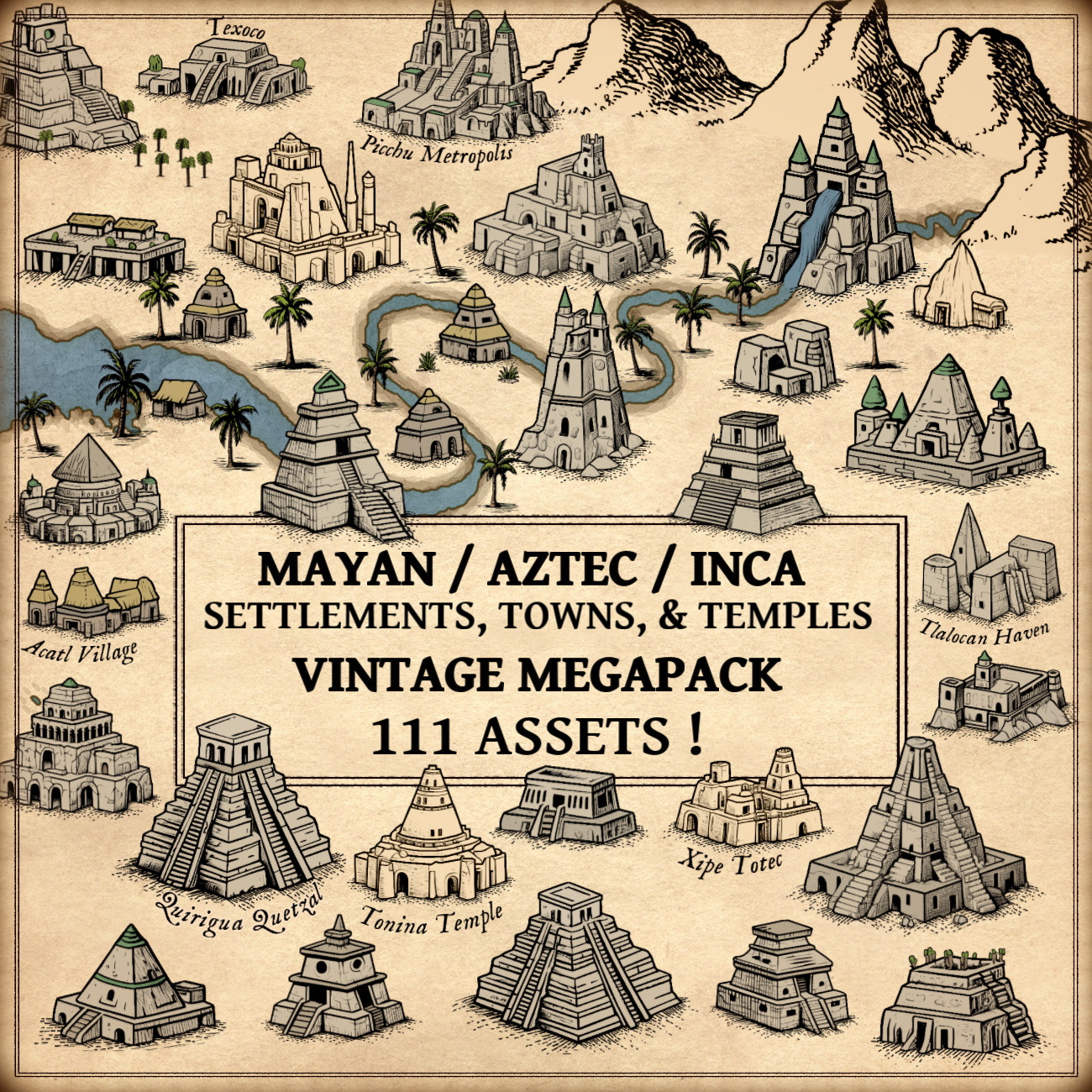
Delving into the rich tapestry of Mesoamerican history, one cannot help but be captivated by the enigmatic civilizations of the Mayans and Aztecs. These two prominent cultures, though distinct in their own right, share a profound connection to the region's cultural and historical landscape. Understanding the differences and similarities between the Mayans and Aztecs offers a deeper appreciation for the complexity and diversity of Mesoamerican societies.
Historical Overview of the Mayans and Aztecs
The Mayans and Aztecs are two of the most well-known civilizations that flourished in Mesoamerica. The Mayan civilization emerged around 2000 BCE and reached its peak between 250 and 900 CE. Known for their advanced knowledge in astronomy, mathematics, and architecture, the Mayans developed a complex society with intricate city-states. In contrast, the Aztec Empire, which rose to prominence in the 14th century, was a powerful and expansive empire that dominated central Mexico until the Spanish conquest in the 16th century.
Geographical and Cultural Differences
The geographical locations of the Mayans and Aztecs significantly influenced their cultural development. The Mayans primarily inhabited the Yucatan Peninsula, Guatemala, Belize, and parts of Honduras and El Salvador. Their cities, such as Tikal and Chichen Itza, were characterized by monumental architecture and sophisticated urban planning. The Aztecs, on the other hand, were centered in the Valley of Mexico, with their capital city, Tenochtitlan, located on an island in Lake Texcoco. This urban center was renowned for its intricate network of canals and causeways.
Culturally, the Mayans and Aztecs had distinct religious beliefs and practices. The Mayans worshipped a pantheon of deities associated with natural phenomena, such as the sun, moon, and rain. Their religious rituals often involved human sacrifices, but these were less frequent and more symbolic compared to the Aztecs. The Aztecs, known for their more violent and frequent human sacrifices, believed in a complex cosmology where the sun's daily journey required constant nourishment through blood offerings. This belief was central to their religious and political systems.
Architectural Marvels
The architectural achievements of the Mayans and Aztecs are a testament to their engineering prowess. The Mayans constructed elaborate pyramids, temples, and palaces using advanced masonry techniques. Notable structures include the Temple of Kukulkan at Chichen Itza and the Pyramid of the Sun at Teotihuacan. The Aztecs, while also known for their pyramids, such as the Temple of the Sun and the Temple of the Moon, were particularly adept at urban planning. Tenochtitlan, with its grid-like layout and extensive infrastructure, was a marvel of its time.
One of the most striking differences in their architectural styles is the use of materials. The Mayans often used limestone, which was abundant in their region, while the Aztecs utilized volcanic rock and adobe. This difference in materials reflects the unique environmental conditions and resources available to each civilization.
Social and Political Structures
The social and political structures of the Mayans and Aztecs were equally complex. The Mayan society was organized into city-states, each governed by a ruler known as an *ajaw*. These city-states were often in competition with each other, leading to frequent conflicts and alliances. The Aztec Empire, however, was a centralized state with a powerful ruler, the *tlatoani*, who held both political and religious authority. The Aztec society was highly stratified, with a clear hierarchy that included nobles, priests, warriors, artisans, and commoners.
Both civilizations had sophisticated systems of governance and administration. The Mayans developed a complex system of writing and record-keeping, which allowed them to document their history, laws, and religious beliefs. The Aztecs, too, had a well-organized bureaucracy that managed various aspects of their society, from taxation to military affairs.
Economic Systems
The economic systems of the Mayans and Aztecs were closely tied to their agricultural practices. The Mayans relied heavily on maize, beans, and squash, which were cultivated using advanced irrigation techniques. They also engaged in trade, exchanging goods such as obsidian, jade, and cacao with other Mesoamerican civilizations. The Aztecs, with their extensive agricultural terraces and chinampas (floating gardens), were able to produce a surplus of food, which supported their large population and military campaigns.
Trade was a crucial aspect of both economies. The Mayans established extensive trade networks that connected them with other civilizations in Mesoamerica and beyond. The Aztecs, through their *pochteca* (merchant class), controlled long-distance trade routes, exchanging goods such as cotton, feathers, and precious metals for items like salt, cacao, and obsidian.
Artistic and Cultural Achievements
The artistic and cultural achievements of the Mayans and Aztecs are a testament to their creativity and innovation. The Mayans are renowned for their intricate stone carvings, pottery, and murals, which often depicted mythological scenes and historical events. Their art was characterized by its realism and attention to detail. The Aztecs, known for their vibrant and colorful art, created stunning sculptures, mosaics, and textiles. Their art often featured intricate designs and symbols that held deep religious and cultural significance.
Both civilizations had rich literary traditions. The Mayans developed a system of hieroglyphic writing, which allowed them to record their history, myths, and religious beliefs. The Aztecs, while not having a written language in the same sense, had a rich oral tradition that included poems, songs, and historical narratives. These literary works provided valuable insights into their beliefs, values, and way of life.
Legacy and Influence
The legacy of the Mayans and Aztecs continues to influence modern Mesoamerican cultures. Their architectural, artistic, and cultural achievements have left an indelible mark on the region's history and identity. Today, many of their sites are popular tourist destinations, attracting visitors from around the world who come to marvel at their engineering and artistic prowess.
In addition to their cultural legacy, the Mayans and Aztecs have also contributed to our understanding of Mesoamerican history. Archaeological discoveries and ongoing research continue to shed light on their complex societies, providing valuable insights into their beliefs, practices, and achievements.
One of the most significant contributions of the Mayans and Aztecs is their impact on modern astronomy and mathematics. The Mayans, with their advanced knowledge of astronomy, developed a complex calendar system that was remarkably accurate. The Aztecs, too, had a deep understanding of celestial bodies and their movements, which they incorporated into their religious and cultural practices.
In conclusion, the Mayans and Aztecs represent two of the most fascinating and influential civilizations in Mesoamerican history. Their unique cultural, architectural, and artistic achievements continue to captivate scholars and enthusiasts alike. By exploring the differences and similarities between these two civilizations, we gain a deeper appreciation for the rich tapestry of Mesoamerican history and the enduring legacy of its people.
Related Terms:
- mayans vs aztecs timeline
- differences between aztecs and mayans
- maya aztec map
- aztecs vs mayans map
- mayans and aztecs differences
- did mayans and aztecs fight