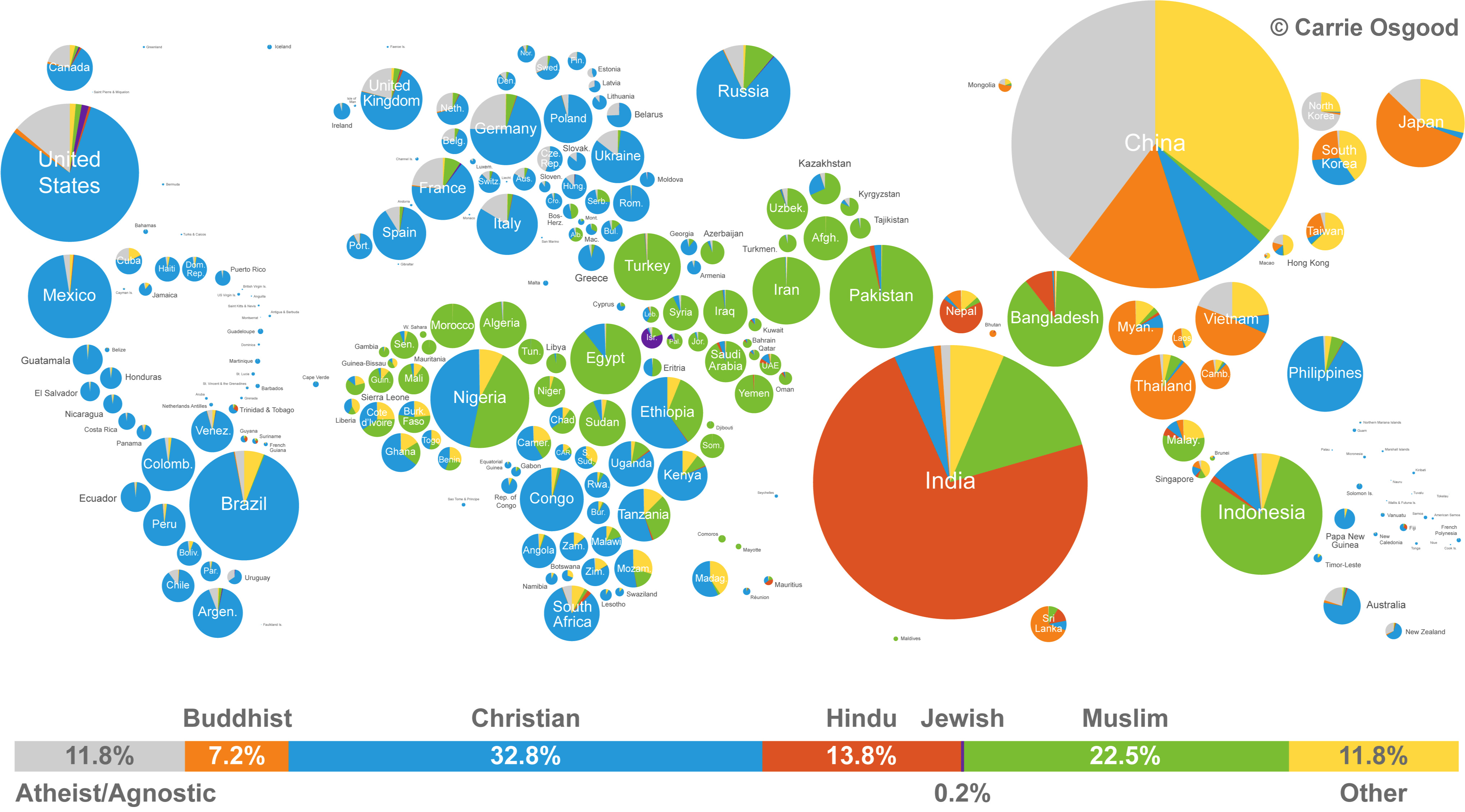
Understanding the diverse landscape of global faiths is a fascinating journey that reveals the rich tapestry of human belief systems. Mapping World Religions provides a comprehensive overview of the major religions practiced around the world, their origins, core beliefs, and cultural impacts. This exploration not only enriches our knowledge but also fosters a deeper appreciation for the diversity and complexity of human spirituality.
Introduction to Major World Religions
Religion has been a fundamental aspect of human civilization since time immemorial. It shapes cultures, influences societal norms, and provides a moral framework for billions of people. Mapping World Religions involves understanding the key faiths that have significantly impacted human history and continue to do so today.
Christianity
Christianity is one of the world's largest religions, with over 2.3 billion followers. It originated in the 1st century AD in the Roman province of Judea, with Jesus Christ as its central figure. The core beliefs of Christianity include the divinity of Jesus, the Holy Trinity (Father, Son, and Holy Spirit), and the teachings of the Bible.
Christianity is divided into several major branches, each with its own doctrines and practices:
- Roman Catholicism: The largest branch, with the Pope as its spiritual leader.
- Protestantism: Includes a wide range of denominations such as Baptists, Lutherans, and Methodists.
- Eastern Orthodoxy: Predominant in Eastern Europe and Russia, with a rich liturgical tradition.
Christianity has had a profound impact on Western culture, influencing art, literature, philosophy, and law. Its teachings on love, forgiveness, and social justice continue to inspire people worldwide.
Islam
Islam is the second-largest religion globally, with over 1.8 billion adherents. It was founded in the 7th century AD in Arabia by the Prophet Muhammad. Muslims believe in the oneness of God (Allah) and follow the teachings of the Quran, the holy book of Islam, and the Hadith, the sayings and actions of the Prophet Muhammad.
Islam is divided into two main branches:
- Sunni Islam: The larger branch, comprising about 85-90% of Muslims.
- Shia Islam: The smaller branch, with significant populations in Iran, Iraq, and Lebanon.
Islamic culture has made significant contributions to science, mathematics, philosophy, and architecture. The Five Pillars of Islam—Shahada (faith), Salah (prayer), Zakat (charity), Sawm (fasting), and Hajj (pilgrimage)—are the core practices that guide the lives of Muslims.
Hinduism
Hinduism is one of the oldest religions in the world, originating in the Indian subcontinent around 1500 BCE. It is characterized by a diverse range of beliefs and practices, with no single founder or sacred text. The Vedas, Upanishads, and Bhagavad Gita are among the most revered scriptures in Hinduism.
Key concepts in Hinduism include:
- Dharma: The moral and ethical duties of an individual.
- Karma: The law of cause and effect, where actions in this life influence future lives.
- Moksha: The ultimate goal of liberation from the cycle of rebirth.
Hinduism has a rich pantheon of deities, with Brahma, Vishnu, and Shiva being the most prominent. The religion has significantly influenced Indian culture, art, and philosophy, and its teachings on non-violence and spiritual enlightenment have inspired many.
Buddhism
Buddhism was founded by Siddhartha Gautama, known as the Buddha, in the 6th century BCE in what is now Nepal. It is based on the Four Noble Truths and the Eightfold Path, which guide practitioners towards enlightenment and the end of suffering.
Buddhism is divided into several branches, with the two main ones being:
- Theravada Buddhism: Predominant in Sri Lanka, Thailand, Myanmar, and Cambodia.
- Mahayana Buddhism: Found in China, Japan, Korea, and Tibet.
Buddhist teachings emphasize mindfulness, compassion, and the impermanence of all things. The religion has had a profound impact on Asian cultures, influencing art, literature, and philosophy. Buddhist monasteries and temples serve as centers of learning and spiritual practice.
Judaism
Judaism is one of the oldest monotheistic religions, originating in the Middle East around 2000 BCE. It is based on the belief in one God and the teachings of the Torah, the first five books of the Hebrew Bible. Judaism has significantly influenced Western culture, particularly through its ethical and moral teachings.
Key concepts in Judaism include:
- Mitzvot: The commandments and laws that guide Jewish life.
- Tzedakah: The practice of charity and social justice.
- Shabbat: The day of rest and worship, observed from Friday evening to Saturday evening.
Judaism is divided into several branches, with the three main ones being:
- Orthodox Judaism: Adheres strictly to traditional practices and beliefs.
- Conservative Judaism: Balances tradition with modern interpretations.
- Reform Judaism: Emphasizes ethical and social teachings over ritual observance.
Judaism has a rich cultural heritage, including festivals like Passover, Yom Kippur, and Hanukkah, which celebrate historical events and religious themes.
Sikhism
Sikhism was founded in the 15th century in the Punjab region of India by Guru Nanak. It is based on the teachings of the ten Sikh Gurus, with the Guru Granth Sahib serving as the eternal Guru and the holy scripture. Sikhism emphasizes the oneness of God, the equality of all humans, and the importance of service to others.
Key concepts in Sikhism include:
- Ek Onkar: The belief in one God.
- Seva: Selfless service to humanity.
- Simran: Meditation on the name of God.
Sikhism has a strong community focus, with Gurudwaras serving as places of worship and community service. The religion has made significant contributions to social justice and humanitarian efforts, particularly through the practice of Langar, a community kitchen that provides free meals to all.
World Religions and Cultural Diversity
Mapping World Religions reveals the intricate relationship between faith and culture. Each religion has shaped the societies in which it is practiced, influencing everything from art and architecture to social norms and ethical values. Understanding this diversity is crucial for fostering mutual respect and appreciation among different communities.
Religious festivals and celebrations are a vibrant expression of cultural diversity. For example:
- Diwali: The Hindu festival of lights, celebrated with fireworks, sweets, and family gatherings.
- Eid al-Fitr: The Islamic festival marking the end of Ramadan, celebrated with feasts and prayers.
- Christmas: The Christian celebration of the birth of Jesus, marked by gift-giving, family gatherings, and religious services.
These festivals not only bring communities together but also provide a window into the rich cultural heritage of different religions.
Religious Syncretism and Interfaith Dialogue
Religious syncretism, the blending of different religious beliefs and practices, is a common phenomenon in many parts of the world. This process often occurs when different cultures interact, leading to the creation of new religious traditions that incorporate elements from multiple faiths.
Interfaith dialogue is essential for promoting understanding and cooperation among different religious communities. It involves open and respectful conversations about beliefs, practices, and values, with the goal of fostering mutual respect and collaboration.
Some examples of interfaith initiatives include:
- The Parliament of the World's Religions: A global gathering of religious leaders and practitioners to promote peace and understanding.
- The United Religions Initiative: A global network of interfaith groups working on social justice and environmental issues.
These initiatives highlight the importance of dialogue and cooperation in addressing global challenges and promoting peace.
Challenges and Opportunities in Mapping World Religions
While Mapping World Religions provides valuable insights into the diversity of global faiths, it also presents challenges. One of the main challenges is the complexity and diversity of religious beliefs and practices, which can be difficult to categorize and understand.
Another challenge is the potential for misinterpretation and stereotyping. It is essential to approach the study of religions with an open mind and a willingness to learn, rather than relying on preconceived notions or biases.
Despite these challenges, Mapping World Religions offers numerous opportunities for learning and growth. It encourages us to explore the rich tapestry of human spirituality, fostering a deeper appreciation for the diversity and complexity of religious beliefs and practices.
By understanding the core beliefs, practices, and cultural impacts of different religions, we can promote mutual respect and cooperation, contributing to a more peaceful and harmonious world.
In conclusion, Mapping World Religions is a journey of discovery that reveals the rich tapestry of human belief systems. From Christianity and Islam to Hinduism and Buddhism, each religion offers unique insights into the human experience, shaping cultures and influencing societies in profound ways. By exploring the diversity of global faiths, we can foster a deeper appreciation for the complexity and beauty of human spirituality, promoting understanding, respect, and cooperation among different communities. This exploration not only enriches our knowledge but also inspires us to embrace the diversity and richness of the world around us.
Related Terms:
- global religions map
- map of world religions today
- spread of religion map
- map of countries by religion
- religions on a map
- world map showing religions