Understanding the LogP Partition Coefficient is crucial for chemists, pharmacologists, and environmental scientists. This fundamental concept helps in predicting how a chemical substance will behave in different environments, particularly in biological and environmental systems. The LogP Partition Coefficient measures the lipophilicity (fat solubility) of a compound, which is essential for drug design, environmental fate modeling, and toxicology studies. This post delves into the intricacies of the LogP Partition Coefficient, its calculation methods, applications, and significance in various scientific fields.
What is the LogP Partition Coefficient?
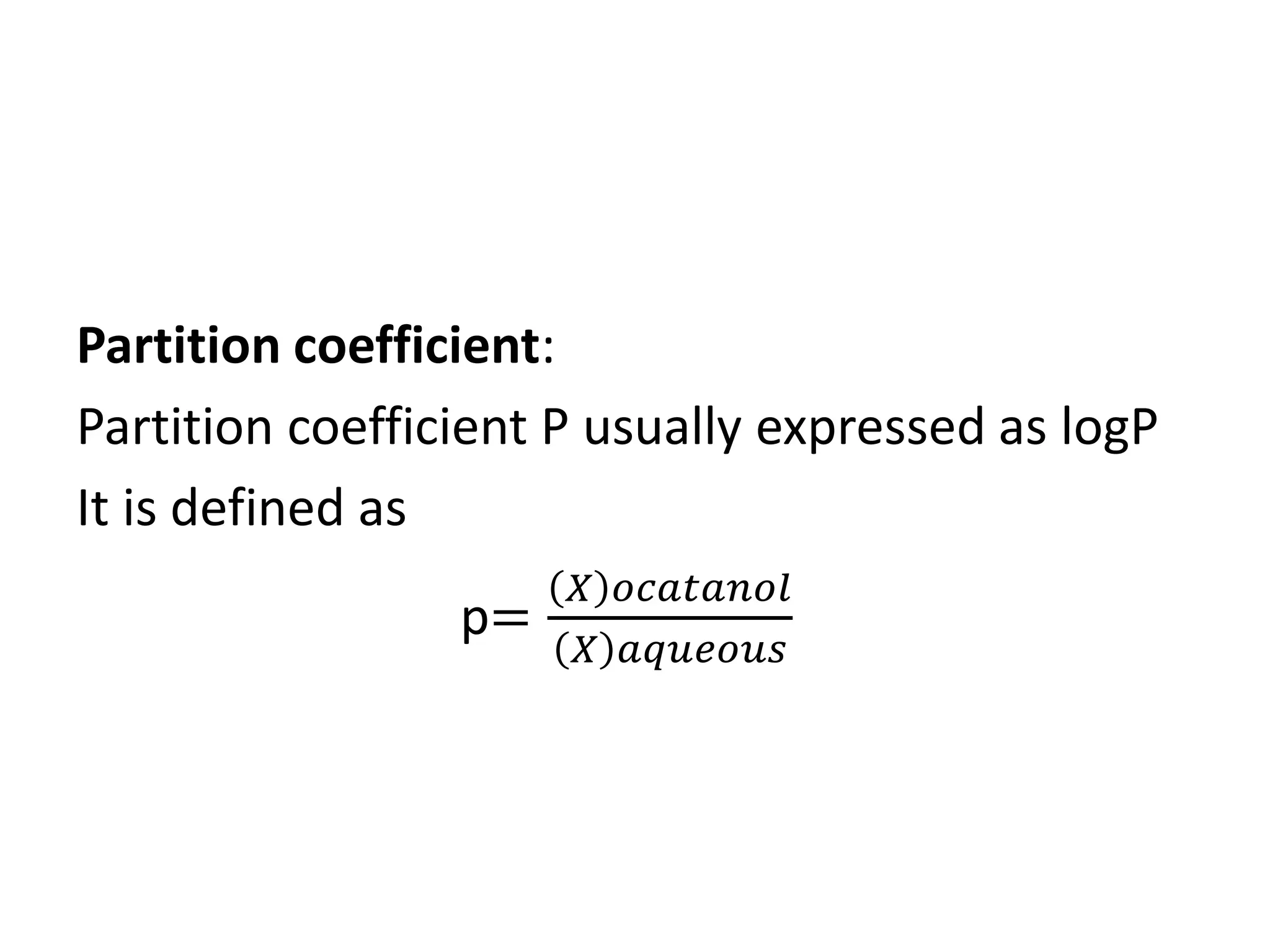
The LogP Partition Coefficient is a measure of how a chemical compound distributes itself between two immiscible phases, typically an organic solvent (like octanol) and water. The partition coefficient (P) is the ratio of the concentration of the compound in the organic phase to its concentration in the aqueous phase. The LogP is the logarithm (base 10) of this ratio, providing a more manageable and interpretable value.
Mathematically, it is expressed as:
📝 Note: The formula for LogP is LogP = log10(C_octanol / C_water), where C_octanol is the concentration in octanol and C_water is the concentration in water.
Importance of the LogP Partition Coefficient
The LogP Partition Coefficient is vital in several scientific disciplines:
- Pharmacology: It helps in predicting the absorption, distribution, metabolism, and excretion (ADME) properties of drugs. A compound’s lipophilicity affects its ability to cross biological membranes, which is crucial for drug efficacy and toxicity.
- Environmental Science: It aids in understanding the fate and transport of pollutants in the environment. The LogP value can predict how a chemical will partition between soil, water, and air, influencing its environmental impact.
- Toxicology: It assists in assessing the potential toxicity of chemicals. Compounds with high LogP values may accumulate in fatty tissues, leading to bioaccumulation and potential health risks.
Methods for Calculating the LogP Partition Coefficient
There are several methods to determine the LogP Partition Coefficient, each with its advantages and limitations. These methods can be broadly categorized into experimental and computational approaches.
Experimental Methods
Experimental methods involve direct measurement of the partition coefficient using laboratory techniques. Some common methods include:
- Shake-Flask Method: This traditional method involves shaking a mixture of the compound in octanol and water, allowing it to reach equilibrium, and then measuring the concentrations in both phases.
- High-Performance Liquid Chromatography (HPLC): This method uses a chromatographic column to separate the compound between a mobile phase (similar to water) and a stationary phase (similar to octanol). The retention time of the compound is correlated with its LogP value.
- Spectroscopic Methods: Techniques like UV-Vis spectroscopy can be used to measure the concentration of the compound in each phase, providing an indirect measure of the LogP value.
Computational Methods
Computational methods use algorithms and models to predict the LogP value based on the chemical structure of the compound. These methods are often faster and more cost-effective than experimental approaches. Some popular computational tools include:
- Fragment-Based Methods: These methods break down the compound into smaller fragments and sum their contributions to the overall LogP value. Examples include the Hansch-Leo method and the Rekker method.
- Quantitative Structure-Activity Relationship (QSAR) Models: These models use statistical techniques to correlate the LogP value with various molecular descriptors, such as molecular weight, polarity, and hydrogen bonding.
- Molecular Dynamics Simulations: These simulations use physics-based models to predict the behavior of the compound in different environments, providing a more accurate estimate of the LogP value.
Applications of the LogP Partition Coefficient
The LogP Partition Coefficient has wide-ranging applications in various scientific and industrial fields. Some key applications include:
Drug Design and Development
In pharmaceutical research, the LogP value is used to optimize the properties of drug candidates. A balanced LogP value ensures that the drug can cross biological membranes efficiently while maintaining water solubility for effective distribution in the body. This is crucial for developing drugs with optimal bioavailability and minimal side effects.
Environmental Fate Modeling
Environmental scientists use the LogP value to predict the behavior of pollutants in the environment. For example, compounds with high LogP values are more likely to accumulate in soil and sediments, while those with low LogP values may remain in the water phase. This information is essential for assessing the environmental impact of chemicals and developing remediation strategies.
Toxicology and Risk Assessment
Toxicologists use the LogP value to assess the potential toxicity of chemicals. Compounds with high LogP values may bioaccumulate in fatty tissues, leading to long-term health risks. Understanding the LogP value helps in setting safe exposure limits and developing guidelines for chemical use.
Cosmetics and Personal Care Products
In the cosmetics industry, the LogP value is used to formulate products that can penetrate the skin effectively. Compounds with appropriate LogP values can deliver active ingredients to the target sites, enhancing the product’s efficacy and safety.
Factors Affecting the LogP Partition Coefficient
Several factors can influence the LogP Partition Coefficient of a compound. Understanding these factors is essential for accurate measurement and prediction of the LogP value. Some key factors include:
Molecular Structure
The chemical structure of a compound significantly affects its LogP value. Factors such as molecular size, polarity, and the presence of functional groups can alter the compound’s lipophilicity. For example, the addition of hydrophilic groups (like hydroxyl or carboxyl groups) can decrease the LogP value, while the addition of hydrophobic groups (like alkyl chains) can increase it.
Temperature and pH
Environmental conditions like temperature and pH can also affect the LogP value. Changes in temperature can alter the solubility of the compound in the organic and aqueous phases, influencing the partition coefficient. Similarly, pH can affect the ionization state of the compound, which in turn affects its lipophilicity.
Solvent Properties
The choice of solvents used in the measurement of the LogP value can also impact the results. Different solvents have varying polarities and hydrogen-bonding capabilities, which can affect the distribution of the compound between the phases. It is essential to use standardized solvents and conditions for accurate and comparable LogP measurements.
Challenges and Limitations
While the LogP Partition Coefficient is a valuable tool, it has several challenges and limitations. Some of these include:
Experimental Variability
Experimental methods for measuring the LogP value can be subject to variability due to factors like sample purity, solvent impurities, and measurement errors. This can lead to discrepancies in the reported LogP values, making it difficult to compare results from different studies.
Computational Accuracy
Computational methods for predicting the LogP value rely on the accuracy of the underlying models and algorithms. These methods may not always account for all the factors influencing the LogP value, leading to potential errors in the predictions. It is essential to validate computational results with experimental data for reliable LogP values.
Complex Mixtures
In real-world scenarios, compounds often exist in complex mixtures, which can affect their LogP values. Interactions between different compounds in the mixture can alter their distribution between the phases, making it challenging to predict the LogP value accurately. Advanced analytical techniques and models are needed to address this complexity.
Future Directions
The field of LogP Partition Coefficient research is continually evolving, with new methods and applications emerging. Some future directions include:
Advanced Computational Models
Developing more accurate and reliable computational models for predicting the LogP value is a key area of research. Machine learning and artificial intelligence techniques can be used to improve the predictive power of these models, accounting for a wider range of factors influencing the LogP value.
Integrated Approaches
Combining experimental and computational methods can provide a more comprehensive understanding of the LogP value. Integrated approaches can leverage the strengths of both methods, reducing experimental variability and improving the accuracy of computational predictions.
Environmental and Health Applications
Expanding the applications of the LogP value in environmental and health sciences is another important direction. Understanding the LogP value can help in developing more effective strategies for environmental remediation, risk assessment, and public health protection.
In summary, the LogP Partition Coefficient is a fundamental concept with wide-ranging applications in various scientific and industrial fields. Understanding the LogP value helps in predicting the behavior of chemicals in different environments, optimizing drug design, assessing environmental impact, and ensuring public health and safety. While there are challenges and limitations, ongoing research and advancements in computational and experimental methods continue to enhance our understanding and application of the LogP value. As we move forward, the integration of advanced techniques and interdisciplinary approaches will further expand the utility and impact of the LogP Partition Coefficient in addressing complex scientific and environmental challenges.
Related Terms:
- log p table
- what are logp values
- log d formula
- logp and logd calculations
- log d equation
- log kow vs pow