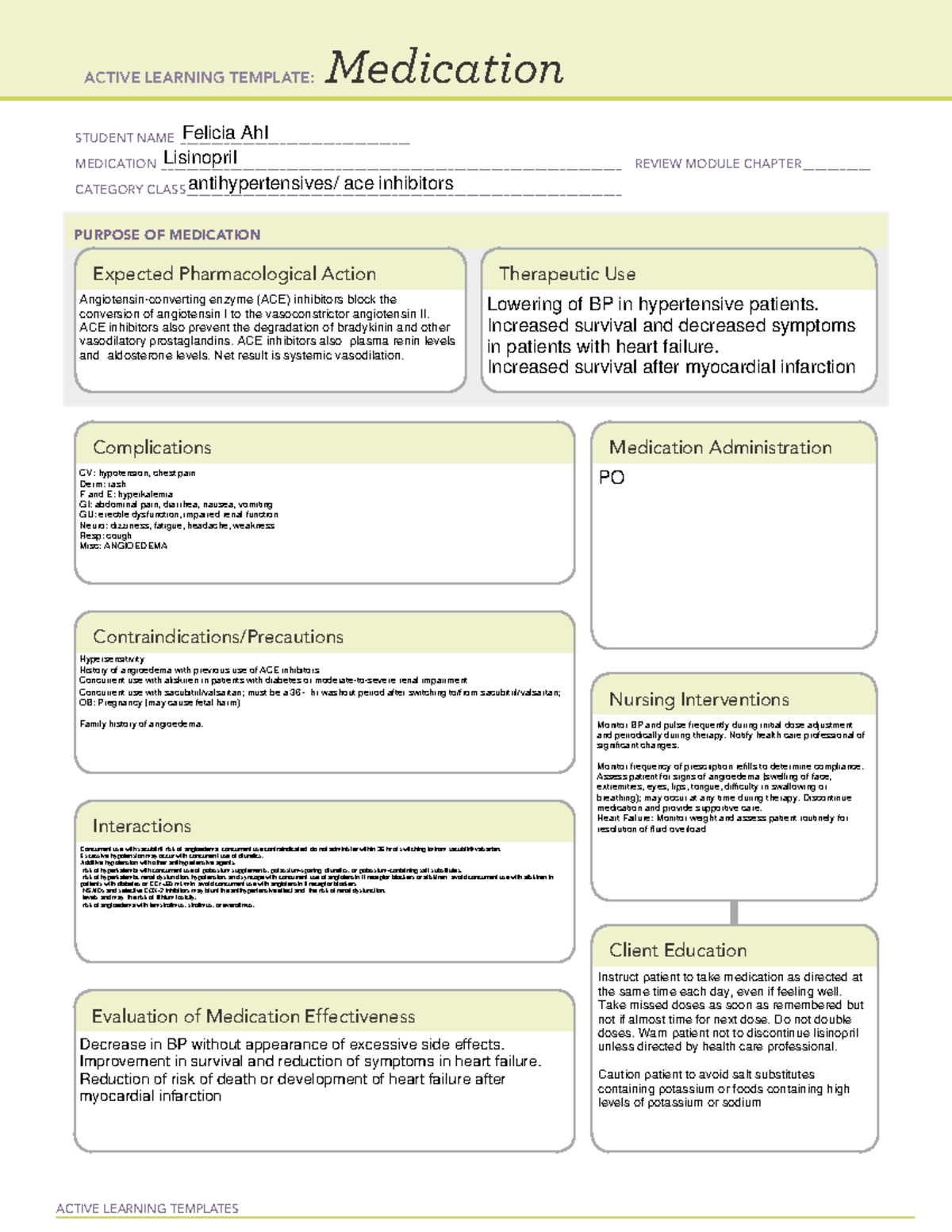
Lisinopril is a widely prescribed medication used to treat high blood pressure, heart failure, and to improve survival after a heart attack. As a nurse, understanding the intricacies of Lisinopril nursing considerations is crucial for ensuring patient safety and effective treatment. This blog post delves into the essential aspects of administering Lisinopril, monitoring patients, and managing potential side effects.
Understanding Lisinopril
Lisinopril belongs to a class of drugs known as angiotensin-converting enzyme (ACE) inhibitors. It works by relaxing blood vessels, which helps to lower blood pressure and reduce the workload on the heart. This medication is often prescribed for its efficacy in managing hypertension and heart conditions.
Lisinopril Nursing Considerations
When administering Lisinopril, nurses must be aware of several key considerations to ensure patient safety and optimal outcomes. These considerations include patient assessment, administration techniques, and monitoring for adverse effects.
Patient Assessment
Before initiating Lisinopril therapy, a thorough patient assessment is essential. This includes evaluating the patient’s medical history, current medications, and any allergies. Key points to consider are:
- Medical History: Assess for conditions such as kidney disease, liver disease, and diabetes, as these can affect the dosage and monitoring requirements.
- Current Medications: Review the patient’s medication list for potential drug interactions. For example, nonsteroidal anti-inflammatory drugs (NSAIDs) can reduce the effectiveness of Lisinopril.
- Allergies: Check for allergies to ACE inhibitors or any other relevant medications.
- Pregnancy and Breastfeeding: Lisinopril is contraindicated in pregnancy due to the risk of fetal harm. It is also not recommended for breastfeeding mothers.
Administration Techniques
Lisinopril is typically administered orally, and it is important to follow specific guidelines to ensure proper absorption and effectiveness.
- Dosage: The initial dose of Lisinopril is usually 10 mg once daily, but this can be adjusted based on the patient’s response and tolerance. The maximum recommended dose is 40 mg once daily.
- Timing: Lisinopril can be taken with or without food. However, it is generally recommended to take it at the same time each day to maintain consistent blood levels.
- Hydration: Ensure the patient is adequately hydrated, as dehydration can exacerbate the risk of hypotension.
Monitoring for Adverse Effects
Lisinopril can cause various side effects, some of which require immediate attention. Nurses should monitor patients for the following:
- Hypotension: A sudden drop in blood pressure can occur, especially with the first dose. Monitor blood pressure regularly, particularly during the initial phase of treatment.
- Cough: A persistent dry cough is a common side effect of ACE inhibitors. If the cough is bothersome, the patient may need to switch to a different class of medications.
- Hyperkalemia: Elevated potassium levels can occur, especially in patients with kidney disease. Monitor serum potassium levels regularly.
- Angioedema: This is a rare but serious side effect characterized by swelling of the face, lips, tongue, or throat. It requires immediate medical attention.
- Renal Function: Monitor renal function, especially in patients with pre-existing kidney disease. Lisinopril can affect kidney function, and adjustments in dosage may be necessary.
Patient Education
Educating patients about Lisinopril is crucial for ensuring adherence to the treatment plan and managing side effects. Key points to include in patient education are:
- Importance of Adherence: Emphasize the importance of taking Lisinopril as prescribed, even if the patient feels well.
- Side Effects: Inform patients about potential side effects and when to seek medical attention. For example, a persistent cough or signs of angioedema should be reported immediately.
- Lifestyle Modifications: Encourage lifestyle changes such as a low-sodium diet, regular exercise, and avoiding alcohol and tobacco to enhance the effectiveness of the medication.
- Follow-Up Appointments: Stress the importance of regular follow-up appointments to monitor blood pressure, renal function, and other health parameters.
Special Considerations
Certain patient populations require special considerations when administering Lisinopril. These include:
- Elderly Patients: Elderly patients may be more sensitive to the effects of Lisinopril and may require lower doses. Monitor for orthostatic hypotension and other age-related side effects.
- Pediatric Patients: Lisinopril is not typically used in pediatric patients, but if prescribed, careful monitoring and dose adjustments are necessary.
- Renal Impairment: Patients with renal impairment may require lower doses and more frequent monitoring of renal function.
Drug Interactions
Lisinopril can interact with other medications, potentially altering its effectiveness or increasing the risk of side effects. Key interactions to be aware of include:
- NSAIDs: Nonsteroidal anti-inflammatory drugs can reduce the antihypertensive effects of Lisinopril.
- Diuretics: Concurrent use of diuretics can increase the risk of hypotension.
- Potassium-Sparing Diuretics: These can increase the risk of hyperkalemia.
- Lithium: Lisinopril can increase lithium levels, leading to toxicity.
Management of Side Effects
While Lisinopril is generally well-tolerated, side effects can occur. Effective management strategies include:
- Hypotension: If hypotension occurs, the patient may need to sit or lie down until symptoms resolve. Adjusting the dose or discontinuing the medication may be necessary.
- Cough: If a persistent cough develops, switching to a different class of antihypertensive medications may be considered.
- Hyperkalemia: Monitor serum potassium levels and adjust the dose or discontinue the medication if necessary. Dietary modifications may also be recommended.
- Angioedema: Immediate medical attention is required. Discontinue Lisinopril and administer appropriate treatment, such as epinephrine or antihistamines.
Conclusion
Lisinopril is a valuable medication for managing hypertension and heart conditions, but it requires careful administration and monitoring. Nurses play a critical role in ensuring patient safety and optimal outcomes through thorough assessment, proper administration techniques, and vigilant monitoring for adverse effects. By understanding Lisinopril nursing considerations, nurses can provide comprehensive care and support to patients, enhancing their quality of life and overall health.
Related Terms:
- lisinopril drug class
- lisinopril nursing patient teaching
- lisinopril classification
- amlodipine nursing considerations
- insulin lispro nursing considerations
- metoprolol nursing considerations