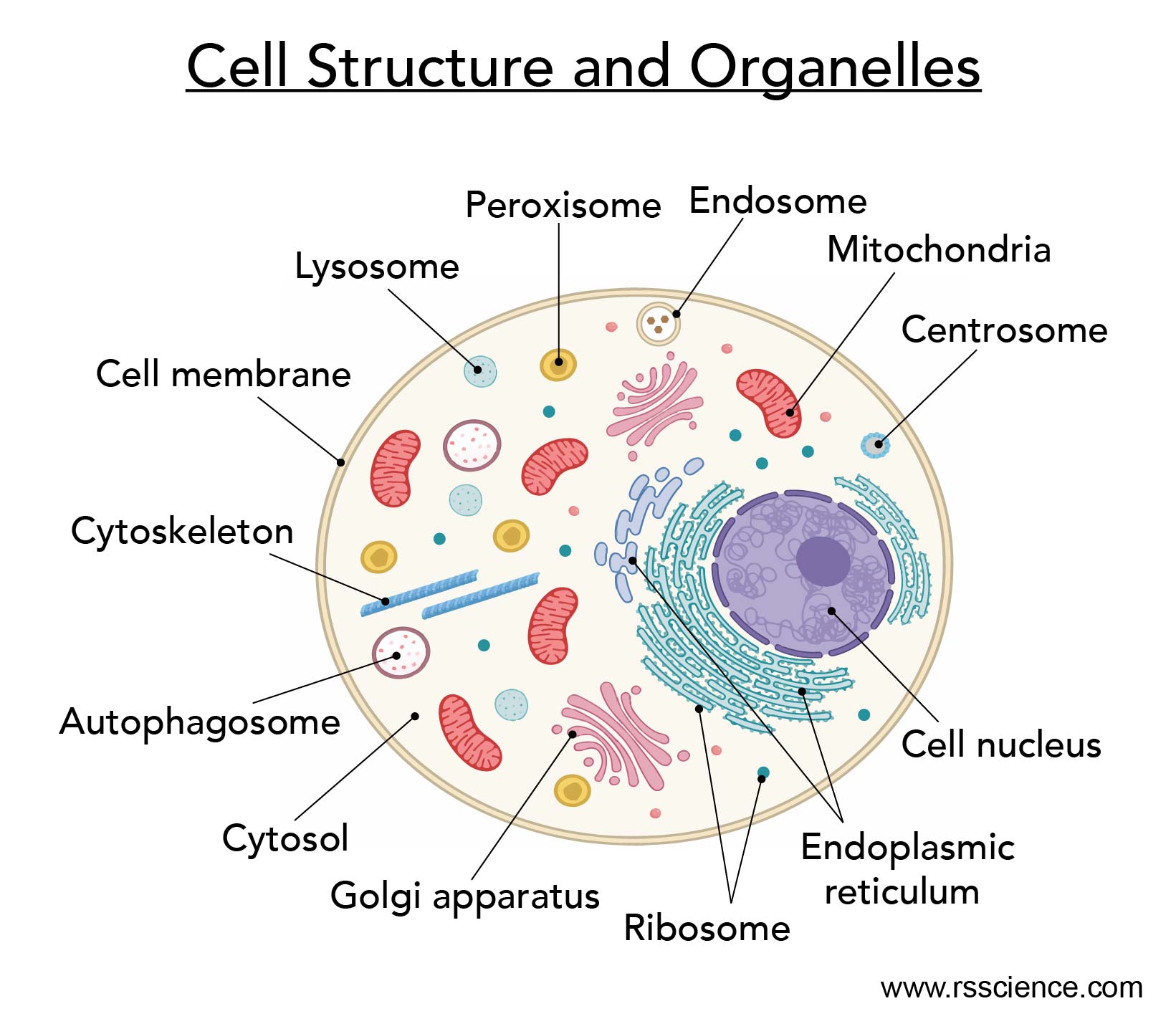
Labeling a cell diagram is a fundamental skill in biology education, essential for understanding the structure and function of cells. Whether you are a student preparing for an exam or a teacher creating educational materials, mastering the art of labeling a cell diagram can significantly enhance your comprehension and communication of cellular biology concepts.
Understanding the Basics of Cell Structure
Before diving into the specifics of labeling a cell diagram, it is crucial to have a basic understanding of cell structure. Cells are the fundamental units of life and can be broadly categorized into two types: prokaryotic and eukaryotic. Prokaryotic cells, such as bacteria, are simpler and lack a true nucleus, while eukaryotic cells, found in plants, animals, and fungi, have a more complex structure with a defined nucleus and various organelles.
Key Components of a Eukaryotic Cell
Eukaryotic cells are composed of several key components, each with a specific function. Here are some of the most important organelles to label in a cell diagram:
- Nucleus: The control center of the cell, containing genetic material.
- Cytoplasm: The gel-like substance that fills the cell, where many cellular activities occur.
- Mitochondria: Known as the powerhouses of the cell, they produce energy through cellular respiration.
- Endoplasmic Reticulum (ER): Involved in the synthesis and transport of lipids and proteins. It comes in two forms: rough ER (with ribosomes) and smooth ER (without ribosomes).
- Golgi Apparatus: Responsible for modifying, sorting, packaging, and distributing proteins and lipids.
- Ribosomes: Sites of protein synthesis, found either freely in the cytoplasm or attached to the rough ER.
- Lysosomes: Contain digestive enzymes that break down waste materials and cellular debris.
- Vacuoles: Storage compartments for water, nutrients, and waste products. Plant cells often have a large central vacuole.
- Cell Membrane: The outer boundary of the cell that regulates the movement of substances in and out of the cell.
- Cell Wall: Found in plant cells, it provides structural support and protection.
- Chloroplasts: Found in plant cells and algae, they are responsible for photosynthesis.
Steps to Label a Cell Diagram
Labeling a cell diagram involves several steps to ensure accuracy and clarity. Here is a step-by-step guide to help you through the process:
Step 1: Gather Your Materials
Before you begin, make sure you have the following materials:
- A clear and detailed cell diagram.
- Labels or sticky notes for each organelle.
- A pen or pencil for writing.
- A reference guide or textbook for verification.
Step 2: Identify the Organelles
Carefully examine the cell diagram and identify each organelle. Use your reference guide to confirm the location and function of each component. This step is crucial for accurate labeling.
Step 3: Label the Organelles
Using your labels or sticky notes, write the name of each organelle clearly and concisely. Place the labels near the corresponding organelle on the diagram. Ensure that the labels are easy to read and do not overlap with other labels.
Step 4: Review and Verify
Once you have labeled all the organelles, review your work to ensure accuracy. Double-check each label against your reference guide to confirm that you have labeled the correct organelles. Make any necessary corrections.
🔍 Note: It is helpful to use different colors for labels to distinguish between different types of organelles, such as using one color for membrane-bound organelles and another for non-membrane-bound organelles.
Common Mistakes to Avoid
When labeling a cell diagram, it is easy to make mistakes. Here are some common errors to avoid:
- Misidentifying organelles: Ensure you correctly identify each organelle before labeling.
- Incorrect spelling: Double-check the spelling of each organelle name.
- Overlapping labels: Make sure labels do not overlap, as this can make the diagram difficult to read.
- Incomplete labeling: Ensure all key organelles are labeled for a comprehensive diagram.
Labeling a Plant Cell vs. an Animal Cell
While the basic structure of eukaryotic cells is similar, there are key differences between plant and animal cells. Understanding these differences is essential for accurate labeling.
Plant Cell Characteristics
Plant cells have several unique features that distinguish them from animal cells:
- Cell Wall: Provides structural support and protection.
- Chloroplasts: Contain chlorophyll and are responsible for photosynthesis.
- Large Central Vacuole: Stores water, nutrients, and waste products.
Animal Cell Characteristics
Animal cells lack some of the structures found in plant cells but have their own unique features:
- No cell wall: Animal cells do not have a rigid cell wall.
- No chloroplasts: Animal cells do not contain chloroplasts.
- Smaller vacuoles: Animal cells have smaller vacuoles or none at all.
Practical Tips for Effective Labeling
Here are some practical tips to help you label a cell diagram effectively:
- Use a high-quality diagram: A clear and detailed diagram makes the labeling process easier.
- Label systematically: Start from one side of the diagram and work your way across to ensure all organelles are labeled.
- Use arrows or lines: Connect labels to the corresponding organelles with arrows or lines for clarity.
- Practice regularly: The more you practice labeling cell diagrams, the more proficient you will become.
Labeling A Cell Diagram for Different Educational Levels
The complexity of labeling a cell diagram can vary depending on the educational level. Here is how you can tailor the process for different levels:
Elementary School
At the elementary school level, focus on the basic components of a cell, such as the nucleus, cytoplasm, and cell membrane. Use simple language and large, clear labels.
Middle School
For middle school students, introduce more organelles, such as mitochondria, endoplasmic reticulum, and Golgi apparatus. Encourage students to understand the basic functions of each organelle.
High School
At the high school level, students should be able to label all major organelles and understand their functions in detail. Include more complex structures like lysosomes, vacuoles, and ribosomes.
College Level
College students should have a comprehensive understanding of cell structure and function. Include detailed labeling of all organelles and discuss their roles in cellular processes. Encourage students to explore advanced topics like cellular respiration, photosynthesis, and protein synthesis.
Interactive Labeling Tools
In addition to traditional paper diagrams, there are several interactive tools available that can enhance the learning experience. These tools often allow students to drag and drop labels onto a digital diagram, providing immediate feedback and reinforcement.
Some popular interactive labeling tools include:
| Tool Name | Description | Features |
|---|---|---|
| Quia | An online platform for creating and sharing educational activities. | Drag-and-drop labeling, immediate feedback, customizable diagrams. |
| Labeling Games | Interactive games that help students learn cell structure through play. | Engaging activities, timed challenges, progress tracking. |
| BioDigital | A 3D platform for exploring human anatomy and biology. | Interactive 3D models, detailed labeling, educational resources. |
💡 Note: Interactive tools can be particularly useful for visual learners and those who benefit from hands-on activities. They can also make the learning process more engaging and enjoyable.
Conclusion
Labeling a cell diagram is a valuable skill that enhances understanding of cellular biology. By following the steps outlined in this guide and avoiding common mistakes, you can create accurate and informative cell diagrams. Whether you are a student, teacher, or enthusiast, mastering the art of labeling a cell diagram will deepen your knowledge and appreciation of the intricate world of cells.
Related Terms:
- cell structures with labels
- blank human cell diagram
- cell labeling simple and complex
- cell diagrams with labeling activity
- cell diagram labeling game online
- labeled diagram of cell structure