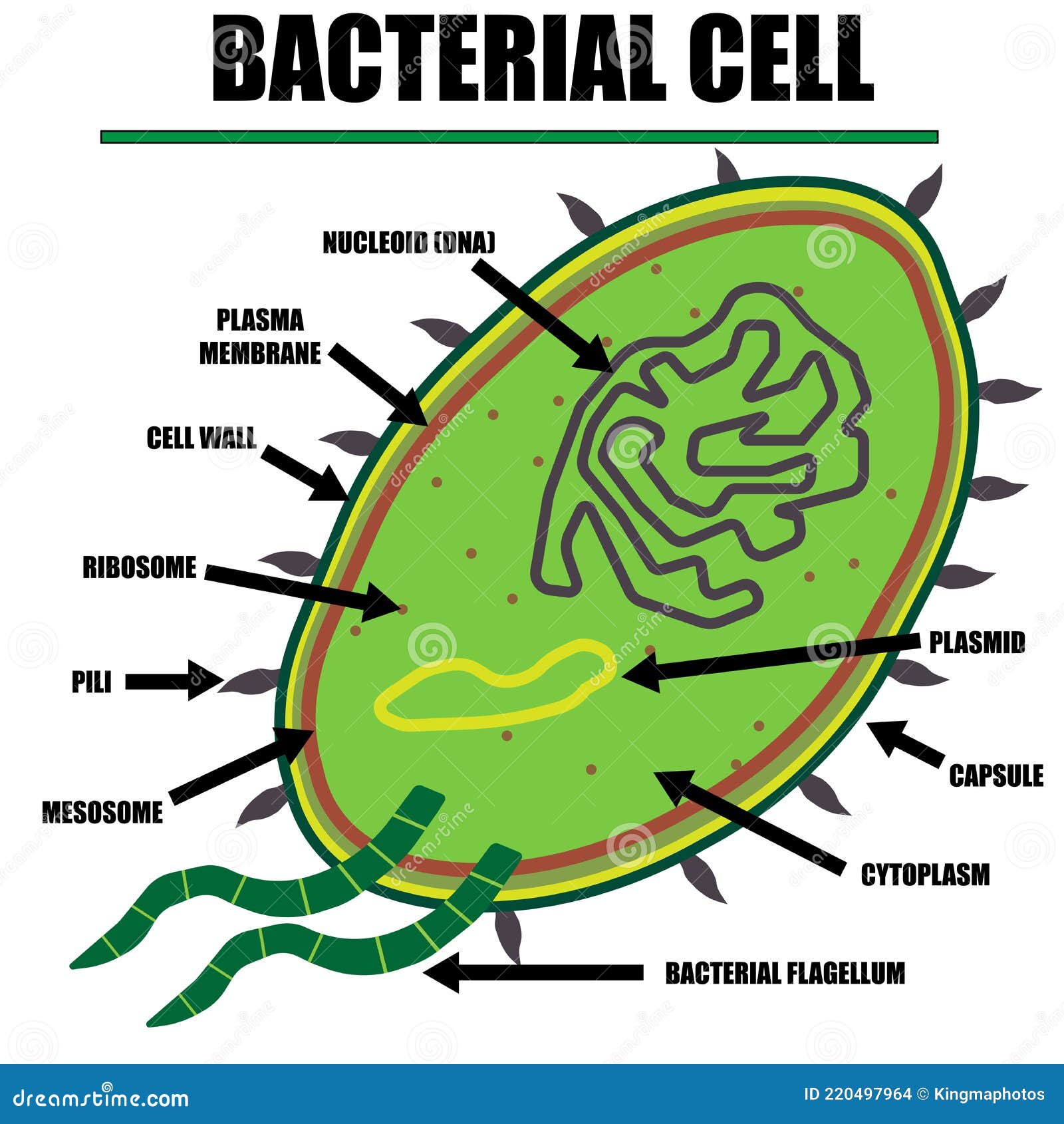
Understanding the intricate world of microbiology often begins with the fundamental task of labeling bacterial cells. This process is crucial for various applications, including research, diagnostics, and educational purposes. Labeling bacterial cells allows scientists to track their behavior, identify specific strains, and study their interactions with other cells and environments. This blog post will delve into the methods, techniques, and significance of labeling bacterial cells, providing a comprehensive guide for anyone interested in this fascinating field.
Understanding Bacterial Cells
Before diving into the labeling process, it’s essential to understand the basic structure and characteristics of bacterial cells. Bacteria are single-celled microorganisms that can be found in various environments, including soil, water, and even within the human body. They come in different shapes and sizes, with the most common shapes being spherical (cocci), rod-shaped (bacilli), and spiral (spirilla).
Bacterial cells are surrounded by a cell wall, which provides structural support and protection. Inside the cell, there is a cytoplasm containing genetic material, ribosomes, and other essential components. The cell membrane regulates the movement of substances in and out of the cell, maintaining its internal environment.
Importance of Labeling Bacterial Cells
Labeling bacterial cells is a critical step in many microbiological studies. It enables researchers to:
- Track the movement and behavior of bacteria in different environments.
- Identify specific strains or species within a mixed population.
- Study the interactions between bacteria and other cells or organisms.
- Monitor the effectiveness of antibiotics or other treatments.
By labeling bacterial cells, scientists can gain valuable insights into the mechanisms of bacterial infections, the development of antimicrobial resistance, and the potential applications of bacteria in biotechnology.
Methods of Labeling Bacterial Cells
There are several methods for labeling bacterial cells, each with its own advantages and limitations. The choice of method depends on the specific requirements of the study and the characteristics of the bacteria being labeled.
Fluorescent Dyes
Fluorescent dyes are commonly used to label bacterial cells. These dyes bind to specific components of the cell, such as the cell membrane or DNA, and emit light when exposed to a particular wavelength. Some popular fluorescent dyes include:
- DAPI (4’,6-diamidino-2-phenylindole): Binds to DNA and emits blue fluorescence.
- SYTO 9: A membrane-permeable dye that stains nucleic acids and emits green fluorescence.
- Propidium Iodide (PI): A membrane-impermeable dye that stains nucleic acids and emits red fluorescence, often used to identify dead cells.
Fluorescent dyes are easy to use and provide high sensitivity, making them suitable for a wide range of applications. However, they may not be suitable for long-term studies due to photobleaching and potential toxicity to the cells.
Genetic Labeling
Genetic labeling involves introducing a gene that encodes a fluorescent protein into the bacterial genome. The most commonly used fluorescent protein is Green Fluorescent Protein (GFP), which emits green light when exposed to blue light. Other fluorescent proteins, such as Red Fluorescent Protein (RFP) and Yellow Fluorescent Protein (YFP), are also available.
Genetic labeling offers several advantages, including:
- Stable and long-term expression of the fluorescent protein.
- No need for external dyes, reducing the risk of toxicity and photobleaching.
- Ability to label specific cell populations or subcellular structures.
However, genetic labeling requires specialized techniques, such as transformation or transduction, and may not be suitable for all bacterial species.
Antibody Labeling
Antibody labeling involves using antibodies that specifically bind to bacterial antigens. The antibodies are conjugated with fluorescent dyes or other labels, allowing for the detection of specific bacterial strains or species. This method is particularly useful for identifying pathogens in clinical samples or environmental samples.
Antibody labeling offers high specificity and sensitivity, making it suitable for diagnostic applications. However, it may be more time-consuming and expensive compared to other labeling methods.
Metabolic Labeling
Metabolic labeling involves incorporating labeled metabolites into the bacterial cells. For example, bacteria can be grown in the presence of labeled amino acids or sugars, which are then incorporated into their proteins or cell walls. This method allows for the tracking of bacterial metabolism and growth.
Metabolic labeling is useful for studying bacterial physiology and metabolism. However, it may require specialized equipment and expertise, and the labels may not be stable over long periods.
Applications of Labeling Bacterial Cells
Labeling bacterial cells has a wide range of applications in various fields, including research, diagnostics, and biotechnology. Some of the key applications include:
Research
In research, labeling bacterial cells enables scientists to study the behavior and interactions of bacteria in different environments. For example, researchers can use fluorescently labeled bacteria to track their movement in soil or water, or to study their interactions with other microorganisms or host cells.
Diagnostics
In diagnostics, labeling bacterial cells is used to identify specific pathogens in clinical samples. For example, fluorescently labeled antibodies can be used to detect the presence of bacteria in blood, urine, or tissue samples. This allows for rapid and accurate diagnosis of bacterial infections, enabling timely treatment and management.
Biotechnology
In biotechnology, labeling bacterial cells is used to monitor the production of bioproducts, such as enzymes or antibiotics. For example, fluorescently labeled bacteria can be used to track the expression of recombinant proteins in fermentation processes, ensuring optimal production and quality control.
Challenges and Limitations
While labeling bacterial cells offers numerous benefits, there are also challenges and limitations to consider. Some of the key challenges include:
Photobleaching
Fluorescent dyes and proteins are susceptible to photobleaching, which is the loss of fluorescence over time due to exposure to light. This can limit the duration of experiments and the accuracy of results.
Toxicity
Some labeling methods, such as the use of fluorescent dyes, may be toxic to bacterial cells. This can affect their behavior and viability, leading to inaccurate results.
Specificity
Ensuring the specificity of labeling is crucial, especially in complex samples containing multiple bacterial species. Non-specific binding of labels can lead to false-positive results and misinterpretation of data.
Cost and Complexity
Some labeling methods, such as genetic labeling and antibody labeling, can be costly and complex. This may limit their accessibility and applicability in certain settings.
📝 Note: To overcome these challenges, it is essential to carefully select the appropriate labeling method based on the specific requirements of the study and to optimize the experimental conditions to minimize potential issues.
Future Directions
The field of bacterial cell labeling is continually evolving, with new techniques and technologies emerging to address the challenges and limitations of existing methods. Some of the future directions in this field include:
Advanced Fluorescent Proteins
The development of new fluorescent proteins with improved brightness, stability, and spectral properties will enhance the sensitivity and specificity of labeling methods. For example, mNeonGreen and mScarlet are newer fluorescent proteins that offer brighter and more stable fluorescence compared to traditional GFP.
Nanoparticle-Based Labeling
Nanoparticle-based labeling involves using nanoparticles conjugated with fluorescent dyes or other labels. This method offers high sensitivity and stability, making it suitable for long-term studies and complex samples.
Multiplex Labeling
Multiplex labeling involves using multiple labels to simultaneously detect and differentiate multiple bacterial species or strains within a sample. This method is particularly useful for studying microbial communities and interactions.
As the field of microbiology continues to advance, the development of new and improved labeling techniques will play a crucial role in enhancing our understanding of bacterial cells and their interactions with the environment and other organisms.
Labeling bacterial cells is a fundamental technique in microbiology that enables researchers to study the behavior, interactions, and characteristics of bacteria. By using various labeling methods, scientists can gain valuable insights into the mechanisms of bacterial infections, the development of antimicrobial resistance, and the potential applications of bacteria in biotechnology. While there are challenges and limitations to consider, the continuous development of new techniques and technologies will undoubtedly enhance our ability to label and study bacterial cells, paving the way for future discoveries and innovations.
Related Terms:
- labeled bacterial cell diagram
- bacterial cell drawing with labels
- bacteria diagram with labels
- bacterial cell diagram with labels
- labelled drawing of bacteria
- labelled diagram of bacteria cell