Writing a comprehensive lab report is a crucial skill for biology students. A well-structured lab report example biology not only demonstrates your understanding of the experiment but also showcases your analytical and communication skills. This guide will walk you through the essential components of a biology lab report, providing detailed instructions and examples to help you create a polished and informative document.
Understanding the Structure of a Lab Report
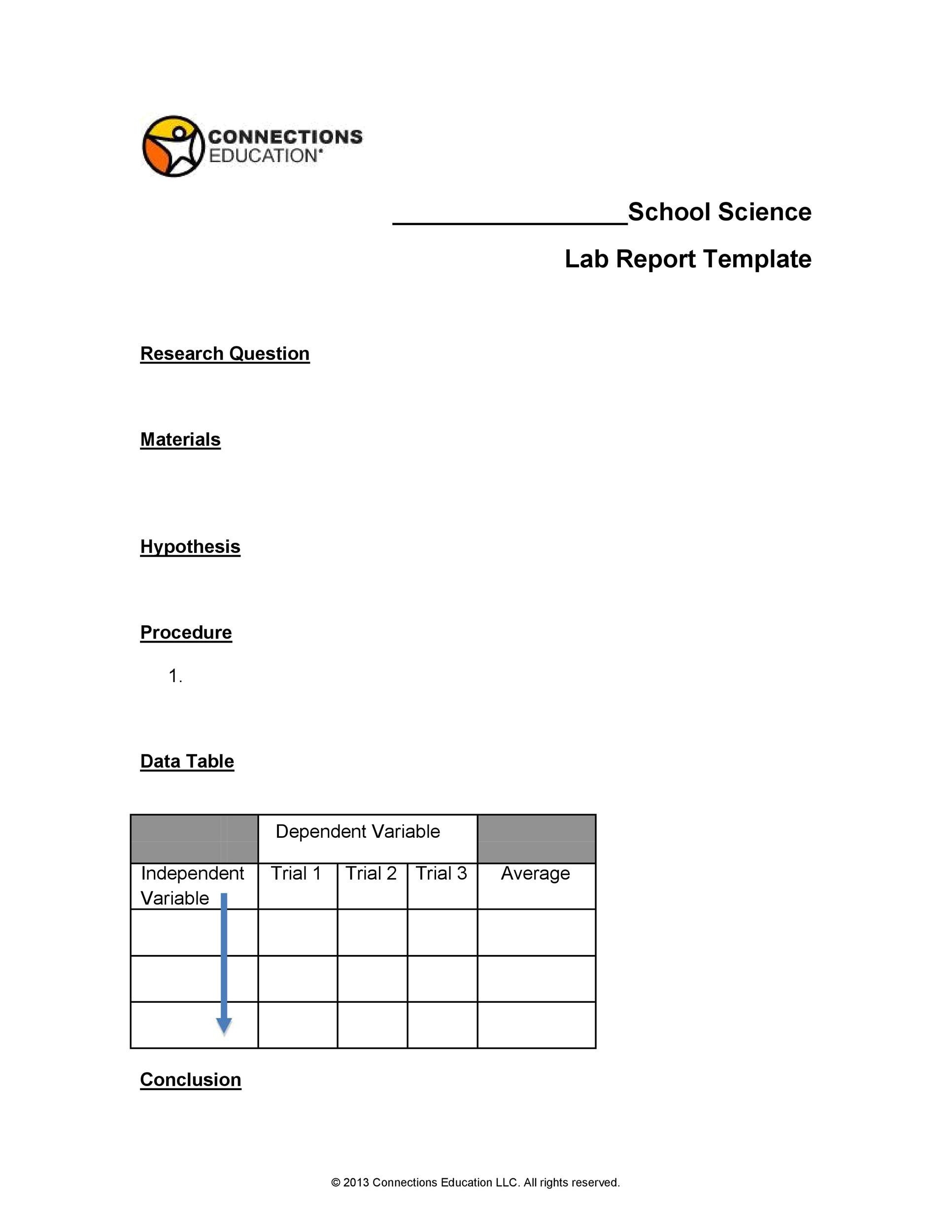
A typical biology lab report consists of several key sections, each serving a specific purpose. Understanding the structure is the first step in creating an effective lab report. The main sections include:
- Title Page
- Abstract
- Introduction
- Materials and Methods
- Results
- Discussion
- Conclusion
- References
Title Page
The title page is the first thing readers see, so it should be clear and informative. Include the following elements:
- The title of the experiment
- Your name and the names of your lab partners
- The course name and number
- The date the report is submitted
- The instructor's name
Example:
| Title | Content |
|---|---|
| Title of the Experiment | Effect of Light Intensity on Photosynthesis |
| Your Name | John Doe |
| Lab Partners | Jane Smith, Alice Johnson |
| Course Name and Number | Biology 101 |
| Date | October 15, 2023 |
| Instructor's Name | Dr. Emily Brown |
Abstract
The abstract is a brief summary of the entire lab report. It should be concise and include the following:
- A statement of the purpose of the experiment
- A brief description of the methods used
- A summary of the results
- A statement of the conclusions drawn
Example:
This experiment investigated the effect of light intensity on the rate of photosynthesis in Elodea plants. The rate of oxygen production was measured using a gas syringe at different light intensities. The results showed that the rate of photosynthesis increased with higher light intensity up to a certain point, after which it plateaued. It was concluded that light intensity is a critical factor in photosynthesis, but other factors such as temperature and carbon dioxide concentration also play significant roles.
Introduction
The introduction sets the stage for the experiment. It should include:
- A brief background on the topic
- The purpose of the experiment
- Any relevant hypotheses
Example:
Photosynthesis is a fundamental process in plants, where light energy is converted into chemical energy stored in glucose. The rate of photosynthesis can be influenced by various factors, including light intensity. This experiment aims to determine how different light intensities affect the rate of photosynthesis in Elodea plants. The hypothesis is that higher light intensities will result in a higher rate of photosynthesis.
Materials and Methods
This section provides a detailed description of the materials used and the procedures followed. It should be written in the past tense and include enough detail for someone else to replicate the experiment. Use subheadings to organize the information.
Materials
List all the materials and equipment used in the experiment. Include quantities if necessary.
Example:
- Elodea plants
- Gas syringe
- Light source with adjustable intensity
- Beaker
- Water
- Timer
Methods
Describe the procedures step-by-step. Include any safety precautions taken.
Example:
1. Cut a small piece of Elodea plant and place it in a beaker filled with water.
2. Attach the gas syringe to the beaker to measure the volume of oxygen produced.
3. Place the beaker under the light source and adjust the light intensity to the first level (e.g., 100 lux).
4. Start the timer and record the volume of oxygen produced every minute for 10 minutes.
5. Repeat steps 3 and 4 for different light intensities (e.g., 200 lux, 300 lux, 400 lux, 500 lux).
6. Ensure that the water temperature remains constant throughout the experiment.
🔍 Note: Be precise in describing the methods to ensure reproducibility. Include any deviations from the standard procedure.
Results
The results section presents the data collected during the experiment. Use tables, graphs, and charts to illustrate the data clearly. Include a brief description of the data and any trends observed.
Example:
The data collected from the experiment is presented in the table below:
| Light Intensity (lux) | Oxygen Produced (mL/min) |
|---|---|
| 100 | 0.5 |
| 200 | 1.0 |
| 300 | 1.5 |
| 400 | 2.0 |
| 500 | 2.0 |
The graph below shows the relationship between light intensity and the rate of photosynthesis:
As the light intensity increased from 100 lux to 400 lux, the rate of photosynthesis also increased. However, at 500 lux, the rate of photosynthesis remained the same as at 400 lux, indicating a plateau effect.
Discussion
The discussion section interprets the results and explains their significance. It should include:
- An explanation of the results in relation to the hypothesis
- A comparison with other studies or expected outcomes
- Possible sources of error and their impact on the results
- Implications of the findings
Example:
The results of this experiment support the hypothesis that higher light intensities increase the rate of photosynthesis. The data shows a direct correlation between light intensity and oxygen production up to 400 lux. However, the plateau observed at 500 lux suggests that other factors, such as the availability of carbon dioxide or the plant's internal processes, may limit photosynthesis at very high light intensities.
One possible source of error in this experiment is the variability in the size and health of the Elodea plants used. Different plants may have different photosynthetic capacities, affecting the results. Additionally, fluctuations in water temperature could have influenced the rate of photosynthesis.
These findings have implications for understanding the optimal conditions for plant growth and photosynthesis. Future studies could investigate the combined effects of light intensity and other factors, such as temperature and carbon dioxide concentration, on photosynthesis.
Conclusion
In conclusion, this lab report example biology demonstrates the importance of a well-structured and detailed lab report. By following the guidelines outlined in this guide, you can create a comprehensive and informative lab report that effectively communicates your findings and analysis. Understanding the structure and components of a lab report is essential for success in biology courses and research. Mastering the art of writing a lab report will not only enhance your academic performance but also prepare you for future scientific endeavors.
Related Terms:
- lab report title page example
- biology lab report sample pdf
- simple lab report example
- lab report template word
- lab report example pdf
- college biology lab report example