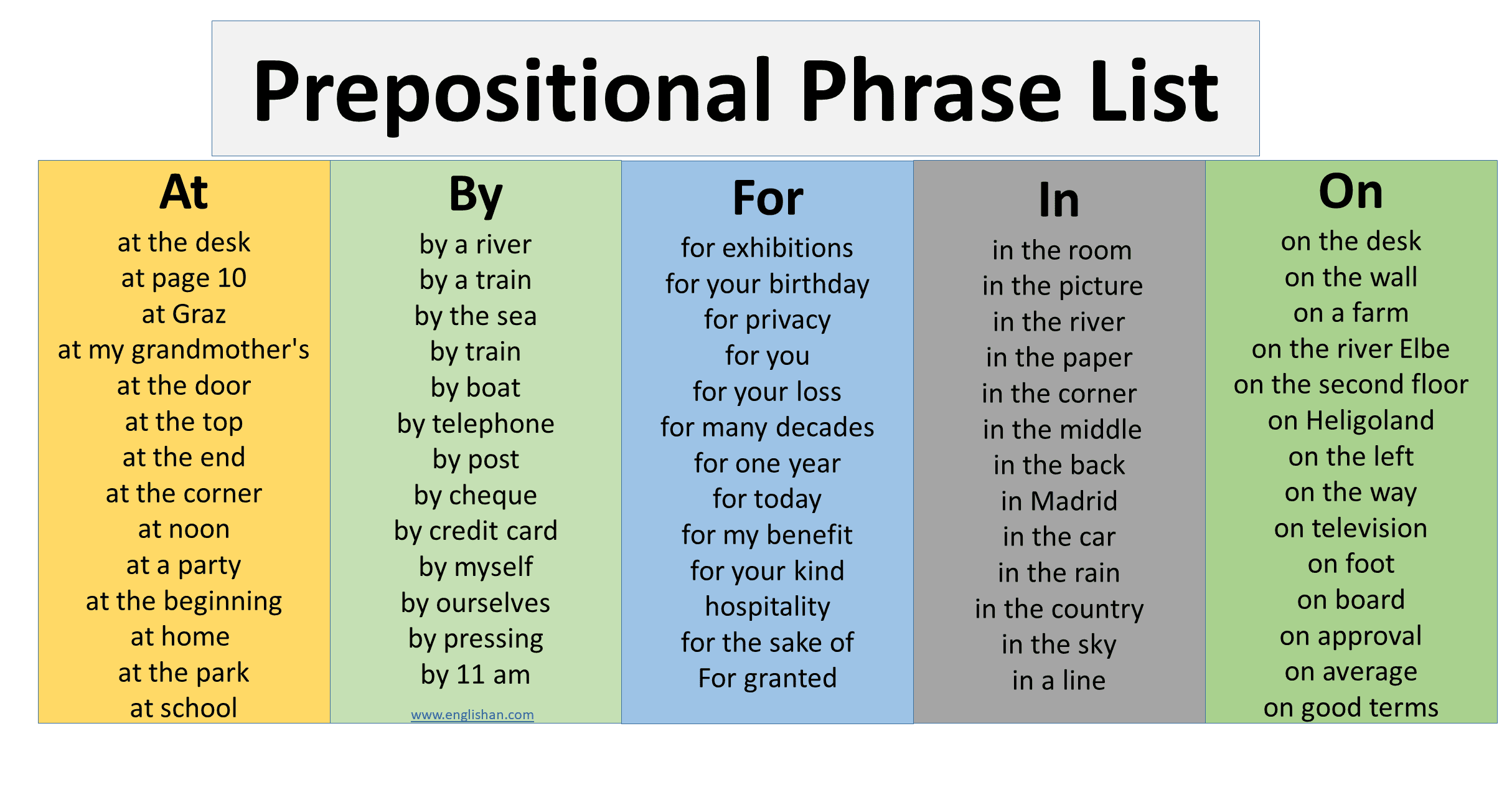
Understanding the intricacies of grammar can often be a challenging task, especially when it comes to prepositions. Prepositions are small but powerful words that can significantly alter the meaning of a sentence. One of the most common questions that arises is, "Is how a preposition?" This question delves into the fundamental understanding of prepositions and their roles in language.
What is a Preposition?
A preposition is a word that shows relationships between a noun or pronoun and other words in a sentence. These relationships can be spatial, temporal, or logical. Prepositions help to answer questions such as where, when, and how something happens. Common prepositions include words like in, on, at, by, for, with, and under.
Is How a Preposition?
The word "how" is often confused with prepositions because it can introduce a question or a clause that describes manner, cause, or condition. However, "how" is not a preposition. Instead, it is an adverb or a conjunction, depending on its usage in a sentence. For example:
- How did you solve the problem? (Adverb)
- I wonder how he managed to finish the project on time. (Conjunction)
In both examples, "how" is not functioning as a preposition. It is either modifying a verb (adverb) or connecting two clauses (conjunction).
Common Prepositions and Their Uses
To better understand the role of prepositions, let's explore some common prepositions and their uses:
| Preposition | Usage | Example |
|---|---|---|
| in | Location, time, or state | The book is in the bag. |
| on | Location, time, or surface | The cat is on the table. |
| at | Location, time, or point | We arrived at the station. |
| by | Agent, means, or time | The letter was written by John. |
| for | Purpose, duration, or recipient | This gift is for you. |
| with | Accompaniment, means, or manner | She cut the cake with a knife. |
| under | Location or condition | The dog is sleeping under the bed. |
These examples illustrate how prepositions can change the meaning of a sentence by indicating the relationship between different elements.
Prepositions in Different Contexts
Prepositions are versatile and can be used in various contexts to convey different meanings. Here are some examples of prepositions in different contexts:
- Spatial Relationships: Prepositions like in, on, and under help to describe the location of objects. For example, "The keys are in the drawer."
- Temporal Relationships: Prepositions like at, on, and during help to describe when something happens. For example, "The meeting is at 3 PM."
- Logical Relationships: Prepositions like by, for, and with help to describe the cause, purpose, or means of an action. For example, "The book was written by an author."
Understanding these contexts can help clarify the role of prepositions in a sentence and avoid confusion with words like "how."
Common Mistakes with Prepositions
Even native speakers can make mistakes with prepositions. Some common errors include:
- Using the wrong preposition: For example, saying "I am good at math" instead of "I am good in math."
- Omitting a preposition: For example, saying "She went to store" instead of "She went to the store."
- Using a preposition incorrectly in a phrase: For example, saying "I am interested in learning Spanish" instead of "I am interested to learn Spanish."
These mistakes can often be avoided with a better understanding of prepositional phrases and their correct usage.
📝 Note: Prepositions are essential for clear communication, and mastering their use can significantly improve your writing and speaking skills.
Prepositions in Different Languages
Prepositions can vary significantly between languages. For example, in English, we use "in" to describe a location within a larger space, while in Spanish, the equivalent preposition might be "en." Understanding these differences is crucial for effective communication in multilingual contexts.
Here are some examples of prepositions in different languages:
- English: The book is in the bag.
- Spanish: El libro está en la bolsa.
- French: Le livre est dans le sac.
- German: Das Buch ist in der Tasche.
- Italian: Il libro è nella borsa.
These examples show how prepositions can differ across languages, highlighting the importance of learning prepositions in the context of each language.
Prepositions in Idiomatic Expressions
Prepositions also play a crucial role in idiomatic expressions, where their meaning can be quite different from their literal use. For example, the phrase "kick the bucket" means to die, even though "kick" and "bucket" have no literal connection to death. Understanding these idioms can help in grasping the nuances of a language.
Here are some examples of idiomatic expressions with prepositions:
- Break down: To stop functioning or to become emotionally overwhelmed.
- Come across: To encounter or find something by chance.
- Fall for: To be deceived or tricked by someone.
- Get over: To recover from an emotional setback.
- Put up with: To tolerate or endure something unpleasant.
These expressions illustrate how prepositions can add layers of meaning to language, making it richer and more expressive.
Prepositions are fundamental to language and play a crucial role in conveying meaning. Understanding their uses and avoiding common mistakes can greatly enhance your communication skills. While "how" is not a preposition, recognizing its role as an adverb or conjunction can help clarify its function in a sentence. By mastering prepositions, you can improve your writing and speaking, making your language more precise and effective.
Prepositions are essential for clear communication, and mastering their use can significantly improve your writing and speaking skills. Understanding the differences between prepositions and words like “how” can help avoid common mistakes and enhance your language proficiency. Whether you are learning a new language or refining your existing skills, a solid grasp of prepositions is key to effective communication.
Related Terms:
- examples of prepositions in grammar
- what is an preposition example
- preposition meaning and examples
- what is prepositions and examples
- how to use prepositions correctly
- example of preposition words