Understanding the intricacies of English grammar can be both fascinating and challenging. One of the areas that often confuses learners and even native speakers is the classification of words. A common question that arises is, "Is because a preposition?" This question delves into the nuances of grammar and the roles that different words play in a sentence. To answer this question, we need to explore the definitions and functions of prepositions and conjunctions.
Understanding Prepositions
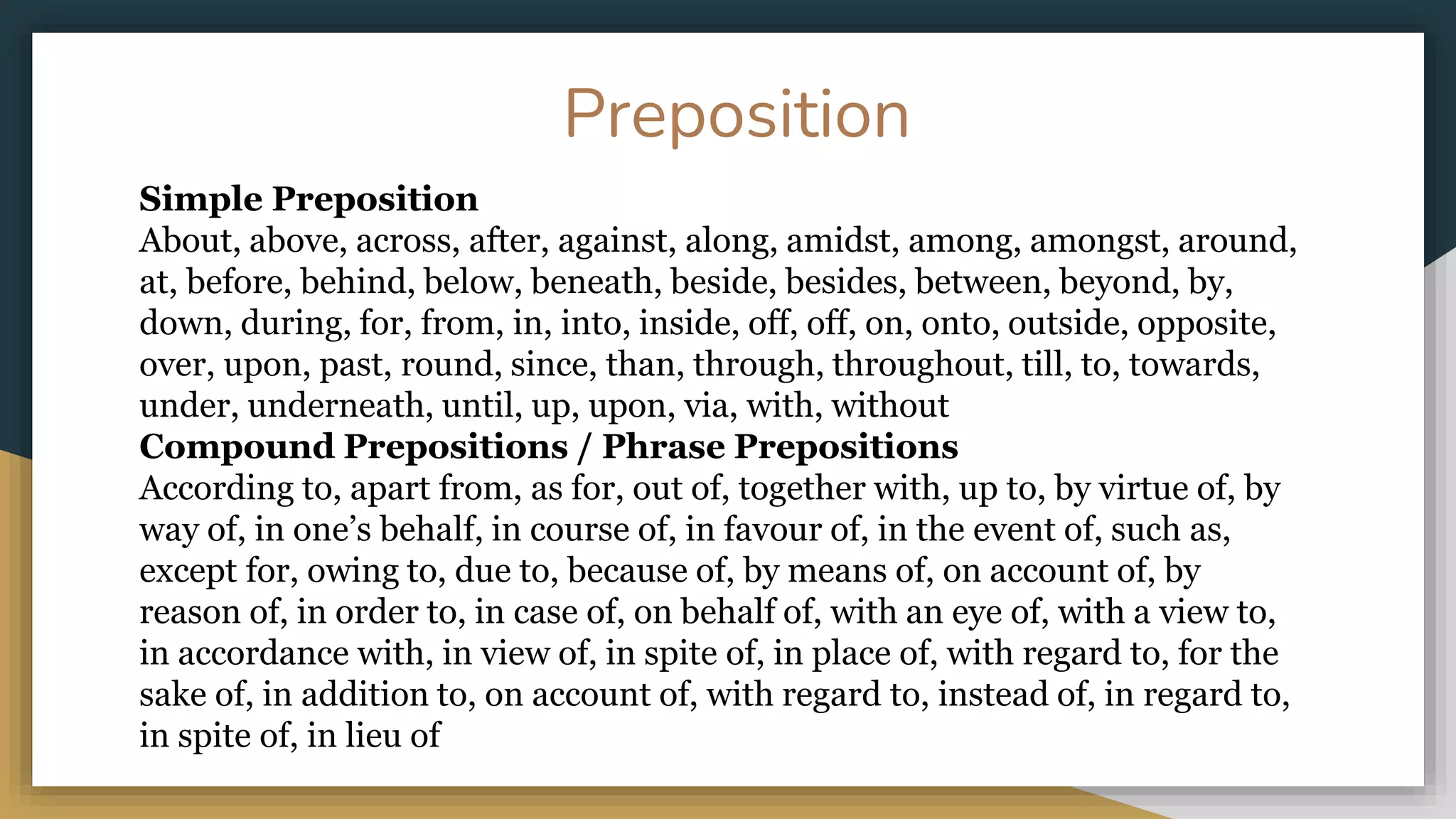
Prepositions are words that show relationships between nouns or pronouns and other words in a sentence. They indicate location, time, cause, manner, and more. Common prepositions include words like in, on, at, by, for, with, and about. These words help to create a clear and coherent sentence by providing context and detail.
The Role of “Because”
The word “because” is often used to introduce a reason or explanation for something. For example, in the sentence “I stayed home because it was raining,” the word “because” connects the main clause “I stayed home” with the subordinate clause “it was raining.” This connection explains the reason for the action.
Is Because a Preposition?
To determine whether “because” is a preposition, we need to examine its function in a sentence. Prepositions typically answer questions like where, when, how, or why. However, “because” specifically answers the question why. This makes it a conjunction rather than a preposition. Conjunctions are words that join words, phrases, or clauses together. In the case of “because,” it joins a main clause with a subordinate clause to provide a reason or explanation.
Examples of “Because” in Sentences
Let’s look at a few examples to illustrate how “because” functions as a conjunction:
- I went to the store because I needed milk. Here, “because” connects the main clause “I went to the store” with the subordinate clause “I needed milk.”
- She couldn’t attend the meeting because she was sick. In this sentence, “because” explains the reason for her absence.
- They decided to cancel the trip because of the bad weather. Here, “because of” is a prepositional phrase that provides the reason for canceling the trip.
Prepositions vs. Conjunctions
To further clarify the difference between prepositions and conjunctions, let’s compare them:
| Prepositions | Conjunctions |
|---|---|
| Show relationships between nouns or pronouns and other words. | Join words, phrases, or clauses together. |
| Answer questions like where, when, how, or why. | Provide reasons, contrasts, or additional information. |
| Examples: in, on, at, by, for, with, about. | Examples: and, but, or, because, although, since. |
Understanding the distinction between prepositions and conjunctions is crucial for accurate grammar and clear communication. While "because" is not a preposition, it plays a vital role as a conjunction in explaining reasons and providing context.
📝 Note: The word "because of" can be considered a prepositional phrase, but "because" itself is a conjunction.
Common Misconceptions
There are several common misconceptions about the word “because” that can lead to confusion. Let’s address a few of these:
- Misconception 1: “Because” is always followed by a verb. While it is common for “because” to be followed by a verb, it can also be followed by a noun phrase. For example, “I stayed home because of the rain.”
- Misconception 2: “Because” can be used interchangeably with “since.” Although both words can introduce reasons, “since” often implies a longer duration or a more formal context. For example, “Since it was raining, we stayed indoors.”
- Misconception 3: “Because” can be used as a preposition. As discussed earlier, “because” is a conjunction, not a preposition. It connects clauses rather than showing relationships between nouns or pronouns.
Using “Because” Effectively
To use “because” effectively in your writing and speaking, consider the following tips:
- Ensure that “because” is followed by a complete clause that provides a clear reason or explanation.
- Avoid using “because” to start a sentence unless it is followed by a complete clause. For example, “Because I was tired, I went to bed early.”
- Be mindful of the context and choose the appropriate word to introduce a reason. Sometimes, “since,” “as,” or “due to” might be more suitable.
📝 Note: Overusing "because" can make your writing repetitive. Vary your sentence structure and use different words to introduce reasons.
Conclusion
In summary, “because” is not a preposition; it is a conjunction that introduces a reason or explanation. Understanding the difference between prepositions and conjunctions is essential for clear and accurate communication. By recognizing the role of “because” as a conjunction, you can enhance your grammar skills and improve your writing and speaking abilities. Whether you are a student, a professional, or someone who enjoys learning about language, grasping the nuances of grammar can greatly benefit your communication skills.
Related Terms:
- difference between because and of
- is because a conjunction
- is because always a conjunction
- is because a verb
- can because be a preposition
- when do we use because