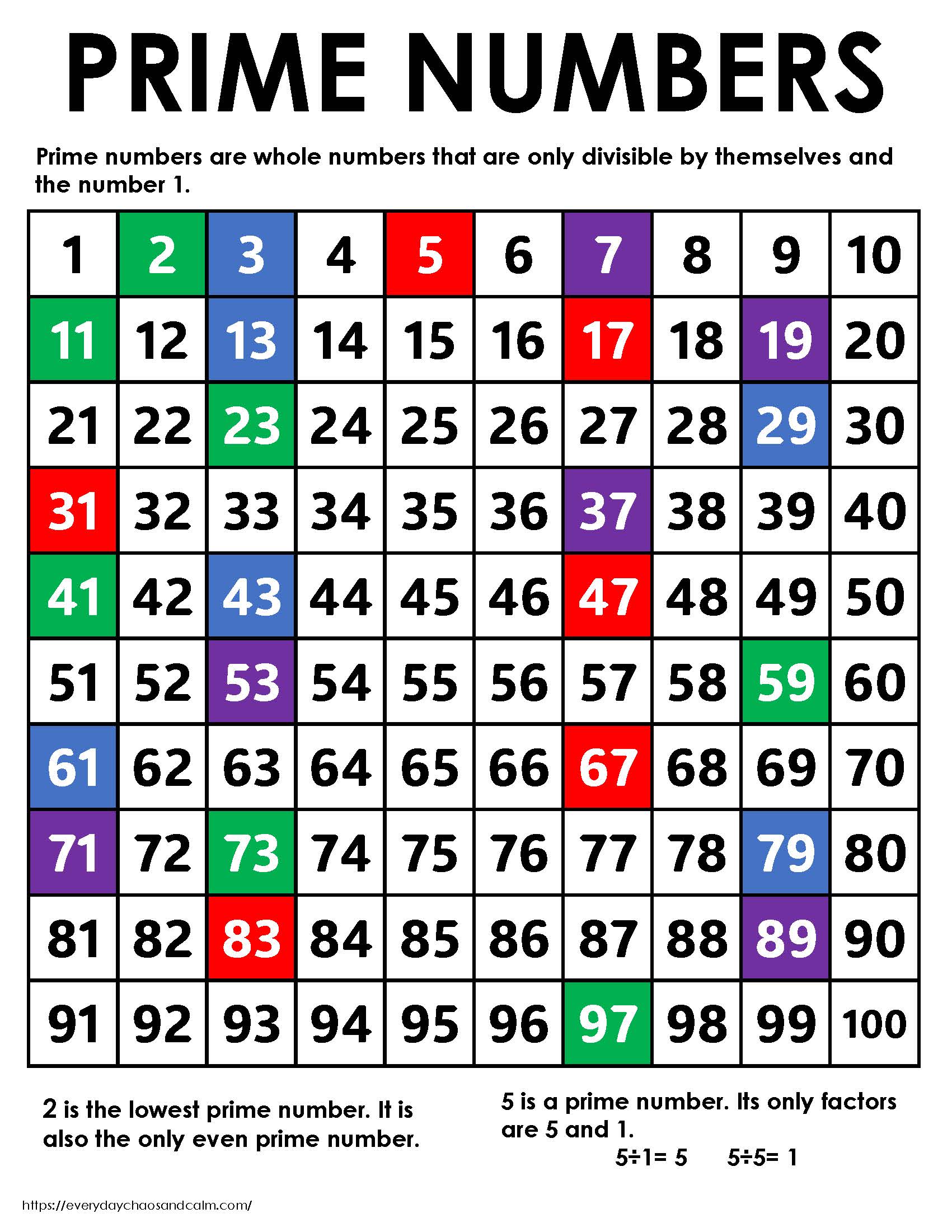
Mathematics is a fascinating field that often leads us to explore the properties of numbers. One of the most intriguing questions in number theory is whether a given number is prime. A prime number is a natural number greater than 1 that has no positive divisors other than 1 and itself. Today, we will delve into the question: Is 27 a Prime Number?
Understanding Prime Numbers
Before we determine whether 27 is a prime number, it’s essential to understand the concept of prime numbers. A prime number is defined as a natural number greater than 1 that cannot be formed by multiplying two smaller natural numbers. For example, the numbers 2, 3, 5, 7, and 11 are all prime numbers because they have no divisors other than 1 and themselves.
Checking if 27 is a Prime Number
To determine if 27 is a prime number, we need to check if it has any divisors other than 1 and 27. Let’s go through the steps:
- First, we check for divisibility by 2. Since 27 is an odd number, it is not divisible by 2.
- Next, we check for divisibility by 3. The sum of the digits of 27 is 2 + 7 = 9, which is divisible by 3. Therefore, 27 is divisible by 3.
- Since 27 is divisible by 3, we can conclude that it is not a prime number.
Divisors of 27
To further illustrate why 27 is not a prime number, let’s list all its divisors:
| Divisor | Result |
|---|---|
| 1 | 27 ÷ 1 = 27 |
| 3 | 27 ÷ 3 = 9 |
| 9 | 27 ÷ 9 = 3 |
| 27 | 27 ÷ 27 = 1 |
As we can see, 27 has divisors other than 1 and itself, specifically 3 and 9. This confirms that 27 is not a prime number.
Prime Numbers vs. Composite Numbers
Numbers that are not prime are called composite numbers. Composite numbers have more than two factors. In the case of 27, it is a composite number because it has the factors 1, 3, 9, and 27. Understanding the difference between prime and composite numbers is crucial in number theory and has applications in various fields, including cryptography and computer science.
Prime Factorization
Prime factorization is the process of determining the prime numbers that multiply together to make a certain number. For 27, the prime factorization is straightforward:
27 = 3 × 3 × 3
This means that 27 can be expressed as the product of three 3s. Prime factorization is a fundamental concept in mathematics and is used in many areas, such as simplifying fractions and solving equations.
💡 Note: Prime factorization is unique for every number, meaning there is only one way to express a number as a product of prime numbers.
Historical Context of Prime Numbers
The study of prime numbers dates back to ancient times. The Greek mathematician Euclid is often credited with proving that there are infinitely many prime numbers. His proof, known as Euclid’s theorem, is a classic example of a proof by contradiction. Euclid’s work laid the foundation for much of modern number theory.
Applications of Prime Numbers
Prime numbers have numerous applications in various fields. Some of the most notable applications include:
- Cryptography: Prime numbers are essential in cryptography, particularly in public-key cryptosystems like RSA. The security of these systems relies on the difficulty of factoring large composite numbers into their prime factors.
- Computer Science: Prime numbers are used in algorithms for hashing, error detection, and random number generation. They are also crucial in the design of efficient data structures.
- Mathematics: Prime numbers are central to many areas of mathematics, including number theory, algebra, and geometry. They are used to solve problems related to divisibility, congruences, and Diophantine equations.
Common Misconceptions About Prime Numbers
There are several misconceptions about prime numbers that are worth addressing:
- All odd numbers are prime: This is not true. While all prime numbers greater than 2 are odd, not all odd numbers are prime. For example, 9, 15, and 21 are odd but not prime.
- Prime numbers are rare: While prime numbers become less frequent as numbers get larger, they are not rare. In fact, there are infinitely many prime numbers, as proven by Euclid.
- Prime numbers have no patterns: While prime numbers do not follow a simple arithmetic pattern, there are complex patterns and distributions that mathematicians study. For example, the distribution of prime numbers follows the Prime Number Theorem, which describes the asymptotic distribution of the prime numbers among the positive integers.
Understanding these misconceptions can help clarify the true nature of prime numbers and their significance in mathematics.
In summary, 27 is not a prime number because it has divisors other than 1 and itself. It is a composite number with the prime factorization of 3 × 3 × 3. Prime numbers play a crucial role in various fields, including cryptography, computer science, and mathematics. Understanding the properties of prime numbers and their applications can deepen our appreciation for the beauty and complexity of mathematics.
Related Terms:
- is 70 a prime number
- is 63 a prime number
- 27 factored into prime numbers
- is 87 a prime number
- is 277 prime
- is 77 a prime number