Understanding different types of measurement scales is crucial in data analysis and research. One of the fundamental scales is the interval scale, which is essential for various types of data collection and analysis. This post will delve into the concept of interval scales, provide interval scale question examples, and discuss their applications and importance in research and data analysis.
Understanding Interval Scales
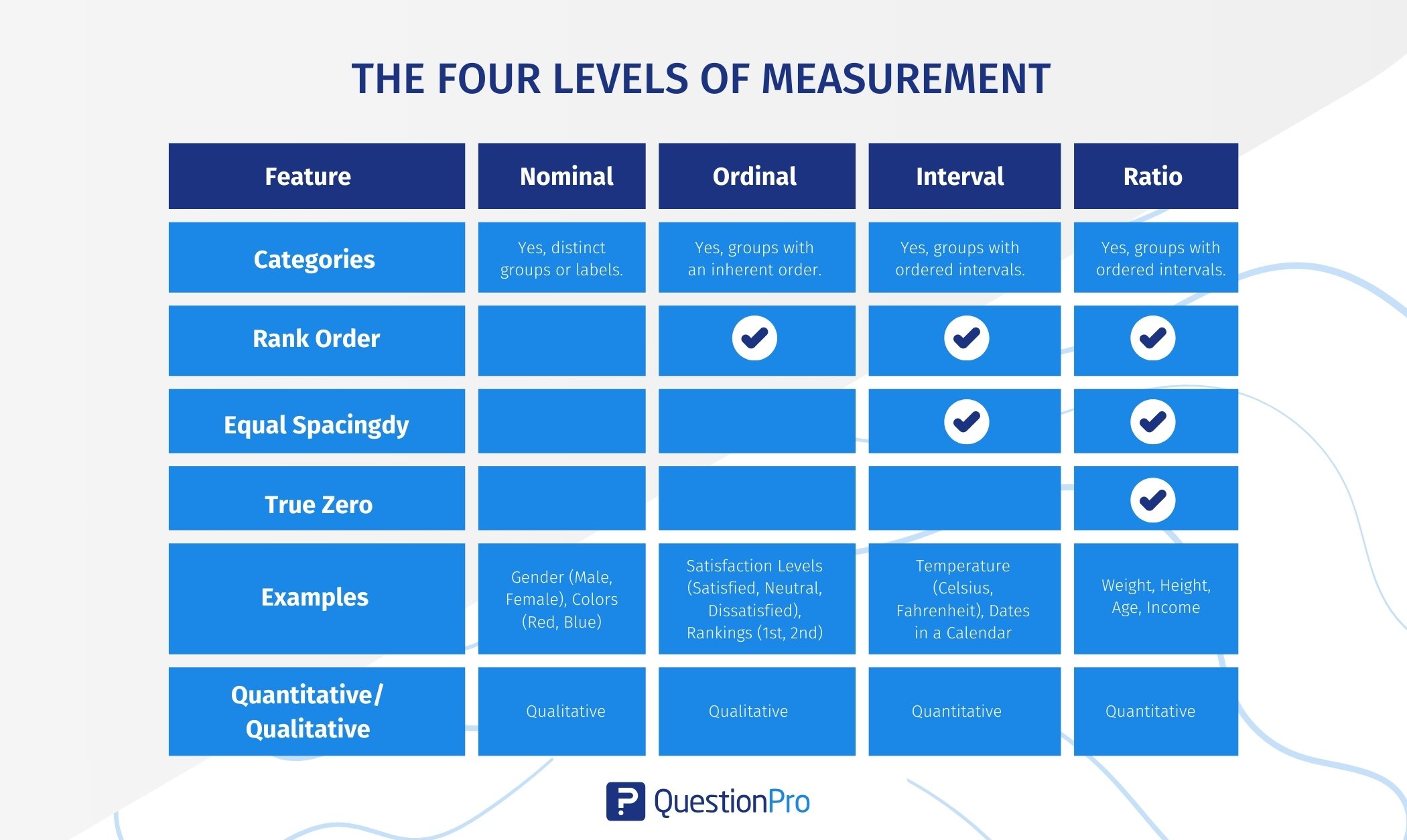
An interval scale is a type of measurement scale where the differences between values are meaningful, but the zero point is arbitrary. This means that the intervals between values are consistent, but there is no true zero point. For example, temperature measured in Celsius or Fahrenheit is an interval scale. The difference between 20°C and 30°C is the same as the difference between 30°C and 40°C, but 0°C does not represent the absence of temperature.
Interval scales are widely used in various fields, including psychology, sociology, and economics. They are particularly useful when the focus is on the differences between values rather than their absolute magnitudes.
Characteristics of Interval Scales
Interval scales have several key characteristics that distinguish them from other types of measurement scales:
- Equal Intervals: The intervals between values are consistent. For example, the difference between 10 and 20 on an interval scale is the same as the difference between 20 and 30.
- Arbitrary Zero Point: The zero point on an interval scale is arbitrary and does not represent the absence of the measured attribute. For instance, 0°C does not mean the absence of temperature.
- No True Zero: There is no true zero point, meaning that ratios are not meaningful. You cannot say that 20°C is twice as hot as 10°C.
- Order Matters: The order of values is meaningful. For example, 30°C is higher than 20°C.
Interval Scale Question Examples
Creating questions that measure interval scales involves designing items that capture differences between responses. Here are some interval scale question examples across different fields:
Psychology
In psychology, interval scales are often used to measure attitudes, opinions, and perceptions. For example:
- Likert Scale: A common interval scale used in psychology is the Likert scale, where respondents rate their agreement with a statement on a scale from 1 to 5 (e.g., Strongly Disagree to Strongly Agree).
- Satisfaction Surveys: Questions like "How satisfied are you with the service?" with responses ranging from 1 (Very Dissatisfied) to 5 (Very Satisfied) are interval scale questions.
Sociology
In sociology, interval scales are used to measure social phenomena such as income, education level, and social status. For example:
- Income Levels: Questions like "What is your annual income?" with responses categorized into intervals (e.g., $0-$20,000, $20,001-$40,000, etc.) are interval scale questions.
- Education Level: Questions like "What is the highest level of education you have completed?" with responses ranging from 1 (Less than High School) to 5 (Doctorate Degree) are interval scale questions.
Economics
In economics, interval scales are used to measure economic indicators such as inflation rates, GDP growth, and unemployment rates. For example:
- Inflation Rates: Questions like "What is the current inflation rate?" with responses measured in percentage points (e.g., 2%, 3%, 4%) are interval scale questions.
- GDP Growth: Questions like "What is the annual GDP growth rate?" with responses measured in percentage points (e.g., 1%, 2%, 3%) are interval scale questions.
Applications of Interval Scales
Interval scales have numerous applications in research and data analysis. They are particularly useful when the focus is on the differences between values rather than their absolute magnitudes. Some common applications include:
- Market Research: Interval scales are used to measure consumer preferences, satisfaction levels, and brand perceptions.
- Healthcare: Interval scales are used to measure health outcomes, symptom severity, and treatment effectiveness.
- Education: Interval scales are used to measure student performance, learning outcomes, and educational attainment.
Importance of Interval Scales in Research
Interval scales play a crucial role in research by providing a standardized way to measure and compare data. They allow researchers to:
- Compare Differences: Interval scales enable researchers to compare the differences between values, which is essential for identifying trends and patterns.
- Conduct Statistical Analysis: Interval scales are compatible with various statistical techniques, including mean, standard deviation, and correlation analysis.
- Ensure Consistency: Interval scales provide a consistent framework for measuring and comparing data, ensuring that results are reliable and valid.
📝 Note: When designing interval scale questions, it is important to ensure that the intervals between responses are consistent and meaningful. This helps to maintain the validity and reliability of the data collected.
Designing Effective Interval Scale Questions
Designing effective interval scale questions involves careful consideration of the measurement scale and the research objectives. Here are some tips for designing effective interval scale questions:
- Define Clear Intervals: Ensure that the intervals between responses are clear and consistent. For example, if using a Likert scale, the intervals between "Strongly Disagree" and "Disagree" should be the same as the intervals between "Disagree" and "Neutral."
- Use Appropriate Language: Use clear and unambiguous language to ensure that respondents understand the question and the response options.
- Avoid Leading Questions: Ensure that the questions are neutral and do not influence the respondents' answers.
- Pilot Test: Conduct a pilot test to ensure that the questions are understood correctly and that the intervals between responses are meaningful.
Here is an example of a well-designed interval scale question:
| Question | Response Options |
|---|---|
| How satisfied are you with the customer service you received? |
|
📝 Note: When designing interval scale questions, it is important to consider the context and the target audience. This helps to ensure that the questions are relevant and meaningful to the respondents.
Interval scales are a fundamental tool in data analysis and research. They provide a standardized way to measure and compare data, enabling researchers to identify trends, patterns, and relationships. By understanding the characteristics of interval scales and designing effective interval scale questions, researchers can collect reliable and valid data that supports their research objectives.
In conclusion, interval scales are essential for measuring differences between values in a consistent and meaningful way. They are widely used in various fields, including psychology, sociology, and economics, and play a crucial role in research and data analysis. By designing effective interval scale questions and understanding their applications, researchers can collect reliable and valid data that supports their research objectives. Interval scales provide a standardized framework for measuring and comparing data, ensuring that results are consistent and meaningful. Whether used in market research, healthcare, or education, interval scales are a valuable tool for researchers seeking to understand and analyze data effectively.
Related Terms:
- interval scale for survey questions
- examples of interval scales measurement
- examples of interval questions
- example of interval level measurement
- interval scale explained
- sample interval survey questions