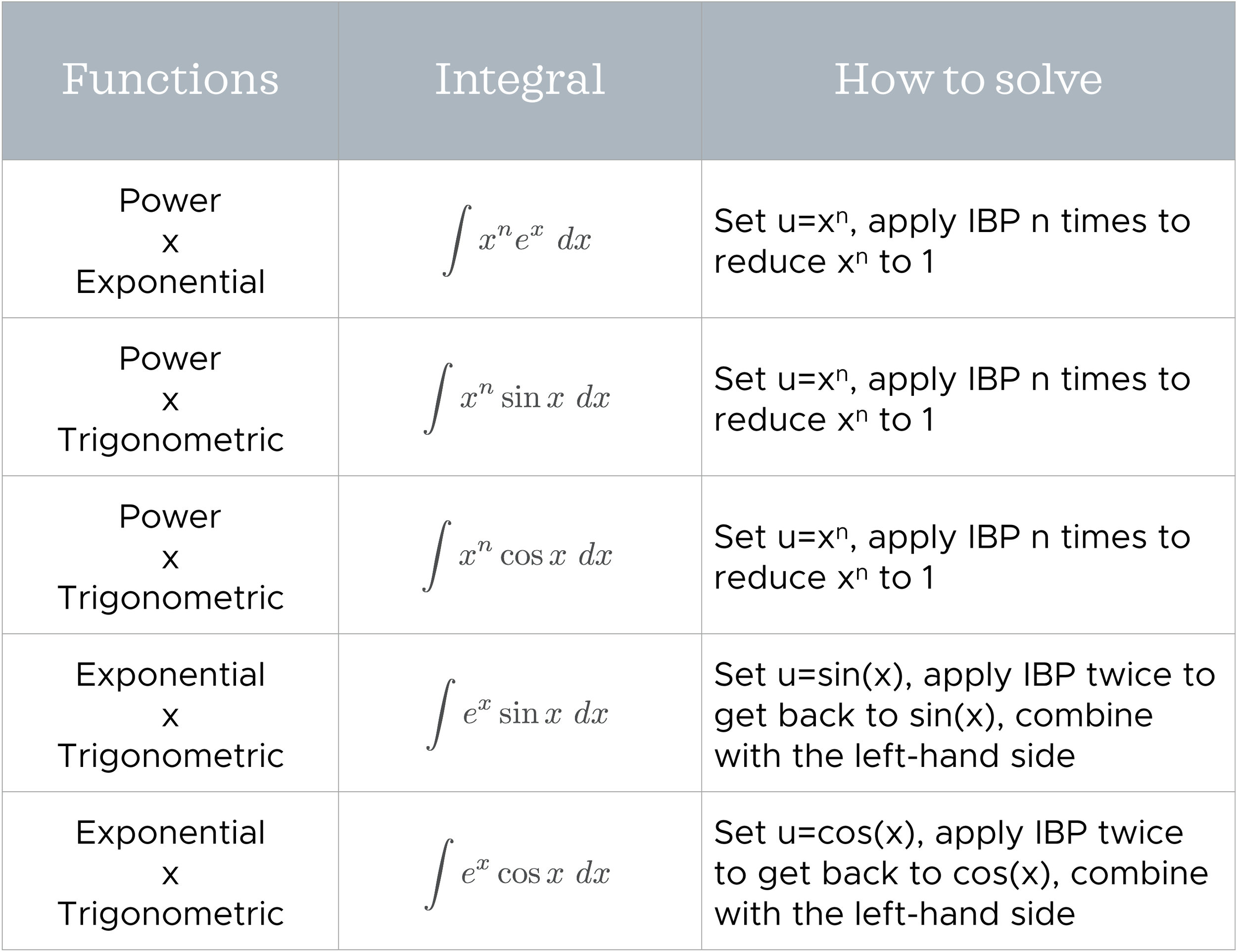
Calculus is a fundamental branch of mathematics that deals with rates of change and accumulation of quantities. One of the key concepts in calculus is the integral, which is used to find areas under curves, volumes of solids, and solutions to differential equations. Among the various types of integrals, the integral of exponential functions is particularly important due to its wide range of applications in fields such as physics, engineering, and economics.
Understanding Exponential Functions
Exponential functions are mathematical functions of the form f(x) = a^x, where a is a constant and x is a variable. These functions are characterized by their rapid growth or decay, depending on the value of a. The most common exponential function is e^x, where e is the base of the natural logarithm, approximately equal to 2.71828.
The Integral of Exponential Functions
The integral of an exponential function is a crucial concept in calculus. The integral of e^x with respect to x is e^x + C, where C is the constant of integration. This result is derived using the fundamental theorem of calculus and the properties of exponential functions.
To understand why the integral of e^x is e^x + C, consider the derivative of e^x. The derivative of e^x with respect to x is also e^x. This means that e^x is its own derivative, a unique property that simplifies many calculations in calculus.
Applications of the Integral of Exponential Functions
The integral of exponential functions has numerous applications in various fields. Some of the key areas where this concept is applied include:
- Physics: Exponential functions are used to model phenomena such as radioactive decay, population growth, and heat transfer. The integral of exponential functions is essential for calculating quantities like half-life and growth rates.
- Engineering: In electrical engineering, exponential functions are used to describe the behavior of circuits and signals. The integral of exponential functions is crucial for analyzing transient responses and designing filters.
- Economics: Exponential functions are used to model economic growth, interest rates, and inflation. The integral of exponential functions helps in calculating compound interest and predicting future economic trends.
Calculating the Integral of Exponential Functions
To calculate the integral of exponential functions, you can use the following steps:
- Identify the exponential function you want to integrate. For example, consider the function f(x) = e^x.
- Apply the integral formula for exponential functions. The integral of e^x with respect to x is e^x + C.
- Include the constant of integration C to account for all possible antiderivatives.
For example, to find the integral of e^x from 0 to 1, you would calculate:
∫ from 0 to 1 e^x dx = [e^x] from 0 to 1 = e^1 - e^0 = e - 1
💡 Note: The integral of e^x is a fundamental result in calculus and is often used as a building block for more complex integrals.
Integral of Exponential Functions with Different Bases
While the integral of e^x is straightforward, the integral of exponential functions with different bases requires a slight modification. For an exponential function of the form a^x, where a is a constant, the integral is given by:
∫a^x dx = (a^x / ln(a)) + C
This formula is derived using the chain rule and the properties of logarithms. For example, to find the integral of 2^x with respect to x, you would calculate:
∫2^x dx = (2^x / ln(2)) + C
Integral of Exponential Functions in Complex Form
In some advanced applications, you may encounter exponential functions in complex form, such as e^(ix), where i is the imaginary unit. The integral of such functions involves complex analysis and Euler’s formula, which states that e^(ix) = cos(x) + i*sin(x).
For example, to find the integral of e^(ix) from 0 to 2π, you would calculate:
∫ from 0 to 2π e^(ix) dx = [e^(ix) / i] from 0 to 2π = (e^(i*2π) - e^(i*0)) / i = (1 - 1) / i = 0
This result shows that the integral of e^(ix) over one full period is zero, which is a useful property in signal processing and Fourier analysis.
Integral of Exponential Functions in Differential Equations
Exponential functions often appear in differential equations, which are used to model dynamic systems. The integral of exponential functions is essential for solving these equations and finding their solutions.
For example, consider the differential equation dy/dx = e^x. To solve this equation, you would integrate both sides with respect to x:
∫dy/dx dx = ∫e^x dx
y = e^x + C
This solution shows that the integral of exponential functions is crucial for finding the general solution of differential equations.
💡 Note: When solving differential equations involving exponential functions, it is important to include the constant of integration to account for all possible solutions.
Integral of Exponential Functions in Probability and Statistics
Exponential functions are also used in probability and statistics to model random variables and distributions. The integral of exponential functions is essential for calculating probabilities, expected values, and other statistical measures.
For example, consider the exponential distribution with parameter λ, which has the probability density function f(x) = λe^(-λx) for x ≥ 0. The cumulative distribution function (CDF) of this distribution is given by:
F(x) = ∫ from 0 to x λe^(-λt) dt = 1 - e^(-λx)
This result shows that the integral of exponential functions is crucial for calculating the CDF of the exponential distribution, which is used to find probabilities and percentiles.
Integral of Exponential Functions in Numerical Methods
In numerical methods, the integral of exponential functions is often approximated using techniques such as numerical integration and Monte Carlo simulations. These methods are used when analytical solutions are difficult or impossible to obtain.
For example, consider the integral ∫ from 0 to 1 e^(-x^2) dx, which does not have a closed-form solution. To approximate this integral, you can use numerical methods such as the trapezoidal rule or Simpson's rule. Alternatively, you can use Monte Carlo simulations to estimate the value of the integral.
Numerical methods are particularly useful when dealing with complex integrals involving exponential functions, as they provide a way to obtain approximate solutions with a high degree of accuracy.
💡 Note: When using numerical methods to approximate the integral of exponential functions, it is important to choose an appropriate method and ensure that the approximation is accurate enough for your application.
Integral of Exponential Functions in Special Functions
Exponential functions are also related to special functions, which are mathematical functions that have important properties and applications. Some of the special functions that involve exponential functions include the gamma function, the error function, and the Bessel functions.
The gamma function, denoted by Γ(z), is defined as:
Γ(z) = ∫ from 0 to ∞ t^(z-1)e^(-t) dt
This integral involves an exponential function and is used to generalize the factorial function to complex numbers. The gamma function has many important properties and applications in mathematics and physics.
The error function, denoted by erf(x), is defined as:
erf(x) = (2/√π) ∫ from 0 to x e^(-t^2) dt
This integral involves an exponential function and is used to model error distributions and signal processing. The error function has many important properties and applications in statistics and engineering.
The Bessel functions, denoted by J_n(x), are defined as:
J_n(x) = (1/π) ∫ from 0 to π cos(nθ - xsin(θ)) dθ
This integral involves an exponential function and is used to model wave phenomena and heat conduction. The Bessel functions have many important properties and applications in physics and engineering.
These special functions are just a few examples of how the integral of exponential functions is used in advanced mathematics. They highlight the importance of exponential functions in various fields and their role in modeling complex phenomena.
Here is a table summarizing some of the special functions that involve exponential functions:
| Special Function | Definition | Applications |
|---|---|---|
| Gamma Function | Γ(z) = ∫ from 0 to ∞ t^(z-1)e^(-t) dt | Generalizing the factorial function, complex analysis |
| Error Function | erf(x) = (2/√π) ∫ from 0 to x e^(-t^2) dt | Error distributions, signal processing |
| Bessel Functions | J_n(x) = (1/π) ∫ from 0 to π cos(nθ - xsin(θ)) dθ | Wave phenomena, heat conduction |
These special functions are just a few examples of how the integral of exponential functions is used in advanced mathematics. They highlight the importance of exponential functions in various fields and their role in modeling complex phenomena.
In conclusion, the integral of exponential functions is a fundamental concept in calculus with wide-ranging applications in various fields. From physics and engineering to economics and statistics, the integral of exponential functions plays a crucial role in modeling and solving complex problems. Understanding this concept is essential for anyone studying calculus or applying mathematical principles to real-world problems. By mastering the integral of exponential functions, you can gain a deeper understanding of calculus and its applications, opening up new opportunities for exploration and discovery.
Related Terms:
- integral of efx
- integral of 1 x
- derivative of exponential
- integral of exponential function formula
- integral of exponential and sin
- integral of exponent