Statistical analysis is a cornerstone of data-driven decision-making, and one of the fundamental tools in this domain is the Individual Sample T Test. This test is widely used to determine whether the mean of a population differs significantly from a known or hypothesized value. Whether you are a researcher, data analyst, or student, understanding how to conduct an Individual Sample T Test is crucial for making informed conclusions from your data.
Understanding the Individual Sample T Test
The Individual Sample T Test, also known as the one-sample t-test, is a statistical hypothesis test used to compare the mean of a sample to a known or hypothesized population mean. This test is particularly useful when you have a small sample size and the population standard deviation is unknown. The test helps to determine if there is enough evidence to reject the null hypothesis, which states that the sample mean is equal to the population mean.
When to Use the Individual Sample T Test
The Individual Sample T Test is appropriate in several scenarios:
- When you have a single sample and you want to compare its mean to a known population mean.
- When the sample size is small (typically less than 30).
- When the population standard deviation is unknown.
- When the data is approximately normally distributed.
Assumptions of the Individual Sample T Test
Before conducting an Individual Sample T Test, it is essential to ensure that the following assumptions are met:
- The data is collected from a random sample.
- The data is approximately normally distributed.
- The observations are independent of each other.
Steps to Conduct an Individual Sample T Test
Conducting an Individual Sample T Test involves several steps. Here is a detailed guide:
Step 1: State the Hypotheses
Formulate the null hypothesis (H0) and the alternative hypothesis (H1).
- Null Hypothesis (H0): The sample mean is equal to the population mean (μ = μ0).
- Alternative Hypothesis (H1): The sample mean is not equal to the population mean (μ ≠ μ0).
Step 2: Choose the Significance Level
Select the significance level (α), which is the probability of rejecting the null hypothesis when it is true. Common choices are 0.05, 0.01, and 0.10.
Step 3: Calculate the Test Statistic
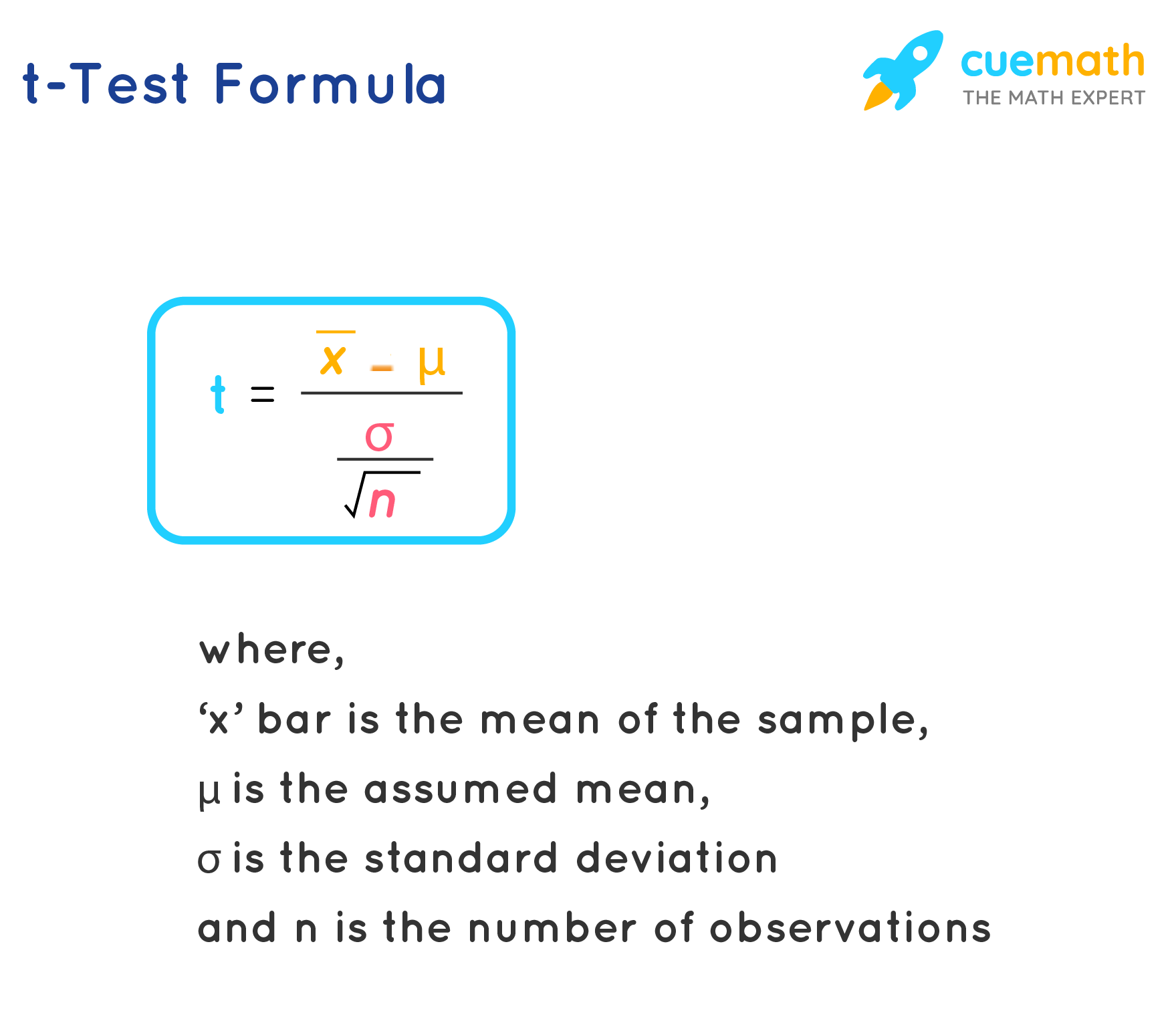
The test statistic for the Individual Sample T Test is calculated using the formula:
📝 Note: The formula for the test statistic is t = (x̄ - μ0) / (s / √n), where x̄ is the sample mean, μ0 is the population mean, s is the sample standard deviation, and n is the sample size.
Step 4: Determine the Critical Value
Find the critical value from the t-distribution table based on the chosen significance level and the degrees of freedom (df = n - 1).
Step 5: Make a Decision
Compare the calculated test statistic to the critical value. If the test statistic falls in the rejection region, reject the null hypothesis. Otherwise, do not reject the null hypothesis.
Step 6: Interpret the Results
Interpret the results in the context of the research question. If the null hypothesis is rejected, conclude that there is enough evidence to suggest that the sample mean is significantly different from the population mean.
Example of an Individual Sample T Test
Let's walk through an example to illustrate the process. Suppose you want to test if the average height of a sample of 20 students is significantly different from the known population mean of 170 cm. The sample mean is 172 cm, and the sample standard deviation is 5 cm.
Step 1: State the Hypotheses
- H0: μ = 170 cm
- H1: μ ≠ 170 cm
Step 2: Choose the Significance Level
α = 0.05
Step 3: Calculate the Test Statistic
t = (172 - 170) / (5 / √20) = 2.828
Step 4: Determine the Critical Value
Degrees of freedom = 20 - 1 = 19
Critical value (two-tailed test at α = 0.05) = ±2.093
Step 5: Make a Decision
Since the calculated test statistic (2.828) is greater than the critical value (2.093), we reject the null hypothesis.
Step 6: Interpret the Results
There is enough evidence to suggest that the average height of the sample is significantly different from the population mean of 170 cm.
Interpreting the Results of an Individual Sample T Test
Interpreting the results of an Individual Sample T Test involves understanding the p-value and the confidence interval. The p-value is the probability of observing a test statistic as extreme as the one calculated, assuming the null hypothesis is true. A small p-value (typically less than the significance level) indicates strong evidence against the null hypothesis.
The confidence interval provides a range of values within which the population mean is likely to fall. A 95% confidence interval, for example, means that if the test were repeated many times, 95% of the intervals would contain the true population mean.
Common Mistakes to Avoid
When conducting an Individual Sample T Test, it is important to avoid common mistakes that can lead to incorrect conclusions:
- Not checking the assumptions of the test.
- Using a non-random sample.
- Incorrectly calculating the test statistic.
- Misinterpreting the p-value or confidence interval.
Alternative Tests
While the Individual Sample T Test is a powerful tool, there are alternative tests that may be more appropriate in certain situations:
- Paired Sample T Test: Used when you have two related samples and want to compare the means.
- Independent Sample T Test: Used when you have two independent samples and want to compare their means.
- Non-parametric Tests: Used when the data does not meet the assumptions of the t-test, such as the Mann-Whitney U Test or the Wilcoxon Signed-Rank Test.
Each of these tests has its own set of assumptions and use cases, so it is important to choose the appropriate test based on your data and research question.
Conclusion
The Individual Sample T Test is a valuable statistical tool for comparing the mean of a sample to a known population mean. By understanding the assumptions, steps, and interpretation of this test, you can make informed decisions based on your data. Whether you are conducting research, analyzing data, or teaching statistics, mastering the Individual Sample T Test will enhance your analytical skills and help you draw accurate conclusions from your data.
Related Terms:
- 1 sample t test example
- independent sample t test
- one sample t test table
- one sample t test formula
- t test value of 1
- 1 sample t test calculator