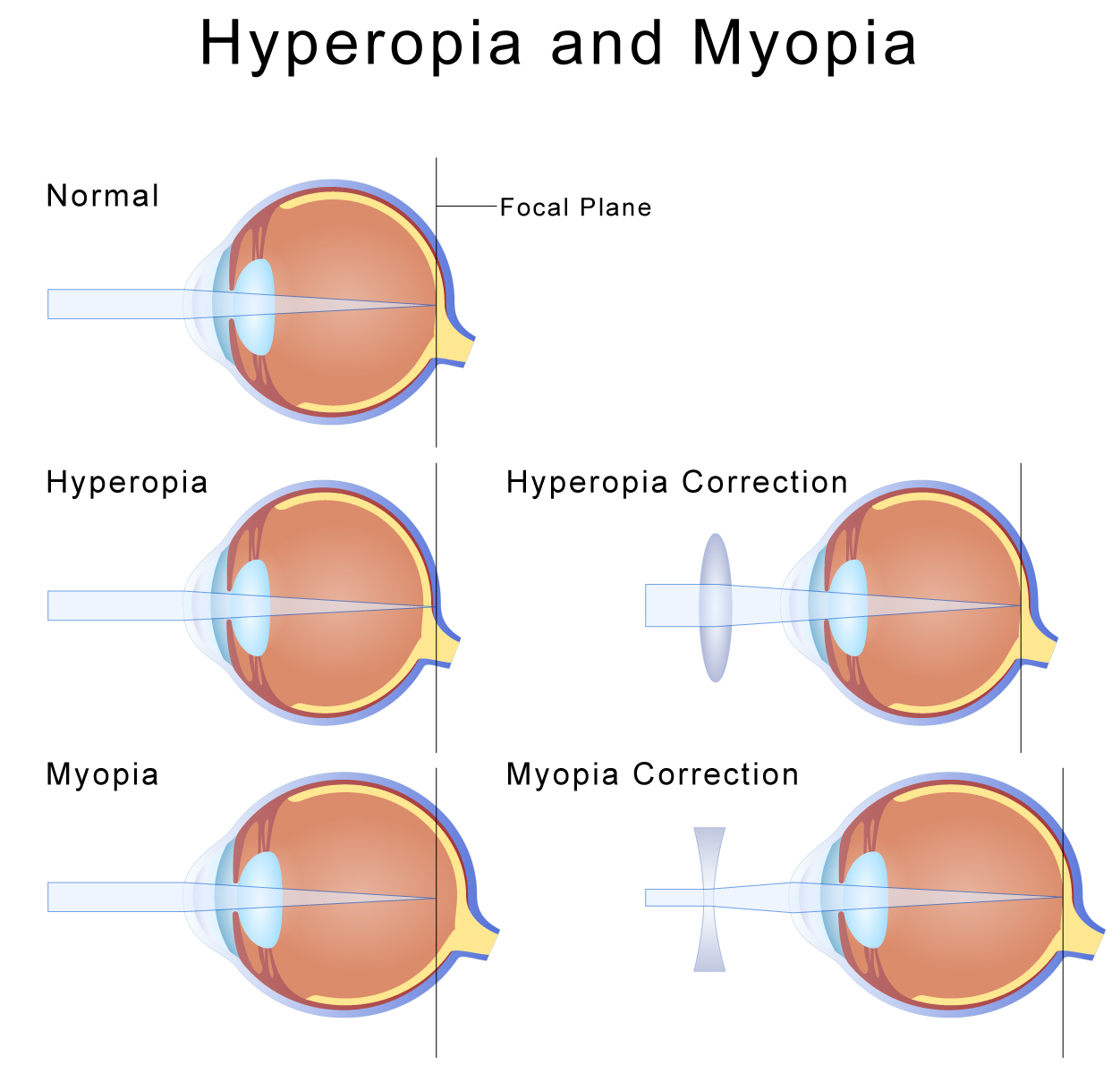
Understanding the differences between Hyperopia and Myopia is crucial for maintaining good eye health. These two conditions are among the most common refractive errors, affecting millions of people worldwide. While both involve issues with how the eye focuses light, they manifest in distinct ways and require different corrective measures. This post delves into the intricacies of Hyperopia vs Myopia, exploring their causes, symptoms, diagnosis, and treatment options.
Understanding Hyperopia
Hyperopia, commonly known as farsightedness, is a condition where distant objects are seen clearly, but close objects appear blurry. This occurs because the eye focuses light behind the retina instead of directly on it. Hyperopia can be caused by several factors, including:
- The eyeball being too short.
- The cornea being too flat.
- A weak lens inside the eye.
Hyperopia can be present at birth and often runs in families. It can also develop later in life due to aging, as the lens of the eye becomes less flexible.
Symptoms of Hyperopia
The symptoms of Hyperopia can vary depending on the severity of the condition. Common symptoms include:
- Difficulty focusing on close objects.
- Eye strain or discomfort after reading or doing close work.
- Headaches, especially after prolonged close work.
- Squinting to see clearly.
- Fatigue or discomfort in the eyes.
In children, Hyperopia may cause:
- Crossed eyes (strabismus).
- Lazy eye (amblyopia).
- Difficulty with reading and close-up tasks.
Diagnosing Hyperopia
Hyperopia is typically diagnosed through a comprehensive eye exam. The process involves several steps:
- Visual acuity test: This measures how well you can see at various distances.
- Refraction test: This determines the exact power of the lenses needed to correct your vision.
- Slit-lamp examination: This allows the eye doctor to examine the structures of your eye.
- Retinal examination: This checks the health of the back of your eye.
These tests help the eye doctor determine the degree of Hyperopia and the best course of treatment.
Treating Hyperopia
There are several options for treating Hyperopia, depending on the severity of the condition and the patient's preferences. Common treatments include:
- Eyeglasses: Prescription lenses can correct Hyperopia by focusing light directly on the retina.
- Contact lenses: These provide a similar correction to eyeglasses but are worn directly on the eye.
- Refractive surgery: Procedures such as LASIK or PRK can reshape the cornea to correct Hyperopia.
- Multifocal contact lenses: These can be useful for patients with both Hyperopia and presbyopia (age-related farsightedness).
For children with Hyperopia, early intervention is crucial to prevent complications like lazy eye or crossed eyes. Regular eye exams and appropriate corrective measures can help manage the condition effectively.
📝 Note: It's important to consult with an eye care professional to determine the best treatment option for Hyperopia. Regular eye exams are essential for monitoring the condition and adjusting treatment as needed.
Understanding Myopia
Myopia, also known as nearsightedness, is a condition where close objects are seen clearly, but distant objects appear blurry. This occurs because the eye focuses light in front of the retina instead of directly on it. Myopia can be caused by several factors, including:
- The eyeball being too long.
- The cornea being too curved.
- A strong lens inside the eye.
Myopia often develops in childhood and can worsen during the teenage years. It can also be influenced by genetic factors and environmental conditions, such as prolonged close work or lack of outdoor activity.
Symptoms of Myopia
The symptoms of Myopia can vary depending on the severity of the condition. Common symptoms include:
- Difficulty seeing distant objects clearly.
- Squinting to see clearly.
- Eye strain or discomfort after prolonged distance viewing.
- Headaches, especially after prolonged distance viewing.
- Difficulty with night vision.
In children, Myopia may cause:
- Difficulty with schoolwork, especially tasks that require distance vision.
- Squinting or frequent blinking.
- Holding books or other objects close to the face.
Diagnosing Myopia
Myopia is typically diagnosed through a comprehensive eye exam. The process involves several steps:
- Visual acuity test: This measures how well you can see at various distances.
- Refraction test: This determines the exact power of the lenses needed to correct your vision.
- Slit-lamp examination: This allows the eye doctor to examine the structures of your eye.
- Retinal examination: This checks the health of the back of your eye.
These tests help the eye doctor determine the degree of Myopia and the best course of treatment.
Treating Myopia
There are several options for treating Myopia, depending on the severity of the condition and the patient's preferences. Common treatments include:
- Eyeglasses: Prescription lenses can correct Myopia by focusing light directly on the retina.
- Contact lenses: These provide a similar correction to eyeglasses but are worn directly on the eye.
- Refractive surgery: Procedures such as LASIK or PRK can reshape the cornea to correct Myopia.
- Orthokeratology (Ortho-K): These are special contact lenses worn overnight to temporarily reshape the cornea.
- Atropine eye drops: These can slow the progression of Myopia in children.
For children with Myopia, early intervention is crucial to prevent complications and manage the condition effectively. Regular eye exams and appropriate corrective measures can help slow the progression of Myopia.
📝 Note: It's important to consult with an eye care professional to determine the best treatment option for Myopia. Regular eye exams are essential for monitoring the condition and adjusting treatment as needed.
Hyperopia Vs Myopia: Key Differences
Understanding the key differences between Hyperopia and Myopia is essential for proper diagnosis and treatment. Here is a comparison of the two conditions:
| Aspect | Hyperopia (Farsightedness) | Myopia (Nearsightedness) |
|---|---|---|
| Vision Clarity | Close objects are blurry; distant objects are clear. | Distant objects are blurry; close objects are clear. |
| Cause | Eyeball too short, cornea too flat, or weak lens. | Eyeball too long, cornea too curved, or strong lens. |
| Symptoms | Eye strain, headaches, squinting, difficulty with close work. | Eye strain, headaches, squinting, difficulty with distance vision. |
| Treatment | Eyeglasses, contact lenses, refractive surgery, multifocal lenses. | Eyeglasses, contact lenses, refractive surgery, Ortho-K, atropine eye drops. |
While both conditions involve issues with how the eye focuses light, they require different corrective measures. Proper diagnosis and treatment are crucial for maintaining good eye health and preventing complications.
Preventing and Managing Hyperopia and Myopia
Preventing and managing Hyperopia and Myopia involves a combination of regular eye exams, appropriate corrective measures, and lifestyle adjustments. Here are some tips for managing these conditions:
- Regular eye exams: Schedule regular eye exams to monitor your vision and detect any changes early.
- Proper lighting: Ensure adequate lighting when reading or doing close work to reduce eye strain.
- Ergonomic setup: Maintain a comfortable distance from the screen or reading material to reduce eye strain.
- Breaks: Take frequent breaks from close work or screen time to rest your eyes.
- Outdoor activity: Encourage children to spend more time outdoors, as it may help slow the progression of Myopia.
- Nutrition: Maintain a balanced diet rich in vitamins and minerals that support eye health.
By following these tips and consulting with an eye care professional, you can effectively manage Hyperopia and Myopia and maintain good eye health.
📝 Note: Early intervention and regular eye exams are crucial for managing Hyperopia and Myopia. Consult with an eye care professional to determine the best course of treatment for your specific needs.
In conclusion, understanding the differences between Hyperopia and Myopia is essential for maintaining good eye health. Both conditions involve issues with how the eye focuses light, but they manifest in distinct ways and require different corrective measures. Regular eye exams, appropriate corrective measures, and lifestyle adjustments can help manage these conditions effectively. By staying informed and proactive, you can ensure optimal eye health and prevent complications associated with Hyperopia and Myopia.
Related Terms:
- myopia vs presbyopia
- myopia meaning
- myopia vs hyperopia lens
- presbyopia vs hyperopia
- myopia vs hyperopia prescription
- hyperopia vs hypermetropia