Understanding the intricacies of English grammar can be both fascinating and challenging. One of the fundamental aspects of grammar is the use of helping verbs. Helping verbs, also known as auxiliary verbs, play a crucial role in forming various tenses, voices, and moods in a sentence. They provide additional information about the main verb, helping to convey the intended meaning more clearly. In this post, we will delve into the world of helping verbs, exploring their types, functions, and providing plenty of helping verbs examples to illustrate their usage.
What Are Helping Verbs?
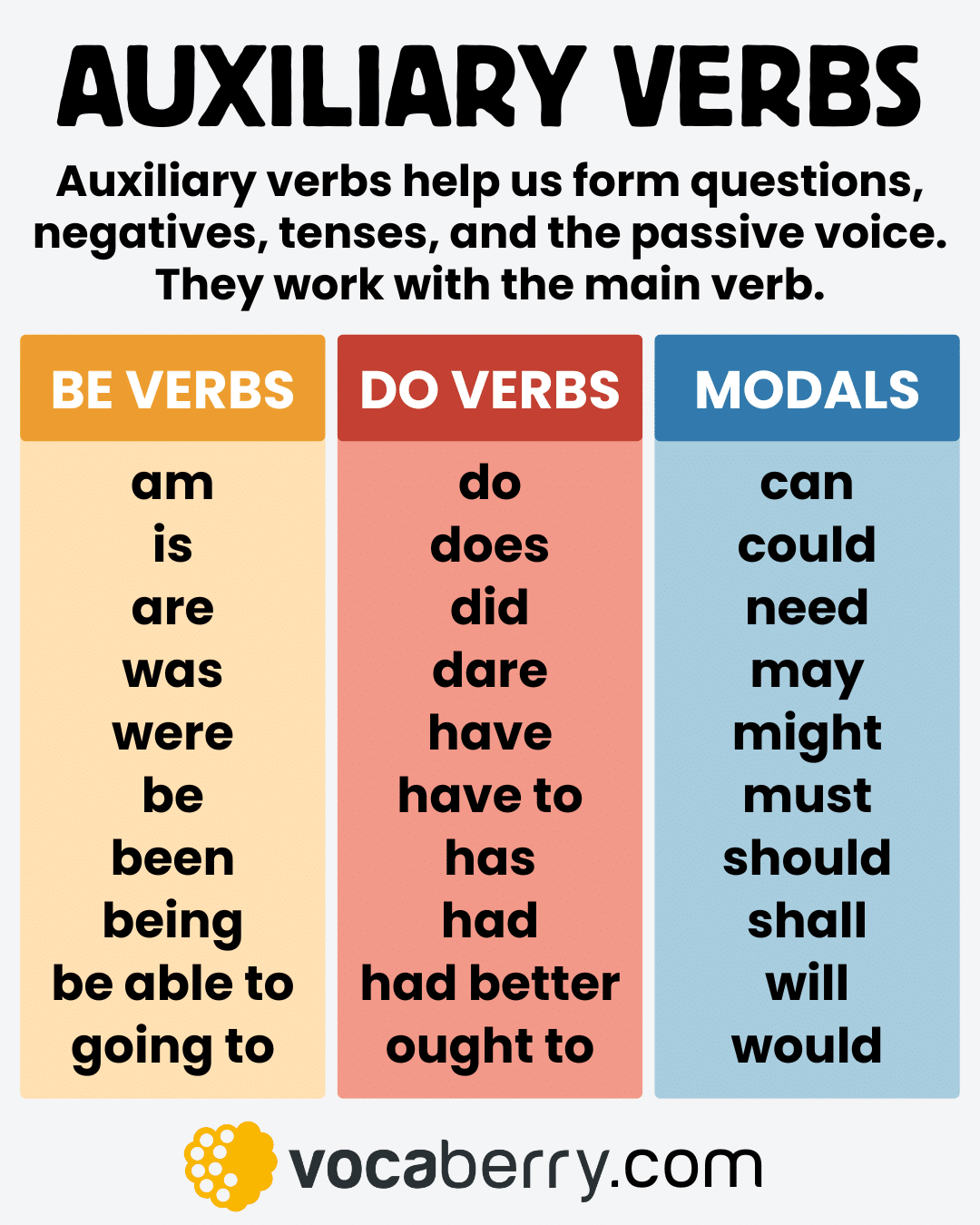
Helping verbs are verbs that assist the main verb in a sentence by providing additional information about the action, such as its tense, voice, or mood. They are essential for constructing complex sentences and expressing nuanced meanings. The primary helping verbs in English include:
- Be
- Do
- Have
- Will
- Shall
- May
- Might
- Must
- Can
- Could
- Would
- Should
Types of Helping Verbs
Helping verbs can be categorized into several types based on their functions. Understanding these categories can help in mastering their usage.
Primary Helping Verbs
Primary helping verbs are the most commonly used and include be, do, and have. These verbs are essential for forming various tenses and aspects.
- Be: Used to form continuous tenses and passive voice. Examples include is, am, are, was, and were.
- Do: Used to form questions and negatives in simple present and simple past tenses. Examples include do, does, and did.
- Have: Used to form perfect tenses. Examples include have, has, and had.
Modal Helping Verbs
Modal helping verbs express modality, which includes possibility, probability, permission, obligation, and ability. The modal verbs are can, could, may, might, must, shall, should, will, and would.
Functions of Helping Verbs
Helping verbs serve various functions in a sentence. They help to form different tenses, voices, and moods, making the language more expressive and nuanced.
Forming Tenses
Helping verbs are crucial for forming different tenses in English. Here are some examples:
- Present Continuous: I am reading a book.
- Past Continuous: She was watching TV.
- Present Perfect: They have finished their homework.
- Past Perfect: He had already left when I arrived.
- Future Simple: We will go to the park.
Forming Passive Voice
Helping verbs are also used to form the passive voice, where the subject receives the action instead of performing it. Examples include:
- The book was written by her.
- The cake is being baked by him.
- The letter has been sent.
Expressing Modality
Modal helping verbs express various shades of meaning related to possibility, probability, permission, obligation, and ability. For example:
- She can swim. (Ability)
- You may go now. (Permission)
- They must finish the project by Friday. (Obligation)
- It might rain tomorrow. (Possibility)
Helping Verbs Examples in Sentences
To better understand the usage of helping verbs, let’s look at some helping verbs examples in various contexts.
Present Tenses
In the present tense, helping verbs are used to form continuous and perfect aspects.
- I am eating breakfast. (Present Continuous)
- She has finished her work. (Present Perfect)
- They do not like coffee. (Simple Present with do for negation)
Past Tenses
In the past tense, helping verbs help to form continuous, perfect, and simple past tenses.
- He was reading a book. (Past Continuous)
- They had already left. (Past Perfect)
- We did not go to the party. (Simple Past with did for negation)
Future Tenses
In the future tense, helping verbs are used to form simple future and future perfect tenses.
- She will call you later. (Future Simple)
- They will have completed the project by next week. (Future Perfect)
Passive Voice
Helping verbs are essential for forming the passive voice in various tenses.
- The car is being repaired. (Present Continuous Passive)
- The letter was sent yesterday. (Simple Past Passive)
- The book will be published next month. (Future Simple Passive)
Modality
Modal helping verbs express different shades of meaning related to modality.
- You should study harder. (Advice)
- She might come to the party. (Possibility)
- They must finish the report by tomorrow. (Obligation)
Common Mistakes with Helping Verbs
While helping verbs are essential for constructing grammatically correct sentences, they can also be a source of common mistakes. Here are some pitfalls to avoid:
Incorrect Tense Formation
One common mistake is using the wrong helping verb to form a tense. For example:
- Incorrect: She has went to the store.
- Correct: She has gone to the store.
Misusing Modal Verbs
Modal verbs can be tricky because they often have specific rules for their usage. For example:
- Incorrect: She can to swim.
- Correct: She can swim.
Omitting Necessary Helping Verbs
Sometimes, helping verbs are omitted, leading to incomplete or incorrect sentences. For example:
- Incorrect: She going to the park.
- Correct: She is going to the park.
📝 Note: Pay close attention to the context and the main verb when using helping verbs to avoid these common mistakes.
Practice Exercises
To reinforce your understanding of helping verbs, try the following exercises:
Fill in the Blanks
Complete the sentences by filling in the appropriate helping verbs.
| Sentence | Helping Verb |
|---|---|
| She ______ reading a book. | is |
| They ______ finished their homework. | have |
| He ______ to the store. | went |
| We ______ go to the park. | will |
| The cake ______ being baked. | is |
Correct the Sentences
Identify and correct the mistakes in the following sentences:
- Incorrect: She has went to the store.
- Incorrect: They do not like to swim.
- Incorrect: He can to play the piano.
- Incorrect: The book was wrote by her.
- Incorrect: She going to the park.
📝 Note: Review the corrected sentences to understand the proper usage of helping verbs.
Helping verbs are a fundamental aspect of English grammar that enhance the expressiveness and clarity of sentences. By understanding their types, functions, and common mistakes, you can improve your grammar skills and communicate more effectively. Whether you are a student, a teacher, or a language enthusiast, mastering helping verbs is essential for achieving proficiency in English.
Related Terms:
- what is a helping verb
- helping verbs examples sentences pdf
- helping verb sentence 10 examples
- helping verbs list with examples
- list of all helping verbs
- action verbs examples