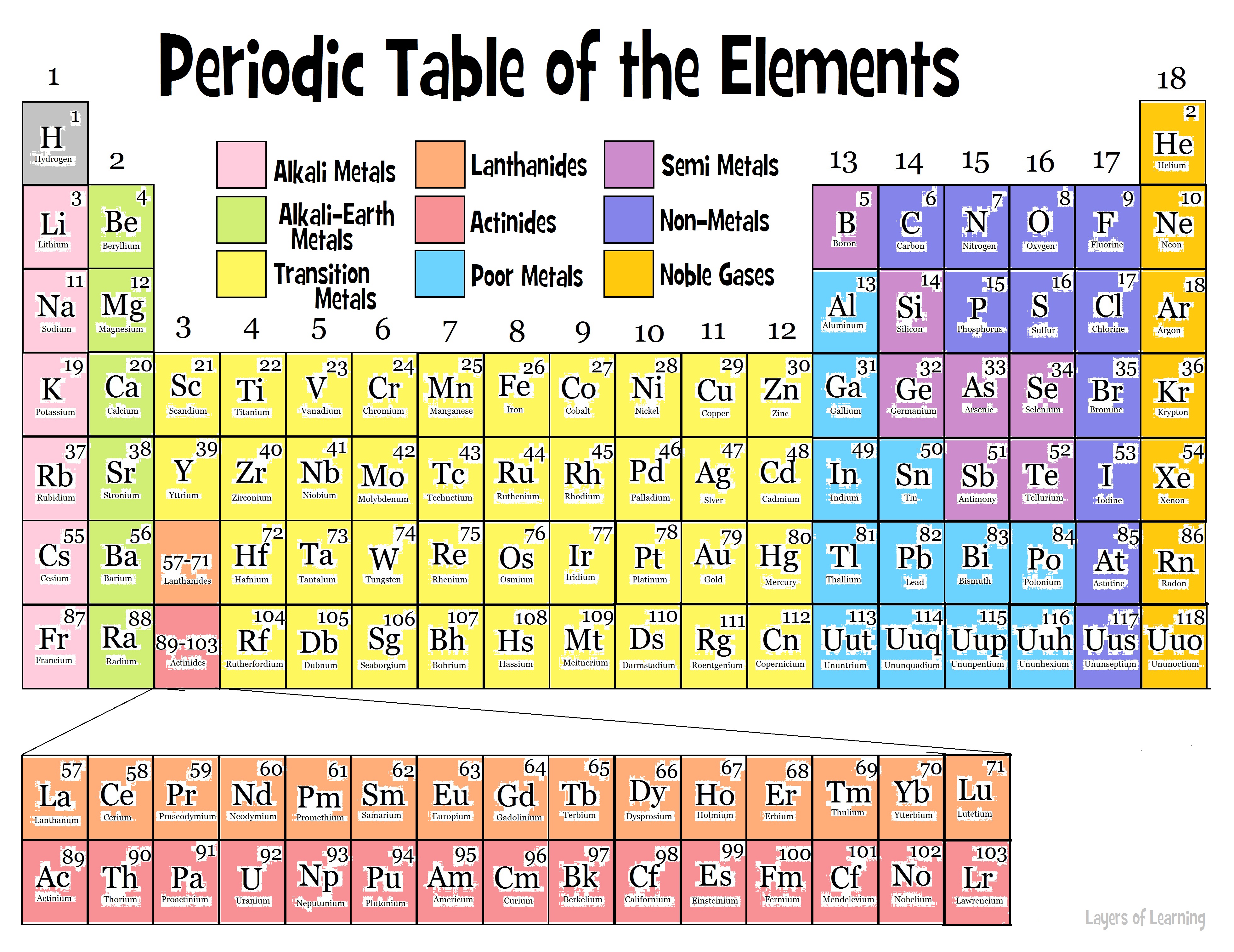
The Group 13 Periodic Table elements, also known as the boron group, are a fascinating set of elements that include boron (B), aluminum (Al), gallium (Ga), indium (In), thallium (Tl), and nihonium (Nh). These elements share similar electronic configurations and exhibit a range of unique properties that make them crucial in various scientific and industrial applications. This blog post will delve into the characteristics, uses, and significance of the Group 13 elements, providing a comprehensive overview of their role in the periodic table.
Introduction to Group 13 Elements
The Group 13 elements are located in the p-block of the periodic table. They have three electrons in their outermost shell, which gives them a valence electron configuration of ns2np1. This configuration influences their chemical behavior and reactivity. The elements in this group exhibit a mix of metallic and non-metallic properties, with boron being the only non-metal and the rest being metals.
Properties of Group 13 Elements
The properties of Group 13 elements vary significantly as you move down the group. Here are some key properties:
- Atomic Radius: The atomic radius increases down the group due to the addition of new electron shells.
- Ionization Energy: The ionization energy decreases down the group because the outer electrons are farther from the nucleus and thus easier to remove.
- Electronegativity: Electronegativity decreases down the group, with boron being the most electronegative and nihonium the least.
- Melting and Boiling Points: The melting and boiling points generally increase down the group, except for gallium, which has a surprisingly low melting point.
Chemical Behavior of Group 13 Elements
The chemical behavior of Group 13 elements is influenced by their electronic configuration. They typically form compounds with a +3 oxidation state, although some elements can exhibit other oxidation states. Here are some key points about their chemical behavior:
- Boron: Boron is unique in that it forms covalent compounds rather than ionic ones. It has a high affinity for oxygen and forms borates and boric acid.
- Aluminum: Aluminum is highly reactive and forms a protective oxide layer when exposed to air, which prevents further corrosion. It is commonly used in alloys.
- Gallium: Gallium has a low melting point and is liquid at temperatures just above room temperature. It forms compounds with various oxidation states, including +1 and +3.
- Indium: Indium is a soft, malleable metal that is often used in low-melting-point alloys. It forms compounds with a +3 oxidation state.
- Thallium: Thallium is a heavy metal that is highly toxic. It forms compounds with a +1 and +3 oxidation state, with the +1 state being more stable.
- Nihonium: Nihonium is a synthetic, radioactive element with a very short half-life. Its chemical properties are not well understood due to its instability.
Applications of Group 13 Elements
The Group 13 elements have a wide range of applications in various industries. Here are some of the key uses:
- Boron: Boron is used in the production of borosilicate glass, which is resistant to thermal shock. It is also used in the manufacture of fiberglass and as a component in some fertilizers.
- Aluminum: Aluminum is widely used in the aerospace industry due to its lightweight and strength. It is also used in packaging, construction, and electrical applications.
- Gallium: Gallium is used in the production of semiconductors and is a key component in gallium arsenide, which is used in LEDs and solar cells.
- Indium: Indium is used in the production of low-melting-point alloys and is a key component in indium tin oxide, which is used in touchscreens and solar panels.
- Thallium: Thallium is used in some specialized applications, such as in the production of infrared detectors and in certain medical imaging techniques.
- Nihonium: Due to its short half-life and synthetic nature, nihonium has no practical applications outside of scientific research.
Environmental and Health Considerations
The Group 13 elements have varying levels of toxicity and environmental impact. It is important to handle them with care:
- Boron: Boron compounds are generally considered low in toxicity, but high doses can be harmful.
- Aluminum: Aluminum is relatively non-toxic, but excessive exposure can lead to health issues, particularly in individuals with kidney problems.
- Gallium: Gallium is considered non-toxic, but its compounds can be harmful if ingested or inhaled.
- Indium: Indium is generally considered non-toxic, but its compounds can be harmful if ingested or inhaled.
- Thallium: Thallium is highly toxic and can cause severe health issues, including organ failure and death.
- Nihonium: Due to its short half-life and synthetic nature, nihonium poses no significant environmental or health risks.
📝 Note: Always handle Group 13 elements with appropriate safety measures, especially thallium, which is highly toxic.
Future Prospects and Research
The study of Group 13 elements continues to be an active area of research. Scientists are exploring new applications and properties of these elements, particularly in the fields of materials science and nanotechnology. For example, the unique properties of gallium and indium make them promising candidates for advanced electronic devices and energy storage solutions.
Research into nihonium, the newest member of the group, is ongoing. Scientists are working to synthesize larger quantities of this element to better understand its chemical properties and potential applications.
Additionally, the development of new alloys and compounds involving Group 13 elements is an area of active research. These materials have the potential to revolutionize industries such as aerospace, electronics, and renewable energy.
In conclusion, the Group 13 Periodic Table elements play a crucial role in various scientific and industrial applications. Their unique properties and chemical behavior make them invaluable in fields ranging from materials science to electronics. As research continues, we can expect to see even more innovative uses for these elements, further expanding their significance in the modern world.
Related Terms:
- melting point of group 13
- group 13 periodic table name
- boron group on periodic table
- boiling point of group 13
- properties of group 13 elements
- 13th element periodic table