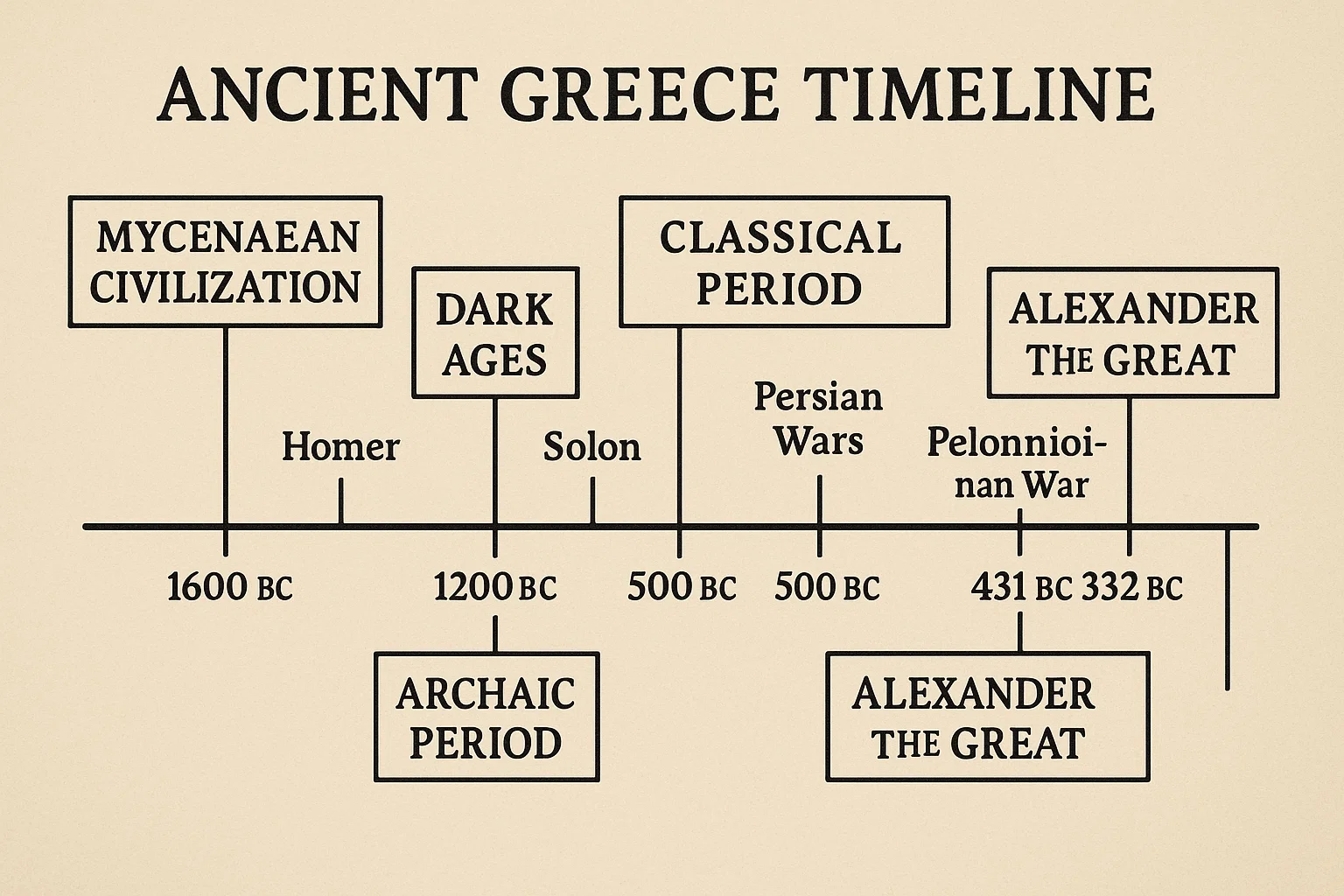
Greek Mythology is a vast and intricate tapestry of stories that have captivated audiences for millennia. These myths, passed down through generations, offer insights into the beliefs, values, and cultural practices of ancient Greeks. Understanding the Greek Mythology Timeline provides a structured way to explore these tales, from the creation of the world to the heroic deeds of legendary figures. This journey through time reveals the evolution of Greek mythology and its enduring influence on literature, art, and philosophy.
The Origins of Greek Mythology
The origins of Greek mythology can be traced back to the Bronze Age, around 3000 BCE. The myths were initially oral traditions, passed down through storytelling and poetry. Over time, these stories were recorded in epic poems, such as Homer's *Iliad* and *Odyssey*, and in the works of Hesiod, including *Theogony* and *Works and Days*. These early texts laid the foundation for the Greek Mythology Timeline, providing a framework for understanding the gods, heroes, and monsters that populated the mythological landscape.
The Creation Myths
The creation myths of Greek mythology are among the most fascinating and foundational stories. According to Hesiod's *Theogony*, the universe began with Chaos, a primordial void from which emerged Gaia (Earth), Tartarus (the underworld), and Eros (love). From Gaia came Uranus (Sky) and Pontus (Sea), setting the stage for the birth of the Titans, a race of giants who would later be overthrown by the Olympian gods.
The Titans, led by Cronus, overthrew their father Uranus and ruled the world. However, Cronus was warned that one of his children would overthrow him, so he swallowed each of his offspring as they were born. Rhea, Cronus's wife, tricked him into swallowing a stone wrapped in swaddling clothes instead of their youngest child, Zeus. Zeus, hidden away on the island of Crete, grew to adulthood and forced Cronus to regurgitate his siblings, who then joined him in a war against the Titans. This conflict, known as the Titanomachy, resulted in the victory of the Olympian gods and the establishment of their rule over the cosmos.
The Olympian Gods
The Olympian gods, named after Mount Olympus where they resided, are the most well-known deities in Greek mythology. They include Zeus, the king of the gods; Hera, the goddess of marriage and women; Poseidon, the god of the sea; Demeter, the goddess of agriculture; Athena, the goddess of wisdom and warfare; Apollo, the god of the sun, music, and prophecy; Artemis, the goddess of the hunt and the moon; Ares, the god of war; Aphrodite, the goddess of love and beauty; Hephaestus, the god of fire and craftsmanship; Hermes, the messenger of the gods; and Dionysus, the god of wine and ecstasy.
Each of these gods had their own domains and responsibilities, and their interactions with each other and with mortals formed the basis for many of the myths. For example, Zeus's numerous affairs with both goddesses and mortals often led to conflicts with his wife Hera, while Poseidon's rivalry with Athena for the patronage of Athens resulted in the city's foundation myth. The stories of the Olympian gods are central to the Greek Mythology Timeline, as they provide a backdrop for the heroic deeds and tragic fates of the mythological heroes.
The Heroes of Greek Mythology
The heroes of Greek mythology are some of the most enduring figures in literature and culture. These larger-than-life figures, often the offspring of gods and mortals, embarked on epic quests, faced monstrous foes, and performed extraordinary feats. Their stories are integral to the Greek Mythology Timeline, as they illustrate the values and ideals of ancient Greek society.
Some of the most famous heroes include:
- Heracles (Hercules): Known for his twelve labors, which included slaying the Nemean Lion, cleaning the Augean stables in a single day, and retrieving the golden apples of the Hesperides.
- Perseus: Famous for beheading the Gorgon Medusa and rescuing Andromeda from a sea monster.
- Theseus: The legendary king of Athens, known for slaying the Minotaur and founding the city of Athens.
- Jason: The leader of the Argonauts, who embarked on a quest to retrieve the Golden Fleece.
- Odysseus: The cunning hero of Homer's *Odyssey*, known for his ten-year journey home from the Trojan War, during which he faced numerous challenges, including the Cyclops, the Sirens, and the sorceress Circe.
These heroes, along with many others, embody the ideals of courage, strength, and cunning that were valued in ancient Greek society. Their stories, often filled with adventure, tragedy, and triumph, continue to inspire and captivate audiences today.
The Trojan War
The Trojan War is one of the most significant events in the Greek Mythology Timeline. This epic conflict, fought between the Greeks and the Trojans, is the subject of Homer's *Iliad* and has inspired countless works of art, literature, and drama. The war was sparked by the abduction of Helen, the wife of the Greek king Menelaus, by the Trojan prince Paris. The Greeks, led by Agamemnon, Menelaus's brother, launched a massive expedition to retrieve Helen and punish the Trojans.
The war lasted for ten years and was marked by numerous heroic deeds, tragic events, and divine interventions. Some of the most famous episodes include:
- The wrath of Achilles, which led to his withdrawal from battle and the subsequent deaths of many Greek warriors.
- The Trojan Horse, a cunning ruse devised by Odysseus that allowed the Greeks to infiltrate the city of Troy and win the war.
- The fate of the Trojan princess Cassandra, who was cursed with the gift of prophecy but doomed never to be believed.
The Trojan War had far-reaching consequences, shaping the destinies of many heroes and setting the stage for the epic journeys of figures like Odysseus and Aeneas. The war's legacy continues to influence literature, art, and culture, making it a pivotal point in the Greek Mythology Timeline.
The Aftermath of the Trojan War
The aftermath of the Trojan War is marked by the journeys of the surviving heroes and the founding of new cities. One of the most famous of these journeys is that of Odysseus, as recounted in Homer's *Odyssey*. Odysseus's ten-year voyage home to Ithaca is filled with challenges, including encounters with the Cyclops, the Sirens, and the sorceress Circe. His journey is a testament to his cunning and resilience, as well as a reflection of the dangers and uncertainties of the ancient world.
Another significant figure from the aftermath of the Trojan War is Aeneas, a Trojan hero who escaped the destruction of his city and embarked on a journey to found a new homeland. His story, told in Virgil's *Aeneid*, is a foundational myth of Roman culture, linking the Trojans to the Romans and establishing the origins of the Roman people. Aeneas's journey, like Odysseus's, is filled with challenges and divine interventions, making it a crucial part of the Greek Mythology Timeline.
Other heroes, such as Agamemnon and Menelaus, returned home to face their own challenges and tragedies. Agamemnon was murdered by his wife Clytemnestra and her lover Aegisthus upon his return, while Menelaus and Helen lived out their days in relative peace. These stories of return and redemption are essential to understanding the full scope of the Greek Mythology Timeline, as they illustrate the consequences of war and the struggles of heroes in the aftermath of conflict.
The Legacy of Greek Mythology
The legacy of Greek mythology is vast and enduring. The stories, characters, and themes of Greek myths have influenced literature, art, and philosophy for thousands of years. From the epic poems of Homer to the plays of Sophocles and Euripides, Greek mythology has provided a rich source of inspiration for writers and artists. The myths have also shaped our understanding of the human condition, exploring themes of love, loss, heroism, and tragedy.
In the realm of art, Greek mythology has inspired countless works, from the sculptures of ancient Greece to the paintings of the Renaissance. The gods, heroes, and monsters of Greek mythology have been depicted in various forms, from marble statues to frescoes and tapestries. These artistic representations have helped to preserve and popularize the myths, ensuring their enduring appeal.
In philosophy, Greek mythology has provided a framework for exploring complex ideas and concepts. The myths often deal with questions of morality, justice, and the nature of the divine, making them a rich source of philosophical inquiry. Philosophers from Plato to Nietzsche have drawn on Greek mythology to explore these themes, using the stories and characters as a basis for their own ideas.
In modern times, Greek mythology continues to influence popular culture, from movies and television shows to video games and comic books. The enduring appeal of these myths lies in their timeless themes and universal appeal, as well as their ability to adapt to new contexts and audiences. Whether through retellings of classic stories or new interpretations of familiar characters, Greek mythology remains a vital and dynamic part of our cultural heritage.
📚 Note: The Greek Mythology Timeline is not a linear progression but rather a complex web of interconnected stories and characters. The myths often overlap and intersect, reflecting the rich and intricate nature of Greek culture and belief.
Greek mythology is a treasure trove of stories that have captivated audiences for millennia. From the creation myths to the heroic deeds of legendary figures, the Greek Mythology Timeline offers a structured way to explore these tales and understand their enduring influence. The myths provide insights into the beliefs, values, and cultural practices of ancient Greeks, as well as the timeless themes and universal appeal that continue to resonate with audiences today. Whether through literature, art, or philosophy, Greek mythology remains a vital and dynamic part of our cultural heritage, shaping our understanding of the world and our place in it.
Related Terms:
- greek mythology wikipedia
- greek mythology facts
- greek mythology stories in order
- greek mythology timeline pdf
- greek mythology wikipedia timeline
- greek mythology time period