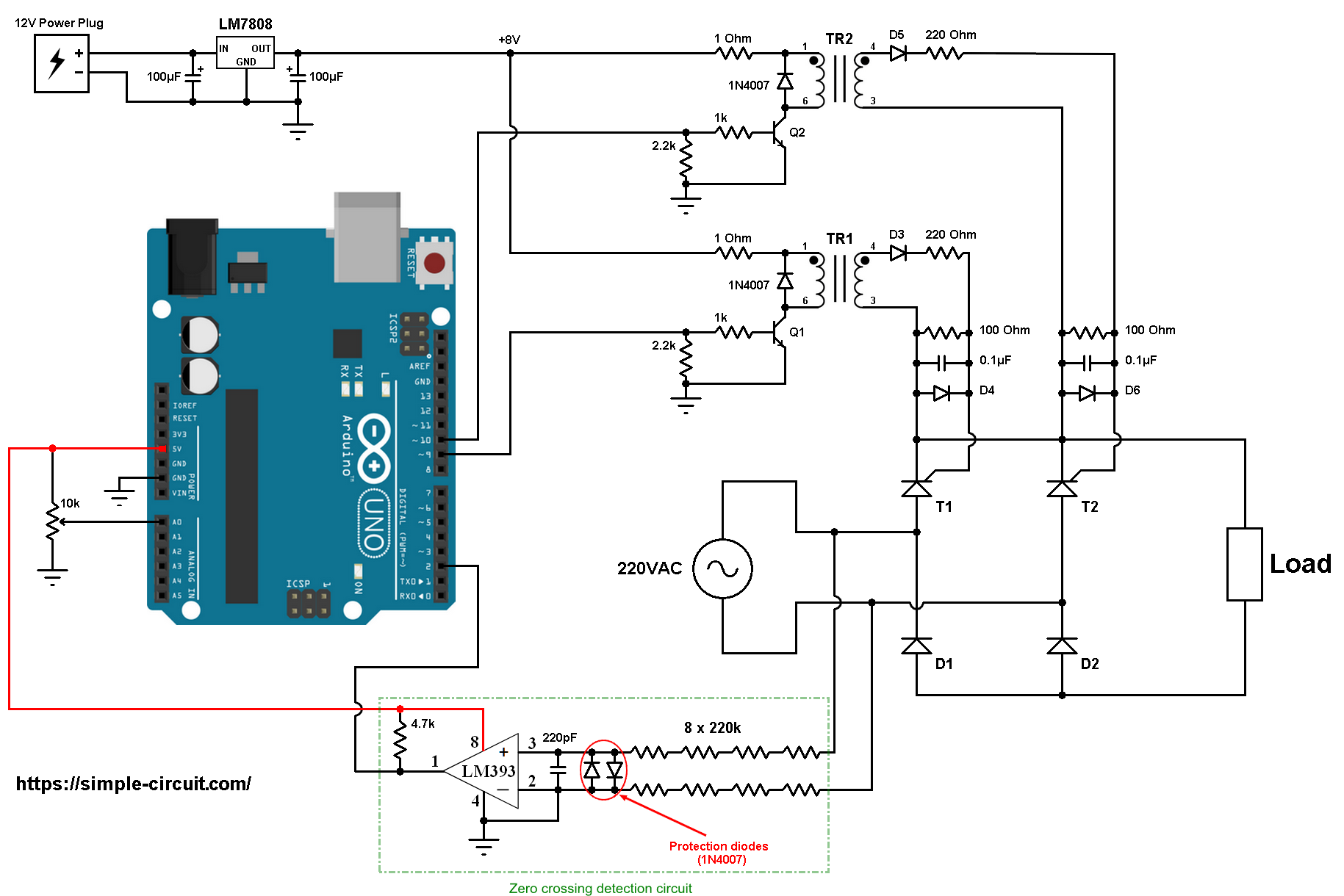
Understanding the intricacies of a Full Wave Bridge Rectifier is crucial for anyone delving into the world of electronics and power supply design. This component plays a pivotal role in converting alternating current (AC) to direct current (DC), making it an essential part of many electronic devices. Whether you are a hobbyist, a student, or a professional engineer, grasping the fundamentals of a Full Wave Bridge Rectifier can significantly enhance your projects and designs.
What is a Full Wave Bridge Rectifier?
A Full Wave Bridge Rectifier is a type of rectifier circuit that converts the entire cycle of an AC input into a DC output. Unlike half-wave rectifiers, which only utilize half of the AC cycle, a Full Wave Bridge Rectifier uses both the positive and negative halves of the AC waveform. This results in a more efficient and smoother DC output, making it ideal for applications requiring a stable power supply.
Components of a Full Wave Bridge Rectifier
The Full Wave Bridge Rectifier consists of four diodes arranged in a bridge configuration. These diodes are connected in such a way that they allow current to flow in only one direction, effectively converting the AC input into a pulsating DC output. The key components include:
- Four diodes
- AC input
- DC output
- Load resistor
How Does a Full Wave Bridge Rectifier Work?
The operation of a Full Wave Bridge Rectifier can be understood by examining the flow of current through the diodes during each half-cycle of the AC input. Here’s a step-by-step breakdown:
- During the positive half-cycle of the AC input, diodes D1 and D3 conduct, allowing current to flow through the load resistor in one direction.
- During the negative half-cycle of the AC input, diodes D2 and D4 conduct, allowing current to flow through the load resistor in the same direction as during the positive half-cycle.
This bidirectional conduction ensures that the entire AC waveform is converted into a pulsating DC output. The resulting DC voltage is then smoothed using a capacitor filter to provide a steady DC supply.
Circuit Diagram of a Full Wave Bridge Rectifier
The circuit diagram of a Full Wave Bridge Rectifier is relatively simple and consists of four diodes connected in a bridge configuration. Below is a typical circuit diagram:

Advantages of a Full Wave Bridge Rectifier
The Full Wave Bridge Rectifier offers several advantages over other types of rectifiers:
- Efficiency: By utilizing both halves of the AC waveform, it provides a more efficient conversion to DC.
- Smoother Output: The pulsating DC output is closer to a steady DC voltage, reducing the need for extensive filtering.
- Higher Output Voltage: The peak voltage of the output is higher compared to half-wave rectifiers, making it suitable for high-voltage applications.
- Reduced Ripple: The ripple factor is lower, resulting in a cleaner DC output.
Applications of a Full Wave Bridge Rectifier
The Full Wave Bridge Rectifier is widely used in various applications due to its efficiency and reliability. Some common applications include:
- Power supplies for electronic devices
- Battery chargers
- Solar power systems
- Automotive electronics
- Industrial control systems
Design Considerations for a Full Wave Bridge Rectifier
When designing a Full Wave Bridge Rectifier circuit, several factors need to be considered to ensure optimal performance:
- Diodes Selection: Choose diodes with appropriate voltage and current ratings to handle the expected load.
- Filtering: Use capacitors to smooth the pulsating DC output and reduce ripple.
- Heat Dissipation: Ensure proper heat dissipation for the diodes to prevent overheating and failure.
- Input Voltage: Consider the input voltage range and ensure the circuit can handle variations.
Calculating the Output Voltage of a Full Wave Bridge Rectifier
The output voltage of a Full Wave Bridge Rectifier can be calculated using the following formula:
📝 Note: The formula assumes an ideal diode with no voltage drop.
Vout = Vpeak - Vdiode
Where:
- Vout is the output voltage
- Vpeak is the peak voltage of the AC input
- Vdiode is the voltage drop across each diode (typically 0.7V for silicon diodes)
Example Calculation
Let’s consider an example where the AC input has a peak voltage of 10V. The output voltage can be calculated as follows:
Vout = 10V - 0.7V = 9.3V
However, in practice, the actual output voltage will be slightly lower due to the voltage drop across the diodes and other losses.
Comparing Full Wave Bridge Rectifier with Other Rectifiers
To better understand the advantages of a Full Wave Bridge Rectifier, it is helpful to compare it with other types of rectifiers:
| Type of Rectifier | Efficiency | Output Voltage | Ripple Factor |
|---|---|---|---|
| Half-Wave Rectifier | Lower | Lower | Higher |
| Full Wave Center-Tapped Rectifier | Higher than Half-Wave | Higher than Half-Wave | Lower than Half-Wave |
| Full Wave Bridge Rectifier | Highest | Highest | Lowest |
Troubleshooting Common Issues
While Full Wave Bridge Rectifiers are generally reliable, there are some common issues that may arise. Here are a few troubleshooting tips:
- No Output Voltage: Check the diodes for proper connection and ensure they are not shorted or open.
- Low Output Voltage: Verify the input voltage and ensure the diodes are functioning correctly.
- High Ripple: Increase the capacitance of the filter capacitor to reduce ripple.
- Overheating: Ensure proper heat dissipation and check for excessive current draw.
By following these troubleshooting steps, you can quickly identify and resolve issues with your Full Wave Bridge Rectifier circuit.
In summary, the Full Wave Bridge Rectifier is a versatile and efficient component for converting AC to DC. Its ability to utilize the entire AC waveform makes it a preferred choice for many applications requiring a stable power supply. Understanding its components, operation, and design considerations can help you create reliable and efficient electronic circuits. Whether you are a beginner or an experienced engineer, mastering the Full Wave Bridge Rectifier is a valuable skill that will enhance your projects and designs.
Related Terms:
- half wave bridge rectifier
- half wave rectifier
- full wave bridge rectifier multisim
- full wave bridge rectifier advantages
- full wave bridge rectifier diode
- full wave bridge rectifier theory