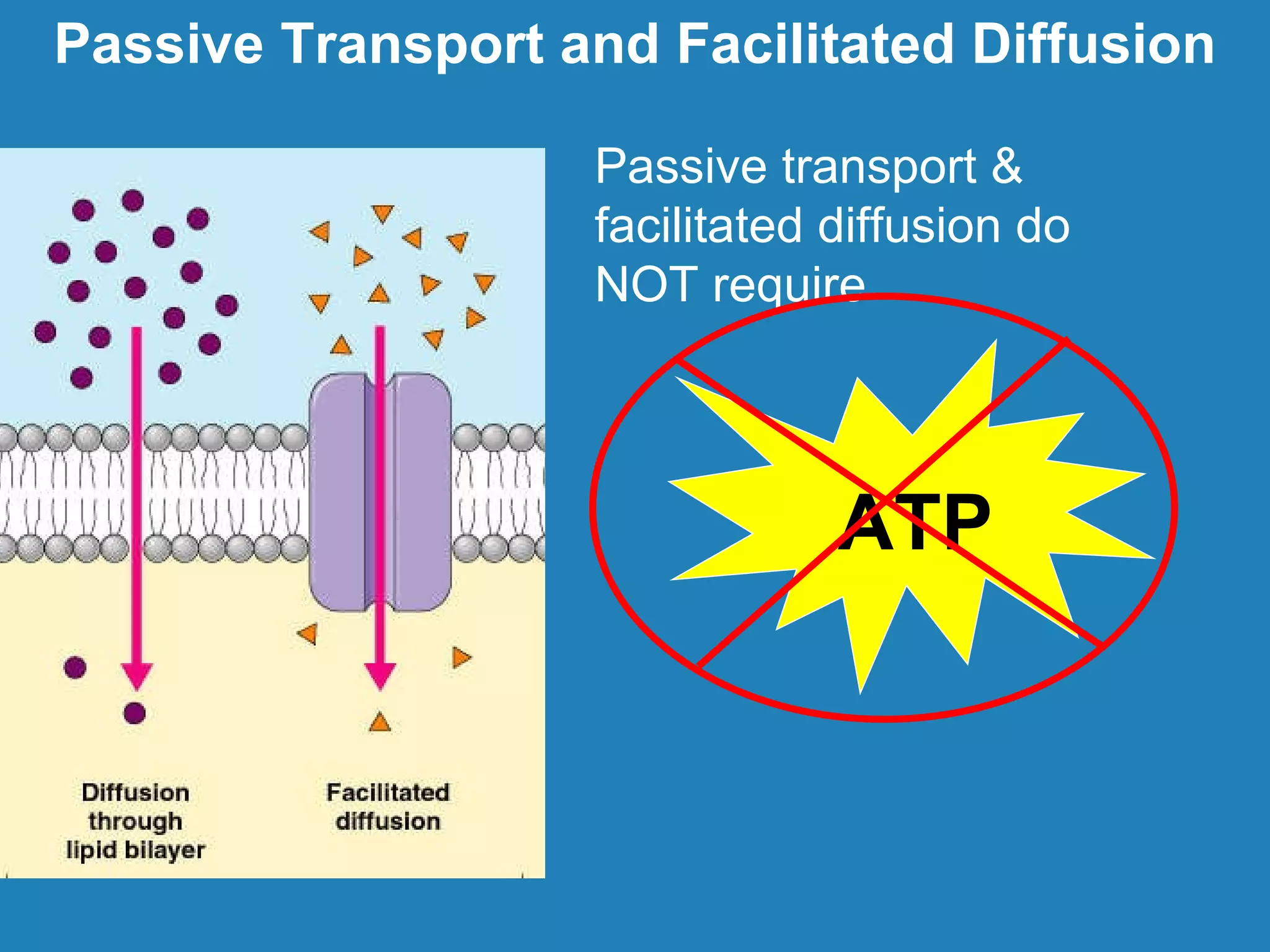
Facilitated diffusion is a fundamental process in cellular biology that enables the movement of molecules across cell membranes without requiring energy. This process is crucial for maintaining cellular homeostasis and ensuring that essential substances are available where needed. Unlike active transport, which requires energy, facilitated diffusion relies on the concentration gradient to move molecules from areas of high concentration to areas of low concentration. This mechanism is particularly important for the transport of large or charged molecules that cannot passively diffuse through the lipid bilayer of the cell membrane.
Understanding Facilitated Diffusion
Facilitated diffusion requires specific transport proteins embedded in the cell membrane. These proteins act as channels or carriers, providing a pathway for molecules to cross the membrane. The process can be divided into two main types: channel-mediated facilitated diffusion and carrier-mediated facilitated diffusion.
Channel-Mediated Facilitated Diffusion
Channel-mediated facilitated diffusion involves the use of channel proteins that create pores in the cell membrane. These channels are selective, allowing only specific molecules to pass through. The movement of molecules through these channels is driven by the concentration gradient. Examples of molecules that use this type of facilitated diffusion include water, which moves through aquaporins, and ions like sodium and potassium, which move through ion channels.
Carrier-Mediated Facilitated Diffusion
Carrier-mediated facilitated diffusion, on the other hand, involves carrier proteins that bind to specific molecules and undergo a conformational change to transport them across the membrane. This process is also driven by the concentration gradient. Glucose transport proteins (GLUTs) are a well-known example of carrier-mediated facilitated diffusion. These proteins facilitate the movement of glucose into cells, which is essential for cellular metabolism.
The Role of Transport Proteins
Transport proteins play a critical role in facilitated diffusion. These proteins are highly specific, recognizing and binding to particular molecules. The specificity of transport proteins ensures that only the intended molecules are transported across the membrane, maintaining the integrity of the cell. The structure of transport proteins is designed to facilitate the movement of molecules efficiently, often involving conformational changes that allow the molecule to pass through the membrane.
Types of Transport Proteins
There are several types of transport proteins involved in facilitated diffusion:
- Ion Channels: These proteins form pores that allow ions to pass through the membrane. Examples include voltage-gated channels and ligand-gated channels.
- Aquaporins: These are water channels that facilitate the movement of water molecules across the membrane.
- Glucose Transporters (GLUTs): These carrier proteins transport glucose into cells, which is crucial for energy production.
- Amino Acid Transporters: These proteins facilitate the movement of amino acids across the membrane, which is essential for protein synthesis.
Mechanism of Facilitated Diffusion
Facilitated diffusion requires a series of steps to transport molecules across the membrane. The process can be broken down into the following stages:
- Binding: The molecule to be transported binds to the transport protein.
- Conformational Change: The transport protein undergoes a conformational change, allowing the molecule to pass through the membrane.
- Release: The molecule is released on the other side of the membrane.
- Reset: The transport protein returns to its original conformation, ready to transport another molecule.
This cycle is repeated continuously, facilitating the movement of molecules down their concentration gradient.
Importance of Facilitated Diffusion
Facilitated diffusion is essential for various cellular processes. It ensures that cells have access to the necessary nutrients and removes waste products efficiently. Some key points highlighting the importance of facilitated diffusion include:
- Nutrient Uptake: Facilitated diffusion allows cells to take up essential nutrients like glucose and amino acids, which are crucial for energy production and protein synthesis.
- Waste Removal: It helps in the removal of waste products, maintaining cellular homeostasis.
- Ion Balance: Facilitated diffusion plays a crucial role in maintaining the ionic balance across the membrane, which is essential for cellular functions like nerve impulse transmission and muscle contraction.
- Water Regulation: Aquaporins facilitate the movement of water, ensuring that cells maintain the correct water balance.
Examples of Facilitated Diffusion
Facilitated diffusion is involved in various biological processes. Some notable examples include:
- Glucose Transport: Glucose transporters (GLUTs) facilitate the movement of glucose into cells, providing the energy needed for cellular activities.
- Ion Channels: Ion channels allow the movement of ions like sodium, potassium, and calcium, which are essential for nerve and muscle function.
- Water Transport: Aquaporins facilitate the movement of water across cell membranes, ensuring proper hydration and osmotic balance.
- Amino Acid Transport: Amino acid transporters move amino acids into cells, which are necessary for protein synthesis.
These examples illustrate the diverse roles of facilitated diffusion in maintaining cellular functions.
Factors Affecting Facilitated Diffusion
Several factors can influence the rate of facilitated diffusion. Understanding these factors is crucial for comprehending how cells regulate the movement of molecules across the membrane. Key factors include:
- Concentration Gradient: The concentration gradient is the driving force behind facilitated diffusion. A steeper gradient results in faster diffusion.
- Temperature: Higher temperatures increase the kinetic energy of molecules, leading to faster diffusion.
- pH: Changes in pH can affect the conformation of transport proteins, altering their ability to facilitate diffusion.
- Presence of Inhibitors: Certain molecules can inhibit transport proteins, reducing the rate of facilitated diffusion.
These factors highlight the dynamic nature of facilitated diffusion and its dependence on various environmental conditions.
Regulation of Facilitated Diffusion
Facilitated diffusion is tightly regulated to ensure that cells maintain the correct balance of molecules. Regulation can occur at several levels, including:
- Gene Expression: The expression of transport proteins can be regulated at the genetic level, ensuring that the right amount of proteins is available for facilitated diffusion.
- Post-Translational Modifications: Modifications like phosphorylation can alter the activity of transport proteins, affecting their ability to facilitate diffusion.
- Feedback Mechanisms: Cells use feedback mechanisms to adjust the rate of facilitated diffusion based on the needs of the cell.
These regulatory mechanisms ensure that facilitated diffusion operates efficiently and effectively.
📝 Note: The regulation of facilitated diffusion is a complex process involving multiple levels of control. Understanding these regulatory mechanisms is essential for comprehending how cells maintain homeostasis.
Diseases Associated with Facilitated Diffusion
Dysfunction in facilitated diffusion can lead to various diseases. Some examples include:
- Diabetes: Impaired glucose transport due to defects in GLUT proteins can contribute to the development of diabetes.
- Cystic Fibrosis: Mutations in the CFTR protein, which functions as a chloride channel, lead to cystic fibrosis.
- Neurological Disorders: Dysfunction in ion channels can result in neurological disorders like epilepsy and migraine.
These examples underscore the importance of facilitated diffusion in maintaining cellular health and the potential consequences of its disruption.
Facilitated diffusion is a critical process in cellular biology that ensures the efficient movement of molecules across cell membranes. It requires specific transport proteins that facilitate the passage of molecules down their concentration gradient. Understanding the mechanisms, importance, and regulation of facilitated diffusion is essential for comprehending cellular functions and the potential impact of its dysregulation on health and disease.
Related Terms:
- facilitated diffusion requires energy
- facilitated diffusion requires quizlet
- where does facilitated diffusion occur
- facilitated diffusion requires atp
- how does facilitated diffusion work
- facilitated diffusion requires carrier