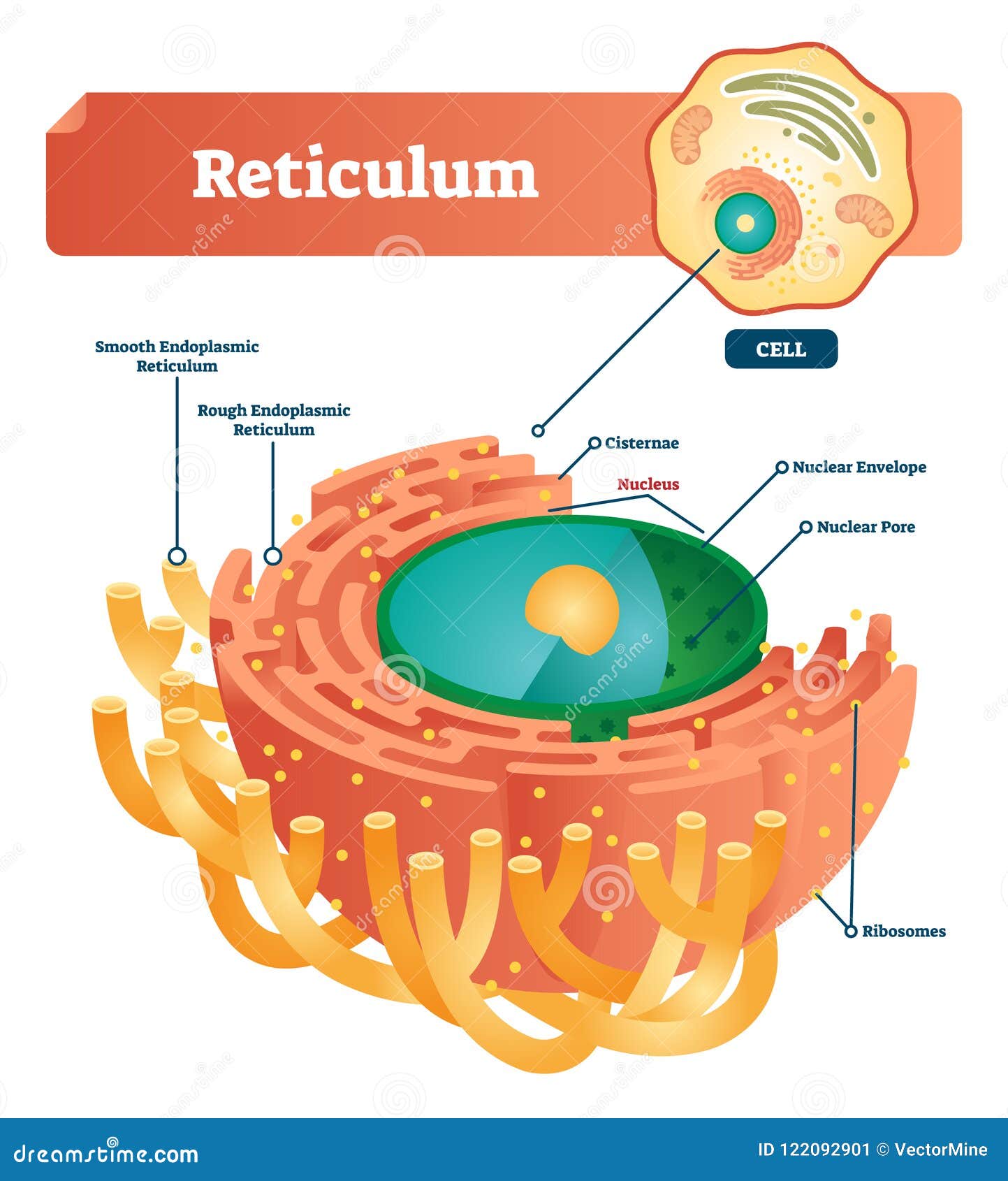
The Endoplasmic Reticulum (ER) is a critical organelle found in eukaryotic cells, playing a pivotal role in various cellular processes. The Endoplasmic Reticulum Model provides a comprehensive framework for understanding the structure, function, and dynamics of this essential cellular component. This model helps researchers and students alike to grasp the complexities of the ER and its interactions within the cell.
The Structure of the Endoplasmic Reticulum
The ER is a network of membranous tubules and sacs that extends throughout the cytoplasm. It is broadly classified into two types: the rough ER (RER) and the smooth ER (SER). The RER is studded with ribosomes, giving it a rough appearance, while the SER lacks ribosomes and has a smooth surface.
Rough Endoplasmic Reticulum (RER)
The RER is primarily involved in the synthesis and folding of proteins. It is particularly abundant in cells that secrete proteins, such as liver cells and plasma cells. The ribosomes attached to the RER translate mRNA into polypeptides, which are then transported into the lumen of the ER for further processing.
Smooth Endoplasmic Reticulum (SER)
The SER is involved in various functions, including lipid synthesis, detoxification, and calcium storage. It is prominent in cells that require high lipid production, such as adipose cells and steroid-producing cells. The SER also plays a crucial role in the metabolism of carbohydrates and the synthesis of phospholipids.
The Functions of the Endoplasmic Reticulum
The ER performs a multitude of functions essential for cellular homeostasis. These functions can be broadly categorized into protein synthesis and modification, lipid synthesis, and calcium storage.
Protein Synthesis and Modification
The RER is the primary site for protein synthesis. Ribosomes on the RER translate mRNA into polypeptides, which are then transported into the ER lumen. Within the ER, these polypeptides undergo post-translational modifications, such as glycosylation and disulfide bond formation, to achieve their functional conformation.
Lipid Synthesis
The SER is the primary site for lipid synthesis. It produces phospholipids, which are essential components of cellular membranes. The SER also synthesizes steroids and other lipids involved in signaling pathways and energy storage.
Calcium Storage
The ER acts as a calcium reservoir, storing and releasing calcium ions (Ca2+) in response to cellular signals. This calcium storage and release mechanism is crucial for various cellular processes, including muscle contraction, neurotransmitter release, and gene expression.
The Endoplasmic Reticulum Model in Cellular Processes
The Endoplasmic Reticulum Model helps elucidate the role of the ER in various cellular processes. Understanding these processes is crucial for comprehending cellular functions and dysfunctions.
Protein Folding and Quality Control
The ER is equipped with a sophisticated quality control system that ensures proteins are correctly folded and functional. Misfolded proteins are either refolded or targeted for degradation. This quality control mechanism is essential for maintaining cellular homeostasis and preventing the accumulation of misfolded proteins, which can lead to diseases such as Alzheimer's and Parkinson's.
Lipid Metabolism
The ER plays a central role in lipid metabolism, synthesizing phospholipids, steroids, and other lipids. These lipids are essential for membrane biogenesis, signaling, and energy storage. The ER's role in lipid metabolism is crucial for maintaining cellular integrity and function.
Calcium Signaling
The ER's ability to store and release calcium ions is vital for various cellular processes. Calcium signaling regulates muscle contraction, neurotransmitter release, and gene expression. Dysregulation of calcium signaling can lead to various diseases, including cardiovascular disorders and neurodegenerative diseases.
The Endoplasmic Reticulum Stress Response
ER stress occurs when the ER's capacity to fold proteins is overwhelmed, leading to the accumulation of misfolded proteins. The cell responds to ER stress through a series of signaling pathways collectively known as the unfolded protein response (UPR). The UPR aims to restore ER homeostasis by increasing the ER's folding capacity, degrading misfolded proteins, and reducing protein synthesis.
Mechanisms of the Unfolded Protein Response
The UPR involves three main signaling pathways: the inositol-requiring enzyme 1 (IRE1), activating transcription factor 6 (ATF6), and protein kinase RNA-like endoplasmic reticulum kinase (PERK) pathways. These pathways work together to restore ER homeostasis and prevent cell death.
IRE1 is a transmembrane protein that activates X-box binding protein 1 (XBP1), a transcription factor that upregulates genes involved in protein folding and ER-associated degradation (ERAD). ATF6 is a transmembrane protein that translocates to the Golgi apparatus upon ER stress, where it is cleaved to release an active transcription factor. PERK phosphorylates eukaryotic initiation factor 2α (eIF2α), leading to a global attenuation of protein synthesis and the upregulation of genes involved in protein folding and ERAD.
Diseases Associated with Endoplasmic Reticulum Dysfunction
Dysfunction of the ER is linked to various diseases, including neurodegenerative disorders, metabolic diseases, and cancer. Understanding the role of the ER in these diseases can provide insights into potential therapeutic targets.
Neurodegenerative Diseases
Neurodegenerative diseases, such as Alzheimer's and Parkinson's, are characterized by the accumulation of misfolded proteins in the brain. ER stress and the UPR play a crucial role in the pathogenesis of these diseases. Targeting the UPR may provide a novel therapeutic approach for treating neurodegenerative disorders.
Metabolic Diseases
Metabolic diseases, such as diabetes and obesity, are associated with ER stress in various tissues, including the liver, pancreas, and adipose tissue. ER stress contributes to insulin resistance, inflammation, and cell death, leading to the development of metabolic diseases. Targeting the UPR may provide a novel therapeutic approach for treating metabolic disorders.
Cancer
Cancer cells often exhibit ER stress due to their rapid proliferation and increased protein synthesis. The UPR plays a dual role in cancer, promoting cell survival and proliferation in some contexts while inducing cell death in others. Targeting the UPR may provide a novel therapeutic approach for treating cancer.
Future Directions in Endoplasmic Reticulum Research
The Endoplasmic Reticulum Model continues to evolve as researchers uncover new insights into the structure, function, and dynamics of the ER. Future research should focus on understanding the molecular mechanisms underlying ER stress and the UPR, as well as the role of the ER in various diseases.
Emerging Technologies
Emerging technologies, such as cryo-electron microscopy and super-resolution microscopy, are providing unprecedented insights into the structure and dynamics of the ER. These technologies enable researchers to visualize the ER at high resolution, revealing new details about its organization and function.
Systems Biology Approaches
Systems biology approaches, such as proteomics and metabolomics, are providing a holistic view of the ER and its interactions within the cell. These approaches enable researchers to identify new proteins and metabolites involved in ER function and dysfunction, as well as their regulatory networks.
Therapeutic Targets
Identifying new therapeutic targets for treating diseases associated with ER dysfunction is a critical area of research. Targeting the UPR and other ER-associated pathways may provide novel therapeutic approaches for treating neurodegenerative disorders, metabolic diseases, and cancer.

📝 Note: The Endoplasmic Reticulum Model is a dynamic and evolving field of study. Researchers are continually uncovering new insights into the structure, function, and dynamics of the ER, as well as its role in various diseases. Staying up-to-date with the latest research is essential for understanding the complexities of the ER and its interactions within the cell.
In summary, the Endoplasmic Reticulum Model provides a comprehensive framework for understanding the structure, function, and dynamics of the ER. The ER plays a crucial role in various cellular processes, including protein synthesis and modification, lipid synthesis, and calcium storage. Dysfunction of the ER is linked to various diseases, including neurodegenerative disorders, metabolic diseases, and cancer. Future research should focus on understanding the molecular mechanisms underlying ER stress and the UPR, as well as the role of the ER in various diseases. Emerging technologies and systems biology approaches are providing new insights into the ER and its interactions within the cell, paving the way for novel therapeutic approaches for treating diseases associated with ER dysfunction.
Related Terms:
- function of endoplasmic reticulum simple
- endoplasmic reticulum whereabouts
- role of the endoplasmic reticulum
- where is endoplasmic reticulum found
- where is endoplasmic reticulum located
- endoplasmic reticulum function and location