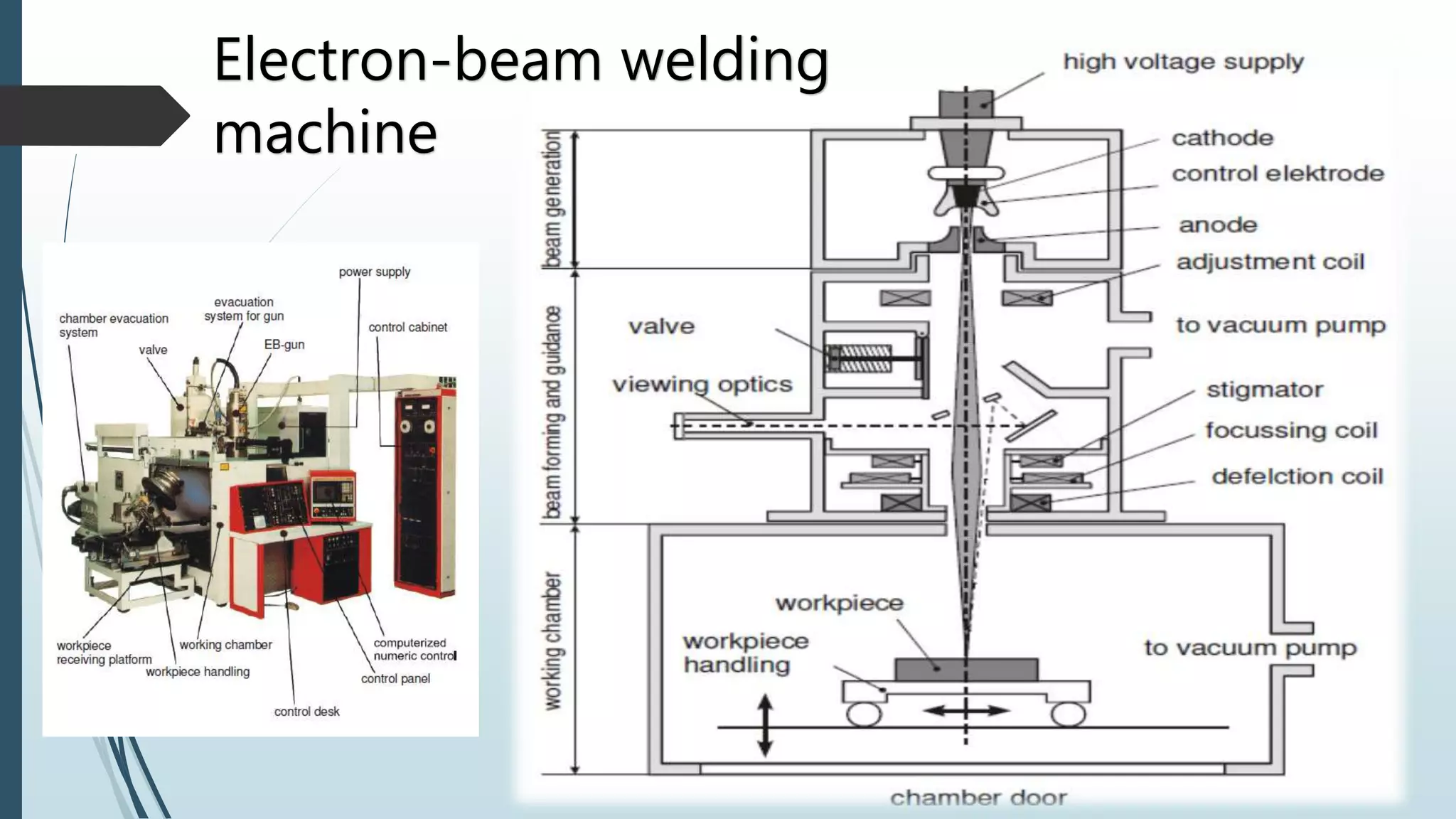
Electron Beam Welding (EBW) is a high-precision welding technique that uses a focused beam of high-velocity electrons to join materials. This advanced method is particularly valued in industries where precision and quality are paramount, such as aerospace, automotive, and medical device manufacturing. Unlike traditional welding methods, EBW offers several unique advantages, including deep penetration, minimal heat input, and the ability to weld dissimilar metals. This blog post will delve into the intricacies of Electron Beam Welding, exploring its principles, applications, advantages, and the steps involved in the process.
Understanding Electron Beam Welding
Electron Beam Welding is a fusion welding process that employs a beam of high-velocity electrons to melt and join materials. The process occurs in a vacuum to prevent the electrons from scattering and to maintain the beam's focus. The high energy of the electron beam allows for deep penetration into the material, resulting in narrow and deep welds with minimal distortion.
The key components of an Electron Beam Welding system include:
- A high-voltage power supply to accelerate the electrons.
- An electron gun to generate and focus the electron beam.
- A vacuum chamber to maintain the necessary environment for welding.
- A worktable to hold and position the workpiece.
Principles of Electron Beam Welding
The principles of Electron Beam Welding revolve around the generation and manipulation of a high-energy electron beam. The process can be broken down into several key steps:
- Electron Generation: Electrons are emitted from a heated cathode (filament) within the electron gun.
- Acceleration: The emitted electrons are accelerated to high velocities using a high-voltage electric field.
- Focusing: Magnetic lenses focus the accelerated electrons into a narrow, high-density beam.
- Deflection: Electromagnets deflect the beam to control its path and position it accurately on the workpiece.
- Welding: The focused electron beam impinges on the workpiece, melting the material and creating a weld.
The vacuum environment is crucial for maintaining the beam's focus and preventing contamination of the weld. The depth of penetration and the width of the weld can be controlled by adjusting the beam's power, focus, and travel speed.
Applications of Electron Beam Welding
Electron Beam Welding is widely used in various industries due to its precision and reliability. Some of the key applications include:
- Aerospace: EBW is used to weld critical components such as engine parts, turbine blades, and structural elements where high strength and precision are required.
- Automotive: In the automotive industry, EBW is employed for welding transmission components, fuel injectors, and other precision parts.
- Medical Devices: EBW is ideal for welding medical implants, surgical instruments, and other devices that require biocompatible and high-strength welds.
- Electronics: The precision of EBW makes it suitable for welding electronic components, such as heat sinks and connectors, where minimal heat input is essential.
- Nuclear Industry: EBW is used for welding components in nuclear reactors, where the welds must withstand extreme conditions and maintain integrity over long periods.
Advantages of Electron Beam Welding
Electron Beam Welding offers several advantages over traditional welding methods, making it a preferred choice for high-precision applications:
- Deep Penetration: The high-energy electron beam can penetrate deeply into the material, allowing for welds with high aspect ratios (depth to width).
- Minimal Heat Input: The focused beam minimizes heat input to the surrounding material, reducing distortion and residual stresses.
- High Weld Quality: EBW produces welds with excellent mechanical properties, including high strength and low porosity.
- Precision: The ability to control the beam's position and power allows for precise welding of complex geometries.
- Versatility: EBW can weld a wide range of materials, including dissimilar metals, and is suitable for both thin and thick sections.
Steps Involved in Electron Beam Welding
The process of Electron Beam Welding involves several steps, each crucial for achieving a high-quality weld. Here is a detailed overview of the steps involved:
- Preparation: The workpiece is cleaned to remove any contaminants that could affect the weld quality. The surfaces to be welded are aligned and clamped securely.
- Vacuum Chamber Setup: The workpiece is placed inside a vacuum chamber, which is then evacuated to create a vacuum environment. This step is essential to maintain the focus of the electron beam.
- Electron Beam Generation: The electron gun generates and accelerates the electrons, which are then focused into a high-density beam.
- Welding: The focused electron beam is directed onto the workpiece, melting the material and creating a weld. The beam's power, focus, and travel speed are carefully controlled to achieve the desired weld characteristics.
- Cooling: After welding, the workpiece is allowed to cool gradually to minimize residual stresses and distortion.
- Inspection: The weld is inspected for quality and integrity using non-destructive testing methods such as X-ray radiography or ultrasonic testing.
🔍 Note: Proper alignment and clamping of the workpiece are crucial to ensure a high-quality weld. Any misalignment can result in weld defects and reduced strength.
Parameters Affecting Electron Beam Welding
Several parameters influence the quality and characteristics of Electron Beam Welds. Understanding and controlling these parameters is essential for achieving optimal results:
- Beam Power: The power of the electron beam affects the depth of penetration and the width of the weld. Higher beam power results in deeper penetration but may also increase the risk of porosity.
- Beam Focus: The focus of the electron beam determines the beam's diameter and the energy density. A tightly focused beam produces a narrow, deep weld, while a defocused beam results in a wider, shallower weld.
- Travel Speed: The speed at which the electron beam moves across the workpiece affects the weld's width and penetration. Faster travel speeds result in narrower welds with less penetration.
- Vacuum Level: The level of vacuum in the chamber affects the beam's focus and stability. A higher vacuum level ensures better beam focus and weld quality.
- Material Properties: The properties of the materials being welded, such as thermal conductivity and melting point, influence the weld's characteristics and quality.
Challenges and Limitations of Electron Beam Welding
While Electron Beam Welding offers numerous advantages, it also presents certain challenges and limitations:
- High Initial Cost: The equipment for Electron Beam Welding is expensive, making it a significant investment for many businesses.
- Vacuum Requirements: The need for a vacuum environment adds complexity to the process and limits the size of the workpiece that can be welded.
- Safety Concerns: The high-voltage power supply and the vacuum environment pose safety risks that must be carefully managed.
- Limited Flexibility: EBW is best suited for applications where the workpiece can be easily positioned and aligned within the vacuum chamber. Complex or large components may be difficult to weld using this method.
Despite these challenges, the benefits of Electron Beam Welding often outweigh the limitations, making it a valuable technique for high-precision welding applications.
Comparison with Other Welding Methods
To better understand the unique advantages of Electron Beam Welding, it is helpful to compare it with other welding methods:
| Welding Method | Penetration Depth | Heat Input | Weld Quality | Precision |
|---|---|---|---|---|
| Electron Beam Welding | High | Low | Excellent | High |
| Laser Beam Welding | High | Low | Good | High |
| TIG Welding | Moderate | Moderate | Good | Moderate |
| MIG Welding | Moderate | High | Fair | Low |
As shown in the table, Electron Beam Welding stands out for its deep penetration, low heat input, and high precision, making it ideal for applications where these factors are critical.
🔍 Note: The choice of welding method depends on the specific requirements of the application, including the materials being welded, the desired weld characteristics, and the available equipment.
Future Trends in Electron Beam Welding
The field of Electron Beam Welding continues to evolve, driven by advancements in technology and increasing demand for high-precision welding solutions. Some of the future trends in Electron Beam Welding include:
- Improved Equipment: Advances in electron gun technology and vacuum systems are making EBW equipment more efficient and cost-effective.
- Automation and Robotics: The integration of automation and robotics is enhancing the precision and consistency of Electron Beam Welding, making it suitable for high-volume production.
- Non-Vacuum EBW: Research is ongoing to develop non-vacuum Electron Beam Welding techniques, which would eliminate the need for a vacuum environment and expand the range of applications.
- Hybrid Welding: Combining Electron Beam Welding with other welding methods, such as laser welding, is being explored to leverage the strengths of each technique and achieve even better weld quality.
These trends are poised to further enhance the capabilities and applications of Electron Beam Welding, making it an even more valuable tool for precision welding.
Electron Beam Welding is a sophisticated and highly effective welding technique that offers numerous advantages for high-precision applications. Its ability to produce deep, narrow welds with minimal heat input makes it ideal for industries where precision and quality are paramount. By understanding the principles, applications, and parameters of Electron Beam Welding, manufacturers can leverage this technology to achieve superior weld quality and performance. As the field continues to evolve, the future of Electron Beam Welding looks promising, with advancements in equipment, automation, and hybrid welding techniques paving the way for even greater capabilities and applications.
Related Terms:
- electron beam welding california
- electron beam welder
- electron beam welding advantages
- electron beam welding near me
- electron beam welding buena park
- electron beam welding titanium