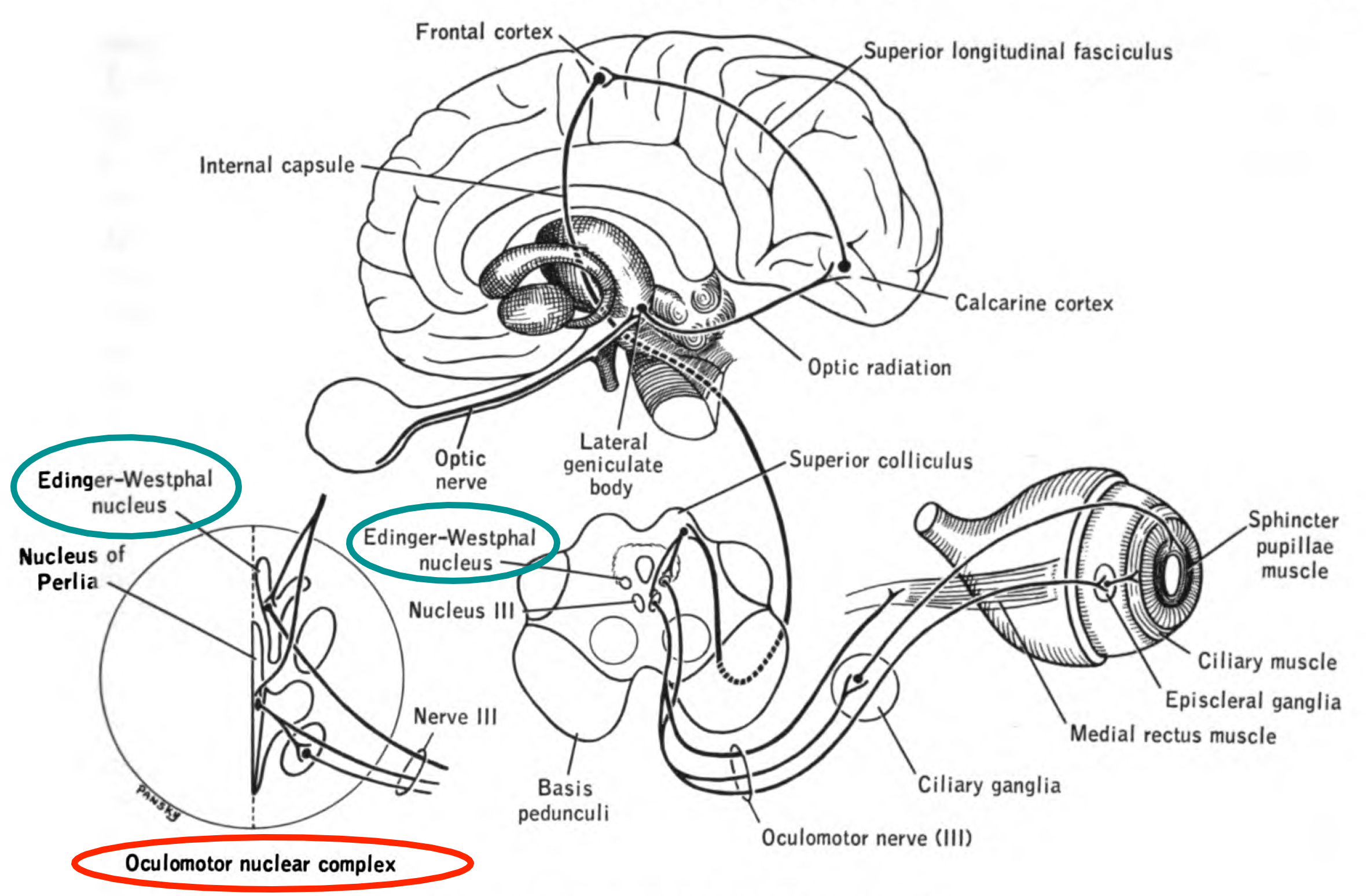
The human brain is a complex and fascinating organ, responsible for a wide range of functions that govern our thoughts, emotions, and physical actions. Among its many components, the Edinger Westphal Nucleus plays a crucial role in the autonomic regulation of the eye. This small but significant structure is part of the oculomotor complex and is involved in the control of pupil size and accommodation, which is the process by which the eye adjusts its focus to see objects at varying distances.
The Anatomy of the Edinger Westphal Nucleus
The Edinger Westphal Nucleus is located in the midbrain, specifically within the oculomotor nucleus. It is a parasympathetic nucleus that sends preganglionic fibers to the ciliary ganglion, which in turn innervates the ciliary muscle and the sphincter pupillae muscle of the eye. This pathway is essential for the autonomic control of the eye, ensuring that the pupil constricts and the lens accommodates appropriately in response to visual stimuli.
The Role of the Edinger Westphal Nucleus in Visual Function
The primary functions of the Edinger Westphal Nucleus are closely tied to the autonomic regulation of the eye. These functions include:
- Pupillary Constriction: The nucleus controls the sphincter pupillae muscle, which constricts the pupil in response to bright light or near vision. This reflex helps to protect the retina from excessive light and improves visual acuity.
- Accommodation: The nucleus also regulates the ciliary muscle, which changes the shape of the lens to focus on near objects. This process is crucial for clear vision at different distances.
These functions are coordinated through a complex neural pathway that involves the Edinger Westphal Nucleus, the ciliary ganglion, and the muscles of the eye. Any disruption in this pathway can lead to visual impairments, such as difficulty focusing or abnormal pupil responses.
Clinical Significance of the Edinger Westphal Nucleus
The Edinger Westphal Nucleus is clinically significant due to its role in various ocular disorders and neurological conditions. Understanding its function and potential dysfunctions is essential for diagnosing and treating these conditions. Some of the key clinical implications include:
- Adie's Tonic Pupil: This condition is characterized by a dilated pupil that reacts slowly to light and accommodation. It is often associated with damage to the ciliary ganglion or the postganglionic fibers from the Edinger Westphal Nucleus.
- Horner's Syndrome: Although primarily associated with the sympathetic nervous system, Horner's syndrome can sometimes involve the parasympathetic pathway, including the Edinger Westphal Nucleus. This syndrome is characterized by ptosis (drooping eyelid), miosis (constricted pupil), and anhidrosis (lack of sweating).
- Oculomotor Nerve Palsy: Damage to the oculomotor nerve, which includes the Edinger Westphal Nucleus, can result in paralysis of the extraocular muscles and disruption of pupil and accommodation functions. This condition can be caused by various factors, including stroke, trauma, or tumors.
Diagnosing these conditions often involves a detailed neurological and ophthalmological examination, including tests to assess pupil responses and accommodation. Imaging studies, such as MRI or CT scans, may also be used to identify structural abnormalities in the brainstem or midbrain.
Diagnostic Techniques for Evaluating the Edinger Westphal Nucleus
Evaluating the function of the Edinger Westphal Nucleus involves a combination of clinical examinations and diagnostic tests. Some of the key techniques include:
- Pupillary Light Reflex Test: This test assesses the pupil's response to light. A normal response involves constriction of the pupil in the illuminated eye and the contralateral eye (consensual response). Abnormalities in this reflex can indicate dysfunction in the Edinger Westphal Nucleus or other parts of the pupillary pathway.
- Accommodation Reflex Test: This test evaluates the eye's ability to focus on near objects. The pupil should constrict and the lens should accommodate when the eye focuses on a near target. Impairments in this reflex can suggest issues with the Edinger Westphal Nucleus or the ciliary ganglion.
- Neuroimaging: MRI or CT scans can provide detailed images of the brainstem and midbrain, helping to identify structural abnormalities that may affect the Edinger Westphal Nucleus. These imaging techniques are particularly useful in cases of suspected oculomotor nerve palsy or other neurological conditions.
In addition to these diagnostic techniques, electrophysiological studies, such as electromyography (EMG) and evoked potentials, may be used to assess the function of the oculomotor nerve and the Edinger Westphal Nucleus. These studies can provide valuable information about the integrity of the neural pathways involved in pupil and accommodation functions.
Treatment Options for Disorders Involving the Edinger Westphal Nucleus
Treatment for disorders involving the Edinger Westphal Nucleus depends on the underlying cause and the specific symptoms. Some of the common treatment options include:
- Medications: Medications such as pilocarpine eye drops can be used to constrict the pupil in cases of Adie's tonic pupil or other conditions affecting pupil size. Other medications may be prescribed to manage symptoms of neurological conditions, such as oculomotor nerve palsy.
- Surgery: In some cases, surgical intervention may be necessary to correct structural abnormalities or repair damaged nerves. For example, surgery may be performed to relieve pressure on the oculomotor nerve in cases of tumor or aneurysm.
- Physical Therapy and Rehabilitation: Physical therapy and rehabilitation programs can help improve eye movements and coordination in patients with oculomotor nerve palsy or other neurological conditions. These programs may include exercises to strengthen the extraocular muscles and improve visual tracking.
It is important to note that the treatment approach should be tailored to the individual patient's needs and the specific characteristics of their condition. A multidisciplinary team, including neurologists, ophthalmologists, and rehabilitation specialists, may be involved in the management of these disorders.
📝 Note: Early diagnosis and intervention are crucial for achieving the best outcomes in patients with disorders involving the Edinger Westphal Nucleus. Regular follow-up and monitoring are essential to assess the effectiveness of treatment and make necessary adjustments.
Research and Future Directions
Research on the Edinger Westphal Nucleus continues to advance our understanding of its role in visual function and its involvement in various ocular and neurological disorders. Some of the key areas of research include:
- Neural Pathways: Studies are ongoing to map the neural pathways involved in the control of pupil size and accommodation, providing insights into the complex interactions between the Edinger Westphal Nucleus and other brain structures.
- Genetic Factors: Research is exploring the genetic factors that may contribute to the development of disorders affecting the Edinger Westphal Nucleus, such as Adie's tonic pupil and oculomotor nerve palsy.
- Therapeutic Interventions: New therapeutic interventions, including gene therapy and stem cell therapy, are being investigated as potential treatments for disorders involving the Edinger Westphal Nucleus. These approaches aim to repair damaged neural pathways and restore normal function.
Future research is likely to focus on developing more targeted and effective treatments for disorders involving the Edinger Westphal Nucleus, as well as improving diagnostic techniques to enhance early detection and intervention.
Case Studies and Clinical Examples
To illustrate the clinical significance of the Edinger Westphal Nucleus, consider the following case studies:
| Case Study | Presentation | Diagnosis | Treatment |
|---|---|---|---|
| Case 1 | A 45-year-old patient presents with a dilated pupil that reacts slowly to light and accommodation. | Adie's Tonic Pupil | Pilocarpine eye drops to constrict the pupil. |
| Case 2 | A 60-year-old patient with a history of diabetes presents with ptosis, miosis, and anhidrosis on one side of the face. | Horner's Syndrome | Management of underlying diabetes and symptomatic treatment. |
| Case 3 | A 50-year-old patient with a sudden onset of double vision and drooping eyelid. | Oculomotor Nerve Palsy | Surgical intervention to relieve pressure on the oculomotor nerve. |
These case studies highlight the diverse clinical presentations and treatment approaches for disorders involving the Edinger Westphal Nucleus. Each case requires a thorough evaluation and a tailored treatment plan to address the specific symptoms and underlying causes.
In conclusion, the Edinger Westphal Nucleus plays a vital role in the autonomic regulation of the eye, controlling pupil size and accommodation. Understanding its function and potential dysfunctions is essential for diagnosing and treating various ocular and neurological disorders. Advances in research and diagnostic techniques continue to enhance our knowledge of this important brain structure, paving the way for more effective treatments and improved patient outcomes.
Related Terms:
- edinger westphal nucleus pathway
- edinger westphal nucleus location
- edinger westphal nucleus function
- edinger westphal nucleus lesion
- westphal nucleus function
- edinger westphal nucleus stroke