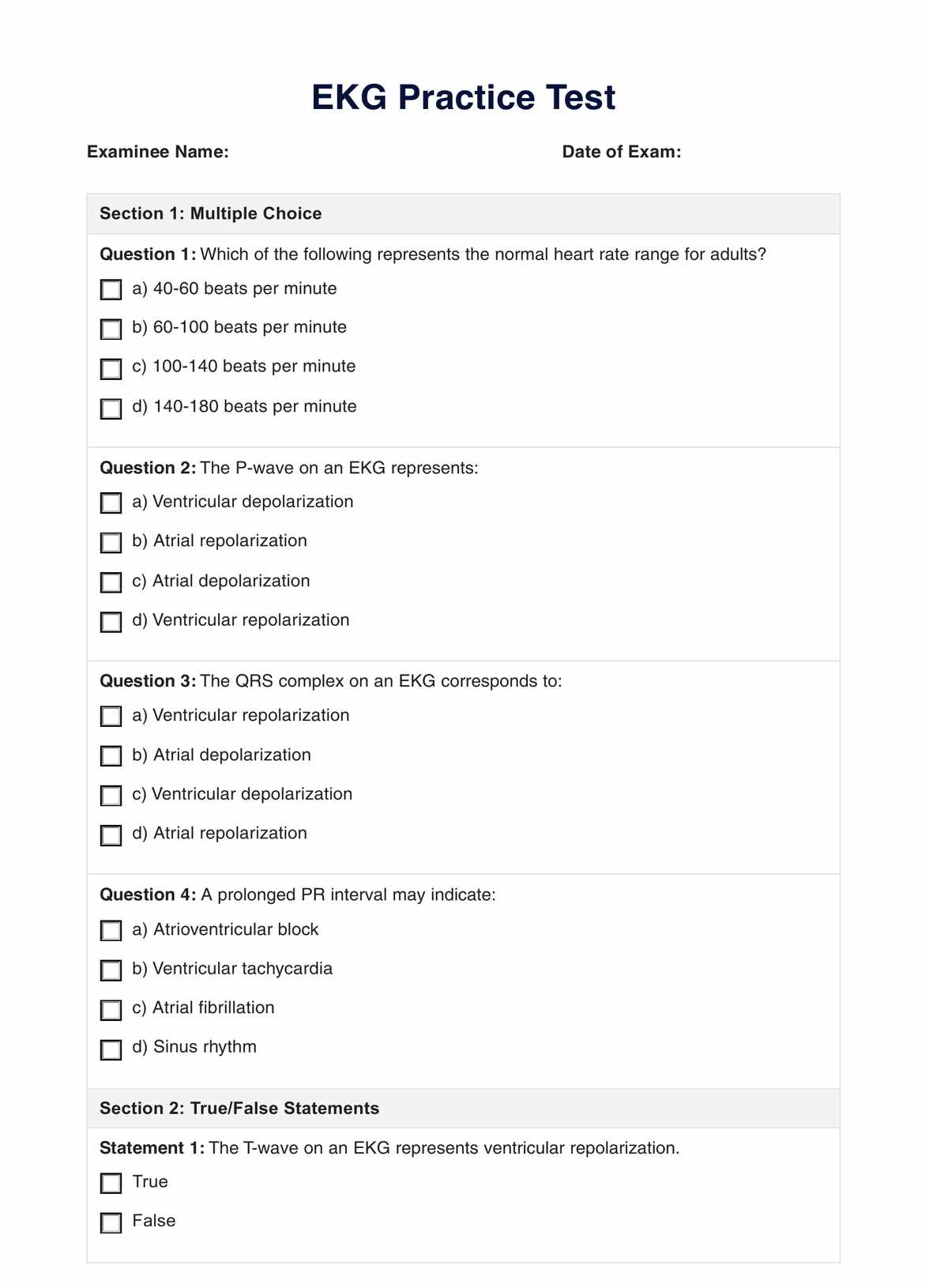
Preparing for an ECG (Electrocardiogram) practice test can be a daunting task, especially for those new to the field of cardiology or medical diagnostics. An ECG practice test is a crucial step in mastering the interpretation of electrocardiograms, which are essential for diagnosing various heart conditions. This guide will walk you through the process of preparing for an ECG practice test, from understanding the basics to advanced interpretation techniques.
Understanding the Basics of ECG
Before diving into the practice test, it's essential to have a solid understanding of the basics of ECG. An electrocardiogram is a graphical representation of the electrical activity of the heart over time. It is used to diagnose a wide range of heart conditions, including arrhythmias, heart attacks, and other cardiac abnormalities.
Key components of an ECG include:
- P Wave: Represents atrial depolarization.
- QRS Complex: Represents ventricular depolarization.
- T Wave: Represents ventricular repolarization.
- PR Interval: The time from the beginning of the P wave to the beginning of the QRS complex.
- QT Interval: The time from the beginning of the QRS complex to the end of the T wave.
Preparing for the ECG Practice Test
Preparation is key to succeeding in an ECG practice test. Here are some steps to help you get ready:
Study Materials
Gather comprehensive study materials that cover all aspects of ECG interpretation. This includes textbooks, online courses, and practice questions. Some recommended resources include:
- Marriott's Practical Electrocardiography
- ECG Made Easy
- Online platforms offering ECG practice tests and quizzes
Practice Questions
Engage in regular practice with ECG practice tests. These tests will help you familiarize yourself with the format and types of questions you might encounter. Look for practice tests that include a variety of scenarios and difficulty levels.
Here are some tips for effective practice:
- Start with basic questions and gradually move to more complex ones.
- Review your answers and understand the rationale behind each correct answer.
- Practice under timed conditions to simulate the actual test environment.
Interpretation Techniques
Mastering ECG interpretation techniques is crucial for success. Focus on the following areas:
Rhythm Analysis
Rhythm analysis involves determining the heart rate, regularity, and the presence of any arrhythmias. Key steps include:
- Counting the number of large squares between R waves to determine the heart rate.
- Identifying the regularity of the rhythm by checking the consistency of the R-R intervals.
- Looking for P waves and their relationship to the QRS complexes.
Axis Determination
Determining the heart's electrical axis helps identify conditions like left or right axis deviation. This involves:
- Analyzing the QRS complexes in leads I and aVF.
- Using the hexaxial reference system to determine the axis.
Interval Measurements
Accurate measurement of intervals is essential for diagnosing conditions like heart blocks. Key intervals to measure include:
- PR interval
- QRS duration
- QT interval
Common ECG Abnormalities
Familiarize yourself with common ECG abnormalities that you might encounter in the practice test. These include:
Arrhythmias
Arrhythmias are abnormalities in the heart's rhythm. Common types include:
- Atrial fibrillation
- Atrial flutter
- Ventricular tachycardia
- Bradycardia
Conduction Blocks
Conduction blocks occur when the electrical impulses are delayed or blocked as they travel through the heart. Common types include:
- First-degree AV block
- Second-degree AV block (Mobitz I and Mobitz II)
- Third-degree AV block
- Bundle branch blocks (left and right)
Myocardial Infarction
Myocardial infarction, or heart attack, can be diagnosed using specific ECG changes. Key findings include:
- ST-segment elevation
- ST-segment depression
- T-wave inversion
- Pathological Q waves
Practice Test Format
Understanding the format of the ECG practice test is essential for effective preparation. Typically, the test includes:
Multiple-Choice Questions
Multiple-choice questions are the most common format. These questions test your knowledge of ECG interpretation and your ability to apply it to clinical scenarios. Each question usually includes:
- A brief clinical scenario
- An ECG tracing
- Several answer choices
True/False Questions
True/false questions assess your understanding of basic ECG principles. These questions are straightforward but require a solid grasp of the material.
Short Answer Questions
Short answer questions may require you to interpret an ECG tracing and provide a detailed explanation of your findings. These questions test your ability to apply your knowledge in a practical setting.
Sample ECG Practice Test
Here is a sample ECG practice test to give you an idea of what to expect:
Question 1
Interpret the following ECG tracing:
What is the most likely diagnosis?
| A | Atrial fibrillation |
|---|---|
| B | Ventricular tachycardia |
| C | Normal sinus rhythm |
| D | Second-degree AV block |
📝 Note: The correct answer is B. Ventricular tachycardia is characterized by a wide QRS complex and a regular rhythm.
Question 2
True or False: The PR interval is measured from the beginning of the P wave to the end of the QRS complex.
📝 Note: The correct answer is False. The PR interval is measured from the beginning of the P wave to the beginning of the QRS complex.
Question 3
Explain the ECG findings in the following tracing:
📝 Note: The ECG shows ST-segment elevation in leads II, III, and aVF, suggestive of an inferior wall myocardial infarction.
Advanced ECG Interpretation
For those looking to take their ECG interpretation skills to the next level, consider exploring advanced topics. These include:
12-Lead ECG Interpretation
The 12-lead ECG provides a more comprehensive view of the heart's electrical activity. Mastering 12-lead ECG interpretation involves understanding the spatial orientation of the leads and how to use them to diagnose various conditions.
ST-Segment Analysis
ST-segment analysis is crucial for diagnosing acute coronary syndromes. Learn to recognize the subtle changes in the ST segment that indicate ischemia or infarction.
T-Wave Inversion
T-wave inversion can be a sign of various cardiac conditions, including ischemia, hypertrophy, and electrolyte imbalances. Understanding the different patterns of T-wave inversion is essential for accurate diagnosis.
QRS Morphology
Analyzing the morphology of the QRS complex can provide insights into conditions like bundle branch blocks, ventricular hypertrophy, and ventricular pre-excitation syndromes.
Final Thoughts
Preparing for an ECG practice test requires a combination of theoretical knowledge and practical experience. By understanding the basics, practicing regularly, and familiarizing yourself with common abnormalities, you can improve your ECG interpretation skills and excel in your practice test. Remember to review your answers and learn from your mistakes to continuously improve your performance.
Related Terms:
- ecg practice test strips
- acls ecg practice test
- ecg practice test pdf
- ecg rhythm quiz
- skillstat ecg simulator
- 6 second ecg