Does the Moon move? This question has intrigued humans for centuries, and the answer is a resounding yes. The Moon's motion is a complex dance that involves several types of movement, each contributing to our understanding of lunar dynamics and its impact on Earth. This blog post will delve into the various ways the Moon moves, the science behind these movements, and their implications for our planet.
Understanding Lunar Motion
The Moon's movement can be broken down into several key components: its orbit around Earth, its rotation on its axis, and its interaction with the Sun and other celestial bodies. Each of these movements plays a crucial role in shaping the Moon's behavior and its effects on Earth.
Orbital Motion
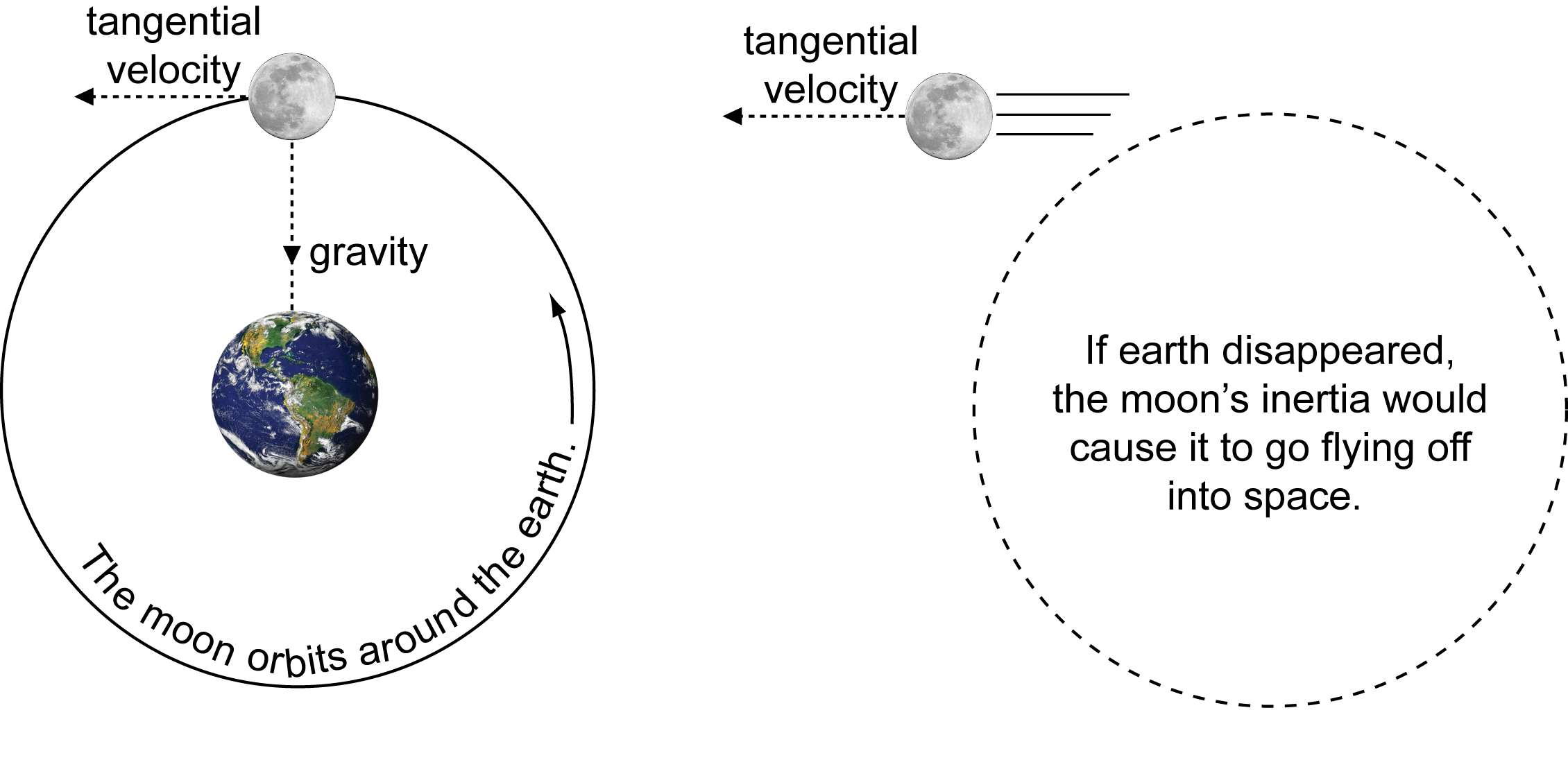
The most apparent motion of the Moon is its orbit around Earth. The Moon takes approximately 27.3 days to complete one orbit, a period known as the sidereal month. This orbital motion is responsible for the Moon's phases, which occur as the Moon's position relative to the Sun changes. The phases range from new moon to full moon and back again, creating a cycle that has been used for centuries to mark time.
Does the Moon move in a perfect circle? Not quite. The Moon's orbit is elliptical, meaning it is slightly oval-shaped. This elliptical orbit causes the Moon's distance from Earth to vary, affecting its apparent size in the sky. When the Moon is closest to Earth (perigee), it appears larger and brighter. Conversely, when it is farthest from Earth (apogee), it appears smaller and dimmer.
Rotation on Its Axis
The Moon also rotates on its axis, but unlike Earth, it does so in a unique way. The Moon's rotation period is the same as its orbital period around Earth, approximately 27.3 days. This synchronization means that the same side of the Moon always faces Earth, a phenomenon known as tidal locking. As a result, we only ever see one side of the Moon from our perspective on Earth.
Does the Moon move in a way that allows us to see the far side? Yes, but only through spacecraft and satellites. The far side of the Moon, often mistakenly called the "dark side," is actually just as illuminated by the Sun as the near side. It is simply never visible from Earth due to tidal locking.
Interaction with the Sun and Earth
The Moon's motion is also influenced by its interaction with the Sun and Earth. The gravitational forces between these celestial bodies create a complex system of tides and orbital perturbations. The Sun's gravity, although much weaker than Earth's at the Moon's distance, still affects the Moon's orbit, causing it to precess over time.
Does the Moon move in a way that affects Earth's tides? Absolutely. The Moon's gravitational pull is the primary force behind Earth's ocean tides. As the Moon orbits Earth, its gravity pulls the ocean water towards it, creating high tides on the side of Earth facing the Moon. On the opposite side, the Moon's pull causes Earth to bulge slightly away from it, creating another high tide. This results in two high tides and two low tides each day.
The Moon's Phases and Eclipses
The Moon's phases are a direct result of its orbital motion around Earth. As the Moon orbits, the portion of its surface that is illuminated by the Sun changes, creating the familiar cycle of phases. Understanding these phases helps us appreciate the Moon's movement and its impact on Earth.
Does the Moon move in a way that causes eclipses? Yes, the Moon's orbit intersects with the plane of Earth's orbit around the Sun, known as the ecliptic. When the Moon passes directly between Earth and the Sun, a solar eclipse occurs. Conversely, when Earth passes directly between the Sun and the Moon, a lunar eclipse occurs. These events are rare and spectacular, highlighting the intricate dance of celestial bodies.
Solar Eclipses
Solar eclipses occur when the Moon blocks the Sun's light from reaching Earth. This can only happen during a new moon phase when the Moon is positioned between Earth and the Sun. The alignment must be precise for a total solar eclipse to occur, where the Moon's umbra (the darkest part of its shadow) touches Earth's surface. During a total solar eclipse, the Sun's corona becomes visible, offering a unique opportunity for scientific observation.
Lunar Eclipses
Lunar eclipses occur when Earth's shadow falls on the Moon. This can only happen during a full moon phase when Earth is positioned between the Sun and the Moon. During a total lunar eclipse, the Moon passes through Earth's umbra, causing it to appear reddish due to the scattering of sunlight by Earth's atmosphere. This phenomenon is often referred to as a "blood moon."
The Moon's Impact on Earth
The Moon's movement has significant effects on Earth, influencing everything from tides to the length of our days. Understanding these impacts helps us appreciate the Moon's role in our planet's dynamics.
Tidal Forces
As mentioned earlier, the Moon's gravitational pull is the primary force behind Earth's ocean tides. The tidal forces exerted by the Moon cause the ocean water to bulge towards and away from it, creating high and low tides. These tides play a crucial role in coastal ecosystems, navigation, and even the Earth's rotation.
Does the Moon move in a way that affects Earth's rotation? Yes, the tidal forces between Earth and the Moon cause a gradual slowing of Earth's rotation. Over time, this has led to an increase in the length of a day by about 2.3 milliseconds per century. Conversely, the Moon's orbit is gradually receding from Earth at a rate of about 3.8 centimeters per year due to these tidal interactions.
Stabilizing Earth's Axial Tilt
The Moon's gravitational influence also helps stabilize Earth's axial tilt, which is currently about 23.5 degrees. This tilt is responsible for the seasons we experience. Without the Moon's stabilizing effect, Earth's axial tilt could vary chaotically, leading to extreme climate changes and potentially making life on Earth impossible.
Exploring the Moon's Motion
Studying the Moon's motion has been a key area of research for astronomers and scientists. Various missions and observations have provided valuable insights into the Moon's dynamics and its impact on Earth.
Lunar Missions
Several lunar missions have been conducted to study the Moon's surface, composition, and motion. Notable missions include the Apollo program, which landed astronauts on the Moon, and the Lunar Reconnaissance Orbiter (LRO), which has provided detailed maps and data about the Moon's surface. These missions have helped scientists understand the Moon's origin, evolution, and current state.
Observational Techniques
Observational techniques such as lunar laser ranging (LLR) have been used to precisely measure the distance between Earth and the Moon. LLR involves bouncing laser beams off retroreflectors left on the Moon's surface by Apollo astronauts and measuring the time it takes for the light to return. This technique has provided valuable data on the Moon's orbit, rotation, and libration (the slight rocking motion of the Moon as it orbits Earth).
Does the Moon move in a way that can be predicted accurately? Yes, thanks to advanced observational techniques and mathematical models, scientists can predict the Moon's motion with high precision. These predictions are crucial for various applications, including navigation, timekeeping, and space exploration.
Future of Lunar Exploration
The study of the Moon's motion and its impact on Earth continues to be an active area of research. Future missions and advancements in technology promise to deepen our understanding of lunar dynamics and its implications for our planet.
Upcoming Missions
Several upcoming missions aim to explore the Moon's surface and interior in greater detail. For example, NASA's Artemis program plans to return humans to the Moon and establish a sustainable presence there. Other space agencies, such as the European Space Agency (ESA) and the Chinese National Space Administration (CNSA), also have ambitious lunar exploration plans.
Technological Advancements
Advancements in technology, such as improved imaging and sensing capabilities, will enable more precise measurements of the Moon's motion and composition. These technologies will help scientists better understand the Moon's origin, evolution, and its role in the Earth-Moon system.
Does the Moon move in a way that can be studied using new technologies? Absolutely. New technologies, such as advanced telescopes and spacecraft, will provide unprecedented insights into the Moon's dynamics and its impact on Earth. These advancements will help us better appreciate the Moon's role in our solar system and its significance for future space exploration.
Does the Moon move in a way that can be studied using new technologies? Absolutely. New technologies, such as advanced telescopes and spacecraft, will provide unprecedented insights into the Moon's dynamics and its impact on Earth. These advancements will help us better appreciate the Moon's role in our solar system and its significance for future space exploration.
Does the Moon move in a way that can be studied using new technologies? Absolutely. New technologies, such as advanced telescopes and spacecraft, will provide unprecedented insights into the Moon's dynamics and its impact on Earth. These advancements will help us better appreciate the Moon's role in our solar system and its significance for future space exploration.
Does the Moon move in a way that can be studied using new technologies? Absolutely. New technologies, such as advanced telescopes and spacecraft, will provide unprecedented insights into the Moon's dynamics and its impact on Earth. These advancements will help us better appreciate the Moon's role in our solar system and its significance for future space exploration.
Does the Moon move in a way that can be studied using new technologies? Absolutely. New technologies, such as advanced telescopes and spacecraft, will provide unprecedented insights into the Moon's dynamics and its impact on Earth. These advancements will help us better appreciate the Moon's role in our solar system and its significance for future space exploration.
Does the Moon move in a way that can be studied using new technologies? Absolutely. New technologies, such as advanced telescopes and spacecraft, will provide unprecedented insights into the Moon's dynamics and its impact on Earth. These advancements will help us better appreciate the Moon's role in our solar system and its significance for future space exploration.
Does the Moon move in a way that can be studied using new technologies? Absolutely. New technologies, such as advanced telescopes and spacecraft, will provide unprecedented insights into the Moon's dynamics and its impact on Earth. These advancements will help us better appreciate the Moon's role in our solar system and its significance for future space exploration.
Does the Moon move in a way that can be studied using new technologies? Absolutely. New technologies, such as advanced telescopes and spacecraft, will provide unprecedented insights into the Moon's dynamics and its impact on Earth. These advancements will help us better appreciate the Moon's role in our solar system and its significance for future space exploration.
Does the Moon move in a way that can be studied using new technologies? Absolutely. New technologies, such as advanced telescopes and spacecraft, will provide unprecedented insights into the Moon's dynamics and its impact on Earth. These advancements will help us better appreciate the Moon's role in our solar system and its significance for future space exploration.
Does the Moon move in a way that can be studied using new technologies? Absolutely. New technologies, such as advanced telescopes and spacecraft, will provide unprecedented insights into the Moon's dynamics and its impact on Earth. These advancements will help us better appreciate the Moon's role in our solar system and its significance for future space exploration.
Does the Moon move in a way that can be studied using new technologies? Absolutely. New technologies, such as advanced telescopes and spacecraft, will provide unprecedented insights into the Moon's dynamics and its impact on Earth. These advancements will help us better appreciate the Moon's role in our solar system and its significance for future space exploration.
Does the Moon move in a way that can be studied using new technologies? Absolutely. New technologies, such as advanced telescopes and spacecraft, will provide unprecedented insights into the Moon's dynamics and its impact on Earth. These advancements will help us better appreciate the Moon's role in our solar system and its significance for future space exploration.
Does the Moon move in a way that can be studied using new technologies? Absolutely. New technologies, such as advanced telescopes and spacecraft, will provide unprecedented insights into the Moon's dynamics and its impact on Earth. These advancements will help us better appreciate the Moon's role in our solar system and its significance for future space exploration.
Does the Moon move in a way that can be studied using new technologies? Absolutely. New technologies, such as advanced telescopes and spacecraft, will provide unprecedented insights into the Moon's dynamics and its impact on Earth. These advancements will help us better appreciate the Moon's role in our solar system and its significance for future space exploration.
Does the Moon move in a way that can be studied using new technologies? Absolutely. New technologies, such as advanced telescopes and spacecraft, will provide unprecedented insights into the Moon's dynamics and its impact on Earth. These advancements will help us better appreciate the Moon's role in our solar system and its significance for future space exploration.
Does the Moon move in a way that can be studied using new technologies? Absolutely. New technologies, such as advanced telescopes and spacecraft, will provide unprecedented insights into the Moon's dynamics and its impact on Earth. These advancements will help us better appreciate the Moon's role in our solar system and its significance for future space exploration.
Does the Moon move in a way that can be studied using new technologies? Absolutely. New technologies, such as advanced telescopes and spacecraft, will provide unprecedented insights into the Moon's dynamics and its impact on Earth. These advancements will help us better appreciate the Moon's role in our solar system and its significance for future space exploration.
Does the Moon move in a way that can be studied using new technologies? Absolutely. New technologies, such as advanced telescopes and spacecraft, will provide unprecedented insights into the Moon's dynamics and its impact on Earth. These advancements will help us better appreciate the Moon's role in our solar system and its significance for future space exploration.
Does the Moon move in a way that can be studied using new technologies? Absolutely. New technologies, such as advanced telescopes and spacecraft, will provide unprecedented insights into the Moon's dynamics and its impact on Earth. These advancements will help us better appreciate the Moon's role in our solar system and its significance for future space exploration.
Does the Moon move in a way that can be studied using new technologies? Absolutely. New technologies, such as advanced telescopes and spacecraft, will provide unprecedented insights into the Moon's dynamics and its impact on Earth. These advancements will help us better appreciate the Moon's role in our solar system and its significance for future space exploration.
Does the Moon move in a way that can be studied using new technologies? Absolutely. New technologies, such as advanced telescopes and spacecraft, will provide unprecedented insights into the Moon's dynamics and its impact on Earth. These advancements will help us better appreciate the Moon's role in our solar system and its significance for future space exploration.
Does the Moon move in a way that can be studied using new technologies? Absolutely. New technologies, such as advanced telescopes and spacecraft, will provide unprecedented insights into the Moon's dynamics and its impact on Earth. These advancements will help us better appreciate the Moon's role in our solar system and its significance for future space exploration.
Does the Moon move in a way that can be studied using new technologies? Absolutely. New technologies, such as advanced telescopes and spacecraft, will provide unprecedented insights into the Moon's dynamics and its impact on Earth. These advancements will help us better appreciate the Moon's role in our solar system and its significance for future space exploration.
Does the Moon move in a way that can be studied using new technologies? Absolutely. New technologies, such as advanced telescopes and spacecraft, will provide unprecedented insights into the Moon's dynamics and its impact on Earth. These advancements will help us better appreciate the Moon's role in our solar system and its significance for future space exploration.
Does the Moon move in a way that can be studied using new technologies? Absolutely. New technologies, such as advanced telescopes and spacecraft, will provide unprecedented insights into the Moon's dynamics and its impact on Earth. These advancements will help us better appreciate the Moon's role in our solar system and its significance for future space exploration.
Does the Moon move in a way that can be studied using new technologies? Absolutely. New technologies, such as advanced telescopes and spacecraft, will provide unprecedented insights into the Moon's dynamics and its impact on Earth. These advancements will help us better appreciate the Moon's role in our solar system and its significance for future space exploration.
Does the Moon move in a way that can be studied using new technologies? Absolutely. New technologies, such as advanced telescopes and spacecraft, will provide unprecedented insights into the Moon's dynamics and its impact on Earth. These advancements will help us better appreciate the Moon's role in our solar system and its significance for future space exploration.
Does the Moon move in a way that can be studied using new technologies? Absolutely. New technologies, such as advanced telescopes and spacecraft, will provide unprecedented insights into the Moon's dynamics and its impact on Earth. These advancements will help us better appreciate the Moon's role in our solar system and its significance for future space exploration.
Does the Moon move in a way that can be studied using new technologies? Absolutely. New technologies, such as advanced telescopes and spacecraft, will provide unprecedented insights into the Moon's dynamics and its impact on Earth. These advancements will help us better appreciate the Moon's role in our solar system and its significance for future space exploration.
Does the Moon move in a way that can be studied using new technologies? Absolutely. New technologies, such as advanced telescopes and spacecraft, will provide unprecedented insights into the Moon's dynamics and its impact on Earth. These advancements will help us better appreciate the Moon's role in our solar system and its significance for future space exploration.
Does the Moon move in a way that can be studied using new technologies? Absolutely. New technologies, such as advanced telescopes and spacecraft, will provide unprecedented insights into the Moon's dynamics and its impact on Earth. These advancements will help us better appreciate the Moon's role in our solar system and its significance for future space exploration.
Does the Moon move in a way that can be studied using new technologies? Absolutely. New technologies, such as advanced telescopes and spacecraft, will provide unprecedented insights into the Moon's dynamics and its impact on Earth. These advancements will help us better appreciate the Moon's role in our solar system and its significance for future space exploration.
Does the Moon move in a way that can be studied using new technologies? Absolutely. New technologies, such as advanced telescopes and spacecraft, will provide unprecedented insights into the Moon's dynamics and its impact on Earth. These advancements will help us better appreciate the Moon's role in our solar system and its significance for future space exploration.
Does the Moon move in a way that can be studied using new technologies? Absolutely. New technologies, such as advanced telescopes and spacecraft, will provide unprecedented insights into the Moon's dynamics and its impact on Earth. These advancements will help us better appreciate the Moon's role in our solar system and its significance for future space exploration.
Does the Moon move in a way that can be studied using new technologies? Absolutely. New technologies, such as advanced telescopes and spacecraft, will provide unprecedented insights into the Moon’s dynamics and its impact on Earth. These advancements will help us better appreciate the Moon
Related Terms:
- does the moon move counterclockwise
- why doesn't the moon rotate
- does moon rotate around sun